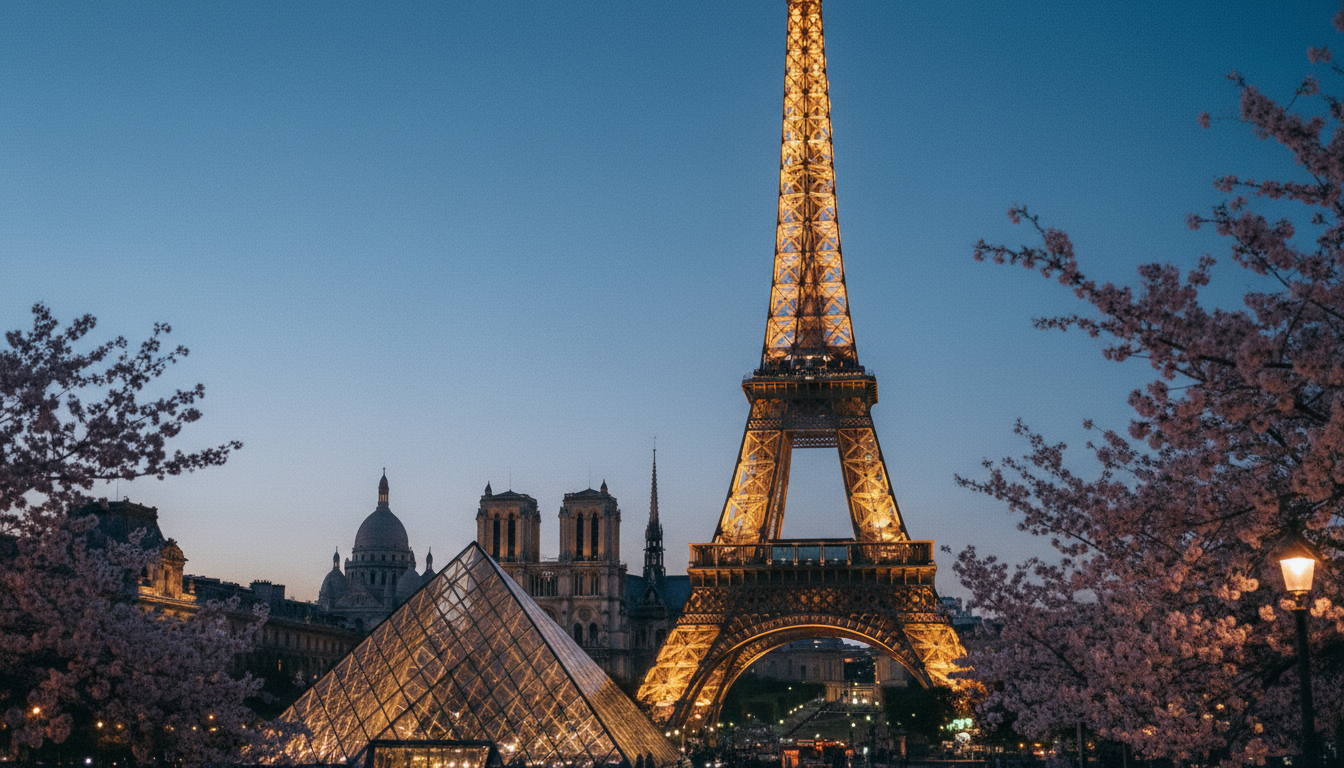
Have you ever wondered why millions of travelers choose Paris as their dream destination year after year? The answer lies in the city’s extraordinary blend of history, culture, and timeless beauty. This captivates visitors from around the globe.
Paris earned its nickname as the “City of Light” when it became the first European city to install gas street lighting during the 19th century. Today, this French capital continues to shine as one of the world’s premier travel destinations. The city welcomes visitors with an incredible collection of iconic paris landmarks, world-class museums, and charming neighborhoods. Each tells its own unique story.
The city is organized into 20 arrondissements, or districts. This makes it simple for you to navigate between different paris monuments and attractions. From the towering Eiffel Tower to the artistic treasures of the Louvre, these must-see landmarks paris offers represent just the beginning of your adventure.
Whether you’re a first-time visitor eager to explore the top paris attractions or a returning traveler searching for hidden gems, this guide will help you. You’ll discover both famous sites and local favorites. You’ll find everything from Gothic cathedrals and romantic Seine River cruises to cobblestone streets in Montmartre that capture the essence of Parisian charm.
Key Takeaways
- Paris features 20 distinct arrondissements, each offering unique attractions and cultural experiences for visitors to explore
- The city earned its “City of Light” nickname by pioneering gas street lighting in 19th-century Europe
- World-renowned landmarks like the Eiffel Tower and Louvre Museum attract millions of international travelers annually
- Paris caters to diverse interests, from art enthusiasts and history buffs to food lovers and romantic couples
- The French capital combines famous tourist destinations with hidden neighborhood gems for authentic local experiences
- Organized planning helps you navigate between top things to see in paris efficiently using the arrondissement system
Iconic Landmarks Known Around the World
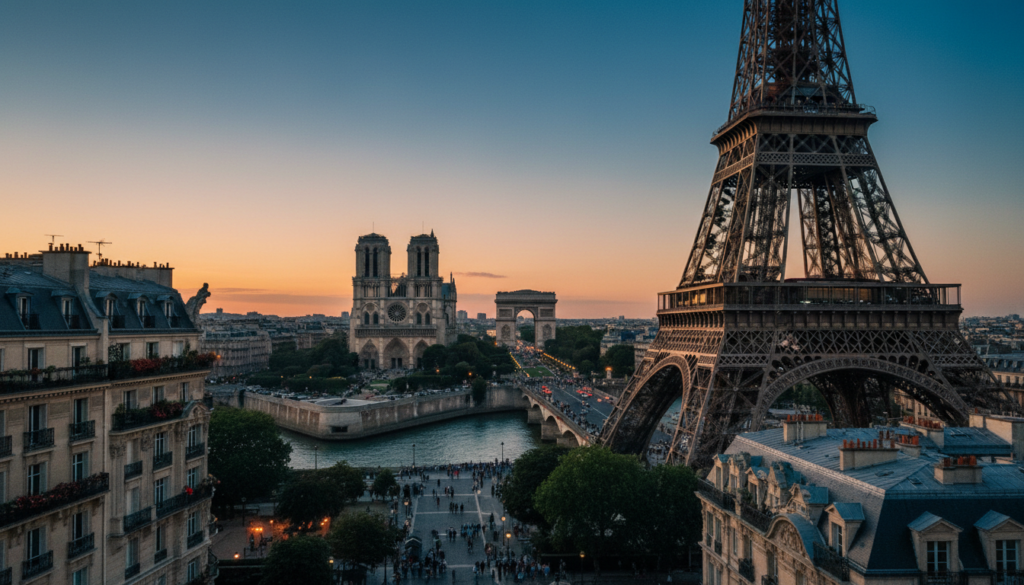
When you think of Paris, certain legendary structures immediately come to mind. These iconic landmarks known around the world represent more than just tourist destinations. They embody centuries of history, artistic achievement, and cultural significance that have shaped the city’s identity.
These top paris monuments offer unforgettable experiences. From breathtaking panoramic views to intimate encounters with history, each structure tells a unique story. Planning your visits strategically will help you make the most of your time at these extraordinary sites.
The Iron Lady That Defines a City
The Eiffel Tower Paris stands as the most recognizable symbol of France. Gustave Eiffel designed this iron lattice masterpiece for the 1889 World Fair. Originally intended as a temporary exhibit, it has endured for over 135 years, welcoming millions of visitors annually.
You can experience the tower in several ways. Climbing the 674 steps to the second level offers an active adventure. Alternatively, elevators transport you effortlessly to the second and third levels, where observation decks provide stunning 360-degree vistas of Paris.
Booking your tickets well in advance is essential for the Eiffel Tower Paris. The official website releases tickets approximately 60 days before your visit date. If you miss advance tickets, consider booking a guided tour that includes skip-the-line access.
The tower houses three restaurants and a champagne bar. Le Jules Verne on the second level offers Michelin-starred dining with panoramic windows. For a more casual experience, the champagne bar at the summit lets you toast to your Paris adventure while gazing across the cityscape.
For Paris landmark photography, arrive at sunrise to capture the tower bathed in golden light with minimal crowds. The Trocadéro Gardens across the Seine provide the classic frontal view, while the Champ de Mars offers dramatic perspectives from directly beneath the structure.
Napoleon’s Triumphant Memorial
The Arc de Triomphe Paris commands attention at the western terminus of the Champs-Élysées. This massive arc de triomphe monument honors those who fought and died in the French Revolutionary and Napoleonic Wars. Napoleon commissioned the structure in 1806, though he never saw its completion in 1836.
You’ll notice twelve radiating avenues surrounding the monument, creating one of Paris’s most chaotic traffic circles. Don’t attempt to cross at street level—instead, use the underground pedestrian tunnel from the Champs-Élysées side. This safe passage leads you directly to the monument’s base.
Climbing the 284 steps to the top rewards you with some of the finest views in Paris. From this vantage point, you can trace the perfectly aligned perspective from the Louvre through the Tuileries Gardens, along the Champs-Élysées, and extending to La Défense. Arc de triomphe visits often feel less crowded than the Eiffel Tower, making the climb more enjoyable.
The monument’s façades feature intricate sculptures and reliefs depicting military victories and revolutionary scenes. The most famous is François Rude’s “La Marseillaise,” showing winged Liberty leading French soldiers. Beneath the arch, the Tomb of the Unknown Soldier from World War I burns with an eternal flame, rekindled every evening at 6:30 PM.
Your arc de triomphe Paris ticket includes access to a small museum inside. This museum explains the monument’s construction and historical significance. Visit during late afternoon to watch the flame ceremony, then stay for sunset views as the city transitions from day to night.
Montmartre’s White Basilica
The Sacré-Cœur Basilica Montmartre crowns the highest point in Paris, its brilliant white Romano-Byzantine domes visible from across the city. Construction began in 1875 as a symbol of hope and renewal after France’s defeat in the Franco-Prussian War. The basilica officially opened in 1914, though consecration was delayed until 1919 due to World War I.
You’ll need to climb considerable stairs to reach the basilica, but the ascent through Montmartre’s charming streets adds to the experience. The funicular railway provides an alternative for those who prefer to save their energy. Your metro ticket works on the funicular, making it a convenient option.
The basilica’s exterior is constructed from travertine stone that whitens with age and rain, maintaining its luminous appearance. Inside, you’ll discover one of the world’s largest mosaics covering the ceiling—a stunning depiction of Christ in Majesty spanning 480 square meters. The interior’s serene atmosphere contrasts beautifully with the lively neighborhood surrounding it.
The steps leading up to Sacré-Cœur Basilica Montmartre have become a beloved gathering spot, especially at sunset. Street performers entertain crowds while visitors relax on the stairs, enjoying panoramic views across Paris. The vantage point allows you to spot landmarks like the Eiffel Tower, Panthéon, and the towers of Notre-Dame.
Entry to the basilica is free, though you can climb the dome for a small fee to access even higher views. The crypt also welcomes visitors and contains fascinating religious artifacts. Photography inside the basilica is prohibited, so focus on absorbing the spiritual atmosphere and architectural details with your own eyes.
The Cathedral’s Triumphant Return
Notre-Dame Cathedral Paris reopened its doors in December 2024 after extensive restoration following the devastating fire of April 15, 2019. This medieval masterpiece, dating back to the 1200s, has emerged from tragedy cleaner and more radiant than it has been in centuries. The restoration revealed original stonework and colors hidden beneath layers of soot and grime.
You’ll need to book free timed entry slots through the official cathedral website to visit the interior. These slots become available several weeks in advance and fill quickly, especially for weekend visits. Arriving 15 minutes before your scheduled time ensures smooth entry through security checkpoints.
The cathedral’s Gothic architecture showcases France’s medieval craftsmanship at its finest. Flying buttresses support the soaring walls, allowing for enormous stained glass windows that bathe the interior in colored light. The famous rose windows, miraculously surviving the fire, continue to inspire awe with their intricate designs and vibrant hues.
The Treasury at Notre-Dame Cathedral Paris houses sacred relics and priceless treasures accumulated over eight centuries. The collection includes items related to the Crown of Thorns, which tradition holds was worn by Jesus during the crucifixion. Ornate reliquaries, vestments, and liturgical objects demonstrate the cathedral’s historical importance as a center of Catholic worship.
For the best experience, attend one of the cathedral’s services where you can hear the newly restored organ filling the space with magnificent sound. Even if you’re not religious, the musical and architectural harmony creates a moving experience. Guided tours provide deeper insights into the cathedral’s construction, the fire, and the remarkable restoration process.
The area surrounding the cathedral on Île de la Cité offers additional exploration opportunities. Archaeological excavations beneath the square in front reveal Roman and medieval Paris. The nearby Sainte-Chapelle, with its stunning stained glass, complements your Notre-Dame Cathedral Paris visit with more Gothic splendor.
| Landmark | Construction Period | Steps to Climb | Best Time to Visit | Advance Booking Required |
|---|---|---|---|---|
| Eiffel Tower | 1887-1889 | 674 (to 2nd level) or elevator | Early morning or after 7 PM | Yes, 60 days ahead |
| Arc de Triomphe | 1806-1836 | 284 to observation deck | Late afternoon for sunset | Recommended but not essential |
| Sacré-Cœur Basilica | 1875-1914 | 300+ street stairs, funicular available | Late afternoon for sunset views | No, free entry |
| Notre-Dame Cathedral | 1163-1345 (reopened 2024) | None for main cathedral | Morning for better light through windows | Yes, free timed slots |
Visiting these paris landmark destinations requires strategic planning to maximize your experience while minimizing time spent in lines. Consider purchasing combination passes that bundle several monuments together at reduced prices. The Paris Museum Pass includes the Arc de Triomphe and offers skip-the-line privileges at many attractions.
Each of these monuments offers unique perspectives on Parisian history and culture. The Eiffel Tower represents industrial innovation and modern France. The Arc de Triomphe embodies military glory and national pride. Sacré-Cœur reflects spiritual devotion and architectural beauty. Notre-Dame stands as a testament to medieval craftsmanship and resilience.
You’ll create lasting memories at each location, whether you’re watching the Eiffel Tower sparkle at night, standing beneath Napoleon’s arch, gazing across Paris from Montmartre’s heights, or marveling at Notre-Dame’s rebirth. These structures have witnessed centuries of French history and continue to inspire visitors from every corner of the globe.
Most Famous Tourist Attractions in Paris for Art Lovers
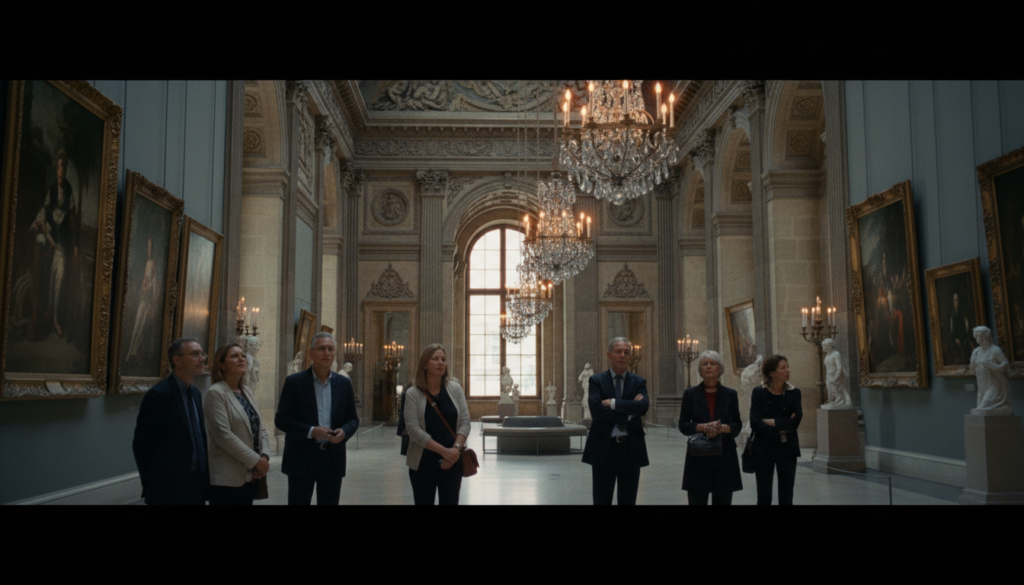
Art lovers find their paradise in Paris, where centuries of masterpieces await. The city’s museums house everything from Renaissance paintings to cutting-edge installations. Whether you have days or just hours, these museums offer unforgettable experiences.
Each museum has its own character and focus. You can spend a day in royal apartments or enjoy Impressionist works in an hour. Planning ahead is key to making the most of your visit.
Musée du Louvre
The Louvre Museum is one of the world’s largest and most visited. It spans over 60,000 square meters of gallery space. Iconic masterpieces like the Mona Lisa and the Venus de Milo are here.
General admission tickets start at €22. But, rushing to see the Mona Lisa can be disappointing due to crowds. The real treasures lie in less-crowded wings where you can truly appreciate the art.
The Napoleon III Apartments offer a glimpse into 19th-century royal living. It’s a peaceful escape from the crowds. The Richelieu Wing showcases French sculptures and decorative arts in stunning natural light.
Guided tours at the Louvre Museum Paris cost between €60 to €120. The “Closing Time at the Louvre” tour is highly recommended. Booking well in advance is essential, especially in summer and holidays.
Plan for at least three to four hours to see major collections. The museum closes on Tuesdays, so plan accordingly.
Musée d’Orsay
The Musée d’Orsay is in a magnificent Beaux-Arts railway station. It focuses on French art from 1848 to 1914. This makes it the world’s premier destination for Impressionist and post-Impressionist works.
Timed entry tickets cost €16. You’ll see beloved works by Monet, Van Gogh, and others. The fifth-floor galleries offer breathtaking views of Paris.
Many prefer this museum to the Louvre. The focused collection means you won’t get museum fatigue. Every room contains recognizable masterpieces you’ve likely seen in art history books.
The museum restaurant offers a unique dining experience. You can enjoy lunch while gazing out over the Seine River and Montmartre.
Centre Pompidou
The Centre Pompidou revolutionized museum architecture in 1977. Its inside-out design features exposed structural elements and colorful exterior pipes. Blue pipes carry air, green pipes carry water, yellow pipes carry electricity, and red pipes house elevators and escalators.
This modern and contemporary art museum houses Europe’s largest collection of 20th and 21st-century art. You’ll find works by Picasso, Matisse, Warhol, and others. The rooftop terrace offers panoramic views across Paris rooftops.
The building itself is a work of art. Architects Renzo Piano and Richard Rogers designed it to make all functional elements visible. The transparent escalators on the exterior let you watch the city unfold as you ascend to upper floors.
General admission costs €15, with free entry on the first Sunday of each month. The surrounding plaza hosts street performers, creating a lively atmosphere that extends the artistic experience beyond the museum walls.
Musée de l’Orangerie
The Musée de l’Orangerie offers an intimate experience centered on Claude Monet’s monumental achievements. This smaller museum houses eight of Monet’s giant Water Lilies murals in two oval rooms. Monet himself helped design these spaces to create the perfect environment for viewing his work.
Tickets cost €12.50 and the entire visit requires only about an hour. This makes it perfect for travelers with limited time. The oval rooms create an immersive experience where Monet’s water gardens surround you on all sides.
Natural light filters through ceiling panels exactly as Monet intended. The changing daylight transforms the paintings throughout your visit. You can sit on central benches and simply absorb the serene beauty of these masterworks.
The lower level contains works by Cézanne, Renoir, Matisse, and other modernists from the Walter-Guillaume collection. Despite its small size, the museum packs considerable artistic punch.
| Museum | Admission Price | Recommended Visit Duration | Primary Focus | Best Feature |
|---|---|---|---|---|
| Musée du Louvre | €22 | 3-4 hours | Ancient to 19th century art | World’s most famous masterpieces |
| Musée d’Orsay | €16 | 2-3 hours | Impressionist collections | Manageable size with recognizable works |
| Centre Pompidou | €15 | 2-3 hours | Modern and contemporary art | Architectural innovation and rooftop views |
| Musée de l’Orangerie | €12.50 | 1 hour | Monet’s Water Lilies | Intimate, immersive experience |
The Paris Museum Pass provides excellent value for visiting multiple museums. It covers over 60 museums and monuments in Paris and the surrounding region. You’ll save both money and time by skipping regular ticket lines at most locations.
Consider your interests and energy levels when planning museum visits. Art enthusiasts often find that visiting one major museum per day allows proper appreciation without exhaustion. Morning visits typically offer smaller crowds and better lighting for viewing paintings.
Historic Monuments and Architectural Wonders
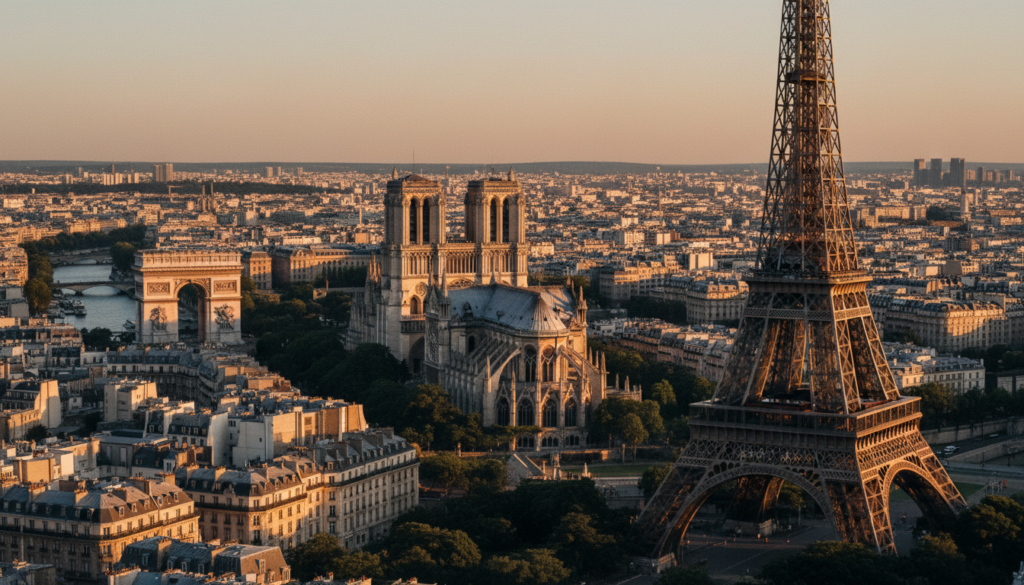
Paris is not just famous landmarks. It also has amazing architectural treasures that tell France’s history. These historic monuments show off incredible craftsmanship from different times. You’ll see beautiful stained glass chapels, grand tombs for heroes, and stunning opera houses that feel like stepping back in time.
The city’s architectural wonders are more than just pretty faces. They connect us to French royalty, revolutionaries, and art that shaped Europe. Visiting these sites helps us appreciate Paris’s role in architecture and history.
Sainte-Chapelle
Sainte-Chapelle is a breathtaking Gothic chapel from the 1200s. It was built for King Louis IX to hold precious relics, like the Crown of Thorns. Even though it’s smaller than Notre-Dame, its beauty is unforgettable.
The chapel’s 50-foot-tall stained glass windows are its crowning glory. These windows, from the 13th century, show vivid Biblical scenes. When sunlight hits them, the chapel glows with a heavenly light that leaves visitors speechless.
Getting in costs €19, and booking tickets in advance is a must. Long lines form all day, especially when it’s busy. Many Paris landmarks need planning, and Sainte-Chapelle is no exception.
Les Invalides and Napoleon’s Tomb
Les Invalides is a massive complex with many interesting features. The most famous is Napoleon Bonaparte’s tomb in a stunning domed building. The tomb is at the center of the dome, surrounded by beautiful details that honor Napoleon.
The complex is also known for its history. It was Louis XIV’s royal church and sheltered Allied pilots during World War II. It’s a place with a rich story.
Inside, you’ll find several military museums that tell the story of French military history. The Musée de l’Armée has a vast collection of armor, weapons, and artifacts. History lovers can spend hours exploring.
Panthéon
The Panthéon is a masterpiece of neoclassical architecture. It’s a mausoleum for famous French citizens who made big contributions to the country. Its grand dome is a landmark in the Latin Quarter.
Inside, you’ll see the tombs of famous people like Voltaire, Rousseau, Victor Hugo, and Marie Curie. The building’s interior is filled with stunning frescoes and architectural details that celebrate French history. There’s even a pendulum that shows the Earth’s rotation.
The crypt below has the tombs in a space that inspires thought. You can explore and learn about each person’s impact on French society. The monument is a mix of beauty and education.
Palais Garnier Opera House
Palais Garnier Opera House is a stunning example of Italian-style architecture from the late 1800s. It was commissioned by Emperor Napoleon III. Every part of the building is decorated with intricate details.
On your tour, you’ll see amazing spaces. The impressive marble staircase welcomes you with its design and railings. The Grand Foyer is breathtaking, with chandeliers, painted ceilings, and mirrors that create endless reflections.
You might see the Phantom of the Opera’s famous box. If you’re lucky, you can see the 1,979-seat auditorium. The famous painted ceiling by Marc Chagall adds modern art to the historic space.
Entry costs €15 for a basic ticket. The €8 upgrade for a multimedia guide is worth it for a 90-minute tour. Always check opening times, as the opera house sometimes closes for shows.
| Monument | Entry Fee | Key Feature | Era Built |
|---|---|---|---|
| Sainte-Chapelle | €19 | 50-foot stained glass windows from 13th century | 1200s (Gothic) |
| Les Invalides | Varies by museum | Napoleon’s elaborate tomb and military museums | 1600s (Baroque) |
| Panthéon | €11.50 | Mausoleum for distinguished French citizens | 1700s (Neoclassical) |
| Palais Garnier | €15 (€23 with guide) | Gold Grand Foyer and Chagall ceiling | 1860s-1870s (Second Empire) |
Most Famous Tourist Attractions in Paris Along the Seine
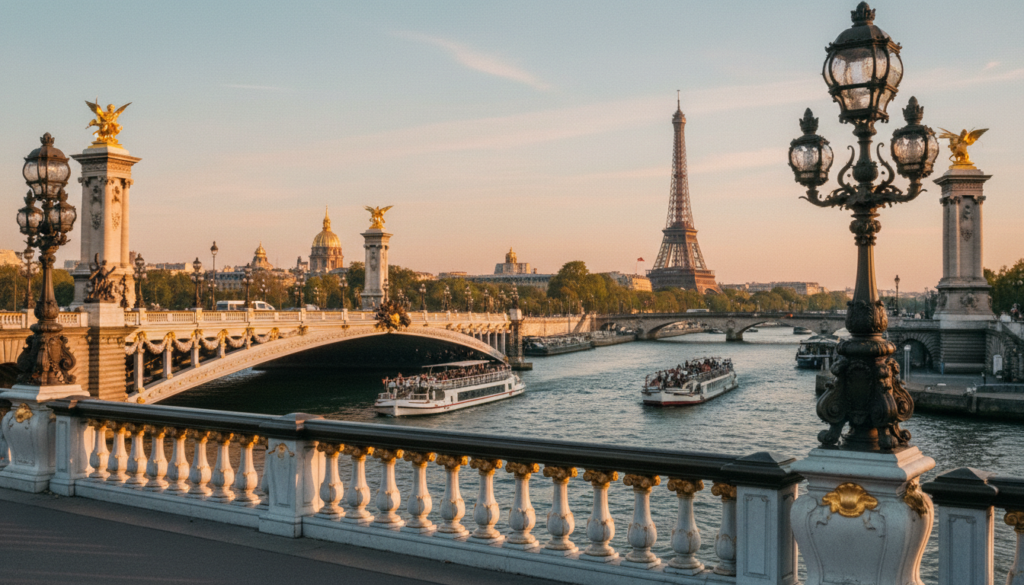
Along the Seine, you’ll find bridges, promenades, and cruises that show Paris’s romance. The river goes through the city center, linking neighborhoods and making great photo spots. You can walk historic bridges or enjoy boat rides.
The Seine connects many most famous tourist attractions in Paris along the Seine. You can walk, boat, or just admire the riverbanks’ beauty.
Pont Alexandre III
Pont Alexandre III is the most ornate bridge on the Seine. Built for the 1900 World’s Fair, it has Art Nouveau lamps and golden statues. It’s a favorite for photos and films.
The bridge links the Champs-Élysées with Les Invalides. Its design lets you see the river clearly, making it perfect for photos.
Pont Alexandre III has bronze sculptures and gilt decorations. The four 17-meter columns represent Fame, Science, Art, and Commerce. Visit at sunset for a golden glow.
Pont Neuf and Île de la Cité
Pont Neuf is Paris’s oldest bridge, built in 1607. It was new because it had no houses, offering river views.
The bridge connects to Île de la Cité, home to Notre-Dame and Sainte-Chapelle. This island is key to Paris’s history.
Walking here gives you amazing views. The bridge has twelve arches and 384 stone masks. Visit Square du Vert-Galant for a peaceful picnic.
Bateaux Mouches Sightseeing Cruise
Seine river cruises are a romantic way to see Paris. They start at €17 for a one-hour tour. The GoCity Pass includes a cruise, saving you money.
Dinner cruises cost €75-€100 and offer great views. The best times are before dinner or at sunset. You’ll see famous sights and learn about Paris’s history.
Try a canal boat ride for a unique experience. These tours go through tunnels, showing Paris’s hidden side. Cruises are a great way to see the city and take photos. Learn more about best city tours in Paris to enhance your river tour.
Berges de Seine Promenade
The Berges de Seine promenade turned old roads into paths for walking and picnics. It’s perfect for enjoying the river without traffic.
The most popular spots are between Musée d’Orsay and Pont de l’Alma. You’ll find gardens, cafes, and play areas.
- Floating gardens and outdoor exercise equipment
- Café terraces and seasonal pop-up restaurants
- Children’s play areas and climbing walls
- Evening entertainment and live music in summer
- Reading nooks with free book exchanges
In warm weather, Parisians enjoy picnics and games here. In winter, it’s quiet for walks. These paths connect attractions, offering scenic breaks.
Celebrated Parks and Gardens
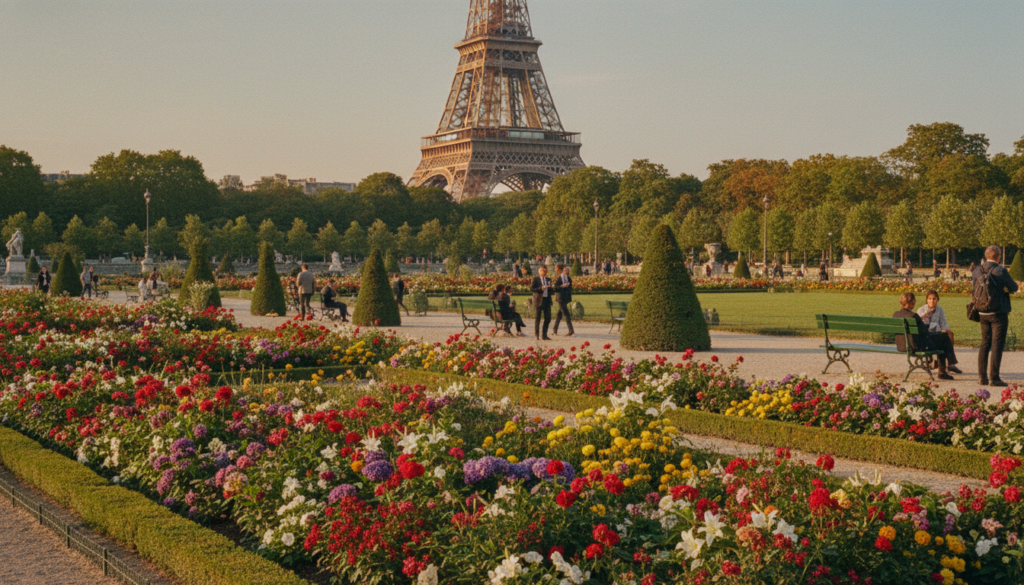
Paris’s parks and gardens are peaceful spots to enjoy the city’s beauty without spending money. You can find everything from formal French gardens to natural landscapes. People love to picnic, read, and enjoy the atmosphere in these green spaces.
Each garden has its own charm. Some have fancy fountains and sculptures, while others have wooded hills and lakes.
A Royal Garden in the Heart of the Left Bank
The Jardin du Luxembourg is a big green space around the Luxembourg Palace. It was made in the 17th century for Marie de’ Medici. Today, you can walk along shaded paths on warm days.
The Grand Bassin is the garden’s main attraction. Here, kids and adults sail model boats on the water.
The garden has over 100 statues and monuments. You can find a Statue of Liberty replica here. The flowerbeds change with the seasons, offering new sights and smells.
Formal Gardens Connecting the Louvre to Place de la Concorde
The Jardin des Tuileries connects the Louvre to Place de la Concorde. These gardens are known for their French design. You’ll see fountains, paths, and trees here.
On nice days, people relax by the fountains. You can sit and read or watch others enjoy their lunch.
There are spots to see the Eiffel Tower from the gardens. The mix of garden beauty and Paris views is great for photos. The paths are shaded, making it comfortable in summer.
A Natural Escape in the 19th Arrondissement
Parc des Buttes-Chaumont is different from Paris’s other gardens. It’s in the 19th arrondissement and has woods and trails. A lake and a dramatic butte are in the park.
The temple on the butte offers panoramic views across Paris. Climbing the paths is worth it for the views.
This park is a favorite among locals. Families picnic, and joggers run on the trails. It’s a beautiful contrast to the city’s other gardens.
Hidden Gardens Behind Historic Arcades
The Palais Royal Gardens are an elegant sanctuary behind arcades with shops and restaurants. They have a royal history but are now open to everyone. The paths and lawns are well-kept, and there are seasonal flowers.
The courtyard has a modern art installation of black-and-white columns. It’s a unique contrast to the old architecture.
After visiting the gardens, you can explore the arcades. You’ll find hidden shops and cafés. The Palais Royal Gardens are peaceful, making them a great place for a quiet afternoon.
Most Famous Tourist Attractions in Paris by Neighbourhood
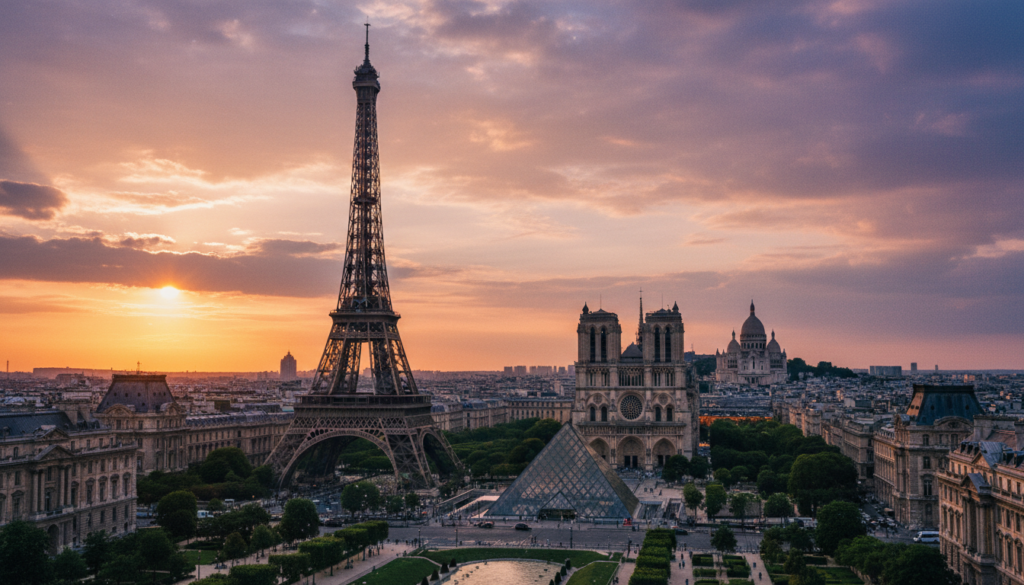
Paris is more than just famous landmarks. Its neighborhoods offer hidden gems and local traditions. Each district adds its own flavor to the city’s character.
Exploring Paris by district reveals layers of history and culture. You’ll find neighborhoods where architecture, cuisine, and shopping blend. This approach makes your visit a true cultural journey.
Historic Charm in the Marais District
Le Marais and Place des Vosges are in the 3rd and 4th arrondissements. They have narrow cobblestone streets and historic mansions. This area mixes old-world elegance with modern vibrancy.
Place des Vosges is Paris’s oldest planned square. It has elegant arcades and a peaceful garden. This spot is perfect for a quiet break.
Rue des Francs-Bourgeois is the main street. It’s lined with fashion boutiques and food shops. This street is great for finding new designers and trying local treats.
The Marais is perfect for wandering. You’ll find hidden courtyards and narrow passages. This mix of old and new makes it a top Paris destination.
Artistic Heritage on the Hilltop
The montmartre neighborhood was once a hilltop village. It attracted artists like Picasso and Van Gogh. The area still has a bohemian atmosphere.
Montmartre and Place du Tertre keep the artistic tradition alive. You can visit Sacré-Coeur Basilica for free. The basilica offers stunning views of Paris.
Place du Tertre is where artists sell their work. It’s a lively spot with portrait artists and landscape painters. Montmartre is worth exploring for its unique streets and character.
Montmartre is hilly, but there’s a funicular to Sacré-Coeur. This makes the hilltop accessible to everyone.
Walking tours in Montmartre are great. They show you secret streets and local traditions. Food tours let you taste the neighborhood’s culinary delights.
Literary Legacy on the Left Bank
Saint-Germain-des-Prés is known for its literary history. It’s where writers and philosophers like Hemingway and Sartre met. The area is famous for its cafes.
The district has wide boulevards and high-end shopping. It’s elegant and sophisticated. The historic church gives the area its name.
Today, Saint-Germain-des-Prés offers luxury and culture. You can enjoy coffee where existentialists debated, then shop or explore art galleries. It’s a unique Parisian experience.
Student Energy and Academic Tradition
The Latin Quarter and the Sorbonne are full of student energy. The Sorbonne has educated students since the 13th century. This area is rich in academic tradition.
Bookshops line the streets, including Shakespeare and Company. This bookstore has welcomed writers since the 1950s. It’s a place for reading and discovery.
The Latin Quarter has a bohemian atmosphere. It’s affordable and lively, with jazz clubs and theaters. Walking here connects you to scholars and thinkers who shaped Western culture.
The area’s narrow streets are perfect for exploring. You’ll find hidden squares and gardens. It’s ideal for experiencing Parisian neighborhood life.
Grand Avenue of Paris
The Champs-Élysées is Paris’s most famous street. It’s a grand boulevard with shops, restaurants, and theaters. The champs-élysées boulevard shows off Parisian grandeur.
The champs-élysées shopping district has international brands. But it’s still worth visiting for its beauty and atmosphere. Evening lights make it magical.
Royal Palaces and Grand Estates
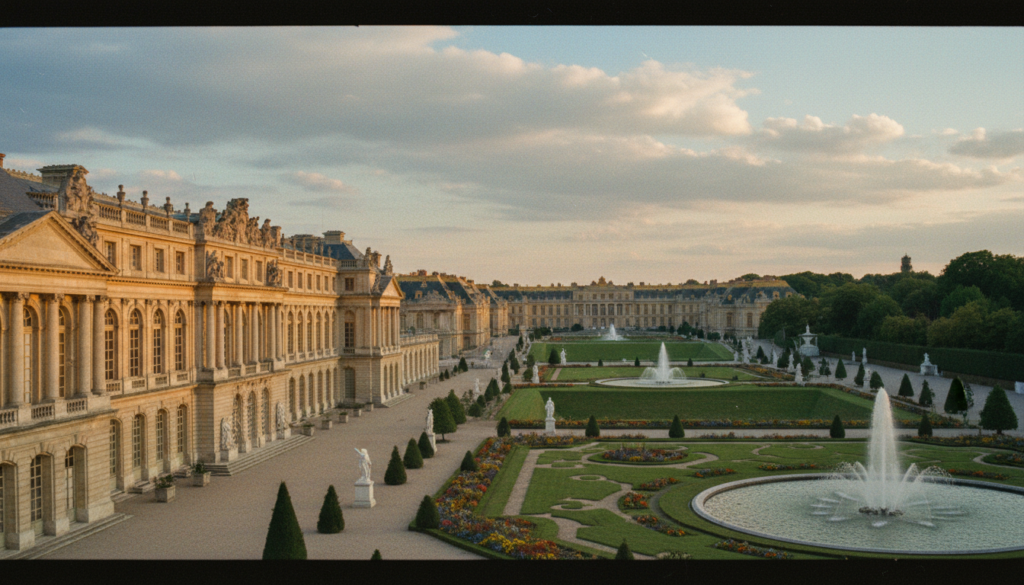
Paris isn’t the only place with grandeur. Royal palaces and grand estates around it offer a peek into France’s aristocratic past. These spots are top picks for day trips from Paris, showcasing French architecture and design. You’ll see everything from gold-dripping baroque palaces to medieval fortresses that guarded kings.
These palaces and estates near Paris tell tales of power, luxury, and art from different dynasties. Each place gives a glimpse into how French royalty lived, worked, and entertained guests in opulent settings.
Palace of Versailles
The Palace of Versailles is a Baroque masterpiece that shows the French monarchy’s peak. It started as a hunting lodge but grew under Louis XIV into a grand royal seat that amazed Europe.
Visiting, you’ll marvel at the Hall of Mirrors, with 357 mirrors reflecting light from 17 windows. This is where the Treaty of Versailles was signed in 1919, ending World War I. The royal apartments are filled with gold leaf, frescoes, and details that took thousands of craftsmen to complete.
The King and Queen’s chambers offer a look into royal life, including Marie Antoinette’s bedroom where she gave birth. The formal gardens stretch far, with fountains, sculptures, and design that shows 17th-century French grandeur.
Marie Antoinette’s hamlet, built in 1783, contrasts the palace’s formality. It was her private retreat for entertaining friends, away from court life. The charming cottages, farm, and lake created a perfect countryside escape.
There are many ways to see this iconic spot. Taking the train from Paris costs about €4 each way, making it an affordable adventure. You can buy timed tickets with full access, including the gardens, to avoid long queues.
Many prefer palace of versailles tours for convenience. These tours include transportation and skip-the-line access, offering historical context. Day trips usually last 4-6 hours and handle logistics for you.
The palace hosts special events all year, adding magic to your visit. The Fêtes Galantes in June turns the Hall of Mirrors into a ballroom for an elegant evening. The Grand Masked Ball is an all-night baroque party where guests dress up for an unforgettable night.
Château de Fontainebleau
South of Paris, Château de Fontainebleau offers a royal experience without the crowds. It served French monarchs for over 700 years, showing the evolution of French royal history.
The château’s architecture reflects different dynasties, from Renaissance to classical styles. You’ll see ornate galleries, chapels, and apartments that show the changing tastes of French kings. Each ruler left their mark on the château.
Château de Fontainebleau offers a more intimate visit than Versailles. You can explore at your own pace without the crowds. The forest nearby has beautiful trails for further exploration.
Château de Vincennes
On Paris’s eastern edge, Château de Vincennes is a medieval fortress. It protected French kings and served as a military stronghold and royal dwelling.
The château’s architecture includes a 50-meter-high keep, thick walls, and a moat. Climbing the tower offers views of eastern Paris. The Sainte-Chapelle de Vincennes is a Gothic beauty, similar to the famous one on Île de la Cité.
Château de Vincennes played many roles in French history, from royal residence to prison. Today, it offers insights into medieval life and defense. It’s less touristy than other palaces, perfect for history lovers.
Palais Royal and Its Historic Arcades
In central Paris, the Palais Royal and its historic arcades offer an elegant oasis near the Louvre. The palace has beautiful gardens and classical architecture from the 17th century.
The arcades house boutique shops, restaurants, and cafés where Parisians gather. You’ll find antique dealers, vintage fashion, and specialty stores. The atmosphere is refined and peaceful.
The contemporary art installation by Daniel Buren has become a favorite since 1986. The black-and-white striped columns fill the courtyard, contrasting with the classical surroundings. You can climb on them, photograph them, and enjoy the contrast.
The gardens are a tranquil retreat for relaxation. Parisians read, chat, or escape the city’s hustle here. The Palais Royal offers accessible royal grandeur without needing a day trip. You can visit it between other Paris attractions and enjoy aristocratic ambiance in the capital’s heart.
Most Famous Tourist Attractions in Paris for Culture and Entertainment
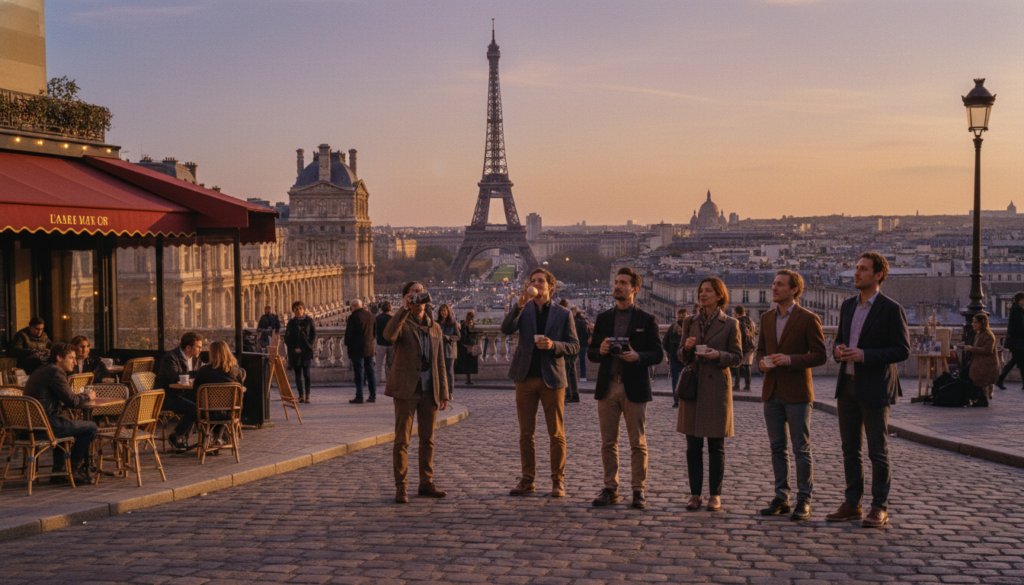
Paris is full of cultural and entertainment spots beyond the usual sights. You can see world-famous cabarets or explore underground sites with dark histories. These places offer a peek into French culture and history, making Paris a cultural hub for centuries.
Legendary Cabaret Performance
The Moulin Rouge in Montmartre has been around since 1889. It’s a famous cabaret theater. Shows are at 9 p.m. and 11 p.m., making for late nights. Tickets start at €118 per person for the show with champagne, a big investment in Parisian fun.
At the Moulin Rouge, you’ll see big dance numbers with fancy costumes. The female dancers perform mostly topless, a French cabaret tradition. But, the dancing is simple. You’re there for the costumes and history, not complex dance moves.
Between dance numbers, you’ll see two-person acts with real talent. These acts add variety and show off impressive skills. Important advice: skip the dinner show to avoid expensive, cramped tables for nearly four hours.
Enjoying dinner at a separate restaurant before the show is better. While Moulin Rouge is a must-see for some, it’s not essential for everyone visiting Paris.
Underground Ossuary Experience
The Catacombs of Paris take you 20 meters below the city streets. They’re historic tunnels that now hold the bones of six million people. It’s a unique attraction for those interested in mortality and urban history.
In the 1700s, Paris’s cemeteries were overcrowded and unsanitary. Authorities moved remains to these tunnels to solve the problem. Today, bones and skulls are arranged in macabre yet beautiful displays.
The tunnels are dark and damp. This attraction might not appeal to everyone. But for history buffs and those open to the unusual, it’s unforgettable. Skip-the-line tickets are available and highly recommended to avoid long waits.
Historic Cemetery and Final Resting Place
Père Lachaise Cemetery is Paris’s largest and most visited cemetery. It attracts about 3.5 million visitors each year. The cemetery is a parklike setting with over 70,000 plots and the graves of many famous people.
Visitors often leave lipstick kisses on Oscar Wilde’s tomb. Jim Morrison of The Doors also has a grave here. Other notable residents include composer Frédéric Chopin and writer Marcel Proust.
Walking through Père Lachaise feels like walking through history. The elaborate tombs and monuments create a beautiful outdoor sculpture garden. The peaceful paths and artistic memorials make it one of the world’s most beautiful cemeteries.
Digital Art Innovation
The Atelier des Lumières immersive art experience offers a new way to see famous artworks. It’s in a former foundry in the 11th arrondissement. Famous paintings are projected on every surface, with music to match.
This technology creates an immersive experience. You can step into paintings by Van Gogh, Monet, and others. The images and music change around you, making art exciting for all ages. Each exhibition lasts several months before changing to new artists.
This attraction is great for families and those who find museums less engaging. The dynamic presentations make art fun for everyone. You’ll spend about an hour inside, but you can stay longer to see more.
Family-Friendly World-Famous Attractions
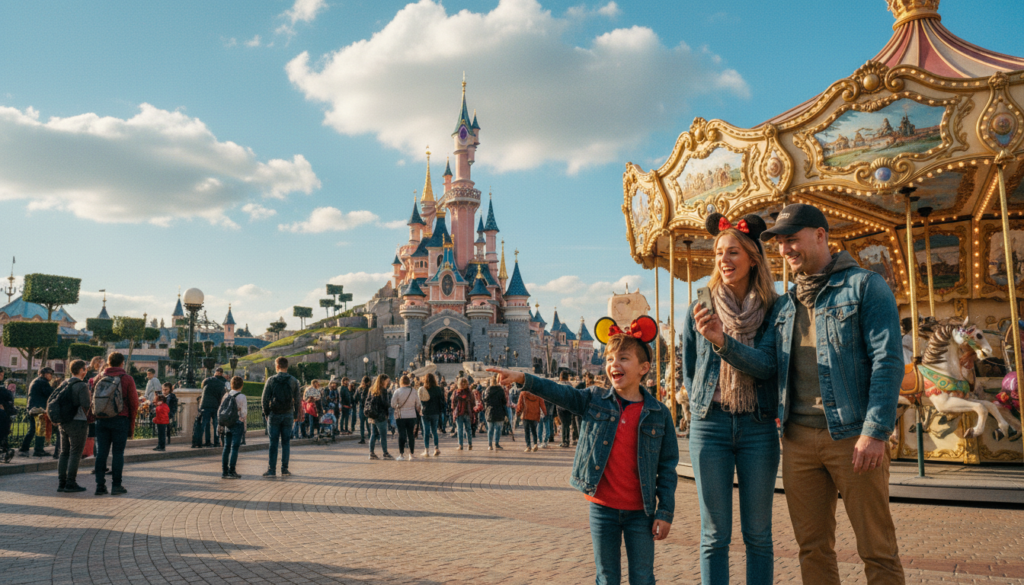
Paris is more than just adult spots. It has fun places for kids and parents to enjoy together. These attractions mix fun with learning, making memories for the whole family. You’ll find everything from theme parks to science museums, all designed for kids.
Planning your trip is easier when you know what’s best for kids. These places offer fun for all ages and interests.
Magic and Adventure at Europe’s Premier Disney Destination
Disneyland Paris is a top spot for families near Paris. It’s 20 miles from the city center. You’ll find Disneyland Park and Walt Disney Studios Park, with rides and shows for everyone.
Getting to Disneyland Paris is easy. Take the RER A train from Paris to Marne-la-Vallée/Chessy station. It’s a 40-minute ride. Tickets are cheaper than in the US, making it a great deal for visitors.
Disneyland Paris has its own magic. You can see shows, meet characters, and ride unique rides. Buying tickets online saves time and money.
Interactive Learning at Europe’s Largest Science Museum
The Cité des Sciences et de l’Industrie makes learning fun for everyone. It’s in Parc de la Villette, with interactive exhibits on space and more. Kids can do experiments and learn by doing.
The planetarium shows amazing space views. The Géode is a mirror sphere with an IMAX theater. These shows make science exciting for kids.
The Cité des Enfants areas are for kids aged 2-7 and 5-12. They’re designed for hands-on learning. It’s different from museums where you just look.
Classic Amusement in Beautiful Garden Settings
Jardin d’Acclimatation is a historic park with modern fun. It’s on the northern edge of the Bois de Boulogne. There are rides for all ages and animal exhibits in beautiful gardens.
The park has over 40 attractions, including carousels and roller coasters. There are pony rides, a small farm, and adventure playgrounds. It’s fun for all ages.
Weekends have special activities and workshops. The park is easy to get to by Métro. It’s a short walk from Les Sablons station.
Underwater Wonders Near the Eiffel Tower
The Aquarium de Paris is in the Trocadéro Gardens. It has over 10,000 fish and invertebrates. The highlight is France’s largest shark tank.
There are touch pools for kids to interact with sea creatures. Daily feeding shows teach about marine life. The jellyfish displays are amazing for all ages.
The aquarium is close to the Eiffel Tower. It’s a great place to visit after seeing the tower. It’s indoors, so it’s perfect on rainy days.
| Attraction | Best Age Range | Travel Time from Central Paris | Key Features | Typical Visit Duration |
|---|---|---|---|---|
| Disneyland Paris | All ages (ideal 3-12) | 40 minutes by RER | Two theme parks, classic characters, unique European attractions | Full day (8-10 hours) |
| Cité des Sciences | 2-15 years | 25 minutes by Métro | Interactive exhibits, planetarium, IMAX theater, hands-on learning | Half to full day (3-6 hours) |
| Jardin d’Acclimatation | 2-12 years | 15 minutes by Métro | 40+ rides, animal exhibits, gardens, workshops | Half day (3-4 hours) |
| Aquarium de Paris | All ages (ideal 3-10) | 10 minutes by Métro | 10,000+ marine animals, shark tank, touch pools, feeding shows | 2-3 hours |
These places add variety to your Paris trip, avoiding museum fatigue. They offer fun and learning for kids. Getting there is easy, even with strollers.
How to Plan Your Visit to the Most Famous Tourist Attractions in Paris
Planning your Paris trip smartly makes it unforgettable. With the right preparation, you can save money and avoid long lines. You’ll also find it easy to get around.
Paris Museum Pass and City Cards for Savings
The Paris GoCity Pass comes in 2-, 3-, 4-, or 6-day options. It gives you unlimited access to attractions, tours, and a Seine River cruise. The Paris Museum Pass lets you visit over 60 museums and monuments for less.
Think about how many places you want to see before you buy. This way, you’ll really save money.
Best Times of Year to Avoid Peak Crowds
Go in the shoulder seasons (April-May or September-October) for nice weather and fewer people. Try to get to places before 9 a.m. or after 6 p.m. for less crowds. Winter is the quietest time, but days are shorter.
Skip-the-Line Tickets and Advance Booking Strategies
Book tickets for the Eiffel Tower, Louvre, Sainte-Chapelle, and Musée d’Orsay weeks in advance. These spots get very busy during peak times. Skip-the-line tickets are a good investment.
Combo tickets might be easier to get last-minute if standard tickets are sold out.
Getting Around Efficiently with the Métro and RER
The Métro covers central Paris, while the RER goes to suburbs like Versailles and Disneyland Paris. Get multi-day passes for easy travel. Use transit apps to plan your route and make the most of your time.
FAQ
How far in advance should I book tickets for the Eiffel Tower?
Book your Eiffel Tower tickets well in advance. Aim for several weeks to months ahead, especially in peak season (June-August) or holidays. Timed entry tickets often sell out, especially for the summit. Try combo tickets with other experiences like Seine River cruises for better availability.
Is the Paris Museum Pass worth buying?
The Paris Museum Pass is worth it if you plan to visit many museums and monuments. It offers access to over 60 attractions at a discount. Compare the cost of individual tickets to the pass price. The pass also saves time with skip-the-line access. Consider the Paris GoCity Pass for more value.
Can I visit Notre-Dame Cathedral after the 2019 fire?
Yes, Notre-Dame Cathedral reopened in December 2024 after restoration. You can see the interior, Treasury’s relics, and medieval beauty. Book free time slots in advance for your visit.
What’s the best way to get to the Palace of Versailles from Paris?
The RER C train is the most affordable way to Versailles, costing about €4 each way. It takes about 40 minutes. Book a day tour for convenience, but it costs more. Purchase timed tickets for full access, as lines can be long.
How long does it take to visit the Musée du Louvre?
The Louvre is vast, so a full day or more is needed. Most visitors spend 2-4 hours. Join a guided tour like “Closing Time at the Louvre” for highlights and to avoid crowds. Book timed entry tickets well in advance.
Are Seine River cruises worth doing in Paris?
Yes, Seine River cruises are relaxing and romantic. Standard cruises start at €17. The best times are before dinner or sunset. Dinner cruises offer good views, and night cruises illuminate Paris beautifully.
Which Paris museum is better for Impressionist art—the Louvre or Musée d’Orsay?
Musée d’Orsay is better for Impressionist art. It houses the world’s finest collection. The museum is smaller, allowing you to see nearly the entire collection in a couple of hours. Timed entry tickets cost €16, and booking in advance saves time.
What’s the best time of day to visit Montmartre and Sacré-Cœur Basilica?
Visit early morning (before 10 a.m.) or at sunset for fewer crowds. Sunset offers magical light and views. Be prepared for hilly terrain and staircases, and consider the funicular if needed.
Do I need to book tickets in advance for Sainte-Chapelle?
Yes, book Sainte-Chapelle tickets in advance. Entry costs €19, and advance booking skips long lines. The Gothic chapel features stunning stained glass windows, making it a popular attraction.
Is visiting the Moulin Rouge cabaret show worth it?
Visiting the Moulin Rouge is worth it if you’re interested in cabaret history. Tickets start at €118 for the show with champagne. The show features spectacular costumes and dance numbers. Dinner cruises are expensive and cramped.
What should I expect when visiting the Catacombs of Paris?
The Catacombs of Paris are a unique experience. You’ll descend 20 meters into tunnels with six million bones. The environment is dark and damp. Book skip-the-line tickets in advance to avoid long waits.
Can I see everything at the Palace of Versailles in one day?
You can see the Palace of Versailles’ highlights in one day. Visit the Hall of Mirrors, royal apartments, and gardens. Marie Antoinette’s hamlet is also worth seeing. Purchase timed tickets for full access and wear comfortable shoes.
Which Paris neighborhood is best for first-time visitors?
Le Marais is excellent for first-time visitors. It offers narrow streets, historic architecture, and trendy boutiques. Place des Vosges is a great photo spot. Montmartre and the Champs-Élysées are also must-sees.
How much time should I allocate for visiting the Arc de Triomphe?
Allocate 1-2 hours for the Arc de Triomphe. Climb the 284 steps for panoramic views. The museum inside explains the monument’s history. The views are less crowded than the Eiffel Tower.
Are the parks and gardens in Paris free to visit?
Yes, Paris’s parks and gardens are free. Jardin du Luxembourg, Jardin des Tuileries, and Parc des Buttes-Chaumont are great for relaxation. They offer a peaceful escape from tourist areas.
What’s the best way to avoid crowds at the Louvre?
Visit early morning or late afternoon/early evening to avoid crowds. Explore the Richelieu Wing and Napoleon III Apartments instead of the Mona Lisa. Book timed entry tickets in advance to skip long lines.
Is Disneyland Paris easy to reach from central Paris?
Yes, Disneyland Paris is easy to reach. Take the RER A train to Marne-la-Vallée/Chessy station. The journey takes about 40 minutes. It’s feasible as a day trip.
What should I see at the Musée de l’Orangerie?
See Monet’s Water Lilies murals at the Musée de l’Orangerie. The museum is intimate and showcases the murals in ideal lighting. Tickets cost €12.50, and you can see the collection in about an hour.
Can I climb to the top of the Eiffel Tower on foot?
Yes, you can climb the Eiffel Tower on foot to the second level. This option is more affordable. However, you must take an elevator from the second level to the top. Climbing tickets are less expensive but still require advance booking.
What’s the best time of day to visit Montmartre and Sacré-Cœur Basilica?
Visit early morning or at sunset for fewer crowds. Sunset offers magical light and views. Be prepared for hilly terrain and staircases, and consider the funicular if needed.
What family-friendly attractions does Paris offer beyond Disneyland?
Paris offers several family-friendly attractions. The Cité des Sciences et de l’Industrie has interactive exhibits. The Jardin d’Acclimatation is a historic amusement park. The Aquarium de Paris features over 10,000 fish. These attractions provide engaging experiences for children.
How much does it cost to visit the major Paris attractions?
Individual ticket prices vary. The Eiffel Tower starts at €17-€28. Musée du Louvre costs €22. Musée d’Orsay is €16. Sainte-Chapelle is €19. Seine River cruises start at €17. Money-saving passes like the Paris Museum Pass can save you money if you visit multiple attractions.
What’s the difference between the Métro and the RER in Paris?
The Métro serves Paris proper with frequent stops. The RER connects Paris to suburbs and airports with fewer stops. Use the RER for destinations like Versailles and Disneyland Paris. Both systems are easy to use and affordable.
Is there a hidden canal boat experience in Paris?
Yes, Paris offers a unique canal boat experience. It takes you underground through historic tunnels. This option reveals the city’s infrastructure and offers a different sightseeing experience.
What makes Saint-Germain-des-Prés special?
Saint-Germain-des-Prés is known for its literary history and famous cafes. It embodies Parisian intellectual and artistic heritage. The area offers art galleries, antique shops, and fine restaurants.
How long should I spend in Paris to see the main attractions?
Plan for at least 4-5 days to see the main attractions. This allows time for iconic landmarks, museums, and a Seine River cruise. First-time visitors might manage in 3 days, but return visitors should plan for a week or more.
What’s included in a typical Montmartre walking tour?
Montmartre walking tours include Sacré-Cœur Basilica, Place du Tertre, and charming streets. Specialized tours reveal secret spots. Food tours let you experience Montmartre’s culinary offerings.
Can I take photos inside Paris museums?
Photography policies vary by museum. At the Louvre, non-flash photography is generally allowed. Check specific museum policies before your visit. Respect “no photography” signs and never use flash.
What’s the best strategy for visiting Paris if I only have two days?
Focus on must-sees with only two days. Day one: Eiffel Tower, Jardin des Tuileries, and a Seine River cruise. Day two: Montmartre, Arc de Triomphe, and Musée d’Orsay. Book all tickets in advance and use the Métro to save time.