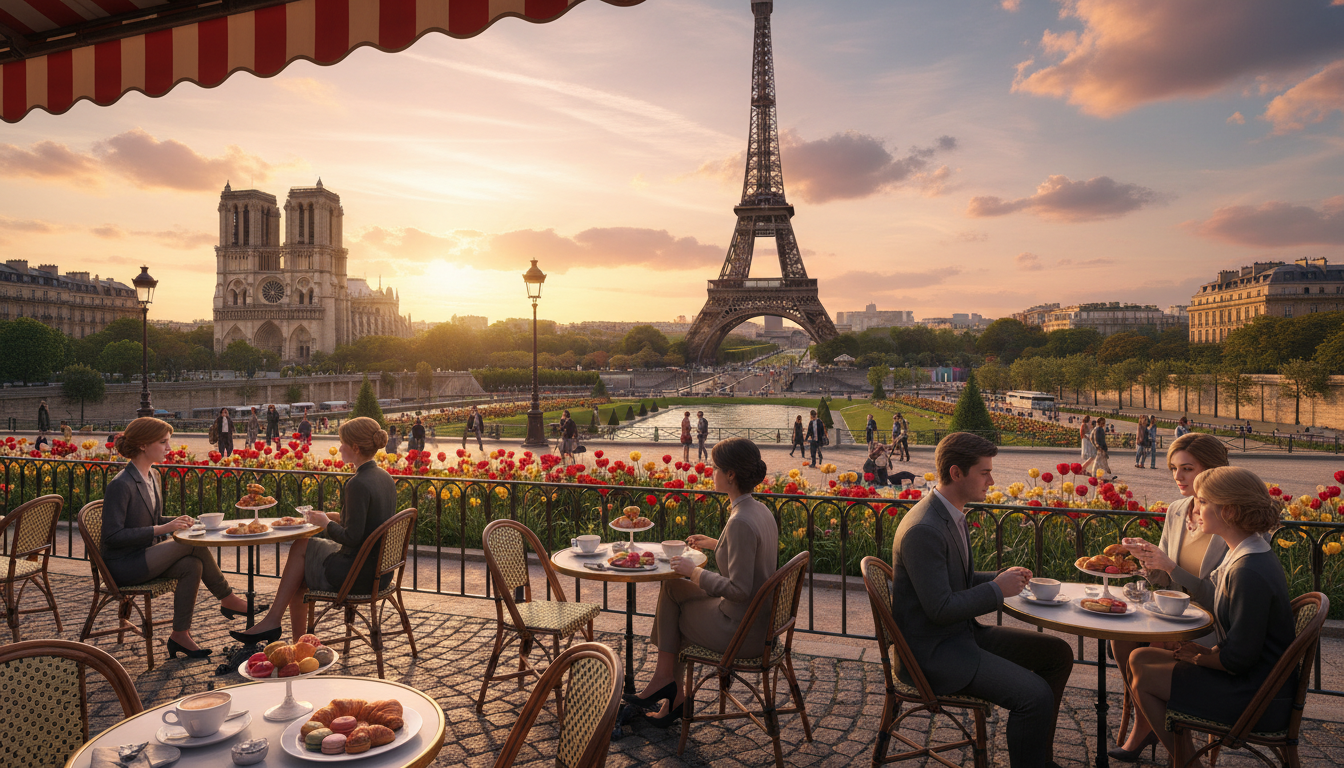
Ever wondered which stops will actually make a trip feel like a true Paris moment? I ask that because travel can become a hurry of photos and lines. I want you to leave with calm memories, not just checkmarks.
This is a curated list — a blend of iconic stops and quieter wins that make the city feel lived-in. I’ll set expectations up front: what to book, what to do on the fly, and how to skip the worst waits.
My approach balances big anchors like museums and towers with neighborhoods, gardens, and one slow afternoon. I preview what each entry gives you: what it is, why it matters, best time to go, and the one tip I wish I’d had sooner.
Key Takeaways
- You’ll get a short list of top spots that feel worth the time.
- I recommend booking high-demand entries ahead to save hours.
- Mix major sites with local neighborhoods for a richer trip.
- Expect crowds; choose where hype matches reward.
- Plan one unhurried afternoon to make the visit personal.
Why Paris Belongs on Every Traveler’s Bucket List Right Now
You can go from monumental views to a tiny bakery corner in less than an hour—and that shift feels special. That contrast is why I still call this a must-do trip.
Plan with space, not a stopwatch. Book timed entries for big museums and towers so you spend time enjoying, not queuing. Pick one major anchor each day, add a long walk, and leave an hour for a café stop that has no agenda.
This city sits among the world’s most visitor-friendly sets of sights, but you can’t “do it all” in a few days. Group stops along the Seine to cut commute time and make more room for serendipity.
Quick reality check: crowds are normal because the place earns its hype. Your biggest win is choosing the right hour—early mornings or late afternoons—rather than hoping to find it empty.
What this list covers: views, museums, neighborhoods, gardens, and day trips. Use it to pick the few things that fit your pace and budget, then leave time for the small moments that become the best memories.
Eiffel Tower Views That Never Get Old
The tower offers a clear promise: a view that changes with light and mood, every visit. I still recommend you pick one level and savor it rather than racing to check every box.
Quick facts: built for the 1889 World’s Fair, it tops out at 324 meters and has three visitor levels. You can take the stairs to lower levels or the elevator to the summit. Typical ticket prices run roughly €23.10–€36.10 depending on how high you go.
Book timed tickets ahead so you don’t waste hours in line; that choice gives you more wandering time afterward. At night the tower sparkles for five minutes at the top of every hour until 1 AM—time your visit for the show if you can.
“Trocadéro gives you that full-frame shot; bridges over the Seine give you cinematic motion.”
For experiences: second floor is great for sweeping views and photos. The summit is smaller but comes with a champagne bar and a glass feeling that feels celebratory. Expect security lines and crowds—go early or late to keep your day calm.
- Stairs vs elevator: save energy if you want more walking later.
- Photo spots: Trocadéro and Seine bridges for different angles.
- Night tip: arrive before dusk for daylight and the sparkle at night.
Louvre Museum Essentials for First-Time Visitors
The Louvre can overwhelm, but a small plan turns it from maze to highlight reel.
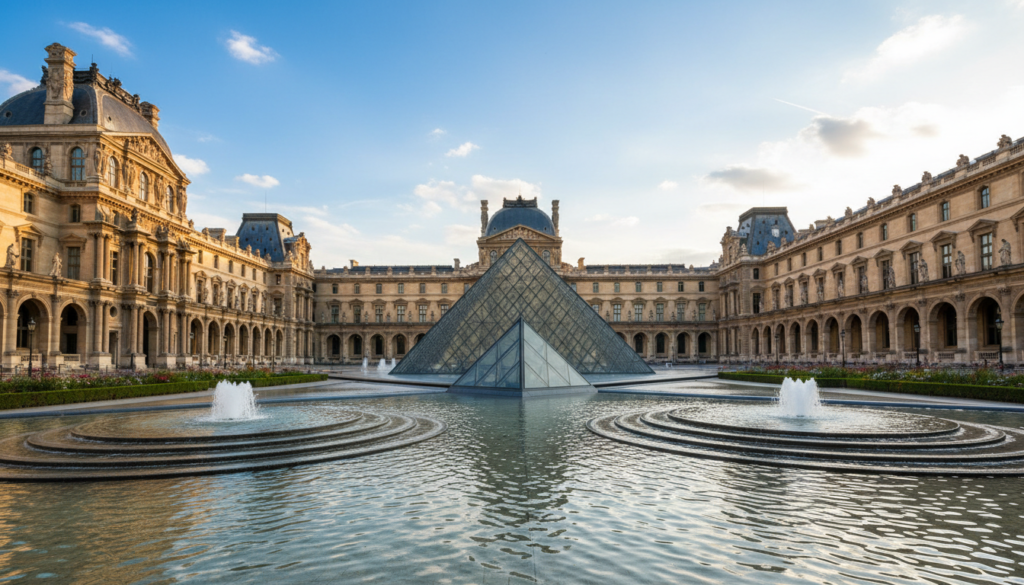
I treat the louvre museum as a place you savor, not conquer. Pick one wing that excites you, choose two must rooms, then allow a surprise detour. That way you see anchor works without museum fatigue.
Practical notes: the complex covers roughly 60,000+ sqm and was once a royal residence. It is closed every Tuesday. Standard tickets run about €22 when bought through official channels, so book your entry to keep the day tidy.
The mona lisa is worth a quick stop—yes, go once, but expect crowds and watch for pickpockets near the viewing area. Treat her as a blink-and-smile moment, then move on to quieter galleries.
- Strategy: one wing + one surprise room + a café break.
- Timing: arrive early or late to avoid peak crowds.
- Safety: keep bags zipped and consult staff if unsure.
“See one masterpiece slowly rather than twenty in a blur.”
| Need | Why it matters | Tip |
|---|---|---|
| Entry ticket | Keeps your schedule tight | Book official timed slots (~€22) |
| One wing focus | Prevents overwhelm | Choose based on era you like |
| Mona Lisa stop | Iconic but crowded | Quick visit; guard your belongings |
| Outdoor reset | Helps your brain absorb art | Walk to nearby gardens after visiting |
Notre-Dame Cathedral and Île de la Cité Must-Sees
Walk onto Île de la Cité and you step into the oldest layer of the city—where streets fold into centuries.
Notre-Dame dominates the island skyline. Check official updates before you go so you know what interior access is open and what areas are viewable from the outside.
For visitors who can enter: prioritize the façade details, the rose windows, and the quiet corners that reveal Gothic craft. If entry is limited, treat the exterior as the main event—look up at the flying buttresses and the sculpted portals.
Slow the walk. Stroll to nearby bridges like Pont Neuf, pause on a riverside bench, and let the moment land. This place rewards being, not racing.
Quick plan:
- If inside: focus on key architectural highlights first.
- If outside: photograph the façade, then walk toward the Louvre or Orsay along the Seine.
- Either way: leave time to notice small details—stained glass, carved figures, hidden doorways.
“Some moments on the island are quiet gifts—take one and keep it.”
| What to do | Why it matters | Tip |
|---|---|---|
| Façade study | Shows Gothic storytelling | Arrive early for softer light |
| Riverside walk | Connects to major museums | Link to Louvre/Orsay for an efficient route |
| Detail hunting | Reveals craft like stained-glass & carvings | Look for small sculpted scenes and hidden symbols |
This is one paris moment that asks you to slow down; take it.
Arc de Triomphe and Champs-Élysées for Classic Paris Energy
Climbing the Arc offers a payoff few monuments give: a layered skyline that rewards the short effort.
The arc triomphe sits at Place Charles de Gaulle, commissioned by Napoleon and planted proudly at the end of the Champs-Élysées.
Visitors can climb to the top for sweeping views; official tickets run about €16. Use the underground tunnel to reach the monument—heavy traffic makes crossing at street level risky.
The avenue itself stretches roughly 1.9 km and is about 70 meters wide. Walk from the Arc down the Champs-Élysées toward Place de la Concorde for a half-day that feels iconic but unhurried.
People-watch, duck into a single independent shop or café, then move on. That keeps the buzz without turning your whole day into mall time.
Timing tip: go late afternoon for cleaner light and a distant eiffel tower silhouette from the platform. It gives better photos and softer crowds.
“The view is the reward; the photo is only the souvenir.”
| What | Why it matters | Quick tip |
|---|---|---|
| Climb the monument | Best panoramic views of the city | Buy tickets online (~€16) |
| Use the tunnel | Safety — heavy traffic | Enter via pedestrian underpass |
| Walk the avenue | Classic sights and people-watching | Limit shopping to one stop to save time |
Seine River Cruise: The Most Relaxing Way to See Paris
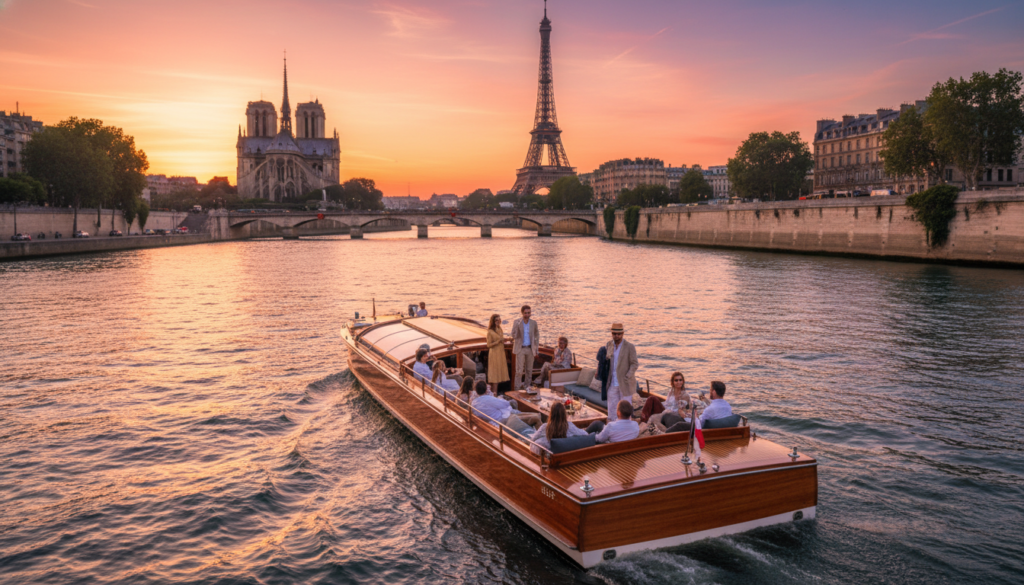
A slow glide on the water is often the simplest way to stitch the city’s landmarks into a single, restful hour. I recommend a Seine river ride when you want a break from walking but still want strong views of major sites.
The choices matter. A one-hour sightseeing river cruise is great for first-timers and families. Dinner cruises suit romance and special evenings. Night cruises add sparkle when monuments light up and reflect on the water.
What you’ll pass: the Eiffel Tower, Notre-Dame area, Musée d’Orsay, and the Louvre—each seen from a relaxed angle that helps you understand the layout fast.
Consider the Batobus if you want a hop-on, hop-off water bus that doubles as transport. It cuts walking and gives the same river experience at a lower cost.
Timing tip: aim for golden hour or early night; the light and reflections change everything. Board from popular piers—arrive 20 minutes early to avoid crowd stress and get a good seat.
“A cruise is the best reset button: your feet rest while the city parades by.”
- Best for a calm overview: daytime one-hour river cruise.
- Best for romance: dinner cruise at dusk.
- Best for practical travel: Batobus as a river shuttle.
Musée d’Orsay for Impressionist Art Lovers
If you love Impressionist light and human-sized galleries, Musée d’Orsay often feels like the sweet spot on any art day.
I love that the building is a restored Beaux-Arts railway station—Gare d’Orsay—so the space itself is part of the visit. The collection focuses on Monet, Van Gogh, Degas, and Renoir, with paintings that reward slow looking.
Practical notes: the museum is closed every Monday. Standard tickets run about €16 through official channels, and entry is free the first Sunday of each month.
My touring tip: pick a theme—Impressionists, portraits, or sculpture—and give yourself time to sit and actually see one work. The giant clock windows also offer memorable city views and quiet photo moments.
Pair it with a walk along the Seine or a short cruise afterward; the location makes that easy and relaxing.
“The building frames the art—sometimes the view through the clock is the most surprising masterpiece.”
| What | Why it matters | Quick tip |
|---|---|---|
| Focus on Impressionism | Best for color and light studies | Choose 3 painters to study deeply |
| Clock/window views | Unique architectural photo spot | Visit mid-afternoon for warm light |
| Opening days & tickets | Planning avoids wasted time | Buy online (~€16); avoid Mondays |
Musée de l’Orangerie and Monet’s Water Lilies
If you want a deep art moment without a full-day commitment, this little museum delivers.
Musée de l’Orangerie sits inside the Tuileries gardens, and its main draw is Monet’s Water Lilies—large panels that wrap the room and ask you to slow down.
The scale and soft light make each painting feel immersive. Stand in the center, breathe, and give yourself more than a glance; the experience is about quiet time, not a quick photo stop.
Logistics are simple: standard tickets run around €12.50 and entry is free the first Sunday of the month. In busy seasons you can decide whether to book ahead or risk a short wait.
- Why go: small space, big emotional impact.
- Pair it with: a walk through the Tuileries and a bench break afterward.
- Planning tip: pick a calmer hour so you can practice slow-looking without shoulder-to-shoulder crowds.
“Art, garden, and a stroll—this loop feels like the heart of Paris.”
Musée Rodin and the Sculpture Garden Escape
Musée Rodin offers a rare pause: sculptures set among quiet lawns where you can actually breathe. I call it a “breathe out” museum—less racing, more wandering.
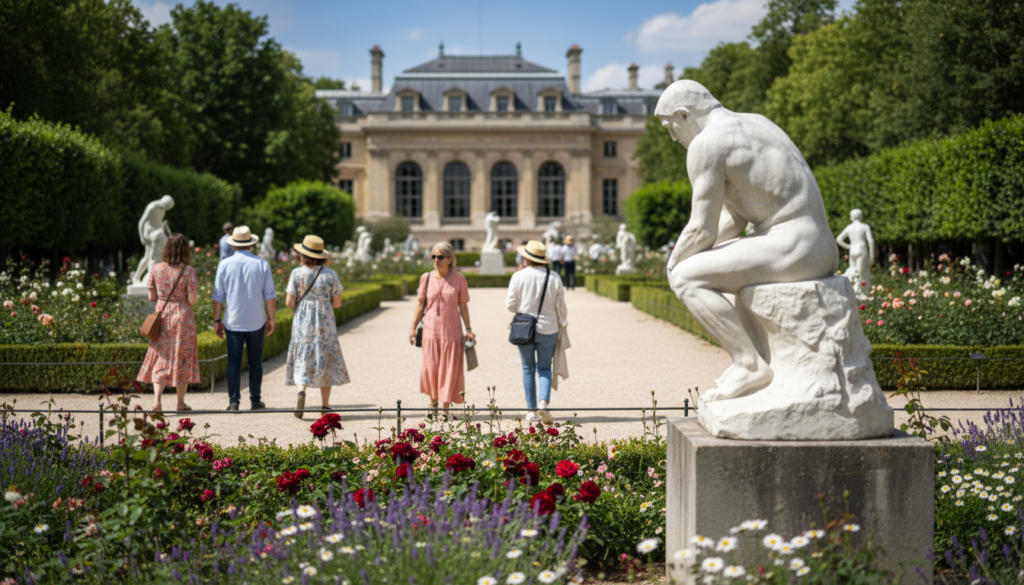
The garden is the show’s heart. Bronze figures sit beside trimmed hedges and sunlit paths. That mix of sculpture and green makes the gardens feel restorative on a busy trip.
Look for famous works like The Thinker and The Kiss. Then slow down and notice smaller studies and drafts—those reveal Rodin’s process and make the visit richer.
Choose a sunny afternoon and budget about two hours so the stop feels like an escape, not a sprint. I recommend coming when other museums feel crowded and you want a gentler art encounter.
This spot suits visitors who want culture without the intensity of an all-day museum marathon. Pair it with a short Seine stroll afterward and your day will flow naturally.
“The garden lets art sit at human pace—quiet, surprising, and easy to love.”
Montmartre and Sacré-Cœur: Art, Views, and Parisian Charm
Montmartre rewards slow footsteps: cobblestones, small studios, and views that keep asking you to stop.
Sacré-Cœur is free to enter and becomes a favorite sunset hangout. The hill gives genuine panoramic views—perfect late in the day when the light softens and the city unfolds below.
My simple game plan: wander a few cobbled lanes, pick one small museum or studio, and leave time to sit on the basilica steps. Step one street away from the busiest corners and you’ll find the old artist vibe—quiet galleries, hand-painted signs, and cafés that feel lived-in.
For a classic night option, consider the Moulin Rouge. Shows typically start at 9:00pm and 11:00pm; book ahead if you plan to attend. You can also appreciate the building’s marquee from the street for free if you prefer not to commit to a performance.
Fit Montmartre into a half-day or evening—it’s a bit removed from the central cluster, so plan transport accordingly. At night, stick to lit streets, keep an eye on your bag, and enjoy the relaxed crowd rather than rushing.
“Save sunset for Sacré-Cœur; the city looks different once the lights begin to glow.”
| What to do | Why it matters | Quick tip |
|---|---|---|
| Cobblestone wander | Find genuine artist corners | Limit stops to two to avoid rush |
| Sacré-Cœur at sunset | Free entry & panoramic views paris | Arrive 30 minutes before sunset |
| Moulin Rouge visit or view | Classic night entertainment option | Book shows early or see the marquee free |
| Evening safety | Enjoy nightlife without stress | Stick to main streets and watch your belongings |
Le Marais: Historic Streets, Boutiques, and Café Culture
If you want a day that mixes window shopping, people-watching, and quiet courtyards, head to Le Marais. I pick this neighborhood when I want the city to feel lived‑in rather than staged.
Start near Place des Vosges and drift west through narrow streets. Give yourself time to detour—some of the best things are unmarked courtyards and hôtel particuliers hiding behind wrought‑iron gates.
Why it works for a short visit: you can fill a half-day or stretch it across two days. It’s flexible for a tired traveler or for someone eager to keep walking.
- Shop small boutiques rather than flagships.
- Pause at a café and watch local life unfold.
- Look for carved doorways and quiet private gardens.
“Le Marais is my buffer day: low commitment, high reward.”
| What to look for | Why it matters | Quick tip |
|---|---|---|
| Streets & courtyards | Reveal historic layers of the city | Walk slowly; peek through gates |
| Boutiques & shops | Local style without heavy tourist markup | Limit purchases to a few unique finds |
| Place des Vosges | Beautiful green square and architecture | Bring a picnic or sit at a café |
| Café culture | Best way to feel the rhythm of a trip | Choose a sidewalk table and linger |
Jardin du Luxembourg and Other Paris Gardens Worth Your Time
A planned pause among trees can change how you remember the whole day. Schedule a deliberate hour here and you’ll see how the city opens up when you slow down.
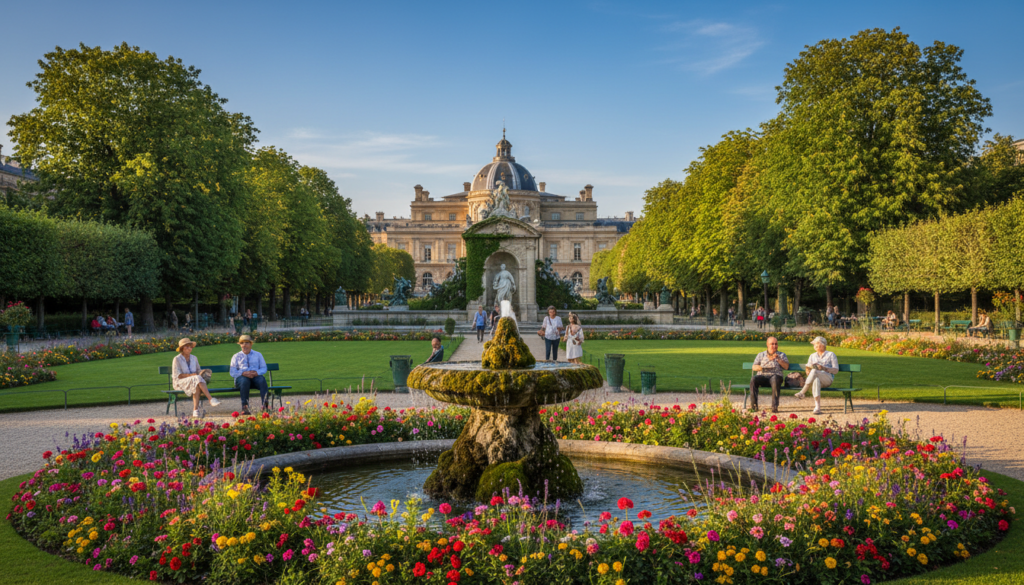
Jardin du Luxembourg spans about 23 hectares and was inspired by Florence’s Boboli Gardens. The lawns, statues, and the Medici Fountain make it easy to reset. Locals use the space for jogging, reading, and quiet downtime.
My favorite way to do it: grab a snack, take a green metal chair, and people-watch without guilt. That small choice counts as sightseeing—because you’re noticing life, not just landmarks.
If you want a bit more energy, loop the paths for statue-spotting, aim for photo corners near the fountain, or follow a longer walk that leaves room to sit again. The Tuileries is another great garden for a central stroll if you’re near museums.
“Protect one hour of your day for a garden; it keeps the rest of your trip from fraying.”
| Feature | Why it matters | Quick tip |
|---|---|---|
| Medici Fountain | Iconic photo and calm spot | Visit mid-morning for softer crowds |
| 23-hectare lawns | Room to wander or rest | Bring a snack and a chair |
| Local use | Shows everyday city life | Watch joggers, parents, and readers |
Canal Saint-Martin and La Promenade Plantée for a Different Side of Paris
If you want a quieter slice of city life, Canal Saint‑Martin shows a softer side that photos rarely capture. The waterway threads through the 10th arrondissement and feels lived‑in rather than staged.
What to do: slow walks along the towpath, coffee at a small café, and low-key people‑watching. Lock in one bench and let the afternoon arrive without a schedule.
La Promenade Plantée is the elevated green walk built on an old rail viaduct—think trees, planters, and new views above the streets. It’s a calm way to add greenery without leaving the core of the city.
Fit both into one easy day: start at the canal for morning light, stroll the promenade after lunch, then choose a nearby bistro for an unhurried dinner. This sequence keeps the pace relaxed and the day connected.
Practical note: hop the Metro when distances grow between neighborhoods; walk when the route links are short. The old train route that became the promenade makes the change of level feel natural and charming.
“Some of the best things on a trip are the in‑between spaces—you’ll remember the quiet corners longer than the crowded landmarks.”
- Best time: morning at the canal, afternoon on the promenade.
- Transport tip: mix walking with short Metro hops to save energy.
- Why go: it shows the city’s everyday life, a welcome contrast to busier stops.
Palace of Versailles Day Trip from Paris
A quick train ride drops you into a world of gilded halls and vast gardens that feel like a different century. The palace versailles is an easy day trip—about an hour by RER—and worth the itinerary space.
The headline moment is the Hall of Mirrors. Walk slowly and let the scale land: the mirrors, chandeliers, and painted ceilings were built to show royal power. Seeing the hall helps you understand why Versailles became a UNESCO World Heritage site.
Practical notes: timed tickets help you skip long lines and control your day. You can go DIY by train or choose a guided tour with transport if you want less planning and a smoother return to the city.
The gardens are a main attraction, not an afterthought. Entry is usually free, but expect a separate fee—commonly €10–€11—on Musical Gardens or Fountains Show days. Plan real time to wander; rushing the lawns and groves wastes the point.
- Must-do: Hall of Mirrors for the history and spectacle.
- Nice-to-do: Rent a bike or picnic on the Grand Canal.
- Packed for comfort: good shoes, water, and a light snack.
| Need | Why | Tip |
|---|---|---|
| Timed tickets | Reduce wait time | Book official slots online |
| Transport choice | DIY saves money; tours save time | Weigh cost vs convenience |
| Garden time | Major part of the visit | Allow at least 90 minutes to explore |
“Give Versailles a relaxed day, not a rushed checklist—its scale rewards patience.”
Monet’s Gardens in Giverny as a Second Day Trip Option
For a gentler day trip, Giverny feels like stepping into one of Monet’s canvases. Claude Monet’s gardens sit about 80 km northwest of the city and they are an easy escape for a calmer day.
How to get there: take a regular train to Vernon, then a short shuttle or taxi to Giverny. The route is straightforward even if you don’t love logistics; many visitors choose guided shuttles to keep it simple.
The visit splits naturally. Start in the flower garden near Monet’s house. Then cross over to the water garden and the Japanese Bridge—the real scenes behind his water‑lily painting series.
You don’t need an art degree to feel why Monet painted here. The light and reflections do the work; standing by the pond makes the paintings make sense.
Practical tips: go early, budget time to linger, and consider skip‑the‑line or guided options during high season. If you must choose between Versailles and Giverny, pick Versailles for grandeur and Giverny for quiet color and intimate views.
| Feature | Why it matters | Quick tip |
|---|---|---|
| Flower garden | Shows the seasonal palette Monet painted | Visit first for morning blooms |
| Water garden & Japanese Bridge | Inspiration for the water‑lily painting series | Give extra time for photos and quiet |
| Train to Vernon | Simple transit option from the city | Book standard tickets; shuttles run from the station |
| Timing choice | Sets the vibe of your day | Early for calm; late for softer light |
“Giverny is less about spectacle and more about slowing down to see color and light.”
Catacombs of Paris for the City’s Darker History
This underground site started as a practical solution to a sanitation crisis—and today it reads like a layered archive. In the late 1700s the city moved remains from overcrowded cemeteries into tunnels that became the Catacombs. The result is unusual: a historical site that also feels quietly solemn.
The vibe is macabre, yes, but it also explains how the city solved a public health problem centuries ago. Treat the visit as a respectful history lesson rather than a thrill ride.
Practical note: standard tickets are commonly about €14 through official channels. Book a timed entry so you control your time underground; capacity is limited and lines can be long.
- Who will love it: history fans and people drawn to the strange side of urban life.
- Who should skip it: anyone who feels uneasy in tight, dark spaces.
- Where to place it: not your first stop of the day—pair the Catacombs with a light afternoon at a nearby park or café.
“It’s a memorial of solutions and lives, not a haunted house.”
Respect basic etiquette—stay quiet, follow signs, and keep photos discreet. This spot sits among the more unusual sites in the world and rewards thoughtful attention.
French Attractions in Paris Planning Tips for US Travelers
When top sites use timed entry and sell out, a simple plan saves stress.
I book one must-see per morning and keep afternoons loose. That lets me enjoy a museum or tower ticket without rushing the rest of the day.
Quick checklist: buy Louvre or Eiffel Tower tickets early (they often sell out). Note weekly closures—Louvre closes Tuesday, Musée d’Orsay closes Monday. Many museums offer free entry the first Sunday of the month; plan around that if you can.
- Pass vs single tickets: choose a pass if you’ll hit many sites; buy single tickets when you prefer fewer, deeper visits.
- Transport: use the Metro for short hops, walk between close arrondissements, take a train for day trips, and try a cruise or Batobus to rest your legs.
- Pace: build café, garden, and 30–60 minute buffers into each day—those pauses make the trip feel abundant.
| Plan item | Reason | Action |
|---|---|---|
| Timed tickets | Avoid long lines | Book official slots online early |
| Closure days | Prevents wasted time | Schedule museums around Mon/Tue closures |
| Transport choice | Saves energy and time | Mix Metro, walking, train, and cruise |
| Pacing & safety | Better memories and comfort | Wear comfy shoes; watch pickpockets |
“One firm booking plus flexible hours keeps your days full and calm.”
Conclusion
A few well-chosen moments—an evening view, a slow walk by the river—will shape your whole visit more than a tight checklist.
I tie the top stops together so they read as one story: the eiffel tower that sparkles after dusk, the louvre museum, the notre dame area and the rooftop sweep at arc triomphe. The seine river quietly connects these sights; a short cruise or riverside walk makes the map click.
Plan smart: note closures (Louvre: Tuesday; Orsay: Monday), book time‑sensitive tickets, and keep one slow evening. Pick three top landmarks, one neighborhood, one garden, and a small splurge like moulin rouge if it fits your taste. That mix gives you the heart paris memory without racing to the end of your trip paris.
FAQ
What are the must-see highlights for a first trip to Paris?
I’d start with the Eiffel Tower, the Louvre (don’t miss the Mona Lisa), Notre-Dame’s Île de la Cité, and a stroll along the Seine. Add the Arc de Triomphe and a night river cruise for classic views; if you have another day, Versailles or Monet’s gardens in Giverny make great day trips.
When is the best time to visit the Eiffel Tower to avoid crowds?
Early morning or late evening works best. I prefer catching sunrise or the first hours after opening—the light is softer and lines are shorter. If you want the city lights, book a late entry and watch Paris glow from the top.
How much time should I budget for the Louvre Museum?
Plan at least half a day. The collection is huge, and focusing on a few sections—like the Denon wing for the Mona Lisa and the Hall of Mirrors—keeps the visit satisfying without exhausting you.
Are there skip-the-line tickets for major sites like the Louvre and Versailles?
Yes. Booking timed-entry tickets or guided tours in advance is the safest way to skip long queues, especially at Versailles and the Louvre. Trains and combined river cruise packages can also save time on busy days.
What’s the best way to see Paris by water?
A Seine river cruise is the most relaxing option; daytime cruises show landmarks clearly, while evening cruises give you the sparkle of the city. Consider a dinner cruise for a special night out.
How can I experience Montmartre and Sacré-Cœur beyond the tourist spots?
Walk the side streets, visit small galleries, and grab coffee at a local café away from Place du Tertre. I like exploring Rue des Abbesses and finding a viewpoint on a quieter stairway for better city perspectives.
Are there smaller museums worth visiting for art lovers?
Absolutely—Musée d’Orsay for Impressionists, Musée de l’Orangerie for Monet’s Water Lilies, and Musée Rodin for sculpture are intimate and rich. They’re easier to digest than the Louvre and often less crowded.
Is it worth doing a day trip to Versailles or Giverny?
Yes—Versailles is ideal for history and grand architecture; expect to spend a full day for the palace, gardens, and fountains. Giverny is quieter and perfect if you love gardens and Monet; it feels more meditative and makes a relaxed second-day option.
What should US travelers know about planning logistics?
Bring a small travel adapter, get a transport pass for metro and buses if you’ll move around a lot, and buy timed tickets online for major sites. Learn a few basic French phrases—people appreciate the effort—and carry a map app for walking routes between sights.
How can I enjoy Paris’s gardens and quieter green spaces?
Early morning visits to Jardin du Luxembourg, Parc Monceau, or the banks of Canal Saint-Martin feel restorative. Pack a picnic, sit by a fountain, and watch local life—these moments often beat the busiest sightseeing hours.
Are there any safety or accessibility tips for visiting sites like the Arc de Triomphe or catacombs?
For the Arc de Triomphe, use the underground passages rather than crossing traffic at street level. The Catacombs have narrow, dim corridors and require decent mobility—check for accessibility options and book ahead because entry is limited.
How many days do I need to get a good sense of the city?
Four to five days gives you a solid mix: main museums, a river cruise, neighborhood wandering (Le Marais, Montmartre), and one day trip. If you prefer deeper exploration and slower pacing, add two more days to soak in small museums and gardens.
What’s the best way to find authentic local food and cafés?
I avoid the busiest tourist streets and follow where locals eat—small boulangeries, neighborhood bistros, and markets. Le Marais and Canal Saint-Martin have excellent options; ask a shopkeeper for recommendations and be open to wandering side streets.