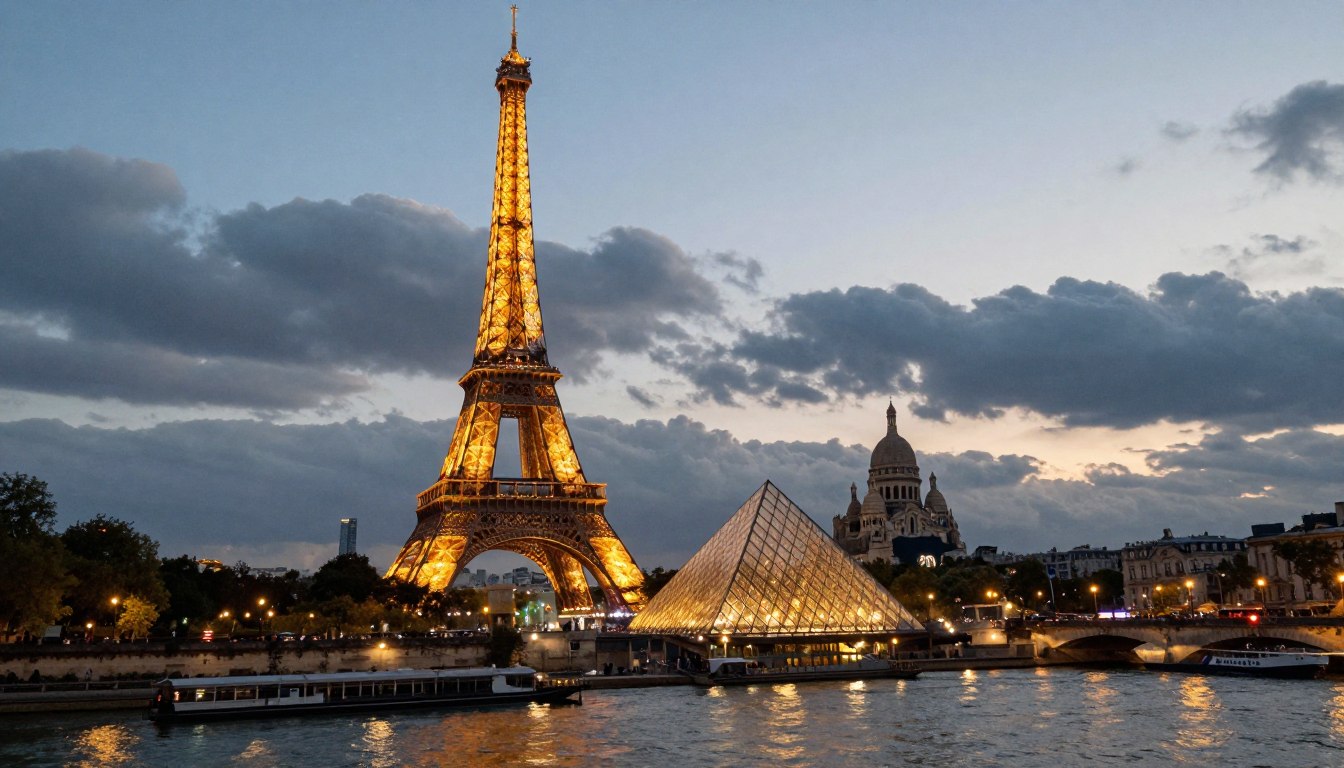
Ever wondered why people say Paris is worth slowing down for? I ask because most visitors rush and miss what makes the place sing. I’ll show you how to visit paris without exhaustion and still feel like you lived there for a week.
Paris is always a good idea—but only if you skip the marathon pace. My plan starts with the big hits, then folds in calmer neighborhoods so your trip paris feels human, not frantic.
The city is organized by numbered arrondissements and split by Left Bank and Right Bank. That layout helps you plan efficient days, walk between sights, and book timed entry to skip peak lines.
I stick to one core rule: book ahead, avoid peak queues, and leave room for serendipity—cafés, bridges, and surprise corners that make you smile.
Key Takeaways
- Start with big sights, then add quiet neighborhoods.
- Use arrondissements and river banks to plan days.
- Book timed entry and avoid peak queues.
- Walk more than you think—many spots sit close together.
- Leave time for cafés, bridges, and happy surprises.
Main attractions in paris you can’t miss on your first trip
For your first trip, think of this list as a starter pack: the skyline icons that make the city feel like itself and a realistic way to group them by area.
I follow one simple rule: pick 2–3 major stops per day, then leave space to sit, sip, and people-watch. If you want see more later, great—but for day one, slow down.
A quick overview early is a game changer. Do a river cruise or a short walking tour so the layout clicks. I recommend a guided tour for your first few hours to ground you.
- Timing: buy timed entry for the Eiffel and the Louvre—lines can steal half a day.
- Crowds: go early, pick weekdays when possible, and don’t feel bad skipping a photo-op to enjoy the moment.
Below is a compact plan to group the icons by area and time needed—use it as a cheat sheet for a calm, happy visit.
| Area | Core Stops | Time |
|---|---|---|
| River bank loop | Eiffel Tower, Seine cruise | Half day |
| Historic heart | Louvre, Notre-Dame | Half to full day (timed entry) |
| Hill view | Sacré-Cœur, Montmartre stroll | Morning or late afternoon |

Eiffel Tower views, tickets, and the best photo spots
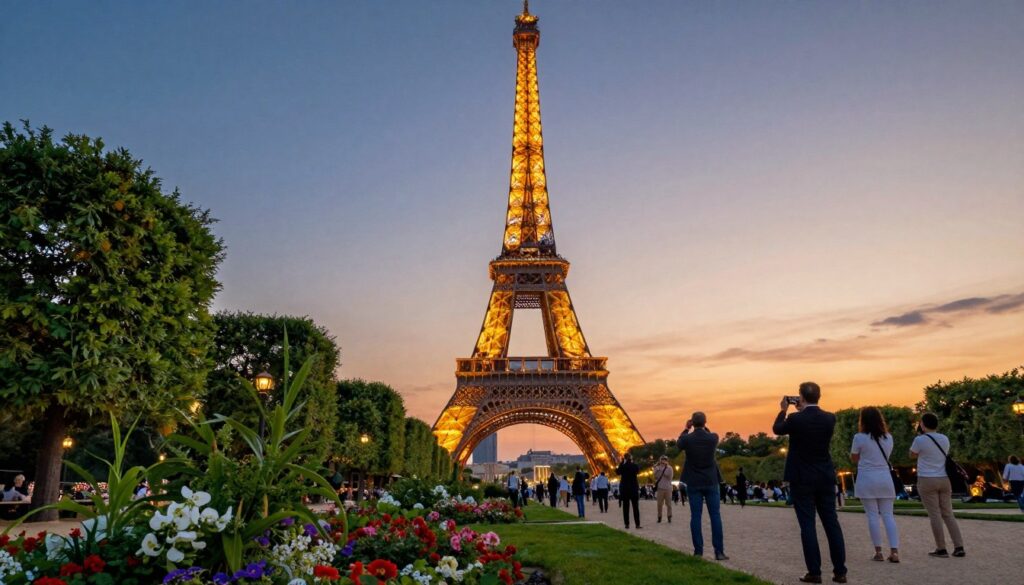
If you want the best views and photos, treat the Eiffel Tower as a choose-your-own-adventure stop. Built by Gustave Eiffel for the 1889 World’s Fair, the tower tops out at 324 meters and has three visitor levels.
Choose your visit: stairs reach the first two levels (cheaper, more exercise); elevators go higher to the summit (faster, pricier). Pick based on budget and energy—both reward you with great panoramas.
Big practical tip: lines can stretch up to four hours in peak months, so get tickets with timed entry or book a skip line style guided tour. It saves half a day and your mood.
- Photo logic: start at Trocadéro for the classic wide shot, then cross a Seine bridge for a cinematic angle—this is how you see eiffel from the best spots.
- Day vs night: daytime for crisp views paris skyline; nighttime for the five-minute sparkle, every hour after dusk until 1 AM.
- Pair it: stroll along seine or hop a short river cruise so you don’t backtrack.
Pro tip: the tower has restaurants and bars—plan to stay a while and make the visit a real part of your city day.
Louvre Museum highlights beyond the Mona Lisa
The Louvre holds more than the Mona Lisa; it’s a maze of treasures that rewards a calm pace.
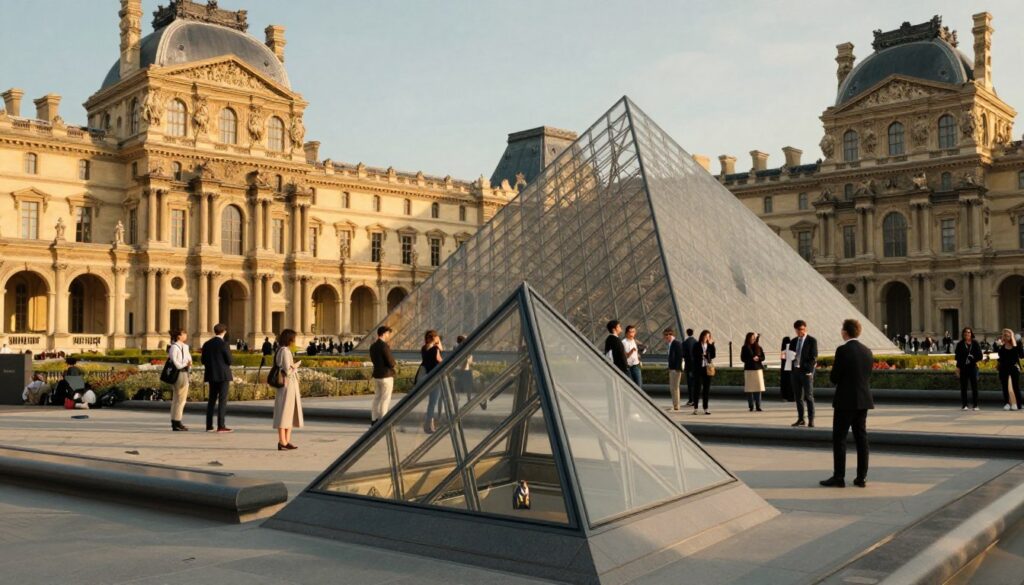
The louvre museum is massive—over 60,000 sqm and more than 10 million visitors each year. If you arrive with a “Mona Lisa only” plan, you’ll feel rushed and underwhelmed.
First-timer route: hit the Mona Lisa, then walk to the Venus Milo and the Winged Victory. Add one collection you love—Egyptian antiquities or European paintings—and call it a win.
Don’t miss the drama of Napoleon III’s apartments or the ruinous fortress remains downstairs. Both feel like secret stages of the city’s story.
Sanity plan: get tickets with timed entry or book a guided tour to skip line chaos and learn efficiently. Mornings and weekdays are calmer.
After the museum, decompress—stroll the riverside or sip at a nearby café to reset your feet and brain.
| Highlight | Why go | Time to allow |
|---|---|---|
| Mona Lisa | Iconic portrait and crowd magnet | 30–45 minutes |
| Venus Milo & Winged Victory | Masterpieces of ancient sculpture | 20–40 minutes |
| Napoleon III apartments | Opulent Second Empire interiors | 30 minutes |
| Fortress remains | Stand inside 12th-century foundations | 15–25 minutes |
Notre-Dame Cathedral and Île de la Cité essentials
On a tiny island at the city’s center, Notre-Dame anchors a compact slice of history you can walk in an hour.
I like to start with an exterior loop—check the flying buttresses, gargoyles, and the sculpted façade slowly. This gives you the story before you step inside.
Practical plan: walk the outside first, then enter if you’ve reserved a free advance ticket or are ready to queue. The cathedral has reopened after the 2019 fire, but the tower climbs are not available yet—so plan views elsewhere for the moment.
My favorite photo angle is from the Left Bank of the Seine River; the cathedral sits framed by water and bridges, and the light there is forgiving late afternoon.
If you want deeper detail, book a short guided tour to learn the architecture, symbolism, and the recent rebuild story without reading every plaque. Pair this stop with Sainte-Chapelle and a riverside stroll—the island truly feels like the heart Paris for a calm walking day.

Sainte-Chapelle’s stained glass and medieval Paris atmosphere
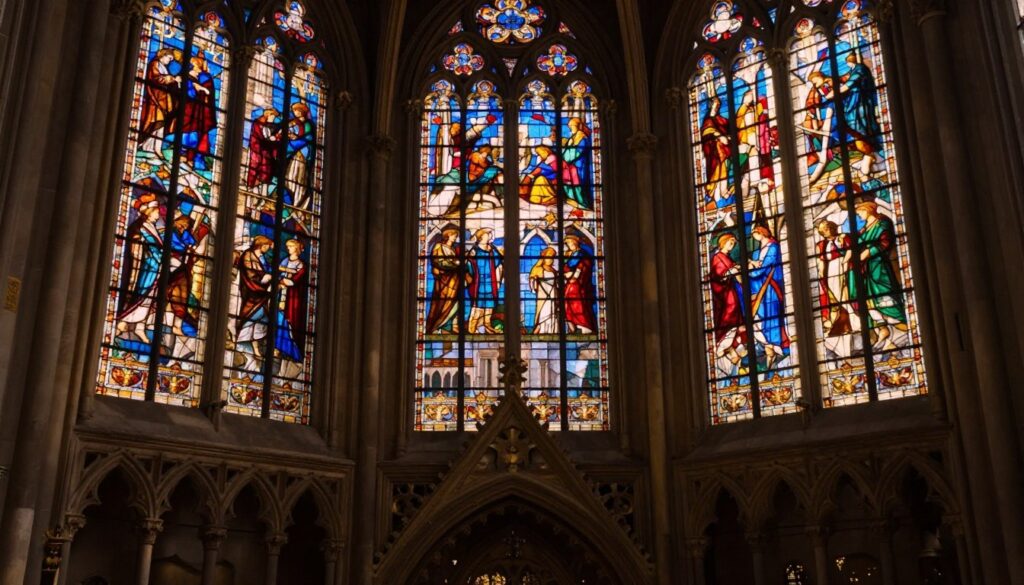
You’ll stop mid-step when sunlight turns the chapel into a jewel box. The effect is immediate: color pours through towering panes and the room feels alive.
Sainte-Chapelle sits on Île Cité, and it’s one famous little church that surprises almost everyone. The upper chapel’s stained glass panels tell Bible stories from floor to ceiling.
Think of it as a quick, high-impact stop compared to a huge museum paris. You don’t need hours—20–40 minutes can be perfect if you slow down and look up.
- Best timing: daylight hours—this is all about color and glow.
- What to watch for: window height, storytelling panels, and that sense of stepping into medieval life.
- Pair it: combine with Notre-Dame on the same island or add a short tour to learn the basics quickly.
Inside, sit for a minute and let your eyes adjust before snapping photos. It’s a small room with a big, full-body effect—one of those city moments you’ll tell people about.
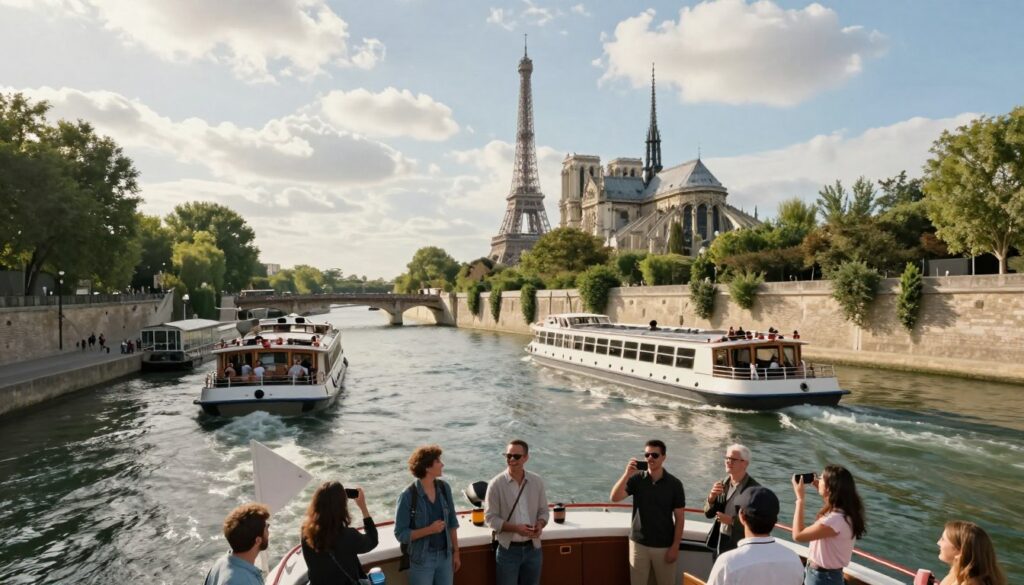
Seine River cruise: the easiest way to see Paris from the water
A gentle cruise on the Seine quickly ties the city’s skyline, bridges, and neighborhoods into one easy map.
I love doing a seine river cruise early in a trip. It’s the fastest way to get a mental map—bridges click, monuments align, and neighborhoods make sense without sore feet.
Options are simple: a one-hour sightseeing ride for a quick overview, an evening cruise to watch illuminated landmarks, or a dinner cruise for a romantic night. Guided tour narration often runs in several languages, so you learn while you rest.
From the water you’ll pass the Eiffel Tower, Musée d’Orsay, the long Louvre stretch, and Île de la Cité with Notre-Dame. Seeing these from the river helps you place them for later walking days.
Practical tip: book ahead in busy months and arrive a little early so you find the boarding point without stress. If your feet are tired, try the Batobus — a hop-on hop-off water bus that works like transit along the banks.
| Type | Best for | Typical length |
|---|---|---|
| Sightseeing cruise | First-day orientation | 1 hour |
| Evening cruise | City lights and skyline views | 1–1.5 hours |
| Dinner cruise | Romantic meal with views | 2–3 hours |
| Batobus | Flexible hop-on hop-off travel | Variable (single ticket or day pass) |
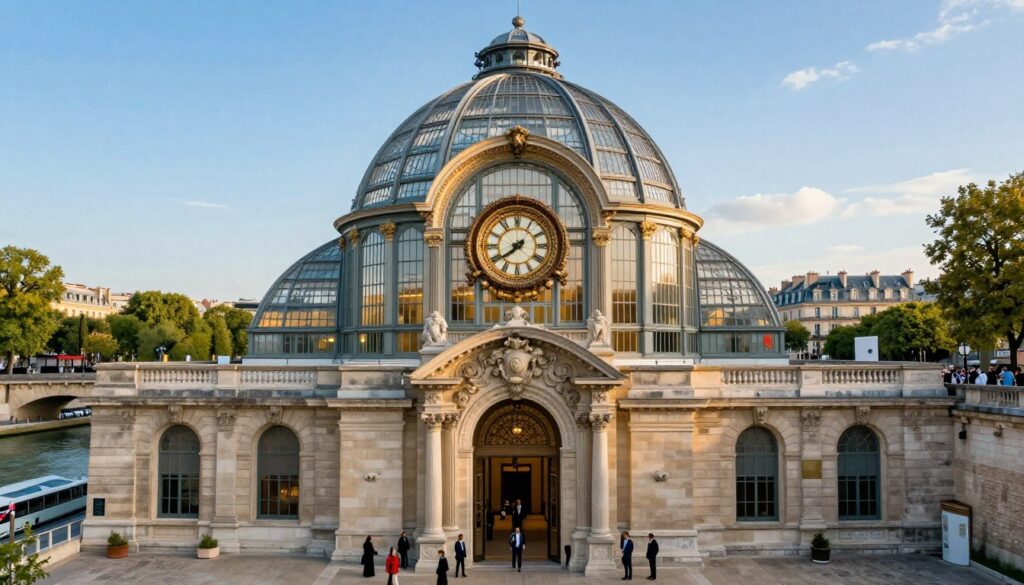
Musée d’Orsay for Impressionist masterpieces on the Left Bank
Step into a former train station and you’ll find one of the gentlest art museums in the city. The Beaux-Arts Gare d’Orsay shell is part of the show: huge arched windows, natural light, and that giant clock you’ll want to photograph.
Why go: it’s the world’s richest run of Impressionist and Post‑Impressionist work without the overwhelm of a massive complex. Think Monet, Renoir, Degas, and Van Gogh—plus a calm sculpture hall to wander.
I recommend a short plan or a guided tour so you hit the must-sees quickly and avoid the biggest crowds. If you prefer DIY, buy a skip line ticket and map three targets before you enter.
The Left Bank setting is perfect for an after‑museum routine: a stroll along the Seine river, a café stop, or browsing a used bookshop nearby. Don’t skip the rooftop terrace—those views paris moments make the visit stick.
- Manageable museum win—world-class, not exhausting.
- Iconic building and clock = built-in photo moment.
- Prioritize Impressionists, then relax on the terrace.
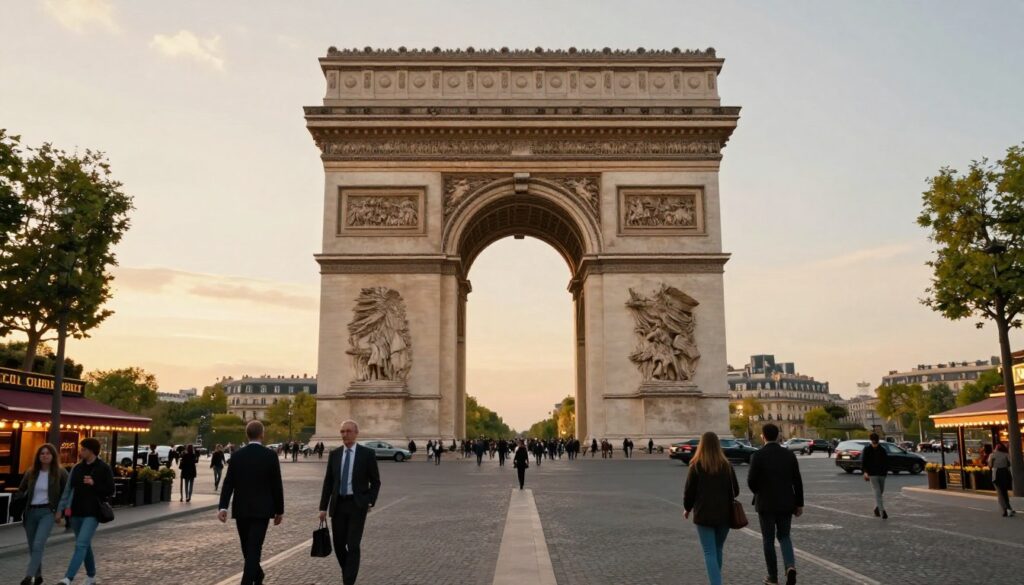
Arc de Triomphe and Champs-Élysées skyline moments
Stand at Place Charles de Gaulle and you’ll feel the avenues fan out like spokes from a compass.
I start here for a classic axis: visit the arc triomphe first, then stroll down the Champs-Élysées for that big‑city energy. The arc rooftop delivers the payoff—those skyline lines make the whole layout click.
Safety note: the traffic circle is hectic. Do not cross—use the underground tunnel to reach the monument calmly.
The base holds the Tomb of the Unknown Soldier and an eternal flame. If you can, pause for the 6:30 pm rekindling; it’s a quiet, moving moment that fits any tour of famous sights.
Practical tips: buy tickets or choose a skip line option for the rooftop. Climb for the broad views paris—morning light gives cleaner photos, while evening brings glowing façades and lights along the 1.9 km avenue.
Montmartre, Sacré-Cœur, and the Moulin Rouge neighborhood vibe
Montmartre feels like a postcard that keeps changing as you climb. The hill is more mood than museum—hilly lanes, painters on corners, tiny cafés, and surprise viewpoints that stop you mid-sentence.
I like to arrive early, wander the quieter side streets first, then save Sacré‑Cœur for when you want the main panorama. Walk slowly—that route keeps the crowds from stealing the scene.
Be honest: the steps and Pigalle can get intense. Step one lane over and you find calm lanes and small museums that feel private. The neighborhood landmark moulin rouge signals you’ve hit cabaret history, even if you only snap a photo.
For the best version, consider a guided tour—food, pastry, or wine walks tell stories you’d miss alone. A short tour saves time and reveals hidden corners.
Finally, build in time to sit. Montmartre rewards a slow coffee; that pause is as much the visit as any of the famous sights of the city.

Latin Quarter and the Left Bank classics for a walking day
I head to the latin quarter when I want a walk-all-day neighborhood that still feels lived-in and surprising. Narrow lanes, old bookshops, and lively brasseries sit on streets first settled by Romans in the 1st century.
Start near the Seine, drift through twisting lanes past the Cluny and the Panthéon, then finish with a long café sit on Boulevard Saint‑Germain. That loop shows you the layers—Roman streets, medieval alleys, and student life—all in one calm route.
- Walking framework: Seine → hidden lanes → museum stops → café pause.
- Crowd tip: avoid Rue de la Huchette at peak hours; use the quieter parallel streets for the same charm with less shoulder-to-shoulder bustle.
- Why go: you feel the history here—Romans left foundations; later thinkers and protests left stories.
If you want context, take a short guided tour or a themed tour about writers and student life. Pair the afternoon with a bookstore stop and a golden-hour riverside walk—the scene here is the heart paris for slow, local moments in the city.
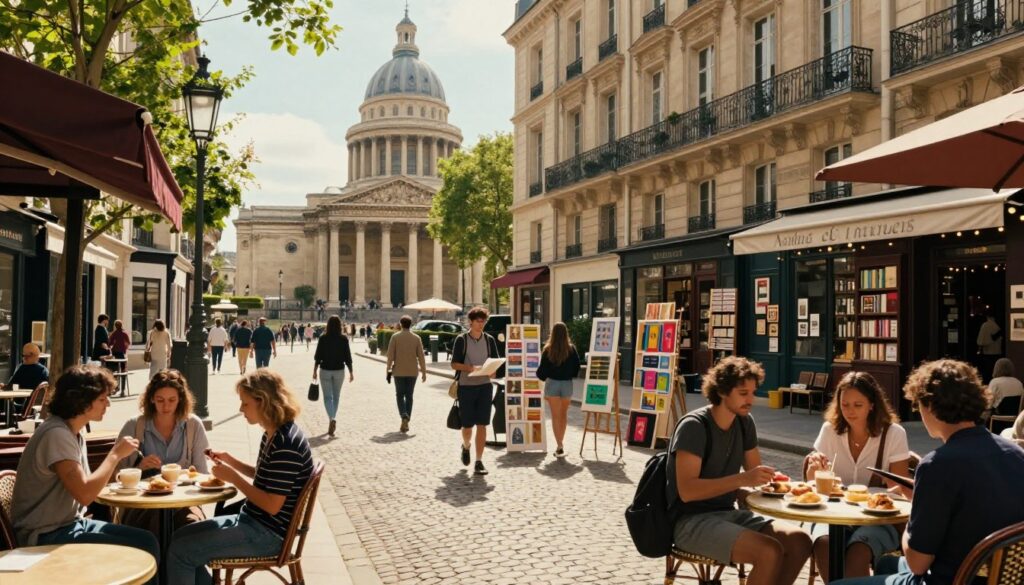
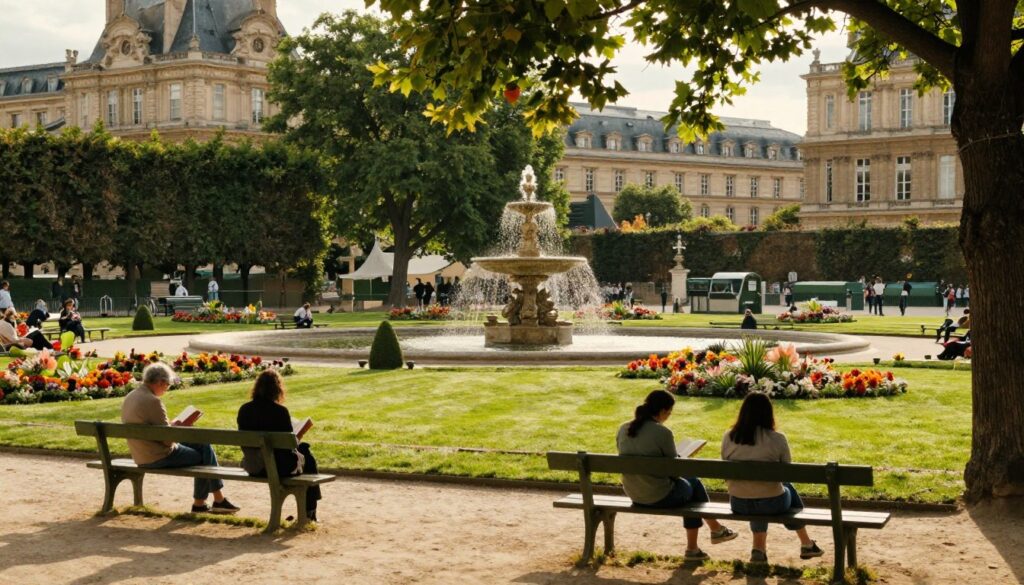
Jardin du Luxembourg for a slower, local Paris afternoon
If your feet need mercy, the Jardin du Luxembourg hands you a quiet hour like a small gift. It sits by the Luxembourg Palace (today the French Senate) and feels calm even on busy days.
My go-to move: grab a green chair, sit by the pond, and people-watch. Let your day breathe for an hour or two—this is the reset button after museum legs and crowded streets.
What to do: watch kids sail toy boats, catch a puppet show, or toss a boule with locals. Walk to the rose garden and the slightly hidden Medici Fountain for a photogenic pause.
This spot is family-friendly (ponies and puppet theater) and perfect solo with a book and coffee. If you want to pace your trip, take time here; it’s not wasted. It makes the city feel livable—paris always rewards the slow moments.
- Green chairs = instant rest.
- Medici Fountain = must-see, slightly tucked away.
- Build this as an easy afternoon between big-ticket stops—good idea for balance.
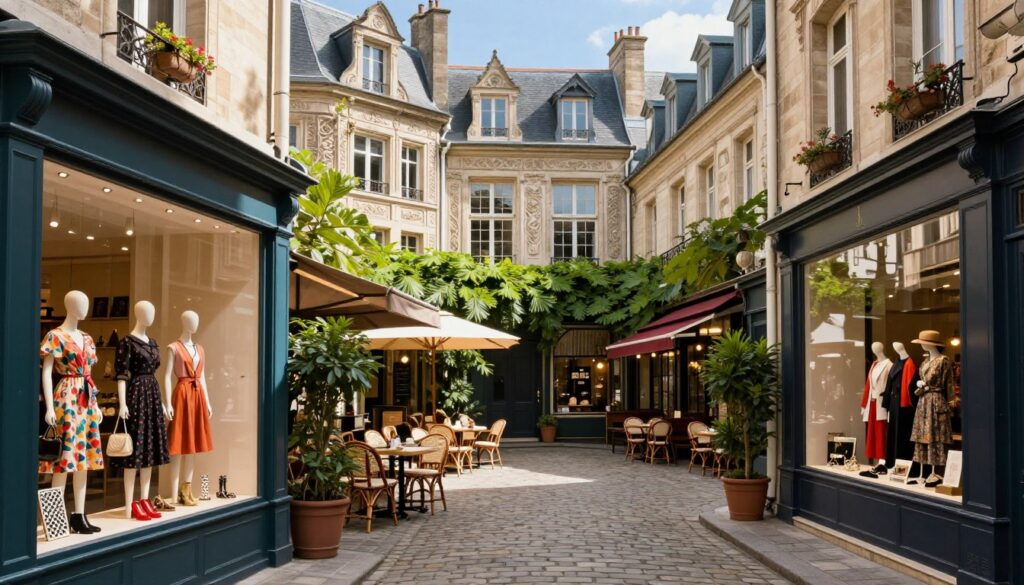
Le Marais for boutiques, architecture, and hidden courtyards
Wandering Le Marais feels like opening a series of delightful doors—each one leads to a new courtyard or café. Cobbled lanes, carved mansions, and small galleries sit side by side. I pick this neighborhood when I want pretty streets + great browsing without committing to a museum line.
Strategy: wander first. Turn corners slowly, poke into courtyards, and pop into shops that feel curated rather than touristy. Place des Vosges is the anchor—perfect for a quick break and prime people‑watching.
This works as a flexible half‑day. Start late morning after an early Louvre visit, or use Le Marais as a lighter day between heavy hitters. Your pace sets the length—shop a little, sit a lot. 😊
If you want deeper context, book a themed walking tour—architecture, Jewish heritage, food, or art. Local guides run some of the best tours and their stories make the neighborhood click.
Le Marais is one of the reasons this city feels layered and alive—easy to love on any trip to one paris.
Canal Saint-Martin for a quieter Paris experience off the main loop
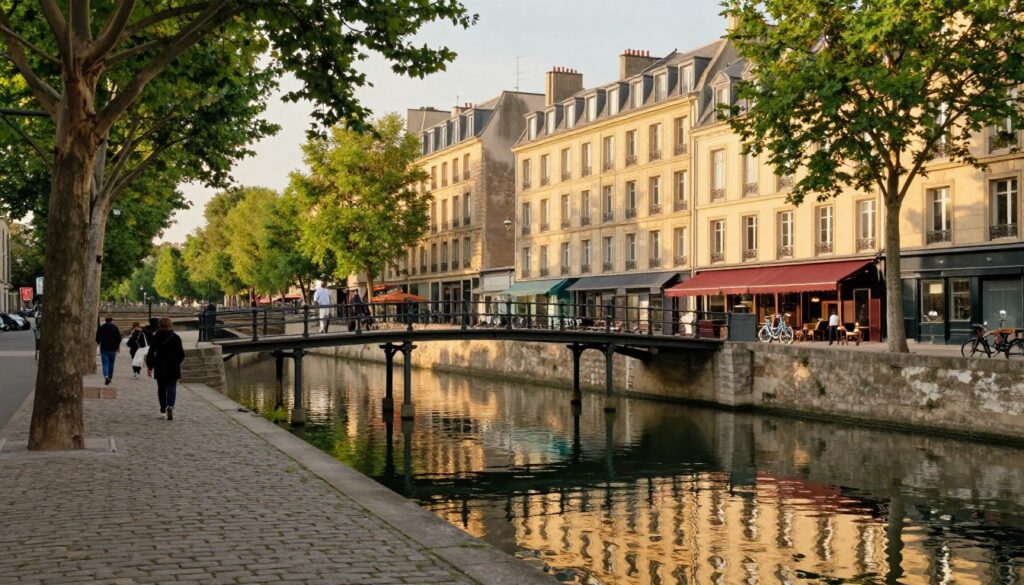
Canal Saint‑Martin feels like the city’s soft exhale—tree‑lined, slow, and quietly local. I go here when I want charm without the crowds.
The canal sits in the 10th arrondissement and has a mellow, artsy vibe. Small cafés, boutiques, and galleries line the water. It’s perfect for slow wandering and low‑key people‑watching.
How to experience it: stroll the towpaths, grab a relaxed lunch, or take a short canal boat ride. Unlike a Seine river cruise, some boats pass through locks and briefly slide into tunnels—surprisingly fun and a little adventurous.
If you’ve finished the big loop, this spot shows a more lived‑in side of the city. It’s also my go‑to for a jet‑lag day: light walking, café stops, and lots of sitting. Consider a short guided tour if you want local stories without the rush.
| Option | Best for | Time |
|---|---|---|
| Walking the towpath | Slow photos & cafés | 1–2 hours |
| Canal boat ride | Unique locks & tunnels | 45–90 minutes |
| Lunch at a canal café | People‑watching & rest | 1 hour |
| Guided neighborhood tour | Local history and tips | 1–2 hours |
Musée Rodin and its sculpture garden escape
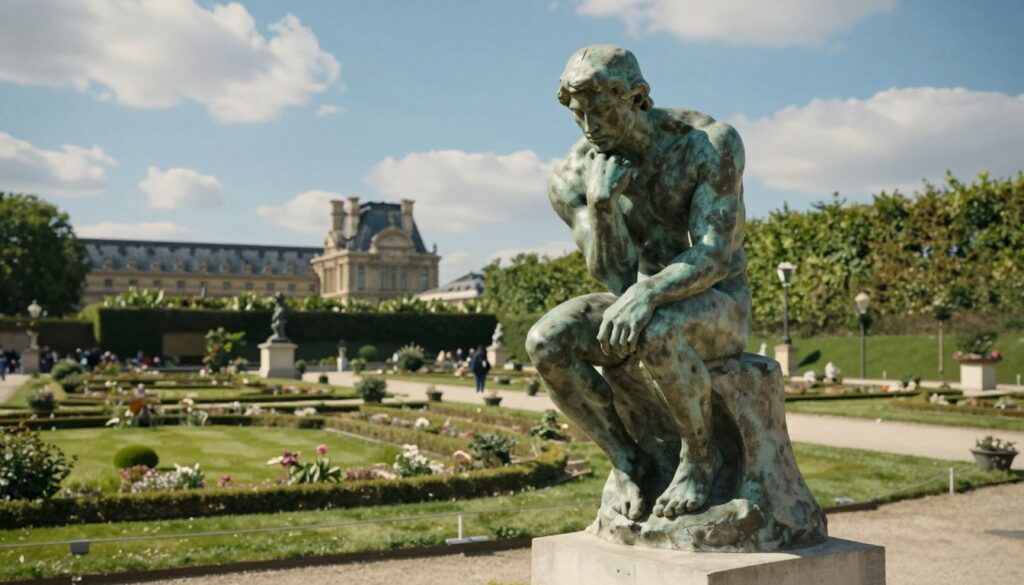
If you crave art plus fresh air, a stop at musée rodin feels like a gentle deep breath during a busy city day.
The museum paris sits in an 18th-century mansion near Les Invalides, and the scale is intimate—rooms of plaster studies and a large, seven-acre garden that unfolds like a secret.
Why go: The Thinker and The Kiss are here, and seeing them in person hits harder than any photo. Walk the paths and you’ll find The Gates of Hell or The Burghers of Calais tucked among trees—dramatic and oddly peaceful.
The layout makes it an easy add-on to a nearby day plan. You don’t cross the whole city to get a restful art stop; it’s a calm pocket with big sculptures and small crowds.
- Art + fresh air: benches, green paths, and bronze works—perfect for lingering.
- Pace: don’t rush; this place rewards slow walking and a café break.
- Practical: book tickets ahead in busier months and consider a short tour to learn the backstory without rush.
Versailles Palace as the classic day trip from Paris
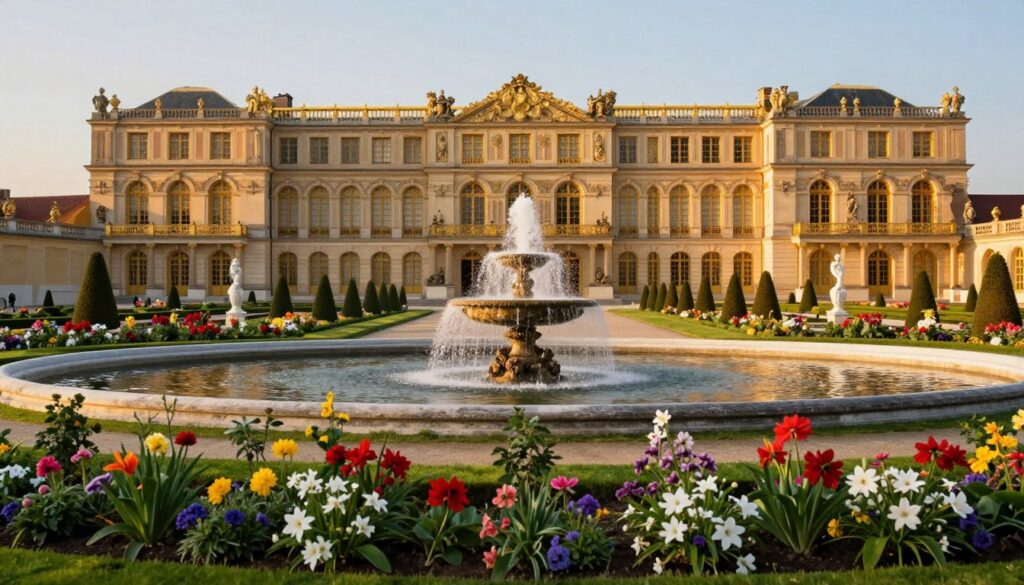
If you plan one unforgettable day beyond the city, make it Versailles. The versailles palace is a UNESCO site with over 700 rooms—grand, ornate, and easy to underestimate.
Travel: take the RER and you’ll arrive in about an hour. Lines are real here; waits of 2–4 hours happen in peak months.
Skip line planning isn’t a luxury—it’s sanity. Book a guided tour or buy timed entry so you don’t spend your whole day outside a queue.
Must-sees: the Hall of Mirrors first, then give the gardens real time. Don’t rush past the Grand Trianon, Petit Trianon, and Marie Antoinette’s Hamlet—they tell the softer side of royal life.
My pacing tip: arrive early, tour palace rooms first, then decompress across the gardens when crowds shift. If you want ease, a short guided tour will simplify transfers and security access.
| Feature | Why go | Time |
|---|---|---|
| Hall of Mirrors | Iconic royal spectacle | 30–45 minutes |
| Gardens & fountains | Landscape, sculptures, relax | 1–3 hours |
| Grand & Petit Trianon | Private royal retreats | 45–90 minutes |
| Marie Antoinette’s Hamlet | Quaint, pastoral escape | 30–60 minutes |
Père Lachaise Cemetery and other memorable Paris “hidden gems”
A stroll through Père Lachaise feels like a low-key treasure hunt—sculpture, story, and famous names around each bend.
I treat père lachaise cemetery as a calm, reflective stop. It’s part history, part art, part gentle wandering. Look for Oscar Wilde, Jim Morrison, and Édith Piaf, but pick just 3–5 targets so the walk stays fun.
The lanes are tree-lined and quiet. Treat the visit like a peaceful walk, not a morbid one. Beautiful monuments, small plaques, and secret views make it one of those moments that sticks.
Consider a guided tour if you want context—who’s buried where, the symbolism, and neat stories that save time and add meaning.
Other low-key gems: browse the bouquinistes along the Seine for vintage finds and unique souvenirs. Or try a Canal Saint‑Martin cruise that links to quieter waterways—an easy way to see another face of the city.
| Spot | Why it’s special | Time |
|---|---|---|
| Père Lachaise | Famous graves, sculpture, quiet paths | 1–2 hours |
| Bouquinistes | Vintage books & art along the river | 30–60 minutes |
| Canal Saint‑Martin cruise | Locks, local vibes, offbeat views | 45–90 minutes |
Conclusion
Wrap this up simply: book smart, move by neighborhood, and leave room to breathe. ,
I recommend you get tickets early for the Eiffel Tower and palace Versailles to skip long lines. A skip line option or a short guided tour at the Louvre or Versailles often saves hours and adds context.
Use a Seine river or a seine river cruise to orient your days. Group sights (Île de la Cité + riverside; Left Bank museums + gardens; Montmartre; Versailles day trip) so transit stays simple.
Balance the big icons—Eiffel Tower, Louvre Museum, Notre Dame, Arc Triomphe, Versailles Palace—with one quiet pick (Canal Saint‑Martin, Jardin du Luxembourg, Le Marais, or Père Lachaise). Take time for sparkle lights, stained glass, a riverside stroll, and a random café stop—those are the memories that make a trip paris feel like home.
FAQ
What should I see on my first trip to Paris?
Start with the Eiffel Tower, Louvre, and Notre‑Dame on Île de la Cité. Add a Seine river cruise for quick orientation, wander the Latin Quarter and Jardin du Luxembourg for local vibes, and save a morning for Montmartre and Sacré‑Cœur. If you have time, a half‑day trip to Versailles or a visit to Père Lachaise cemetery offers a memorable contrast.
How do I get the best views and photos of the Eiffel Tower?
For classic shots, head to Trocadéro at sunrise or sunset—fewer crowds and golden light. The Champ de Mars gives close‑up perspectives, and the riverbanks along the Seine offer reflective views at night. Buy timed tickets to skip long lines and consider an evening summit visit for sparkling lights.
What can I see at the Louvre beyond the Mona Lisa?
The Louvre is huge—don’t miss the Venus de Milo, Winged Victory of Samothrace, and the Egyptian antiquities. The Denon wing has many highlights; pick a few galleries and use a map or guided tour to avoid overwhelm. Reserve skip‑the‑line tickets when possible.
Is Notre‑Dame open to visit after the restoration?
The cathedral has been under restoration since the 2019 fire. You can still explore Île de la Cité, see the cathedral exterior, and visit nearby Sainte‑Chapelle to admire its stained glass. Check current reopening dates and guided tour availability before you go.
Why visit Sainte‑Chapelle—what makes it special?
Sainte‑Chapelle houses one of the finest collections of 13th‑century stained glass—intense color and storytelling that fill the chapel with light. It’s compact and emotional, offering a real sense of medieval Paris right near the Conciergerie and Île de la Cité.
Is a Seine river cruise worth it, and which option should I take?
Yes—it’s the easiest way to see many landmarks from the water (Eiffel Tower, Notre‑Dame, Musée d’Orsay). Choose a daytime commentary cruise for orientation or an evening dinner cruise for romance. Look for hop‑on hop‑off options if you want flexibility along the banks.
What should I expect at Musée d’Orsay?
Musée d’Orsay showcases Impressionist and Post‑Impressionist masters—Monet, Renoir, Degas, Van Gogh—housed in a stunning former railway station. It’s on the Left Bank, quieter than the Louvre, and ideal for a relaxed art‑filled afternoon.
How do I best experience the Arc de Triomphe and Champs‑Élysées?
Climb the Arc for panoramic skyline views (buy tickets to avoid lines). Walk down the Champs‑Élysées toward Place de la Concorde to soak in the grand avenue feel—shop, people‑watch, and pause at cafés. Visit early morning to avoid heavy pedestrian traffic.
What’s special about Montmartre and the Moulin Rouge area?
Montmartre feels like a village—cobbled lanes, artists in Place du Tertre, and Sacré‑Cœur’s hilltop views. The Moulin Rouge adds that bohemian nightlife history. Wander the side streets, enjoy cafés, and go at sunset for the best light over the city.
How much time should I spend in the Latin Quarter and Left Bank?
Plan a half‑day to stroll narrow streets, visit the Panthéon, and relax in Jardin du Luxembourg. The Left Bank rewards slow walking—book time for cafés, bookshops, and a museum or two (like Musée Rodin) without rushing.
Is Jardin du Luxembourg worth visiting?
Absolutely—it’s a peaceful break from sightseeing with manicured lawns, fountains, and people playing chess. Perfect for picnics, a lazy afternoon, or watching local life unfold—especially if you’re exploring the Latin Quarter nearby.
What will I find in Le Marais and its courtyards?
Le Marais mixes medieval streets, boutique shopping, and historic sites like Place des Vosges and the Picasso Museum. Look for hidden courtyards, vintage shops, and great cafés—an ideal neighborhood for slow discovery and photography.
Why visit Canal Saint‑Martin and what’s the vibe?
Canal Saint‑Martin offers a quieter, local side of the city—tree‑lined walkways, iron footbridges, and relaxed bars. It’s perfect for an afternoon stroll, a picnic by the water, or watching Parisians linger at cafés away from the main loop.
What makes Musée Rodin and its garden special?
Musée Rodin pairs intimate galleries with a beautiful sculpture garden where works like The Thinker sit among flowers and paths. It’s calm, reflective, and often less crowded—great for art lovers who want a peaceful visit.
How do I plan a day trip to the Palace of Versailles?
Book early timed entry to see the Hall of Mirrors and the royal apartments—skip‑the‑line tickets help. Allow a full day to explore the gardens, Trianon palaces, and Marie Antoinette’s estate. Trains from central stations make it an easy classic day trip.
What should I know about visiting Père Lachaise Cemetery?
Père Lachaise is atmospheric—grave sites of Jim Morrison, Édith Piaf, and Oscar Wilde draw visitors. Wear comfortable shoes for winding paths, and take your time to appreciate the sculptures and quiet corners. It’s a thoughtful, off‑beat stop from the usual sightseeing.