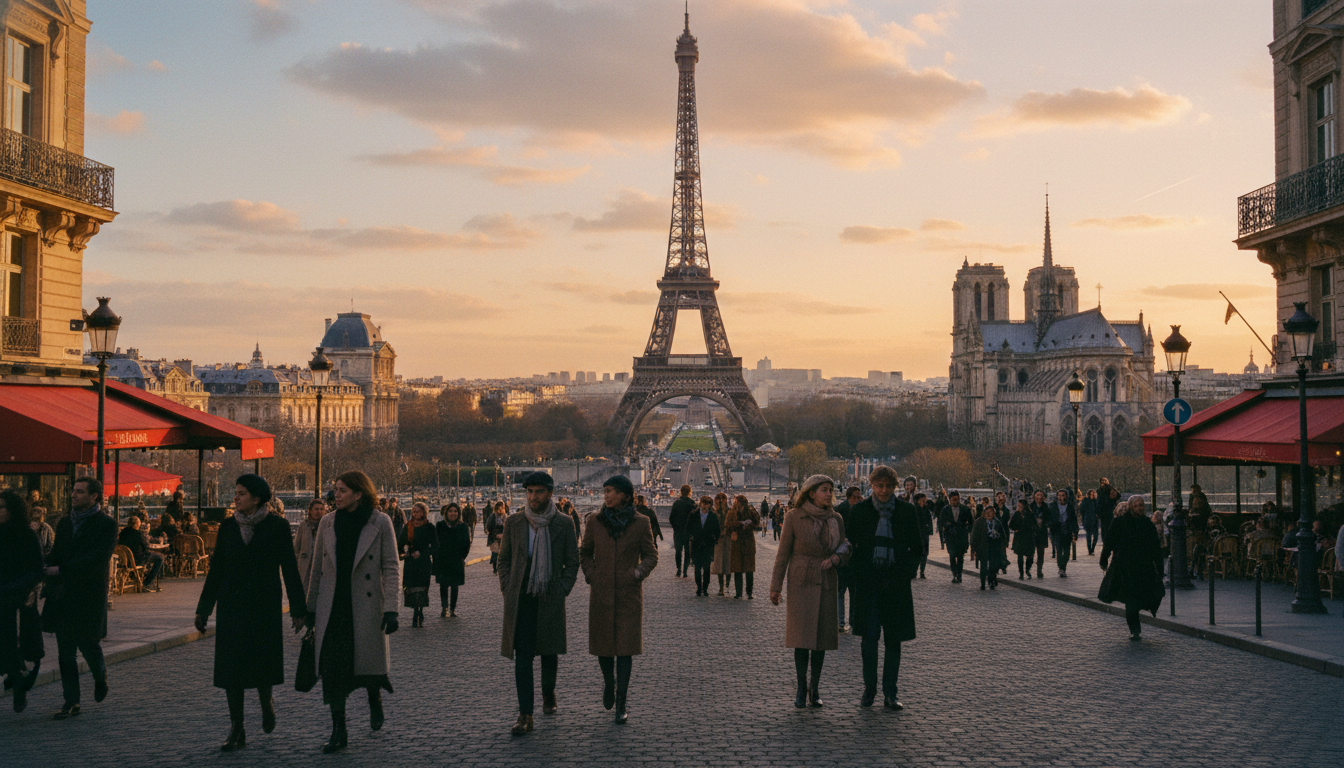
What draws 30 million visitors to Paris each year? It’s the city’s mix of history and modern culture. This blend offers experiences you can’t find elsewhere.
Paris is known as the “City of Light”. It was the first city in Europe to light its streets with gas lamps in the 19th century. Today, it shines with famous museums, stunning architecture, and paris landmarks that have amazed people for years.
The city is divided into arrondissements, or neighborhoods. Many are close enough to walk between. This makes it easy to see paris landmarks to visit.
Planning your Paris trip is key. From the iconic landmarks that define the paris skyline to secret cultural spots, this guide will help. It will show you the most celebrated destinations and help you enjoy this amazing city.
Key Takeaways
- Paris welcomes 30 million international visitors annually, making it one of the world’s most popular travel destinations
- The city’s arrondissement system organizes neighborhoods in a spiral pattern, with many major sites within walking distance
- Paris earned its “City of Light” nickname by pioneering gas street lighting in 19th-century Europe
- Advance ticket booking for major landmarks helps you avoid long queues and maximize your sightseeing time
- The French capital offers a unique blend of historic monuments, world-class museums, and architectural masterpieces
- Understanding peak visiting times allows you to plan your itinerary more effectively and enjoy attractions with smaller crowds
Iconic Landmarks That Define the Paris Skyline
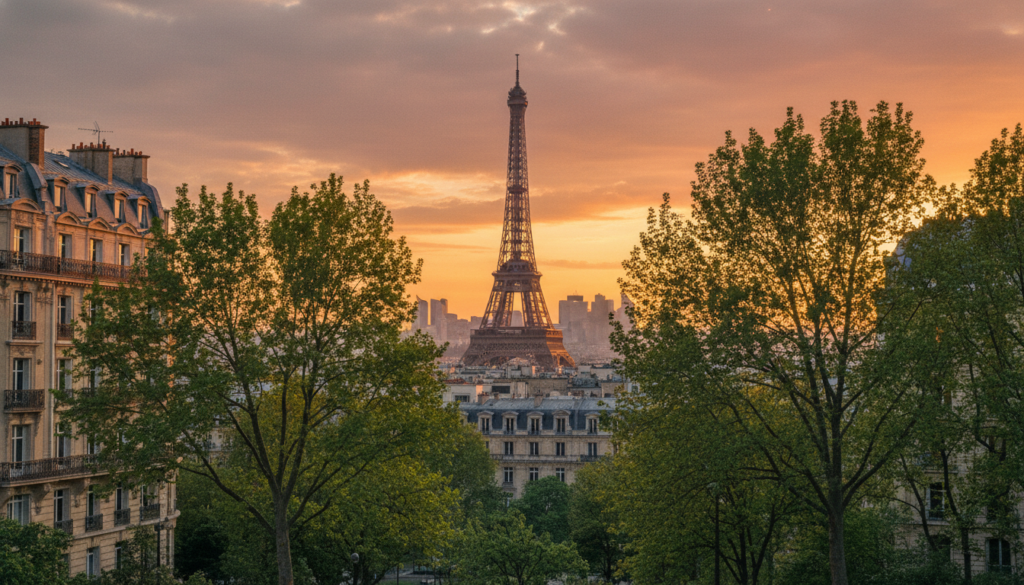
Four landmarks stand out in Paris, shaping the city’s skyline and its spirit. These structures reflect French history, architectural innovation, and cultural pride. Standing before these monuments is the start of exploring Paris.
Each landmark offers a unique view of Paris. You’ll see iron towers, triumphal arches, gleaming basilicas, and neoclassical temples. These sites offer both beauty and historical depth, enriching your Paris experience.
Eiffel Tower
The Eiffel Tower in Paris is France’s most iconic symbol, welcoming nearly seven million visitors each year. Built for the 1889 World Fair, it was initially criticized but now loved by all. At 1,083 feet tall, it dominates the skyline and offers stunning views from three levels.
You don’t need to climb all 674 steps to see the tower’s beauty. Elevators take you to the first and second levels, perfect for photos. The third level, only accessible by elevator, offers the best panoramic views.
“The Eiffel Tower is the Empire State Building after Einstein.”
Visiting the Eiffel Tower can be more than just sightseeing. It houses three restaurants, including the famous Le Jules Verne on the second level. Book your skip-the-line tickets at least two weeks in advance to avoid long waits.
Plan to spend 2-3 hours here, with ticket prices from €10.70 to €28.30. The best times to visit are early morning or late evening when it’s less crowded.
Arc de Triomphe
The Arc de Triomphe stands at the center of Place de l’Étoile, with twelve grand avenues radiating out. It commemorates French military victories and honors soldiers. Napoleon commissioned it in 1806, but it was completed in 1836.
Climbing the 284 steps to the top offers spectacular arc de triomphe views. From the top, you’ll see the Champs-Élysées, the Eiffel Tower, and Montmartre. It’s a climb worth making.
Safety tip: Never try to cross the roundabout on foot. Use underground passages from the Champs-Élysées metro station to reach the Arc de Triomphe landmark.
Under the arch lies the Tomb of the Unknown Soldier, with an eternal flame for World War I soldiers. Spend 45 minutes to 1 hour here, with admission at €13. Sunset visits are especially beautiful.
| Landmark | Average Visit Time | Ticket Price | Best Time to Visit |
|---|---|---|---|
| Eiffel Tower | 2-3 hours | €10.70-€28.30 | Early morning or after 6 PM |
| Arc de Triomphe | 45 minutes-1 hour | €13 | Sunset for photography |
| Sacré-Cœur Basilica | 1-1.5 hours | Free (dome €6) | Early morning weekdays |
| Panthéon | 1-2 hours | €11.50 | Late afternoon |
Sacré-Cœur Basilica
The Sacré-Cœur Basilica sits atop Montmartre hill, its white domes visible from afar. Completed in 1914, it symbolizes hope after France’s defeat. The travertine stone naturally whitens, giving it a unique glow.
Reaching Sacré-Cœur involves climbing 270 steps or taking the funicular. The views of Paris are breathtaking, with clear days offering views up to 30 miles away.
Inside, a massive mosaic of Christ in majesty greets you. The basilica is free to enter, but climbing the dome costs €6. This effort rewards you with Paris’s second-highest viewpoint.
Allow 1 to 1.5 hours for your visit, best on weekday mornings. The area around Sacré-Cœur can be crowded, so stay alert.
Panthéon
The Panthéon is a masterpiece of French neoclassical architecture, originally a church turned mausoleum. Its dome, inspired by St. Paul’s Cathedral, rises 272 feet above the Latin Quarter. The entrance inscription honors great men.
Inside, you’ll find the tombs of France’s most celebrated figures. Voltaire, Rousseau, Victor Hugo, and Marie Curie are among them. The crypt’s calm invites reflection on their contributions.
The main hall features Foucault’s Pendulum, a scientific demonstration proving Earth’s rotation. The interior’s grandeur includes stunning frescoes of Saint Genevieve. Don’t miss the colonnade gallery for views of the Latin Quarter.
Plan for 1 to 2 hours to fully explore, with admission at €11.50. Late afternoon is ideal for a peaceful visit. Audio guides enhance your experience of the building’s history and honored individuals.
World-Renowned Museums and Galleries
Paris is home to museums and galleries that attract art lovers worldwide. These places hold humanity’s greatest artistic treasures. Visiting these museums is as important as seeing the Eiffel Tower or strolling along the Seine.
Each museum offers a unique view of art history and creativity. You’ll find vast collections, intimate galleries, and architectural wonders. Planning your visits helps you avoid crowds and make the most of your time.
Musée du Louvre
The Louvre Museum is one of the world’s largest and most visited. It’s in a former royal palace on the Seine’s Right Bank. The museum spans over 60,000 square meters, housing about 35,000 artworks from ancient times to the mid-19th century.
The Louvre museum highlights include famous works like the Mona Lisa and the Venus de Milo. Winged Victory of Samothrace is another must-see. But, don’t miss the museum’s depth beyond these famous pieces.
The Egyptian Antiquities collection takes you back to ancient times. The Napoleon III Apartments show off 19th-century opulence. Visiting the Louvre Museum Paris requires planning to avoid disappointment.
Arrive before 9 a.m. or after 6 p.m. on Wednesdays and Fridays for a better experience. Buying Louvre museum tickets in advance saves time. Private guided tours offer a deeper understanding of the museum’s treasures.
The Richelieu Wing is less crowded but houses exceptional Louvre museum attractions. Focusing on one or two wings is better than rushing through everything.
Musée d’Orsay
The Musée d’Orsay is in a stunning Beaux-Arts railway station on the Left Bank. It became a museum in 1986, preserving its grand clock and iron framework. The building itself is a work of art.
This museum specializes in French art from 1848 to 1914. It has the world’s finest collection of Impressionist and Post-Impressionist paintings. You’ll see works by Monet, Degas, Renoir, Van Gogh, and Cézanne.
Exploring the Musée d’Orsay takes two to three hours. The main gallery level has sculptures and early paintings. The upper level features Impressionist galleries with natural light.
The museum café offers views of the Seine toward Montmartre. Tickets cost around €16, with reduced rates for evening visits. Booking advance tickets online saves time during peak seasons.
Centre Pompidou
The Centre Pompidou is known for its radical inside-out architecture. Its colorful pipes and ducts cover the exterior. This design was once controversial but is now a beloved landmark.
Inside, you’ll find Europe’s largest collection of modern and contemporary art. The museum showcases various movements, including Fauvism, Cubism, and Pop Art. You’ll see works by Picasso, Matisse, Kandinsky, and Warhol.
The Centre Pompidou also hosts temporary exhibitions, a public library, cinema, and performance spaces. The rooftop terrace offers panoramic views without admission fees. You can see major landmarks from Notre-Dame to the Eiffel Tower.
Standard museum admission costs about €14. Combination tickets for special exhibitions are higher. The Paris Museum Pass is worth it if you’re visiting multiple museums.
Musée de l’Orangerie
The Musée de l’Orangerie is in the Tuileries Garden, often overlooked by tourists. It houses eight massive Water Lilies murals by Claude Monet. These murals create an immersive experience.
Monet designed these rooms for peaceful meditation. The natural light filters through the ceiling onto the paintings. The scale of these works is surprising, surrounding you completely.
The lower level has a collection of Impressionist and Post-Impressionist works. You’ll see paintings by Cézanne, Renoir, Picasso, and Modigliani. This selection complements the Water Lilies experience without overwhelming you.
Admission to the Musée de l’Orangerie costs around €12.50. Combination tickets for the Orsay Museum are available. You can explore everything in 60 to 90 minutes. Visiting during weekday mornings is peaceful.
The Paris Museum Pass is great for visiting multiple museums. It covers over 60 museums and monuments, including the ones mentioned. You’ll also get skip-the-line access, saving time during your trip.
Historic Monuments and Architectural Masterpieces
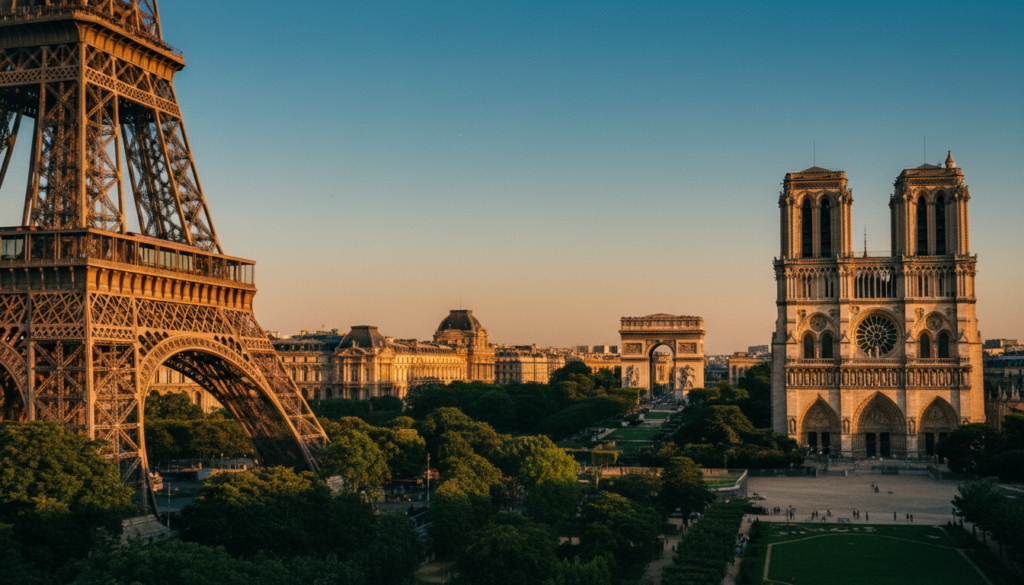
Exploring Paris’s historic monuments and architectural wonders is a journey through time. Each building tells a story of faith, power, and creativity. You’ll see Gothic cathedrals, opera houses, and more, showcasing French culture’s rich heritage.
These landmarks are more than just sights to see. They offer a glimpse into Paris’s past and its architectural evolution. Whether you’re admiring medieval art or marveling at 19th-century grandeur, each visit is unique.
Notre-Dame Cathedral
Notre Dame Cathedral stands proudly on the Île de la Cité, overlooking the Seine. After a fire in 2019, it has reopened, though restoration continues. The exterior boasts stunning stone carvings, gargoyles, and rose windows that have captivated visitors for centuries.
The cathedral’s history began in 1163, with construction taking nearly 200 years. It has seen coronations, royal weddings, and key moments in French history. It’s more than just a building.
Plan your visit to Notre Dame carefully. Lines can be long, especially in summer. You might find similar beauty in other Parisian churches without the wait.
Entry to the cathedral is free, but reservations are required. You can see the nave, chapels, and art that survived the fire. The interior, restored, reveals colors unseen for generations.
Sainte-Chapelle
Sainte-Chapelle is a hidden gem on the Île de la Cité. Commissioned by King Louis IX in the 13th century, it houses precious Christian relics. The chapel’s upper level features 50-foot-tall stained glass windows that create a kaleidoscope of light.
The windows, mostly from the 13th century, depict over 1,000 biblical scenes. Sunlight through the glass transforms the interior into a colorful jewel box. The soaring nave and delicate rose windows showcase medieval craftsmanship.
Entry to Sainte-Chapelle costs €19 for adults. Advance online booking is essential due to limited visitor capacity. Lines for same-day tickets can be over two hours long during peak season. Many find this a worthwhile experience despite the cost.
Palais Garnier – The Paris Opera House
The Palais Garnier is Paris’s grand opera house, built in the late 1800s. Emperor Napoleon III commissioned it to showcase French culture. The building is as opulent as Versailles, with a copper dome that has turned green with age.
The exterior features elaborate sculptures and columns. Inside, the Grand Staircase and painted ceilings are breathtaking. Natural light illuminates the colored marble from around the world.
The Grand Foyer is a social space with mirrors and chandeliers. The ceiling features paintings surrounded by gilded moldings. The auditorium is adorned with red velvet, gold leaf, and artistic detail.
Self-guided entry costs €15 for adults, with an audio-visual guide adding €8. The multimedia guide is highly recommended for its visual reconstructions and historical context. Allow 90 minutes for a thorough tour, though you can rush through in 45 minutes if pressed for time.
Check the performance schedule before visiting, as parts of the building close during rehearsals and shows. Daytime visits between 10 AM and 1 PM offer the fullest access to all public areas.
Les Invalides and Napoleon’s Tomb
Les Invalides and Napoleon’s tomb are a vast complex on Paris’s Left Bank. Originally built as a hospital for wounded soldiers, it now houses museums, monuments, and churches dedicated to French military history. The golden dome of the Église du Dôme dominates the Paris skyline, visible from various vantage points across the city.
The tomb of Napoleon Bonaparte lies beneath the dome. His remains are in six nested coffins inside a red quartzite sarcophagus. The Musée de l’Armée occupies much of the complex, displaying one of the world’s largest collections of military artifacts.
Additional chapels within the complex contain tombs of other French military heroes. The architecture itself tells stories of French power and ambition. The site offers audio guides in multiple languages to enhance your understanding of the exhibits and their historical context.
Combined entry to the tomb and museums costs approximately €14 for adults. Allocate at least two hours to explore the highlights, though military history enthusiasts could spend a day examining the extensive collections.
Famous Tourist Attractions in Paris for Garden and Nature Lovers
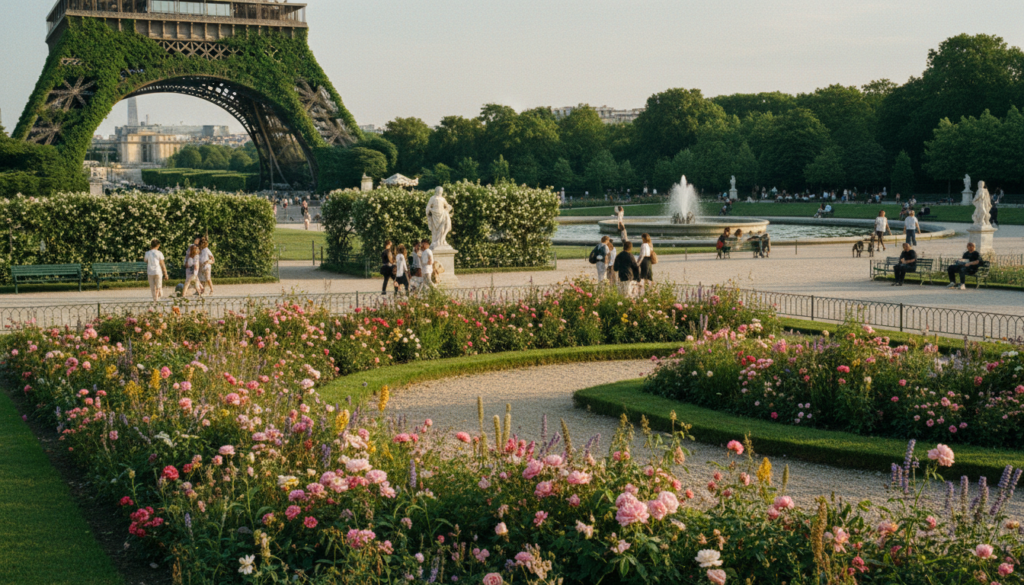
Paris is famous for its beautiful gardens and parks. These green spaces are a big part of Parisian life. They offer a peaceful escape from the city’s hustle and bustle.
Each garden has its own unique charm. You can see everything from perfectly manicured French gardens to wild, romantic landscapes. These natural environments are all within the city.
The Timeless Elegance of Formal French Gardens
The Jardin des Tuileries is a 55-acre green space between the Louvre and Place de la Concorde. It dates back to the 17th century. Here, you can walk through symmetrical paths, see fountains, and relax in comfortable chairs.
In spring, the Tuileries come alive with colorful flowers. You can rent a chair by the pools and watch Parisians enjoy their lunch. The view of the Eiffel Tower is stunning.
Throughout the jardin des tuileries, you’ll find sculptures and art installations. There are ice cream vendors and cafés for refreshments. Early mornings are quiet, while afternoons are lively.
Where Parisians Gather for Leisure
Luxembourg Gardens is a favorite among Parisians. It was created in the 17th century around Luxembourg Palace. The gardens mix French and English styles, offering diverse environments.
The Grand Bassin is the garden’s centerpiece, where children sail model boats. You’ll find green metal chairs everywhere, inviting you to sit. The Medici Fountain is a romantic spot with its Italian design.
Luxembourg gardens has over 100 statues of French queens and notable women. There’s a puppet theater, tennis courts, and chess tables. The orchards show traditional French horticulture.
Botanical Wonders and Scientific Discovery
The Jardin des Plantes is a green space that’s also educational. It started as a royal herb garden in 1626. Now, it spans 28 hectares in the 5th arrondissement.
Inside the jardin des plantes, you’ll find the Natural History Museum. It has galleries on paleontology, mineralogy, and evolution. The Grande Galerie de l’Évolution has spectacular taxidermy displays for all ages.
Greenhouses in the garden have tropical and desert plants. The alpine garden recreates mountain environments. The Ménagerie is one of the world’s oldest public zoos.
Dramatic Landscapes and Local Charm
Parc des Buttes-Chaumont offers a different look from Paris’s formal gardens. It’s in the 19th arrondissement and has rugged cliffs, waterfalls, and dramatic elevation changes. Napoleon III created it in the 1860s from former quarries.
A manmade lake with a rocky island and the Temple de la Sibylle provide stunning views. You can reach the temple on a suspension bridge. This adds adventure to your visit.
The parc des buttes-chaumont is loved by locals. It’s a place for jogging in the morning and picnics on weekends. Grottos and caves offer mystery, and the waterfalls provide a calming sound.
| Garden Name | Size & Location | Best Features | Ideal Visit Time |
|---|---|---|---|
| Jardin des Tuileries | 55 acres, 1st arrondissement | Formal design, Eiffel Tower views, fountains, sculptures | Spring mornings for flowers, afternoons for people-watching |
| Luxembourg Gardens | 23 hectares, 6th arrondissement | Model boat sailing, Medici Fountain, diverse garden styles, statues | Sunny afternoons, weekends for family activities |
| Jardin des Plantes | 28 hectares, 5th arrondissement | Botanical collections, Natural History Museum, greenhouses, zoo | Weekday mornings for educational tours, any season |
| Parc des Buttes-Chaumont | 25 hectares, 19th arrondissement | Dramatic topography, suspension bridge, temple, waterfalls, caves | Early morning for jogging, late afternoon for golden light |
Bring a blanket for picnics and stop at markets for food. The gardens are open longer in summer. They usually open at 7:30 AM and close at dusk.
Parisians see their gardens as outdoor living rooms. They’re perfect for reading, socializing, and enjoying life. These natural spaces show Paris at its most relaxed and authentic. They’re a must-see for your trip.
Charming Neighbourhoods Worth Exploring
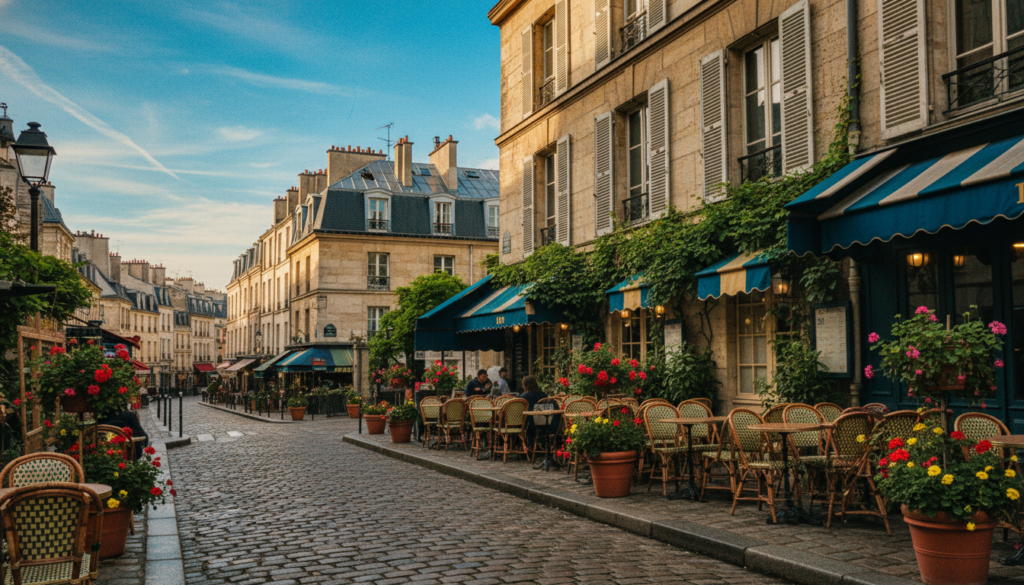
While monuments capture postcards, Paris’s neighborhoods capture hearts. They offer a glimpse into the city’s history and culture. Each district has its own charm, architecture, and local flavor.
Exploring different areas helps you find the right spot for your interests. From bohemian villages to elegant literary quarters, Paris’s neighborhoods show the city’s soul.
Le Marais and Place des Vosges
In the 3rd and 4th arrondissements, Le Marais and Place des Vosges are vibrant and historic. The area has narrow streets and magnificent medieval buildings that survived big changes in the 19th century.
This area mixes old-world charm with modern allure. Historic mansions now house art galleries, and trendy boutiques are in old buildings.
Place des Vosges is Paris’s oldest square. Built in the 17th century, it has symmetrical buildings and a central garden. You can relax or explore art galleries under the arches.
Rue des Francs-Bourgeois is great for shopping with unique designers and vintage stores. The street goes through Le Marais, past cafes where locals brunch.
Rue des Rosiers in the Jewish quarter is famous for falafel and bakeries. The area comes alive at night, with a lively LGBTQ+ scene and nightlife.
Montmartre and Place du Tertre
The Montmartre district is on a hill in the 18th arrondissement. It was once a village where famous artists worked. Picasso, Van Gogh, and others lived here.
Exploring Montmartre on foot is a must, but be ready for hills and stairs. A funicular helps with the steepest part.
Montmartre and Place du Tertre are the heart of the district. Place du Tertre is lively, with artists selling their work. But, it can be crowded and pricey.
Wandering side streets in Montmartre is magical. You’ll find hidden spots, windmills, and a vineyard. The sunset from Sacré-Cœur is stunning, but it’s busy.
Instagram-famous cafes are pretty but pricey. For real experiences, try Rue Lepic, where locals shop and eat.
Saint-Germain-des-Prés
This elegant Left Bank area is the intellectual heart of Paris. Saint-Germain-des-Prés was famous for philosophers and artists in the mid-20th century.
Les Deux Magots and Café de Flore are famous cafes on Boulevard Saint-Germain. They hosted Jean-Paul Sartre and Ernest Hemingway. Prices are high, but the history is worth it.
Rue Bonaparte and Rue de Rennes offer upscale shopping. Art galleries and antique shops are also here.
The Saint-Germain-des-Prés church is one of Paris’s oldest. It’s a peaceful spot in the busy streets.
The Latin Quarter is nearby, with the Sorbonne university. It’s lively with affordable food and bookshops.
Île de la Cité and Île Saint-Louis
The Seine’s two islands are in the heart of Paris. Île de la Cité and Île Saint-Louis are where Paris began over 2,000 years ago.
Île de la Cité has big monuments like Notre-Dame Cathedral. It’s busier, with wide boulevards and government buildings.
Île Saint-Louis is quieter, with narrow streets and 17th-century houses. Berthillon ice cream shop is famous, but it’s busy in summer.
Walking the perimeter of Île Saint-Louis offers great views. Street musicians and locals picnic here on warm evenings.
Pont Saint-Louis connects the islands, offering views of Notre-Dame. The area is magical at sunset, with golden light on the Seine.
| Neighborhood | Best Known For | Ideal Visiting Time | Walking Difficulty |
|---|---|---|---|
| Le Marais | Historic architecture, trendy boutiques, Jewish quarter, LGBTQ+ nightlife | Afternoon to evening | Easy (flat terrain) |
| Montmartre | Artist history, Sacré-Cœur views, bohemian atmosphere, Place du Tertre | Morning or sunset | Challenging (steep hills) |
| Saint-Germain-des-Prés | Literary cafes, upscale shopping, art galleries, intellectual heritage | Mid-morning to afternoon | Easy (flat terrain) |
| Île de la Cité & Île Saint-Louis | Medieval origins, island charm, ice cream shops, Seine views | Late afternoon | Easy (minimal elevation) |
Exploring Paris, you might also want to see the Champs-Élysées. This famous avenue is long and grand. But, Champs-Élysées shopping is mostly international chains, not unique Parisian boutiques.
Each neighborhood is best explored slowly, with stops at cafes and parks. Observe daily life, visit markets, and explore side streets. These areas show Paris’s history and culture, making it a fascinating city to explore on foot.
Famous Tourist Attractions in Paris Along the Seine
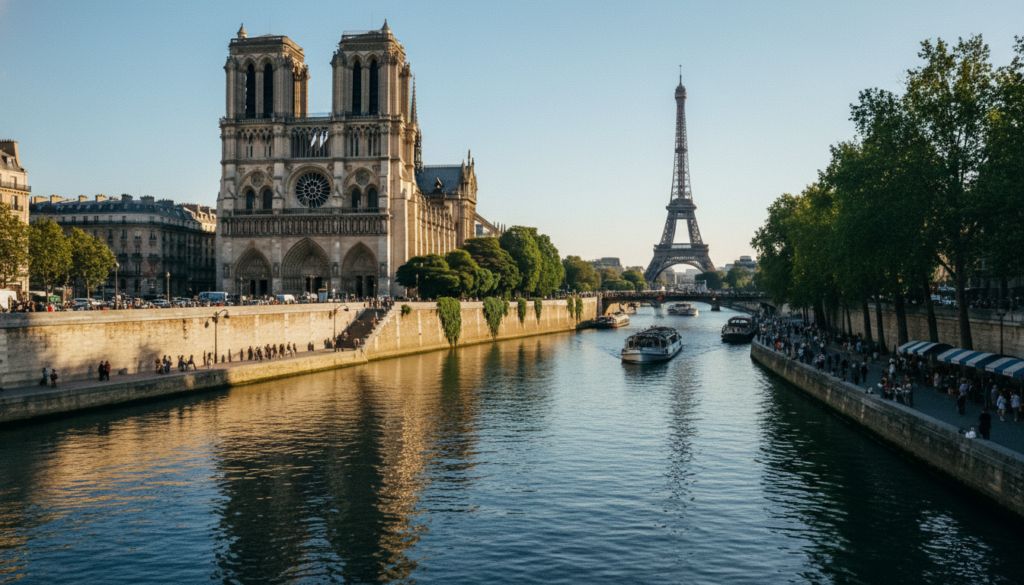
The Seine River flows through Paris, turning it into a scenic attraction. It’s a key route and a backdrop for famous landmarks. Exploring the Seine offers romantic and breathtaking views you can’t find elsewhere.
The bridges along the Seine connect history and beauty. Walking by the river reveals hidden gems. Whether cruising or strolling, the Seine offers a journey through French culture.
Pont Alexandre III
The Pont Alexandre III is the most ornate and photographed bridge in Paris. It connects the Esplanade des Invalides to the Grand Palais and Petit Palais. The bridge dazzles with golden statues and Art Nouveau lamp posts.
Built for the 1900 Universal Exhibition, it celebrates the Franco-Russian alliance. Photographers love it during golden hour. The bridge offers stunning views of the Seine and monuments.
Seine River Cruises with Bateaux Mouches
Seine river cruises offer a unique view of Paris. They start near the Eiffel Tower. Standard one-hour sightseeing cruises start around €17.
On the cruise, you’ll see landmarks like Notre-Dame and the Louvre. The boats pass under historic bridges. It’s a relaxing way to see major sights.
Dinner cruises cost €75-€100 per person and include meals and music. Booking before dinner or at sunset is best. Seine cruises are part of Go City passes.
There are also champagne tastings and nighttime tours. Each offers unique photo opportunities and memorable moments.
Pont Neuf – The Oldest Bridge in Paris
Pont Neuf is the oldest standing bridge in Paris. Built in 1607, it was a design breakthrough. It’s the first Parisian bridge without houses or shops.
The bridge has 381 stone masks on its cornices. These have survived centuries. Walking across offers stunning views of the Seine.
The bridge has twelve arches and a plaza in the middle. This plaza has a statue of Henry IV. It’s a key spot in European bridge design history.
Berges de Seine Promenade
The Berges de Seine promenade has pedestrian-friendly walkways along the river. It’s great for jogging, cycling, or strolls. The paths have benches, gardens, and activity areas.
Along the promenade, you’ll find bouquinistes—green book stalls. They sell vintage books and collectibles. These stalls offer unique souvenirs.
The bouquinistes are a cultural institution. They’ve operated for 300 years. Browsing their stalls captures Paris’s intellectual spirit.
The promenade hosts seasonal events and outdoor cafés. Early morning and evening are peaceful. Midday is bustling with activity.
Cultural Experiences Beyond the Usual Sightseeing
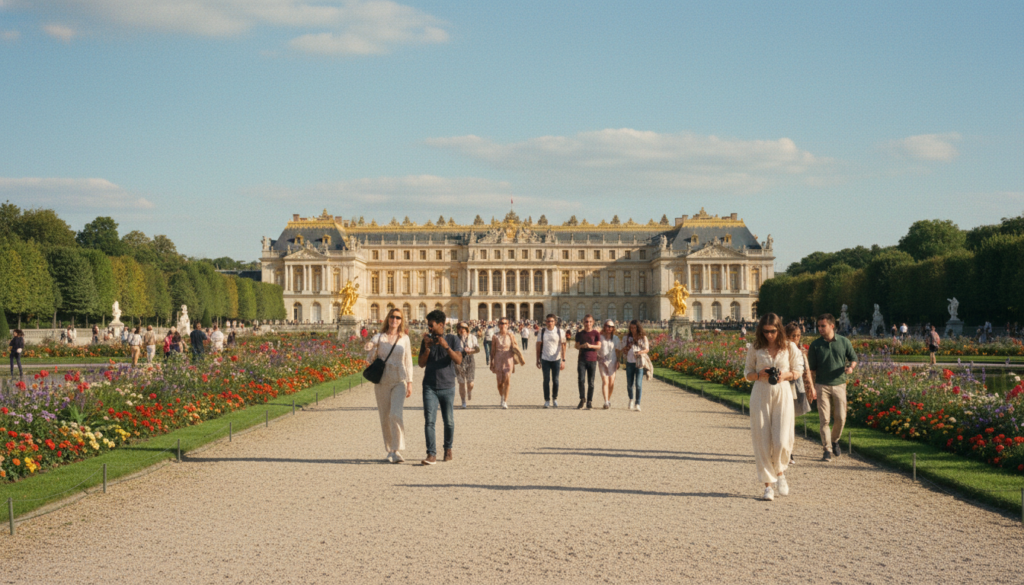
Ready to see Paris like a local? Get ready for experiences that go beyond the usual tourist spots. These cultural experiences beyond the usual sightseeing show you the real France. You’ll see history, art, and traditions that most tourists miss.
Each place offers a unique look at Paris’s past. You’ll explore underground ossuaries, celebrity graves, and the royal palace. You’ll also see classic Parisian shows. These aren’t just sights; they’re deep dives into French culture.
Royal Splendor Just Outside the City
The Palace of Versailles is a must-see, just 12 miles from Paris. It’s a stunning example of Baroque architecture. The palace’s grandeur will leave you amazed.
Getting there is easy. You can take a train for about €4 each way. Or, book a palace of versailles tour for a hassle-free trip.
Inside the Versailles Palace, you’ll see the Hall of Mirrors. It has 357 mirrors that reflect the garden’s beauty. The King’s and Queen’s apartments have original furnishings from the 17th and 18th centuries.
The gardens are huge and need hours to explore. You’ll see fountains and sculptures that tell stories from Louis XIV’s time. Timed tickets cost around €20-€27. Book early to avoid crowds.
Arrive early to avoid the crowds. Rent bikes to see more of the estate. For more non-touristy things to do in Paris, Versailles is a great choice.
Beneath the Streets of Paris
The Catacombs of Paris offer a different view from Versailles. These tunnels hold the bones of six million Parisians. The displays are fascinating but not for the faint of heart.
This place is not for everyone. It’s dark, damp, and has narrow passages. But for those interested in unusual history, it’s a must-see.
Book your tickets early. Daily visitor numbers are limited. You can’t just show up.
Walking through the catacombs is a unique experience. You’ll see skeletal remains and learn about Paris’s past. The visit takes about 45 minutes to an hour.
A Cemetery That’s a Tourist Destination
Père Lachaise Cemetery is a famous spot in Paris. It’s home to famous poets, artists, musicians, and statesmen. Walking here feels like exploring an outdoor sculpture garden.
Visit Oscar Wilde’s tomb, covered in lipstick kisses. Jim Morrison’s grave also attracts fans. Other notable residents include Edith Piaf and Frederic Chopin.
The cemetery’s beautiful landscaping and architecture create a peaceful atmosphere. Get a map at the entrance or use a smartphone app to find graves. It covers 110 acres.
Allow two hours to explore fully. It’s a peaceful and moving experience. The cemetery offers a unique look at Paris’s cultural history.
Iconic Parisian Entertainment
The Moulin Rouge and Parisian cabaret is a must-see since 1889. It offers two shows nightly with spectacular costumes and staging. But, it’s not what everyone expects.
Tickets start at €118 for the show with champagne. Seating can be cramped, especially at lower prices. Female dancers perform topless in elaborate costumes.
Avoid the dinner option unless you like expensive meals. The dinner packages are too pricey. Stick with the champagne-only option for better value.
If you want to see the Moulin Rouge, you’ll likely enjoy it. The production values are impressive. For more night attractions in Paris, the cabaret offers something unique.
Book tickets early, especially during peak seasons. The late show times mean you’ll be out until after midnight. While not for everyone, the Moulin Rouge delivers on its promise of glitz and glamour.
Family-Friendly Attractions in Paris
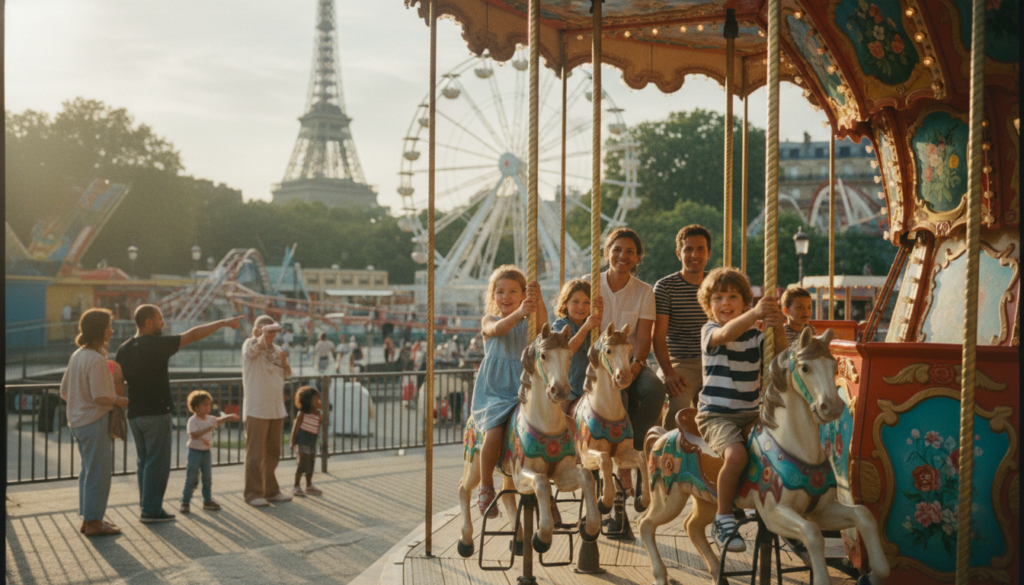
Paris is more than just romantic walks and museums. It has many attractions for families. These spots are fun for kids and adults, offering entertainment and educational experiences for young travelers.
These attractions in Paris are a mix of fun and learning. Your kids will love the interactive exhibits, thrilling rides, and activities. You’ll make memories that last a lifetime.
Europe’s Premier Theme Park Experience
Disneyland Paris is Europe’s largest theme park, just 32 kilometers east of Paris. It has two parks: Disneyland Park with classic Disney attractions and the iconic Sleeping Beauty Castle. Walt Disney Studios Park focuses on movie-themed rides and behind-the-scenes entertainment.
Getting there is easy with the RER A train to Marne-la-Vallée/Chessy station. It takes about 40 minutes from central Paris. You can also take shuttle buses from the city.
Ticket prices vary by season and how early you book. Buying tickets online weeks in advance saves money.
To enjoy Disneyland Paris, arrive early to beat the crowds. The Disney app helps plan your day with real-time wait times.
Disneyland Paris is a highlight for families. But, if you want to explore Paris, spend a day in the city center.
The magic of Disney brings joy to families across languages and cultures.
Interactive Science Discovery for All Ages
The Cité des Sciences et de l’Industrie is a top science museum for families. It’s in Parc de la Villette and attracts over two million visitors yearly. It offers hands-on science education.
Explore exhibits on space, technology, biology, and physics. Your kids can do experiments and watch demonstrations. This makes science fun and easy to understand.
The museum has a planetarium with immersive shows and a Géode IMAX cinema. There’s also a special area for kids aged 2-12 with activities for hours of fun.
This is great on rainy days. Most signs and exhibits have English, making it easy for visitors from abroad.
Underwater Wonders Near Trocadéro
The Aquarium de Paris is near Trocadéro and offers marine life encounters. It has over 10,000 fish and invertebrates in dozens of exhibits.
See France’s largest shark tank and interactive touch pools where kids can touch starfish and other sea creatures. The jellyfish room is mesmerizing with special lighting.
The aquarium is not the world’s largest but offers hours of fun for ocean life fans. It’s close to the Eiffel Tower and Trocadéro Gardens for a great afternoon.
Classic Amusement in Bois de Boulogne
Jardin d’Acclimatation is a traditional amusement park in the Bois de Boulogne. It has carnival rides, a small zoo, playgrounds, and puppet shows.
Young children (under 12) will love the gentler rides and attractions. It’s a great break from museums and monuments. The garden setting is perfect for outdoor fun.
Entry fees are affordable, and you can buy ride tickets individually or in packages. It’s a place where parents can relax while kids play safely.
The park is popular on weekends and school holidays. Visiting on weekday mornings is quieter.
| Attraction | Best Age Range | Estimated Visit Duration | Key Highlight |
|---|---|---|---|
| Disneyland Paris | 3-12 years | Full day (8-10 hours) | Classic Disney characters and themed lands |
| Cité des Sciences | 5-15 years | 3-4 hours | Hands-on science experiments and planetarium |
| Aquarium de Paris | 3-10 years | 2-3 hours | Shark tank and touch pools |
| Jardin d’Acclimatation | 2-10 years | 3-5 hours | Traditional rides in garden setting |
Plan your trip around these family-friendly attractions in Paris. Everyone will have a great time. Paris is perfect for families, offering fun and learning experiences.
Think about your kids’ ages, interests, and energy levels when choosing attractions. Mixing active entertainment with quieter cultural experiences makes for a balanced trip.
How to Plan Your Visit to Paris Attractions
Planning your Paris trip well can make it amazing. You can avoid long waits and save money. Knowing when to go, which passes to buy, and how to get around is key.
Best Times of Year to Avoid Crowds
Spring (April-May) and fall (September-October) are the best times to visit Paris. The weather is nice, and there are fewer people. Try to avoid Sundays and Tuesdays at places like Versailles, which is closed on Mondays.
Arrive early, around 9:00 a.m., to skip the crowds. Check out detailed Paris itineraries for the best days to visit.
Paris Museum Pass and City Cards
The Paris Museum Pass lets you into over 60 places for a good price. It costs between €55 (two days) and €85 (six days). The Go City Pass includes attractions, cruises, and tours for a full Paris experience.
Getting Around with the Métro and RER
The Métro is great for central Paris, and the RER goes to Versailles and airports. Buy tickets at stations or use contactless payment. Citymapper is a great app for planning your route.
Paris’s neighborhoods are closer than they seem on maps. Walking between attractions is often easy.
Booking Skip-the-Line Tickets in Advance
Book your tickets for the Eiffel Tower, Louvre, Sainte-Chapelle, and Versailles early. They sell out fast. Combo tickets might be easier to get than single ones.
Don’t wait to buy tickets at the door. You might be out of luck.
FAQ
What are the most famous tourist attractions in Paris that I absolutely shouldn’t miss?
You must see the Eiffel Tower, the Louvre Museum, and Notre-Dame Cathedral. Also, don’t miss the Arc de Triomphe, Sacré-Cœur Basilica in Montmartre, and Sainte-Chapelle. A Seine River cruise, Le Marais, and Montmartre are also must-sees.
Consider a day trip to the Palace of Versailles. Balance famous sites with quieter spots in Paris’s gardens and neighborhoods for a full experience.
How far in advance should I book tickets for famous tourist attractions in Paris?
Book tickets for big attractions like the Eiffel Tower and Louvre Museum 2-4 weeks in advance. This is especially true during peak seasons and holidays. These spots often sell out, and without pre-booked tickets, you might face long waits or be turned away.
For museums like the Musée d’Orsay, booking a few days to a week ahead is usually enough. But, booking early is safer during busy times.
Is the Paris Museum Pass worth buying for visiting famous tourist attractions in Paris?
The Paris Museum Pass is worth it if you plan to visit 4-5 major attractions. It costs around €55 for two days, €70 for four days, or €85 for six days. It covers over 60 museums and monuments, including the Louvre and Versailles.
It saves money and often lets you skip long security lines. But, it doesn’t cover the Eiffel Tower. You might still need to book time slots for certain attractions. If the pass costs more than individual tickets, it’s a good deal.
What’s the best way to see the Eiffel Tower without waiting in long lines?
Always book timed entry tickets in advance through the official Eiffel Tower website or reputable tour operators. Never show up hoping to buy tickets on-site, as you’ll face waits of 2-3 hours or find tickets sold out.
Decide which level you want to visit. The second floor offers the best views for most people. The summit is higher but often cloudier. Consider visiting during early morning or late evening when crowds are smaller.
The tower also has three restaurants and a champagne bar. You can book these experiences separately for a unique visit.
Which famous tourist attractions in Paris are best for families with children?
Disneyland Paris is great for young Disney fans, located about 32 kilometers from central Paris. The Cité des Sciences et de l’Industrie offers hands-on science exhibits for all ages.
The Aquarium de Paris near Trocadéro features interactive touch pools and France’s largest shark tank. The Jardin d’Acclimatation in Bois de Boulogne has carnival rides, playgrounds, and activities for younger children.
Paris’s beautiful gardens, like Luxembourg Gardens, offer space to run around and puppet shows. Even the Eiffel Tower and Seine River cruises captivate children with their scale and unique perspectives.
What are the best times to visit famous tourist attractions in Paris to avoid crowds?
The best months to visit Paris are April-May and September-October. These months offer pleasant weather without the summer crowds. Avoid June-August when crowds peak and prices rise.
Winter months (November-March, except holidays) have the smallest crowds but shorter daylight hours and colder weather. Arrive at major attractions right when they open or during late afternoon/evening hours when day-trippers have left.
The Louvre and Musée d’Orsay have extended hours on Wednesday and Friday evenings with smaller crowds. Avoid weekends at the most popular sites, and consider that Tuesdays see higher museum traffic because many museums are closed Mondays.
How do I get to the Palace of Versailles from Paris?
You can reach the Palace of Versailles by taking the RER C train from various Paris stations to Versailles Château-Rive Gauche station. The journey takes about 30-40 minutes and costs approximately €4 each way.
From the station, it’s a 10-minute walk to the palace entrance. You can also book a guided tour with round-trip transportation included. This costs more but eliminates navigation stress and often includes skip-the-line access.
Whichever option you choose, book your timed palace entry tickets well in advance (around €20-€27 for full access). Arrive early to beat tour bus crowds, and plan to spend at least half a day exploring the palace, gardens, and Marie Antoinette’s estate.
What should I know before visiting the Louvre Museum?
The Musée du Louvre is massive—you cannot see everything in one visit, so plan strategically. While the Mona Lisa is the most famous artwork, expect crowds and a relatively small painting behind protective glass.
Consider taking a guided tour or focusing on less-crowded wings like the Richelieu Wing and the stunning Napoleon III Apartments. Book skip-the-line tickets in advance (around €17-€22) and enter through the less-crowded Porte des Lions or Carrousel du Louvre entrances rather than the main pyramid.
The museum is closed on Tuesdays, and has extended hours until 9:45 p.m. on Wednesdays and Fridays. Download the museum’s app or map beforehand, wear comfortable shoes, and allow at least 3-4 hours for a meaningful visit focused on specific collections that interest you.
Are Seine River cruises worth it, and which company should I choose?
Seine River cruises are definitely worthwhile, offering a relaxing way to see Paris’s major monuments. Bateaux Mouches is the most famous operator, with standard one-hour sightseeing cruises starting around €17.
More elaborate lunch or dinner cruises with live music cost €75-€100 but can be overpriced for what you receive. The best approach is booking a standard daytime or sunset cruise when the light is most beautiful and monuments begin to illuminate.
Many visitors find afternoon cruises (around 4-6 p.m.) ideal for capturing both daylight and twilight views. Skip the expensive dinner cruises and instead enjoy a regular cruise followed by dinner at a quality restaurant in a charming neighborhood.
Is visiting Notre-Dame Cathedral worth the wait after its reopening?
Notre-Dame Cathedral has significant historical and architectural importance and represents an impressive restoration achievement following the devastating 2019 fire. However, whether it’s worth long wait times depends on your interests and schedule.
If you arrive to find hour-long lines, consider that Paris has other equally impressive churches like Sainte-Chapelle (with arguably more breathtaking interiors) and Sacré-Cœur Basilica that might offer better experiences with less waiting. Notre-Dame is most worthwhile if you can visit during less crowded times (early morning or late afternoon) or if Gothic architecture particularly fascinates you.
The exterior and surrounding Île de la Cité area can be appreciated without entering, and many visitors find this sufficient given the time constraints of a Paris vacation.
What makes Sainte-Chapelle different from other churches in Paris?
Sainte-Chapelle is consistently rated as one of Paris’s most breathtaking attractions because of its extraordinary 50-foot-tall stained glass windows—most original from the 13th century—that create an almost otherworldly kaleidoscope of biblical scenes bathed in colored light.
Unlike larger churches, Sainte-Chapelle is an intimate Gothic chapel that feels more like stepping inside a jewel box. The windows depict over 1,000 biblical scenes, and on sunny days, the colored light transforming the interior is truly magical. Despite the €19 entry fee, most visitors consider it excellent value and more impressive than many larger, more famous churches.
The key is booking timed tickets in advance to avoid the often lengthy security lines at this small venue with limited capacity.
Which Paris neighborhoods should I explore beyond the main landmarks?
Le Marais is essential for its medieval architecture, vintage boutiques, contemporary galleries, Jewish heritage along Rue des Rosiers (famous for falafel), and the magnificent Place des Vosges—Paris’s oldest planned square.
Montmartre offers bohemian charm with its hilltop location, artists’ studios, hidden staircases, and beautiful views, though be prepared for tourist crowds around Sacré-Cœur and Place du Tertre. Saint-Germain-des-Prés represents intellectual Paris with legendary cafes like Les Deux Magots and Café de Flore, upscale shopping, and art galleries.
The two islands—Île de la Cité (home to Notre-Dame and Sainte-Chapelle) and Île Saint-Louis (with its narrow streets, boutique shops, and famous Berthillon ice cream)—offer romantic strolls with stunning architecture. The Latin Quarter around the Sorbonne provides student energy, bookshops, and affordable bistros. Each neighborhood has distinct character worth experiencing on foot.
Should I visit the Eiffel Tower summit or is the second floor enough?
For most visitors, the second floor of the Eiffel Tower offers the best experience—you’re high enough for spectacular views (115 meters up) with clear perspectives on Paris’s layout and landmarks, while being close enough to identify specific buildings and streets.
The second floor also has the best restaurant (Le Jules Verne) and more space to move around. The summit (276 meters) is certainly impressive and offers bragging rights, but views can be obscured by clouds or haze, identifying specific landmarks becomes harder from that height, and it adds both cost and time (another elevator and potential wait).
If weather is perfect and you specifically want to say you’ve been to the very top, go for it, but don’t feel you’re missing out if you stop at the second floor—many Paris veterans actually prefer it.
What’s the best way to experience Versailles in one day?
Start early by taking the first RER train or joining a morning tour to arrive when the palace opens, giving you first access before tour buses arrive. Book your timed entry tickets well in advance for the palace interior (€20-€27 for full access including the estate).
Spend 2-3 hours touring the State Apartments, Hall of Mirrors, and royal chambers—consider the multimedia guide for enhanced context. Then head to the vast gardens, where you can walk, rent bikes (highly recommended for covering more ground), or take the petit train.
Don’t miss Marie Antoinette’s Trianon estate and Hamlet at the garden’s far end, where she escaped court life—it’s a 20-minute walk or short bike ride but absolutely worth it. Bring snacks or plan for lunch at one of the on-site cafes (or pack a picnic for the gardens). Allow a full day (6-8 hours) for a comprehensive visit, or at minimum a half-day (4-5 hours) focusing on the palace and main garden areas.
Are the Catacombs of Paris suitable for everyone, and how do I visit?
The Catacombs of Paris are definitely not for everyone. You’ll descend 131 steps into underground ossuaries, walk through narrow tunnels with low ceilings, and view the bones and skulls of approximately six million Parisians arranged in sometimes artistic, sometimes macabre displays.
The temperature is cool (around 14°C/57°F year-round), the space can feel claustrophobic, and you’ll climb 112 steps to exit. It’s not recommended for anyone with mobility issues, claustrophobia, or those easily disturbed by human remains.
However, if you’re fascinated by unusual history, underground spaces, and Paris’s hidden side, it’s a truly unique experience. Daily visitor numbers are strictly limited, so you must book tickets well in advance—they often sell out weeks ahead. The visit takes about 45 minutes to an hour, and photography is allowed. Arrive at your exact ticket time and bring a light jacket.
What’s the best way to get around Paris to visit all the famous tourist attractions?
Paris’s Métro (subway) system is the most efficient way to get around, with stations approximately every 500 meters throughout central Paris, making virtually all famous tourist attractions easily accessible. Trains run from about 5:30 a.m. to 1:00 a.m. (later on weekends).
You can buy individual tickets (€2.10) or a carnet of ten tickets (€17.90), or consider the Navigo Découverte pass for unlimited weekly travel. However, many famous tourist attractions in Paris are actually within walking distance despite being in different arrondissements—for example, you can walk from the Louvre through the Tuileries Gardens to Place de la Concorde and up the Champs-Élysées to the Arc de Triomphe.
Apps like Citymapper or Google Maps make navigation simple, showing you whether walking or transit is faster for any route. Paris is a very walkable city, and you’ll discover charming streets and cafes between major sites that you’d miss if you only took the Métro.
Is the Moulin Rouge cabaret show worth the high ticket price?
The Moulin Rouge is expensive (tickets start at €118 and can exceed €200 with dinner), and you should understand exactly what you’re getting before booking. The show features spectacular costumes, impressive staging, choreography, and live music, with topless female performers as part of the traditional French cabaret style.
However, the dancing isn’t exceptional compared to professional dance performances, seating can be cramped, and the experience is undeniably touristy rather than authentically Parisian. Most visitors should skip the dinner option—it’s even more expensive, the food is mediocre, and the seating is more uncomfortable.
That said, if seeing the iconic Moulin Rouge is on your bucket list and you approach it as a fun, splurgy entertainment experience rather than high art, you’ll likely enjoy the spectacle. Book the champagne-only option for the best value, and don’t expect an intimate or sophisticated evening—it’s big, loud, and designed for tourists, but it delivers exactly what it promises.
How many days do I need to see the major famous tourist attractions in Paris?
You need at minimum 3-4 full days to see Paris’s major famous tourist attractions without feeling completely rushed. A reasonable first-visit itinerary might include: Day 1 – Eiffel Tower, Trocadéro, Arc de Triomphe, and Champs-Élysées; Day 2 – Louvre Museum and Tuileries Gardens; Day 3 – Notre-Dame, Sainte-Chapelle, Île de la Cité, and a Seine River cruise; Day 4 – Versailles day trip.
However, 5-7 days allows you to experience Paris more thoroughly, adding Montmartre and Sacré-Cœur, Musée d’Orsay, Luxembourg Gardens, Le Marais neighborhood, Père Lachaise Cemetery, and time for simply wandering charming streets, enjoying long cafe breaks, and making spontaneous discoveries. Remember that Paris rewards a slower pace—rushing from landmark to landmark without time to absorb the atmosphere means you’ll miss much of what makes the city special.
Quality experiences at fewer attractions often create better memories than exhausting yourself trying to check off every possible sight.
Which famous museums in Paris are best for impressionist art?
The Musée d’Orsay is absolutely the best museum for impressionist and post-impressionist art, housing the world’s finest collection of works by Monet, Renoir, Degas, Cézanne, Van Gogh, Gauguin, and many others. The museum is housed in a beautiful former train station, making it more manageable than the overwhelming Louvre, and you can see masterpieces like Van Gogh’s “Starry Night Over the Rhône” and Monet’s “Poppy Field” without excessive crowds (especially if you visit during evening hours on Wednesday or Friday).
The nearby Musée de l’Orangerie is a perfect complement, featuring Monet’s massive Water Lilies panels in specially designed oval rooms that create an almost meditative atmosphere—these paintings are much larger than most people realize and represent the culmination of Monet’s career. Together, these two museums provide an unparalleled impressionist experience. Both are covered by the Paris Museum Pass, and you should allow 2-3 hours for Musée d’Orsay and 1-2 hours for Musée de l’Orangerie.
What should I know about visiting the Arc de Triomphe?
The Arc de Triomphe offers some of Paris’s most spectacular panoramic views from its observation deck, looking out over the Champs-Élysées toward the Eiffel Tower in one direction and Montmartre in another, with the perfectly symmetrical layout of Haussmann’s Paris radiating in all directions.
You’ll need to climb 284 steps (no elevator for visitors), but the climb is absolutely worthwhile for