Ever wondered whether you can really feel Paris instead of just ticking boxes? I ask that because the city is arranged in numbered arrondissements, and what looks far on a map is often a short, lovely walk.
This short guide strikes a balance: a practical list that mixes iconic landmarks, art you can feel, and neighborhoods worth wandering. I’ll set expectations—Paris doesn’t reward the traveler who tries to “win” it in three days.
I write from years of travel and trial; you’ll get traveler-to-traveler tips on what’s worth your time depending on your vibe—first trip or repeat visit, museum lover or one-museum-max, budget-aware but quality-focused.
I’ll also share real logistics: when timed tickets save hours, when a pass makes sense, and how to avoid lines so your days are for wandering, not waiting.
Key Takeaways
- Don’t try to see everything; leave room for serendipity.
- Use a simple map to orient yourself—many sites are walkable.
- Prioritize timed tickets and passes to skip long lines.
- Choose highlights based on your travel vibe and past visits.
- Mix famous spots with odd, lesser-known stops for balance.
- Expect honest advice on what’s worth it and what’s overrated.
Fun attractions in Paris you can’t miss on a first trip
Pick one headline sight each day, then layer in cafés, short walks, and a neighborhood that feels cinematic.
I call this the starter pack for a first trip: the must-see icons that actually repay your time, plus a few easy choices to skip if you’re not excited.
Eiffel Tower — built in 1887 by Gustave Eiffel for the 1889 World’s Fair. You can climb 674 steps, use the elevators, or dine at one of the restaurants and bars. Decide whether you want the panoramic climb or a picnic on the grass and the classic ground-level view.
- Arc Triomphe — a top viewpoint at night when the tower sparkles. Great for wide city vistas.
- One classic museum or two, plus a neighborhood that feels like a movie set for wandering and people-watching.
Plan 1–2 anchors per day, expect crowds at peak time, and start with a walking tour or strategic stroll to get your bearings. That way your trip paris balances big moments and calm discovery.
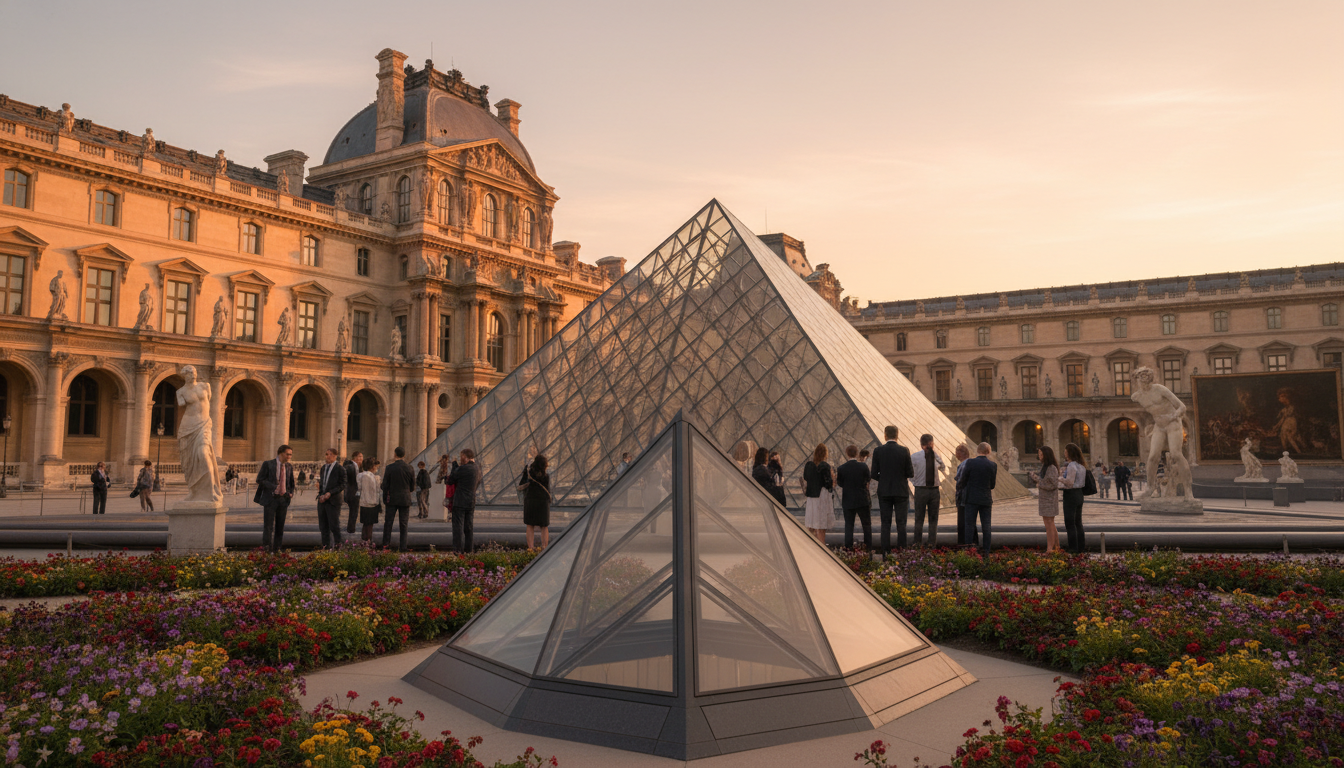
The Louvre Museum highlights beyond the Mona Lisa
You don’t need to see every gallery to leave the Louvre thrilled—pick a path and own it.
The building spans over 60,000 sqm, so trying to “do it all” is a fast route to fatigue. Focus on one wing or a theme: sculpture, Renaissance masters, or big-hitters across periods.
If you want context and faster access, a private guided tour helps you notice details you would walk past. Alternatively, skip-the-line timed entry tickets let you wander at your own pace for a focused 2–3 hour visit.
“Aim for morning slots and avoid the heavy afternoon flow—your energy is the ticket to good viewing.”
- See works by lesser-known masters in the Denon and Sully wings.
- Pick one theme and follow a simple route—no backtracking.
- Bring comfortable shoes, a bottle of water, and low expectations about seeing everything.
Bottom line: choose a tour or timed tickets, set a short list of highlights, and leave time to breathe by the Seine. That’s the best way to feel like you did the Louvre justice without burning out.
Impressionist Paris: Musée d’Orsay, Musée de l’Orangerie, and Water Lilies
For a compact, soulful art day, pair the sweep of musee d’orsay with the quiet power of Monet’s oval canvases.
Musée d’Orsay occupies a Beaux‑Arts former station; the building adds to the experience and helps the art land. Its Impressionist and post‑Impressionist paintings give you a big, curated story without the marathon feel of larger museums.
Across the Tuileries sits the Orangerie. The oval rooms that hold Monet’s water lilies have a hush that photos don’t capture. Seeing them in person is an emotional reset—small, intense, and very physical.
My simple timing: Orangerie for a quieter morning or late‑day pause; d’Orsay when you have energy for several floors. That rhythm keeps the day cohesive rather than scattered.
Practical tips: use an audio guide or a short guided tour if you want context quickly. A museum pass can pay off if you reserve slots and limit yourself to two stops per day.
“A museum, a café, and a riverside stroll—let the paintings settle into your day.”
Notre-Dame Cathedral and Île de la Cité classics
Step onto Île de la Cité and you feel how old streets and modern life share the same heartbeat.
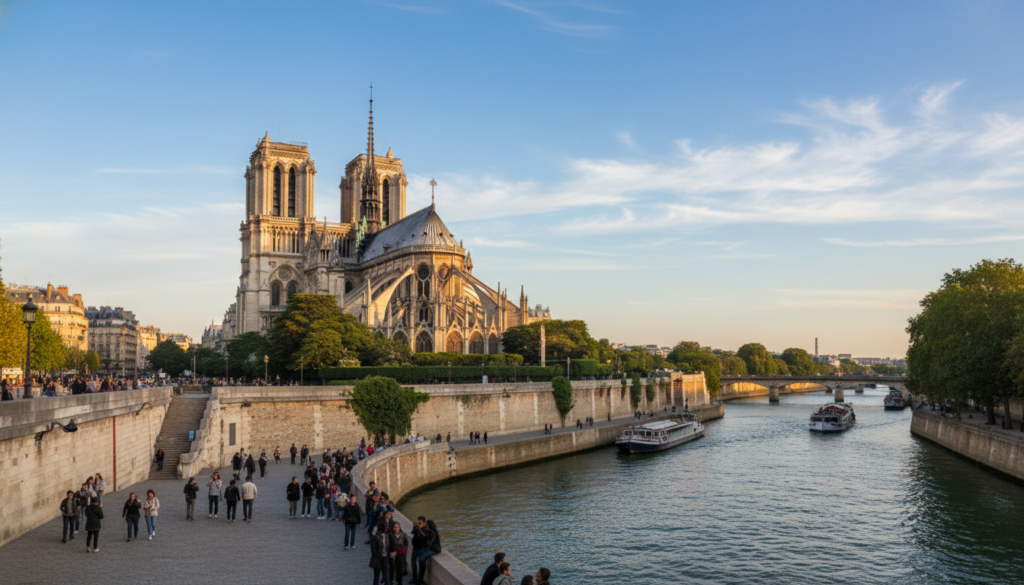
Today you can visit the cathedral interior, though the towers remain closed for restoration. That means you get the nave and light, but not the climb—plan your expectations so the day feels full, not frustrating.
A simple loop works best: admire the façade, wander the island’s small lanes, then cross a bridge for the classic Seine view. It makes the stop a neat block of your itinerary.
Some guided tour options focus on the façade and the crypt’s history. If you like stories and short contextual walks, pick one; you’ll learn what makes these places matter without a half-day commitment.
“Go early or late to avoid the biggest groups—these hours give the spot a quieter, more local feel.”
- Pair this visit with a nearby bookstore or café for a calm pause.
- Move slowly, look up, and let the island set the pace for the rest of your city day.
Sainte-Chapelle stained glass that feels like a hidden gem
Walk inside Sainte‑Chapelle and you’ll quickly rethink what “window” can mean.
Sainte‑Chapelle sits on Île de la Cité and is famous for its stained glass. When sunlight hits at midday, the effect is less a collection of pretty windows and more a vivid, almost physical wash of color.
Why I’d prioritize this interior: the chapel is small, so the visual impact is immediate. Even if you’re not a church person, the scale and detail make it a rare stop among historic places.
“Aim for a sunny, mid‑day visit—those are the moments the panels feel alive.”
Practical notes: book skip‑the‑line tickets or a short tour to avoid long waits. If slots are limited, try nearby time windows or combine it with a Notre‑Dame area walk so the visit stays relaxed.
Quick strategy: do a slow lap, keep looking up, then sit for a minute so the color sinks in. That pause turns the image from a photo moment into memory.
| Best time | Why | Pair with |
|---|---|---|
| Mid‑day (sunny) | Glass panels show peak color intensity | Short Seine walk; Notre‑Dame area |
| Late morning | Fewer crowds than early afternoon | Coffee nearby, quick loop of Île de la Cité |
| Reserved slot | Skip lines, better mood, more time | Combine with another short stop that day |
- Expect crowds, but the space is small enough that timing pays off.
- Bring a calm pace—this is one of those world spots that rewards slow looking.
Montmartre: art, Sacré-Cœur, and bohemian streets
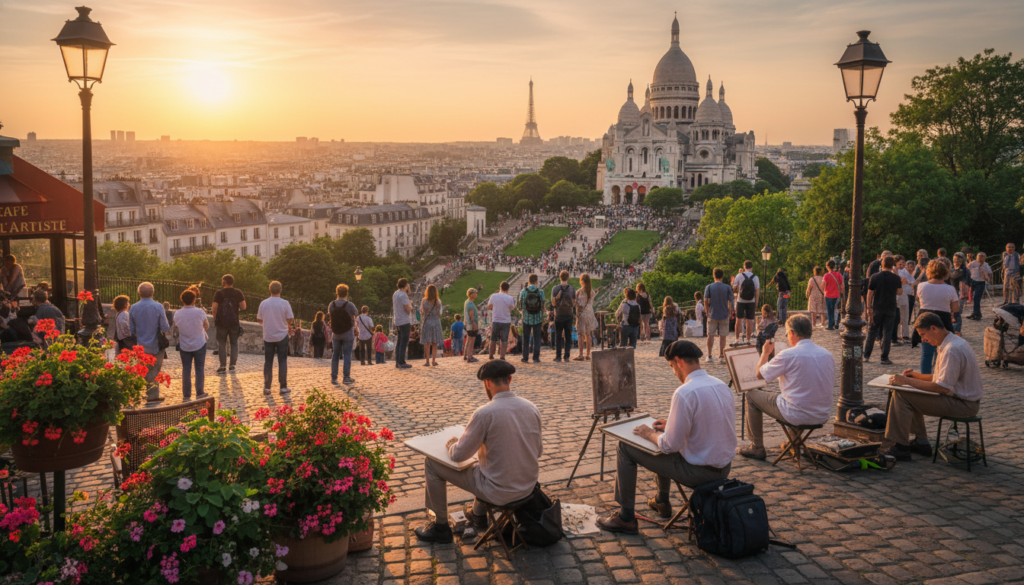
Montmartre sits above the city like a lived‑in postcard—narrow lanes, artists, and a wide view that rewards slow walking.
I map a simple route: start at Sacré‑Cœur for the panorama, then take the quieter side streets toward Place du Tertre. Pause on a bench; watch buskers and local people drift by.
Should you do a tour? A food tour or a short guided tour is worth it if you want local bites and fewer tourist-restaurant traps. A good one hits pastry stops, wine or cheese, and a couple of hidden places you’d miss alone.
Be realistic about stairs and walking. Montmartre is hilly; pace yourself and plan one sit-down moment—coffee, a dessert, or a small glass of wine—so the neighborhood can come to you.
“Late afternoon into night is my go-to: golden light, softer crowds, and a more cinematic mood.”
- Keep the route flexible; let art and small discoveries set the pace.
- Aim for one relaxed meal at a recommended restaurant rather than racing sites.
- Enjoy people-watching; on this hill, it’s a local pastime.
Le Marais for boutiques, history, and market bites
If you want a little history, some neighborhood shopping, and smart snacking, Le Marais delivers on a single stroll.
Start with narrow cobblestone streets and let curiosity lead. Pop into concept shops and vintage stores for things that feel like home and not like an airport purchase.
Pause at Marché des Enfants Rouges for quick food tastings or grab a sandwich to sit on the steps of Place des Vosges. That market is compact and perfect for curated bites.
A choose-your-own afternoon works best: boutique browsing, a market stop, then a calm reset in the square. Move slowly; detours are the reward.
“A short food tour can save time and point you to edible souvenirs worth bringing home.”
Consider a guided tour if you want edible souvenirs and a local to curate the best stalls. Otherwise, taste selectively—three stops beat a stress-filled crawl.
- Shopping tip: look for small ateliers, printed scarves, and home goods from independent makers.
- Pair Le Marais with a riverside walk or a nearby museum to stitch it into a longer day without rushing your trip.
Canal Saint-Martin for an off-the-beaten-path Paris vibe
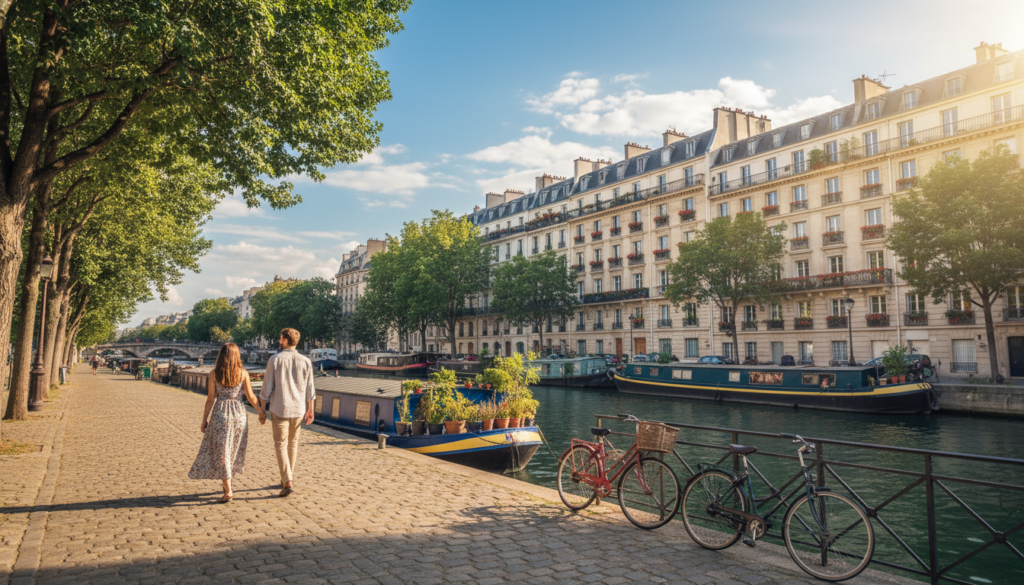
I often choose Canal Saint‑Martin when I need a half‑day that feels lived‑in rather than staged. The canal sits in the 10th arrondissement and offers a quieter stretch of the city where locals meet for coffee and apéro.
What you’ll actually do: stroll the towpath, pause at a waterside café, browse small boutiques, and lean into a slower way of moving through the day.
There’s also a canal boat ride option. The route includes a surprising underground tunnel that shows the city from a different angle. That bit feels like a mini urban adventure.
- Vibe: low‑key, everyday life, fewer crowds than headline spots.
- Best for: repeat visitors, neighborhood lovers, and curious travelers who want off‑map places.
- Plan: treat it as a flexible half‑day that can shrink or expand with your energy.
“Bridges, reflections, and leafy edges make simple photo moments without lines.”
| What to do | Why go | Pair with |
|---|---|---|
| Stroll and café stop | Local pace, easy people watching | Casual dinner nearby |
| Boat ride (with tunnel) | Unique city views, quiet section | Late afternoon apéro |
| Shop small galleries | Discover makers and gifts | Combine with a short museum visit |
Gardens and green escapes in the city
Green spaces are the secret pace-setters that stop a busy sightseeing day from feeling like work.
I always build at least one garden stop into a longer trip. They are not filler; they make the day livable and real.
Top places to know: Jardin du Luxembourg (23 hectares, lounge chairs, local life), Jardin des Tuileries (central between the Louvre and Place de la Concorde), and Place des Vosges (a manicured square in Le Marais).
Picnic playbook: grab a baguette, a wedge of cheese, and something sweet. Claim a chair or a patch of grass and call it a plan.
Use gardens as a reset between big sights. Walk slowly, watch people, read, or study statues—these simple things refresh energy and curiosity.
“The best Paris moments are often the quiet ones you didn’t schedule.”
| Garden | Best for | Quick tip |
|---|---|---|
| Jardin du Luxembourg | Lounging, people-watching | Bring a book and use the green chairs |
| Jardin des Tuileries | Central, short breaks between museums | Perfect for a timed museum day pause |
| Place des Vosges | Pretty pause, boutique stroll | Pair with a Marais walk and café stop |
La Promenade Plantée (Coulée Verte): Paris’ elevated walk
There’s a thin, planted ribbon above the city that feels like a secret garden walk. It’s La Coulée Verte, an elevated greenway built on an old railway viaduct in the 12th arrondissement.
In plain terms: it’s an easy, scenic path that runs nearly three miles from Bastille toward Bois de Vincennes. The route offers different views and a quieter energy away from street traffic and crowds.
Practical plan: start at the Bastille end, then walk as long as you like and hop off where a café or shop catches your eye. Budget thirty minutes to a half day depending on your pace and how often you stop for photos.
This place is perfect for walkers, runners, and photographers — anyone who needs a low-effort win after museum time. Pair the walk with a casual neighborhood meal and it becomes a full, satisfying mini-adventure.
“Not a big monument stop, but a real-life slice of the city that shows another way to travel.”
- What you’ll notice: planted beds, quiet terraces, and odd urban views.
- Best times: morning for calm; late afternoon for warm light.
Spooky and surprising: Catacombs of Paris and cemetery strolls
If you’re curious about the city’s darker history, the Catacombs and Père Lachaise offer two very different but related experiences. The Catacombs are an underground ossuary lined with the bones of millions; the visit feels eerie, quiet, and close to the past.
Practical note: buy timed tickets or join a short tour to avoid long waits. Lines form early and can eat half a day if you don’t plan time slots.
Père Lachaise is gentler but still solemn. People come for famous graves — Oscar Wilde, Jim Morrison, Edith Piaf — and for the artful memorials tucked along shaded paths.
“Approach both places with curiosity and respect; they tell stories about life, death, and the world people left behind.”
Who should go? History lovers, curious travelers, and anyone drawn to the “weird but meaningful” side of a city. If bones unsettle you, skip the ossuary and take the cemetery walk instead.
- Timing: morning slots mean fewer crowds; late afternoon gives soft light in Père Lachaise.
- Tickets: reserve online for the Catacombs; cemetery entry is usually free but guided maps help.
- Pacing: pair this with a lighter day — a garden or café afterward helps reset.
| Site | Why go | Best time |
|---|---|---|
| Catacombs | Unique underground history; intense atmosphere | Morning with timed tickets |
| Père Lachaise | Famous graves, quiet wandering, sculpture and history | Late afternoon for light and calm |
| Guided tour option | Context, faster entry, local stories | Reserve a mid-morning slot to combine both sites |
Final thought: this is a meaningful detour if you want a different kind of day. And it’s fine to pass — the city offers many other ways to feel alive and connected.
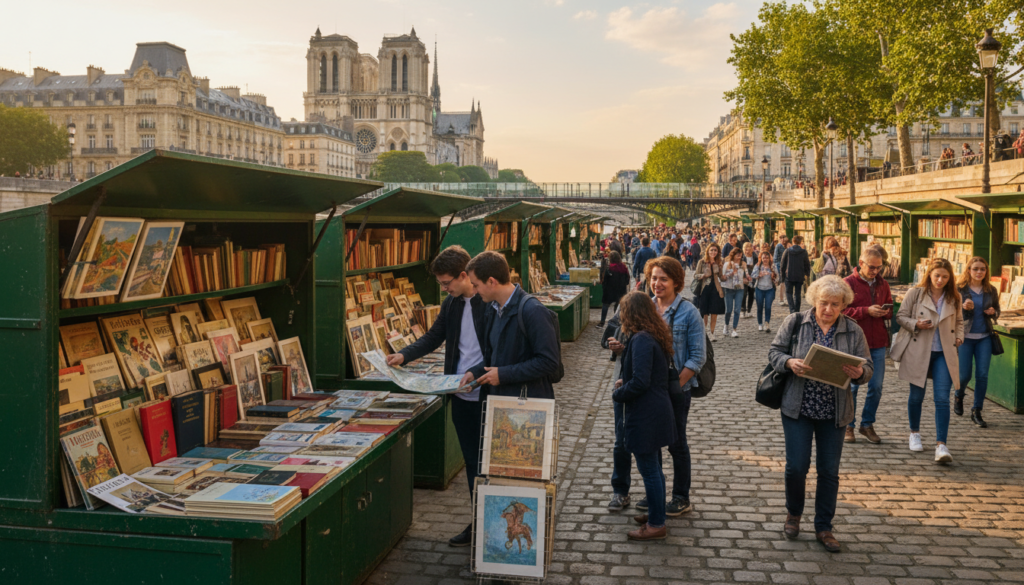
Paris flea markets and bouquinistes for one-of-a-kind souvenirs
If you want keepsakes that feel personal, spend a morning at a flea market or along the riverside book stalls.
Marché aux Puces de Saint-Ouen is the big market — open mainly Friday to Monday. For a quieter option, check Marché aux Puces de Vanves on a market day and enjoy smaller stalls and easier browsing.
I’ll show you where the city gets specific: places filled with vintage prints, flat postcards, and odd things that fit in a suitcase.
Here’s a short list of tips you can use the first time you go:
- Set a simple budget and stick to it.
- Browse first; buy later — don’t snap up the first “vintage” find.
- Watch your bag and keep purchases close in crowded spots.
The bouquinistes along the Seine have sold books and prints for about 300 years. They pack flat, tell stories, and make your trip feel less generic and more yours.
“Go slow, ask prices, and choose objects that mean something to you.”
Experiences that make a trip to Paris feel personal
Hands-on moments beat checklists. I mean the small things—making a scent, shaping a macaron, or tasting local cheese—that stick in your head long after the photos fade.
Start by getting your bearings with a short walking tour that focuses on one neighborhood. A two-hour taster lets you learn rhythm and find cafés you’ll return to later.
Be a flâneur: set out with no agenda, follow what looks good, and let the day unfold. That way you discover curiosities you didn’t even know you want see.
Try one hands-on activity as your “one splurge.” The best things I recommend are perfume workshops, macaron classes, and simple wine or cheese tastings. They’re beginner-friendly and memorable.
“Choose small groups and local guides; big themed activities can feel scripted.”
Match experiences to your personality—history nerds pick themed walks; food lovers take classes. Budget by swapping one splurge for picnic lunches; it saves time and money while keeping the trip personal.
Eat your way through Paris: food tours, bakeries, and restaurants
Begin your trip with a short food tour; it teaches what “good” tastes like here and helps you pick better places for the rest of your visit.
I use a simple game plan: bakeries for morning pastries, a market or picnic for midday, and one great sit-down meal each evening.
Why a tour early matters: a guided tasting shows you real products and good vendors. Le Marais tours tend to focus on markets and specialty shops. Montmartre tours lean toward pastries and café culture.
Try a pain au chocolat first thing, then compare a croissant later—small experiments teach fast. For upgrades, take a croissant-making class or book a cheese and wine tasting when you need a relaxed break from walking.
Restaurant tips: reserve when you can, aim to eat slightly earlier than peak dinner time, and don’t be shy about casual spots. Budget wins include picnics, market bites, and choosing one memorable meal rather than splurging every night.
“Eat with curiosity—food is one of the clearest ways to feel a place.”
- Mix walks and tastings to keep a light pace.
- Use a tour early to learn quality cues.
- Balance bakeries, markets, and one special restaurant per night.
Day trips from Paris that are truly worth your time
Some day trips feel like bonus chapters — pick ones that tell a different story than the city.
I recommend two clear choices. Versailles is grand and theatrical. Take the RER or regional train for about €4 each way. Book a timed entry so the gardens and palace feel magical, not miserable.
Giverny is Monet made real — water lilies, the little bridge, and a quiet garden that lands like a painting. The usual route is a train to Vernon, then a shuttle or taxi for the last mile. It’s a slow, restorative visit that rewards early planning.
Choose by taste: pick Versailles if you love history and palaces; pick Giverny if art and nature move you. If you want both, expect a long day and consider an organized tour for logistics.
“A day trip should add contrast — something the city can’t give you, not just more things.”
| Site | Train time | Best for |
|---|---|---|
| Versailles | ~30–40 minutes from central stations | Royal history, grand interiors, formal gardens |
| Giverny | ~45–60 minutes to Vernon, then shuttle/taxi | Impressionist gardens, peaceful landscapes, photography |
| Combined tour | All-day with coach or booked transfer | Both sites if you accept a long, full day |
Tickets, museum passes, and getting around the city
Locking timed entry is my go-to strategy to stop sightseeing from becoming a waiting game.
Plan tickets like flights: book major sites first—Eiffel slots and big museums—then fill smaller visits. Timed entry saves you precious time and keeps the day flexible.
When to buy a museum pass: get a museum pass for heavy museum days. If you aim for one or two museums total, skip it and buy individual tickets instead.
I follow a simple rhythm: one museum early, a long lunch and walk, then a second site late. That spacing gives the art time to settle and saves mental fatigue.
Reserve attractions that require it. Last-minute winging it will cost you time. Use a short guided tour for complex museums; self-guided works better for neighborhood wandering.
- If your time is tight: lock Eiffel and one major museum, leave smaller stops flexible.
- Prioritize tickets for peak days; build a 30–60 minute buffer each day.
- Walk when you can—getting around paris is often faster on foot between nearby arrondissements.
“The best value isn’t the cheapest price—it’s the time you don’t waste standing in line.”
Conclusion
When you leave, measure your success by moments that stick, not by a checked list. This guide gives you a simple mix: iconic sights, museums, neighborhoods, green escapes, offbeat corners, and a couple of day trips to broaden the view.
If you only do five things: climb the eiffel tower view or picnic below, pick one major museum, wander a neighborhood (Montmartre or Le Marais), sit in a garden, and taste a local pastry that makes you smile.
For a second visit, lean into smaller tours, hidden streets, the canal life, a late-night museum, and one hands-on class that becomes your one favorite memory at home.
Protect your time with a few reservations, plan fewer big stops per day, and pick one personal anchor—one tour, one long garden afternoon, or one class. Save this list, choose your top ten, and give yourself permission to change your mind once you arrive.
The best souvenirs are tiny: a street you loved, a perfect pastry, or a stained glass glow you didn’t expect to feel. Those bits bring the city home.
FAQ
What are the must-see highlights on a first trip to Paris?
The essentials are the Eiffel Tower for the views, the Arc de Triomphe and Champs-Élysées for classic city scenes, the Louvre for world-class art, and Notre-Dame/Île de la Cité to feel the medieval heart of the city. I also recommend a walk through Le Marais for boutiques and cafés and a late afternoon along the Seine to watch the city light up.
Which Louvre works should I see beyond the Mona Lisa?
Focus on the Winged Victory of Samothrace, the Venus de Milo, the large-scale French paintings in the Denon wing, and the decorative arts galleries. I like to set a short list before I go—pick three to five pieces and explore nearby rooms rather than trying to see everything in one visit.
How much time should I plan for Musée d’Orsay and Musée de l’Orangerie?
Give Musée d’Orsay at least three hours to enjoy the Impressionist and Post-Impressionist collections. Musée de l’Orangerie can be enjoyed in 60–90 minutes if you focus on the Water Lilies and the Monet rooms. I often visit d’Orsay in the morning and save de l’Orangerie for a quieter afternoon.
Is Notre-Dame open to visitors after the fire, and what else should I see on Île de la Cité?
The cathedral interior has been closed for major restoration, but you can still view the exterior and walk around Île de la Cité. Don’t miss Sainte-Chapelle nearby for its stained-glass windows and the Conciergerie to learn about Parisian history. I find the island’s small streets and riverbanks very atmospheric.
What makes Sainte-Chapelle’s stained glass special?
Sainte-Chapelle houses one of the most complete and vibrant collections of 13th-century stained glass, with towering panels that tell biblical stories in jewel-like color. Visit on a sunny day—light changes everything—and allow 30–45 minutes to really take it in.
How should I plan a visit to Montmartre and Sacré-Cœur?
Wander the bohemian streets early to avoid crowds, visit the Place du Tertre for local artists, and climb to the Sacré-Cœur for panoramic views. I usually combine Montmartre with a coffee break at a small bakery and leave time to stroll back down through hidden stairways and lanes.
What’s worth exploring in Le Marais beyond shopping?
Le Marais offers Jewish quarter history on Rue des Rosiers, the Musée Carnavalet for Paris history, and the picturesque Place des Vosges. It’s perfect for small museums, art galleries, and market-style bites—great for an unhurried afternoon.
Why visit Canal Saint-Martin and what should I do there?
Canal Saint-Martin has a relaxed, local vibe—cafés, picnic spots, independent shops, and iron footbridges. It’s ideal for a riverside stroll, a picnic, or a short boat trip. I love watching Parisians linger here late into the evening.
Which gardens are the best green escapes in the city?
Jardin du Luxembourg for its formal layout and people-watching, Jardin des Tuileries between Louvre and Place de la Concorde, and Parc des Buttes-Chaumont for more rugged paths and views. These are perfect for slow afternoons when you want a break from museums and streets.
What is La Promenade Plantée and why visit it?
La Promenade Plantée (Coulée Verte) is an elevated, linear park built on an old railway viaduct—an early inspiration for New York’s High Line. It offers a leafy, peaceful walk above street level with gardens, benches, and unique city views; a nice contrast to busier tourist areas.
Are the Catacombs and Père Lachaise Cemetery worth a visit?
Yes—if you enjoy history and a touch of the macabre. The Catacombs offer a subterranean glimpse of Paris’s past and require advance tickets due to limited entry. Père Lachaise is a wandering experience among famous graves like Jim Morrison and Édith Piaf; plan a couple of hours to explore either site.
Where should I hunt for unique souvenirs and vintage finds?
Visit the Marché aux Puces de Saint-Ouen for antiques and flea-market treasures, and stroll along the bouquinistes on the Seine for vintage books and prints. I usually allocate a morning at the flea market and keep an eye out for secondhand prints and small decorative pieces.
How can I make my trip feel more personal and local?
Take a small-group guided tour focused on food, neighborhoods, or art; join a cooking or pastry class; and spend time in local markets like Marché d’Aligre. I find a neighborhood café and a short language exchange go a long way toward authentic experiences.
What food experiences should I prioritize—bakeries, restaurants, or food tours?
Start with bakeries for croissants and baguettes, sample a bistro for classic French dishes, and join a food tour to discover hidden producers and tasting spots. I balance casual stops with one memorable restaurant dinner to cover both everyday pleasures and a special meal.
Which day trips from Paris are truly worth the time?
Versailles for the palace and gardens, Giverny to see Monet’s house and water lily ponds, and the Loire Valley for châteaux if you have more time. These spots each offer a distinct perspective on French history and landscape—pick one based on whether you want grandeur, gardens, or castles.
What’s the best way to buy museum tickets and get around the city?
Buy timed-entry tickets or a Paris Museum Pass in advance for popular sites to avoid long lines. Use the metro and RER for efficient travel; taxis or rideshares are helpful late at night. I plan museums in blocks near one another to minimize transit time and leave afternoons free for wandering.