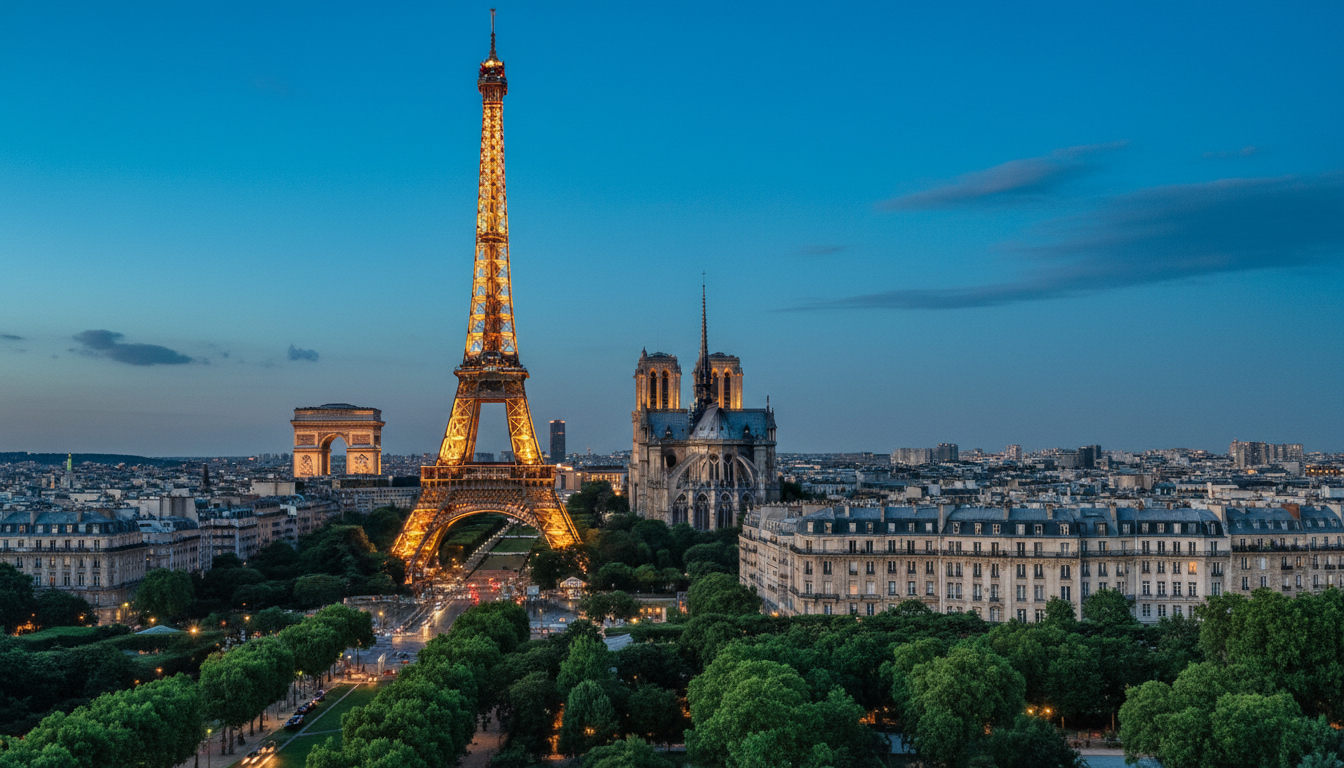
Have you ever wondered what it’s like to walk through 2,000 years of civilization in one city? The French capital offers this experience. Every street corner shows centuries-old buildings and monuments that saw key moments in European history.
You’ll find that paris historical landmarks turn the city into an open-air museum. From ancient Roman baths to World War II sites, each era left its mark. These historic sites in paris are more than old buildings—they’re where history was made.
The city’s cultural heritage sites are recognized by UNESCO for their global importance. These landmarks have shaped art, architecture, and politics worldwide. They continue to inspire millions of visitors every year.
Whether you have a weekend or weeks, you can find heritage landmarks that interest you. From famous cathedrals to quiet palace gardens, your journey through history is waiting.
Key Takeaways
- Paris showcases over 2,000 years of continuous civilization through its preserved monuments and buildings
- Multiple UNESCO World Heritage Sites recognize the city’s outstanding universal cultural value
- Every major period from Roman times through World War II left visible architectural landmarks
- The city functions as a living open-air museum where pivotal European events unfolded
- Visitors can explore sites ranging from ancient ruins to 20th-century resistance locations
- Options exist for both casual sightseers and serious history enthusiasts at every interest level
Ancient and Medieval Historical Attractions in Paris
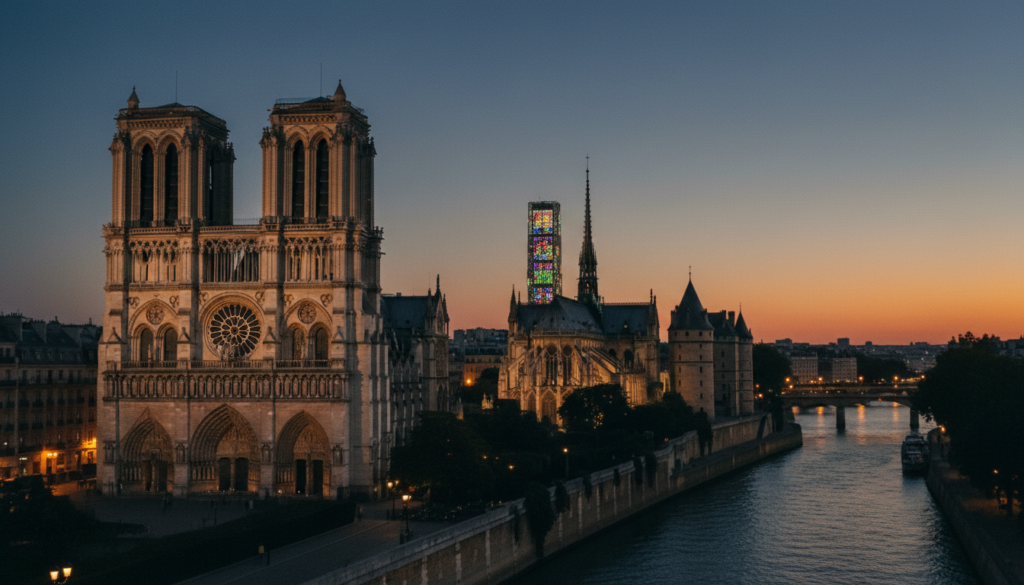
Step into Paris’s distant past where ancient Roman baths and soaring Gothic cathedrals tell stories spanning nearly two millennia. The ancient and medieval historical attractions in Paris form the foundation of the city’s identity. These monuments reveal how a small Roman settlement called Lutetia transformed into one of Europe’s most magnificent medieval capitals.
The Seine’s islands preserve the oldest chapters of Parisian history. Here you’ll find structures that witnessed the birth of French Gothic architecture and the dramatic events that shaped the nation. From royal chapels with jewel-like windows to fortress prisons that held queens, these medieval Paris attractions connect you directly to centuries of human drama.
The Cathedral and the Island’s Heart
Notre-Dame Cathedral stands as the crown jewel of medieval Paris architecture on Île de la Cité. Construction began in 1163 and continued for nearly two centuries, creating a Gothic masterpiece that inspired Victor Hugo’s famous novel featuring Quasimodo, the bell-ringer with a heart of gold. The cathedral’s flying buttresses, rose windows, and iconic twin towers represent the pinnacle of medieval French craftsmanship.
The devastating fire of April 2019 shocked the world as flames consumed the cathedral’s spire and roof. After years of meticulous restoration work, Notre-Dame Cathedral Paris has reopened to visitors. You’ll now need to book a reserved time slot to enter this beloved landmark, ensuring better crowd management and preservation of the historic structure.
The Île de la Cité itself holds even deeper significance as the ancient heart of Paris. The Parisii tribe first settled this strategic river island around 250 BCE. Later, Roman conquerors transformed it into Lutetia, establishing the foundation for what would become Paris. Walking these island streets means treading the same ground where the city’s entire story began.
A Royal Chapel’s Radiant Windows
Sainte-Chapelle rises like a jewel box just steps from Notre-Dame, offering one of medieval Europe’s most breathtaking artistic experiences. King Louis IX commissioned this 13th-century royal chapel specifically to house precious Christian relics, including what was believed to be Christ’s Crown of Thorns. The king spared no expense in creating a worthy home for these sacred treasures.
The chapel’s stained glass windows represent the finest achievement of Rayonnant Gothic architecture. These towering panels of colored glass depict 1,113 biblical scenes spanning from Genesis to the Resurrection. When sunlight streams through these windows, the interior transforms into a kaleidoscope of ruby reds, sapphire blues, and emerald greens that seem almost supernatural.
Art historians consider Sainte-Chapelle Gothic architecture among the most significant medieval artworks surviving today. The windows cover an astounding 6,458 square feet of glass, with nearly 70 percent of the original 13th-century panels remaining intact. This preservation makes your visit a genuine encounter with medieval artistic genius rather than a modern reconstruction.
From Royal Residence to Revolutionary Prison
The Conciergerie medieval palace began as the residence of the royal palace keeper on Île de la Cité. By the 14th century, French royalty had relocated across the Seine to the Louvre, and this imposing Gothic structure took on a darker purpose. The building became one of France’s most notorious prisons, a role that would define its place in history.
During the French Revolution, the Conciergerie prison gained terrible fame as the final stop before the guillotine. Thousands passed through its cells during the Reign of Terror, including Queen Marie Antoinette who spent her last days here in 1793. The prison earned the grim nickname “the antechamber of death” as countless nobles, clergy, and revolutionaries awaited execution within its walls.
Today, you can explore this Conciergerie monument and witness multiple layers of French history. The magnificent Hall of the Men-at-Arms showcases medieval Gothic vaulting from the palace’s royal era. You can also visit the reconstructed cell where Marie Antoinette spent her final hours, a sobering reminder of the Revolution’s human cost. The building’s architecture tells two contrasting stories—one of royal grandeur, another of revolutionary justice.
Roman Foundations and Medieval Treasures
The Musée de Cluny offers a unique journey through Paris’s earliest architectural remains combined with spectacular medieval art. The museum occupies a 15th-century mansion built directly atop ancient Roman ruins. This unusual setting creates a perfect venue for exploring both ancient sites in Paris and medieval masterpieces under one roof.
The Roman Baths of Lutèce date to the 2nd century CE when Paris was a provincial Roman town. These thermal baths represent the city’s oldest surviving structures, with massive stone walls and vaulted chambers that Roman citizens once used for bathing and socializing. The frigidarium (cold bath chamber) remains particularly impressive, showcasing Roman engineering skills that have endured for nearly two thousand years.
The medieval mansion above houses one of the world’s finest collections of medieval art. The museum’s most famous treasures are the “Lady and the Unicorn” tapestries, six remarkable woven artworks from around 1500 CE. These tapestries captivate viewers with their rich symbolism and exquisite detail. The collection also includes Gothic sculptures, illuminated manuscripts, and stained glass that illuminate daily life during the Middle Ages.
Visiting these medieval monuments Paris offers you direct connection to the city’s foundation story. From Roman baths to Gothic chapels, each structure preserves essential chapters of how Paris evolved from ancient settlement to medieval capital. These buildings aren’t merely tourist attractions—they’re authentic witnesses to the events and people who shaped European history.
Royal Palaces and Residences
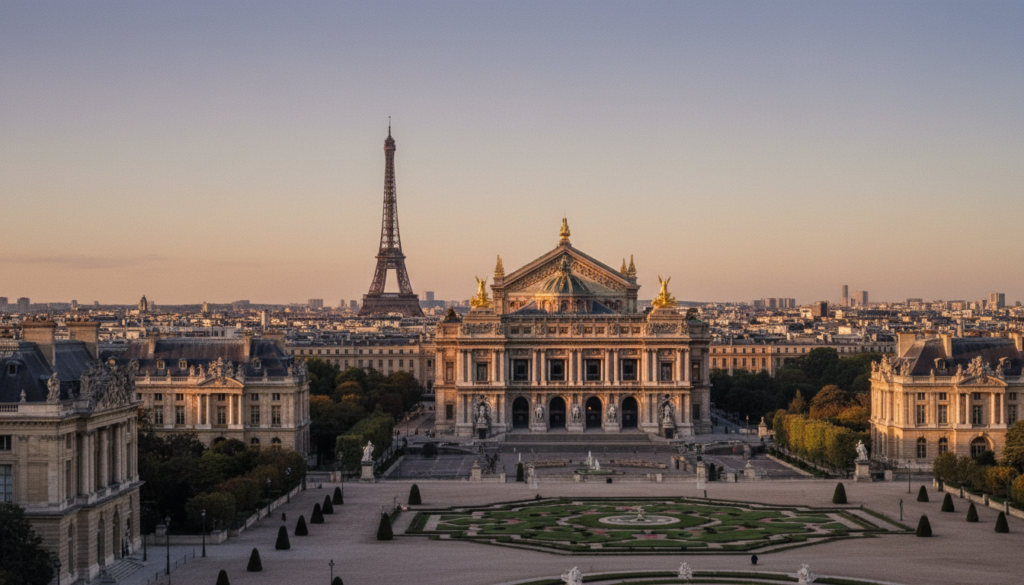
The royal palaces and residences of Paris are stunning monuments to French monarchy’s history. These buildings show how royal power grew from medieval fortresses to grand symbols of power. They were centers of politics, art, and culture that shaped Europe.
Each palace has its own story of ambition, revolution, and restoration. The grandest estates show the wealth and vision of rulers who hired the best architects and artists. Visiting these palaces gives you a close look at the lives of monarchs who shaped French history.
Versailles: The Sun King’s Ultimate Achievement
The Palace of Versailles is the peak of royal grandeur in Europe. It started as a hunting lodge for Louis XIII but became a grand château under Louis XIV. This change made Versailles the symbol of absolute monarchy in France.
It took decades to finish the palace in 1689. The royal family lived there for a hundred years until the French Revolution in 1789. Louis XVI and Marie Antoinette lost their lives during this time.
Today, Versailles is restored to its former glory. You can see its 2,300 rooms, showcasing Louis XIV’s vision. Talented artists like Le Vau, Le Brun, and Le Nôtre worked on the palace and its gardens.
The Hall of Mirrors is Versailles’ most famous space. It has 357 mirrors that reflect natural light. Versailles tours let you walk through this hall where historic treaties were signed and royal celebrations took place.
The Fortress That Became the World’s Greatest Museum
The Louvre Museum started as a medieval fortress, not an art gallery. King Philippe Auguste built it in the late 12th century to protect Paris from Viking invasions. You can see the original fortress foundations in the museum’s basement.
Over time, French monarchs turned the fortress into a royal residence. Charles V made it more comfortable in the 1360s, and François I demolished the old keep in 1546. The building expanded under successive rulers, adding wings and decorations.
Louis XIV moved the royal court to Versailles in 1682. This change allowed the Louvre to become a public museum in 1793. It now preserves centuries of architectural evolution, from medieval to Renaissance.
The French Revolution changed the Louvre’s purpose in 1793. It became a museum for the people, displaying art confiscated from the monarchy and church.
Hidden Gardens Behind Historic Columns
The Palais Royal and its historic arcades offer a peaceful escape in the city center. Cardinal Richelieu built this palace in the 1630s as his home. It later became a royal residence.
The arcaded galleries and central gardens are elegant today. These were added in the late 18th century and became popular spots. Shops, cafés, and entertainment venues filled the arcades, creating a lively social hub.
The gardens have a classic French design with perfectly trimmed trees and geometric flower beds. Contemporary art installations add surprising modern touches to this historic setting. Daniel Buren’s famous striped columns in the main courtyard create a striking contrast with the palace’s classical architecture.
Medieval Fortress on the Eastern Edge
The Château de Vincennes and its medieval keep is France’s tallest surviving medieval fortified structure. It rises to 170 feet, dominating the eastern Parisian skyline. French kings used Vincennes as a principal residence before Versailles.
Charles V completed the massive keep in 1370, creating a royal residence for comfort and defense. Thick stone walls and strategic towers protected the monarch during times of unrest. The château witnessed many significant events, including the deaths of King Henry V of England and the imprisonment of the Marquis de Sade.
You can climb the keep’s stairs to explore royal chambers and chapel spaces. The Sainte-Chapelle at Vincennes mirrors the famous chapel on Île de la Cité with its Gothic elegance. The fortress walls extend around extensive grounds that once housed entire military operations and royal administration.
Vincennes served military purposes well into the 19th century. Napoleon converted parts of the château into an arsenal and military school. Today, you can walk through courtyards where soldiers once drilled and visit the castle’s historical museum that explains its evolution from royal residence to military installation.
Historical Attractions in Paris from the French Revolution
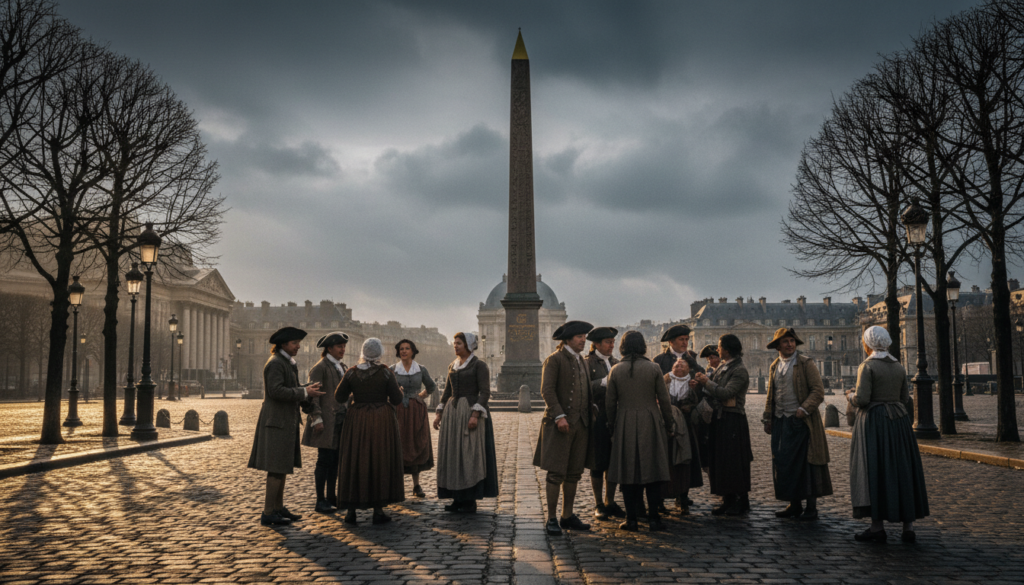
The French Revolution left deep scars on Paris. From 1789 to 1799, the city changed from a royal capital to a center of radical change. Today, you can walk in the squares where history’s biggest events happened and see the buildings that felt the revolution’s fervor.
The historical attractions in Paris from the French revolution connect us to a key moment in European history. These sites tell stories of bravery, fear, and change that shaped France. You’ll see where kings fell, revolutionaries rose, and people fought for freedom, equality, and brotherhood.
Former Site of the Guillotine
Place de la Concorde is one of Paris’s most beautiful squares, but it has a dark past. During the Reign of Terror, over 1,300 people were executed here by guillotine. King Louis XVI and Queen Marie Antoinette were among them.
The square was once called Place Louis XV. The Revolution changed it to Place de la Révolution, where crowds watched executions. Even revolutionary leader Maximilien Robespierre met his end here in July 1794.
Now, the square is called Place de la Concorde, meaning “harmony square.” It symbolizes national healing after violence. The Egyptian obelisk in the center replaced the guillotine, offering a peaceful focus.
Don’t miss the Hôtel de la Marine on the square’s north side. This 18th-century building once held royal treasures and now houses the Navy Ministry. Its restored salons and galleries show off pre-revolutionary luxury. It’s a must-see among Paris’s built attractions.
Marie Antoinette’s Final Days
The Conciergerie was crucial during the French Revolution as a prison before death. This former royal palace became a revolutionary tribunal prison, processing thousands of prisoners. Walking through its Gothic halls, you feel the weight of history.
Marie Antoinette’s cell is the most visited spot in this revolutionary site. The former queen spent 76 days in a small, humid cell. Guards watched her constantly, denying her privacy in her final weeks.
You can see a recreation of her cell, with a small cot and religious images. The original cell is now a memorial chapel. Other prisoners’ quarters show the daily life of those facing the guillotine.
The conciergerie french revolution exhibits include original items like guillotine blades and revolutionary playing cards. You’ll see personal belongings of leaders and paintings of the tribunal. These artifacts bring the human side of revolutionary justice to life.
Revolutionary Burial Ground
The Panthéon Paris is a symbol of revolutionary ideals in architecture. Originally a church, it became a mausoleum for France’s greatest citizens during the Revolution. Its dome is a landmark in the Latin Quarter.
This panthéon paris historical site honors figures whose writings inspired the Revolution. Voltaire and Jean-Jacques Rousseau are among them. Their ideas about individual rights and social contracts were key to the Revolution.
There are crypts throughout the building, honoring different contributions to French society. Figures like Victor Hugo and Émile Zola are buried here. The paris pantheon mausoleum still welcomes new members, like Joséphine Baker in 2021.
The building’s architecture makes a political statement. Revolutionary architects removed Christian symbols and added republican motifs. The entrance inscription reads: “Aux grands hommes la patrie reconnaissante” (To great men, the grateful homeland).
Visitors can climb to the colonnade for city views. But the real power is below. Standing among the tombs, you feel the lasting impact of revolutionary ideals. The panthéon paris landmarks status shows its ongoing importance to France.
Revolutionary Museum Collection
Musée Carnavalet has galleries dedicated to revolutionary Paris. It’s the largest collection of period artifacts in the world. The museum is in two historic mansions in Le Marais, documenting the Revolution’s phases.
The musée carnavalet has authentic items like guillotine blades and revolutionary playing cards. You’ll see personal belongings of leaders and hundreds of paintings from the era. Robespierre’s desk and Danton’s seal are among the exhibits.
One gallery shows a revolutionary-era shop, with original signs promoting republicanism. Another has propaganda posters and newspaper editions. These objects show how the Revolution touched all of Parisian life.
The museum’s paintings depict key moments of the Revolution. You’ll see the fall of the Bastille and the Women’s March on Versailles. These artworks were used to spread revolutionary messages, now valuable historical records.
Room settings show how revolutionary politics entered homes. Middle-class parlors display revolutionary calendars and busts of heroes. Furniture designs also reflected political allegiances. The collection shows the Revolution’s impact on all of Parisian society.
Recent renovations have improved the french revolution landmarks display. There are multimedia stations and better lighting. The museum is free for permanent collections, making it accessible to all.
These french revolution sites tell a story of dramatic change that reshaped Paris and Western politics. Walking through them, you connect with events that textbooks can only describe. Each location preserves memories of courage, violence, and idealism that still influence modern democracies.
Napoleonic Era Monuments and Landmarks
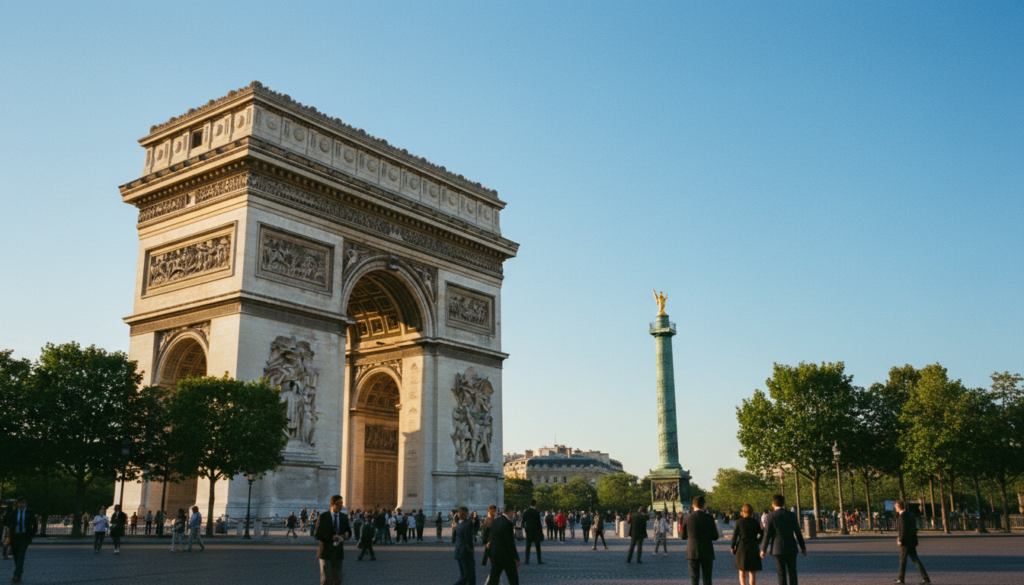
Napoleon Bonaparte changed Paris between 1799 and 1815. He made the French capital show off military wins and national pride. Today, Paris still has napoleonic era monuments and landmarks that tell stories of conquest and French pride.
These napoleon era buildings are more than tourist spots. They mark a time when France ruled Europe and Paris was its heart. Visiting these sites lets you walk through history that still shapes French culture.
Arc de Triomphe and the Tomb of the Unknown Soldier
The arc de triomphe is a key symbol of Paris. Napoleon started this huge arch in 1806 to honor his Grande Armée after Austerlitz. It was finished in 1836, long after Napoleon was gone.
This impressive structure is at the center of Place Charles de Gaulle, once Place de l’Étoile. Twelve avenues spread out like a star from it, making a dramatic urban design. The arc de triomphe monument is 50 meters high and 45 meters wide, a marvel of its time.
The arch shows stunning bas-reliefs of Napoleonic victories and French military history. The famous “La Marseillaise” sculpture captures the revolutionary spirit before Napoleon’s empire. The inner walls list 558 French generals and 128 battles in stone.
Underneath the arch is the Tomb of the Unknown Soldier, added after World War I. An eternal flame burns here, lit every evening at 6:30 PM. This turned the arc de triomphe into a symbol for all French soldiers.
There are 284 steps to the top observation deck. The views of Paris are stunning, showing all twelve avenues. The monument is still a key spot for national ceremonies, like Bastille Day.
Les Invalides and Napoleon’s Tomb
The les invalides and napoleon’s tomb complex is a golden dome in the 7th Arrondissement. Louis XIV started it in 1670 for war veterans. Today, it’s France’s top military history center, still helping wounded soldiers.
Napoleon’s remains are in the Dome Church. His body came here in 1861, twenty years after his death in exile. Looking down, you see Napoleon’s red quartzite sarcophagus in a crypt below, a dramatic sight.
Napoleon’s remains are in six nested coffins, each of different materials. This shows France’s growing respect for its former emperor. The tomb is on a green granite base, surrounded by twelve statues of Napoleon’s campaigns and achievements.
The Army Museum inside Les Invalides has vast collections of French military history. You’ll see everything from medieval times to World War II, including Napoleon’s personal items. It helps understand France’s military traditions and Napoleon’s role in them.
The courtyard and architecture show 17th-century French design. Visiting les invalides and napoleon’s tomb takes hours to see the tomb and museum. It attracts history lovers worldwide who want to grasp France’s military legacy.
Vendôme Column on Place Vendôme
Napoleon built the vendôme column in 1810 to celebrate Austerlitz. It’s 44 meters tall in Place Vendôme, surrounded by luxury. He modeled it after Trajan’s Column in Rome, linking his empire to ancient Roman glory.
The bronze spiral bas-relief around the column is amazing. Napoleon made it from 1,250 Austrian and Russian cannons captured at Austerlitz. It shows scenes from the 1805 campaign, highlighting Napoleon’s military genius.
The vendôme column has faced hard times. In 1871, revolutionaries knocked it down as a symbol of militarism. The French rebuilt it, and now it stands as a Napoleonic memorial and a piece of Paris’s complex past.
You can see the column from the beautiful Place Vendôme, one of Paris’s most famous squares. The architecture around it adds to the monument’s impact. The column shows Napoleon’s dream of making Paris a new Rome, the capital of a vast empire.
Pont d’Austerlitz and Napoleonic Battle Memorials
Paris has many napoleonic era monuments and landmarks besides the big ones. The Pont d’Austerlitz over the Seine River is named after Napoleon’s greatest victory. It reminds Parisians of the empire’s glory days.
Many Parisian bridges, streets, and squares remember Napoleonic battles and victories. The Pont d’Iéna, Rue de Rivoli, and Rue de Wagram are examples. These names turned Paris’s geography into a map of French military triumph.
Paris has small monuments and plaques marking Napoleon’s life and reign. Look for them in the Marais or Latin Quarter. They show how Napoleon’s legacy is woven into Paris’s urban planning and memory.
The spread of these memorials shows Napoleon’s lasting impact on Paris. His vision shaped not just buildings but the city’s identity as a center of power, culture, and military achievement. Understanding these connections deepens your appreciation of Paris as a living historical document.
Historical Attractions in Paris from the Belle Époque
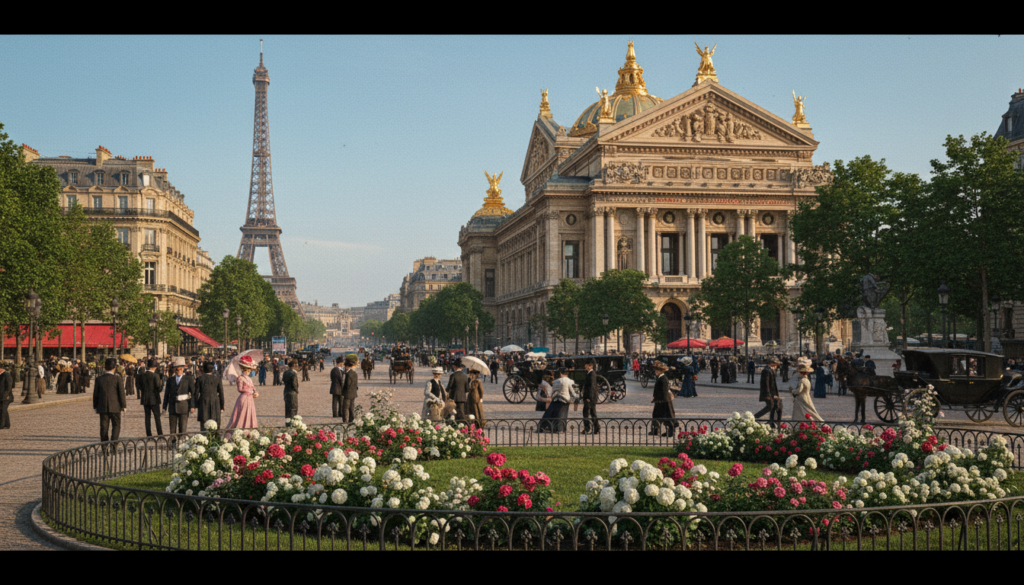
Paris shone brightly during the Belle Époque, a time of grand palaces and engineering marvels. This era, from 1880 to 1914, made Paris the cultural center of the world. Art and technology merged, creating landmarks that still shape Paris today.
The Belle Époque’s influence is seen everywhere, from the grand opera houses to bridges with golden statues. The historical attractions in Paris from the Belle Époque show a time of hope before World War I. These monuments capture a moment when beauty and progress seemed endless.
Palais Garnier – The Paris Opera House
The Palais Garnier – The Paris Opera House is a stunning building in Paris. Architect Charles Garnier finished it in 1875, creating a temple to the performing arts. It stands at Place de l’Opéra, drawing attention with its neo-Baroque facade.
Inside, you’ll find marble staircases, gilded bronze details, and plush red velvet. The Grand Foyer dazzles with its painted ceiling and ornate mirrors. The auditorium seats nearly 2,000 people, under Marc Chagall’s 1964 ceiling painting.
This opera house inspired Gaston Leroux’s famous novel “The Phantom of the Opera.” The building’s underground lake and passages added mystery to the story. Today, Palais Garnier is a top venue for ballet and opera.
You can experience this landmark in two ways:
- Attend a performance to see the opera house in its full glory with live entertainment
- Take an architectural tour during the day to explore the building’s ornate interiors at your own pace
- Visit the museum inside to learn about opera history and costume design
Grand Palais and Petit Palais
The Grand Palais and Petit Palais are twin monuments to French artistic achievement. Built for the 1900 Exposition Universelle, they showcase Paris’s cultural dominance. They represent the pinnacle of Belle Époque architectural ambition.
The Grand Palais features one of Europe’s largest glass-and-steel naves, a stunning feat of engineering. It has hosted art exhibitions and fashion shows throughout its history. The Nazis used it for trucks during World War II, while Karl Lagerfeld later transformed it into elaborate runway shows.
Following its 2025 reopening, you can experience world-class art exhibitions and cultural events here. Fashion Week brings international glamour to its halls. During holiday seasons, the space even transforms into an indoor ice-skating venue.
The Petit Palais houses the City of Paris Museum of Fine Arts with impressive permanent collections. You’ll find paintings, sculptures, and decorative arts spanning centuries. The building itself features a charming interior garden courtyard perfect for quiet reflection.
Pont Alexandre III
Pont Alexandre III is Paris’s most ornate bridge. It was built for the 1900 Exposition Universelle. It connects the Champs-Élysées quarter with Les Invalides across the Seine River.
The bridge’s single-span arch was an engineering marvel for its time. Architects designed it low to preserve views of nearby monuments. The result perfectly balances technical innovation with aesthetic beauty.
You’ll be captivated by the elaborate Art Nouveau decorations covering this bridge:
- Four gilded bronze statues of Fame riding Pegasus at each corner
- Ornate lamp posts topped with cherubs holding lights
- Detailed sculptures representing arts and sciences
- Garlands and medallions celebrating Franco-Russian friendship
The bridge epitomizes Belle Époque extravagance, where no detail was too small for artistic attention. It remains one of the most photographed spots in Paris, especially at sunset when golden light enhances its decorations.
Eiffel Tower as a Monument of Industrial Progress
The Eiffel Tower stands above all other Parisian landmarks, literally and symbolically. You might think of it as a timeless icon, but Eiffel Tower history reveals it was originally a temporary installation. Gustave Eiffel designed this iron lattice structure for the 1889 Exposition Universelle to demonstrate French engineering prowess.
The tower faced fierce criticism from Parisian artists and intellectuals before construction even finished. They called it an eyesore and a metal monstrosity. A famous petition signed by prominent figures labeled it a threat to French artistic heritage.
Yet Eiffel’s revolutionary design proved critics wrong. The structure became the world’s tallest building until 1930. Its iron framework represented the cutting edge of industrial engineering, using over 18,000 metal parts held together by 2.5 million rivets.
The Eiffel Tower as a Monument of Industrial Progress symbolized humanity’s mastery over materials and height. What was meant to stand for just 20 years became Paris’s most recognizable symbol. You can still climb its levels today, experiencing the same views that amazed Belle Époque visitors over a century ago.
The tower’s transformation from controversial experiment to beloved icon mirrors Paris’s own evolution. It represents the Belle Époque’s lasting legacy—a willingness to embrace bold innovation that ultimately defines timeless beauty.
World War and Resistance Heritage Sites
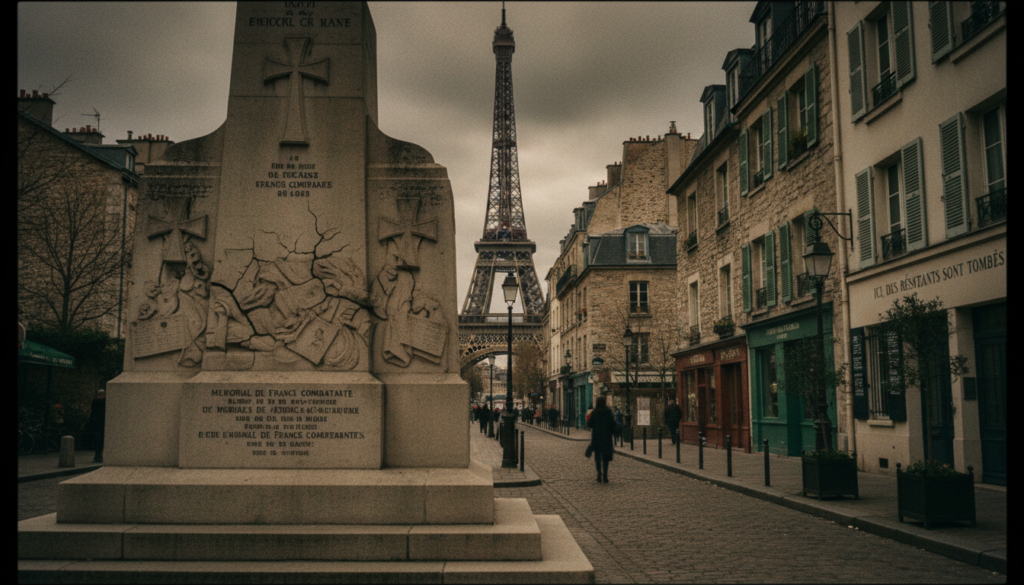
Paris was under Nazi control from 1940 to 1944. Today, you can visit sites that remember those who fought back and those who lost their lives. These sites remind us of the bravery during France’s darkest time. The city honors both victims and heroes with memorials and museums.
These sites are all over Paris, each telling a different story of the occupation years. Some remember the 76,000 Jews deported from France. Others celebrate the brave fighters who risked everything for freedom.
Visiting these sites helps us understand modern Paris. It’s an emotional but valuable experience.
Mémorial de la Shoah
The Mémorial de la Shoah is Europe’s largest Holocaust documentation center in the Marais district. You’ll see the Wall of Names right when you arrive, listing 76,000 Jews deported to Nazi death camps. This memorial is both a place of remembrance and a place of learning.
Inside, you can explore archives that document the persecution of Jews during the Vichy regime. The museum shows how French authorities worked with the Nazis. Personal testimonies and photographs make these stories real.
The Tomb of the Unknown Jewish Martyr is in the crypt below. An eternal flame burns there for victims whose names are unknown. The memorial teaches new generations about this tragic time.
You can also visit the reading room and research facilities for more information. The staff helps visitors find information about their family or historical events.
Musée de l’Ordre de la Libération at Les Invalides
The Musée de l’Ordre de la Libération at Les Invalides honors 1,038 individuals recognized by General Charles de Gaulle. These Compagnons de la Libération made big contributions to France’s freedom. The museum tells their stories through artifacts and documents.
See weapons hidden in everyday objects used by resistance fighters. There are secret radios, false identity papers, and coded messages. Personal effects and letters show the human side of these heroes.
The exhibits show how ordinary people became heroes. A schoolteacher, a factory worker, and a shopkeeper risked their lives to fight the occupation. Their bravery still inspires today.
Interactive displays explain resistance networks and sabotage operations. Learn about the intelligence gathered for the Allies and the rescue networks that saved thousands.
Mémorial des Martyrs de la Déportation
The Mémorial des Martyrs de la Déportation is at the eastern tip of Île de la Cité. It honors 200,000 people deported to Nazi concentration camps. The design itself shows the horror of deportation.
Descend into a crypt-like space that feels like imprisonment. Narrow passages and low ceilings make you feel trapped. Thousands of crystals represent victims who never returned.
The memorial’s message is “Forgive, but do not forget.” It’s a reminder to remember without hatred. Natural light through bars symbolizes the victims’ last glimpses of freedom.
Visitors often find the experience moving and somber. The simple design lets you reflect deeply on the massive loss.
Hôtel Lutetia and Its Wartime History
The Hôtel Lutetia and its wartime history is a complex story on Boulevard Raspail. During the war, the German Abwehr used this grand hotel for military intelligence. Enemy officers interrogated and planned from its luxurious rooms.
In 1945, the hotel became a place of joy and sorrow. It was where concentration camp survivors reunited with their families. Thousands of displaced persons found loved ones here.
Photos show survivors in the ornate lobby. Red Cross workers helped find family members. Some reunions were joyful, while others were heartbreaking.
Today, the hotel has historical plaques about its past. Staying here lets you reflect on its complex history. It reminds us that history has both light and dark moments.
| Heritage Site | Historical Significance | Key Features | Location |
|---|---|---|---|
| Mémorial de la Shoah | Holocaust documentation and memorial for 76,000 deported Jews | Wall of Names, archives, Tomb of Unknown Jewish Martyr | Marais district, 4th arrondissement |
| Musée de l’Ordre de la Libération | Honors 1,038 Compagnons de la Libération recognized by de Gaulle | Resistance artifacts, weapons, personal effects, coded documents | Les Invalides complex, 7th arrondissement |
| Mémorial des Martyrs | Commemorates 200,000 people deported to concentration camps | Underground crypt, illuminated crystals, minimalist architecture | Eastern tip of Île de la Cité |
| Hôtel Lutetia | German Abwehr headquarters and 1945 survivor reception center | Historical plaques, Art Nouveau architecture, dual legacy | Boulevard Raspail, 6th arrondissement |
These sites preserve important memories of occupation and liberation. Each one offers a unique view of how Paris survived and defeated the Nazis. Visiting these sites helps keep these stories alive for future generations.
Historical Churches and Sacred Architecture
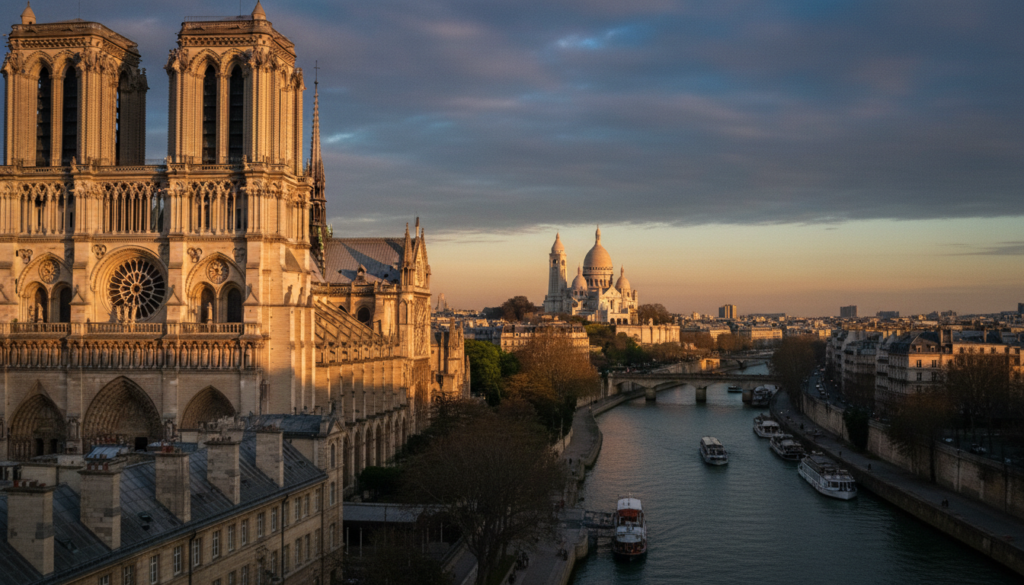
Paris’s churches show off a mix of styles, from Romanesque to Byzantine. These historic churches Paris offers tell stories of faith and art. They show how the city has changed over nearly 15 centuries.
Historical churches and sacred architecture in Paris are more than places of worship. They were community hubs, art showcases, and symbols of power. Walking through these buildings connects you to Paris’s past.
The styles range from medieval Gothic to Renaissance and even Moroccan. For a detailed guide on visiting these landmarks, check out this Paris churches resource. Start your journey through sacred Paris with four key sites.
A Gleaming Beacon Above the City
The Basilique du Sacré-Cœur in Montmartre is Paris’s highest point. Its white stone façade was built after France’s defeat in the Franco-Prussian War. It was a symbol of hope and penance.
Completed in 1914, the basilica is a masterpiece of Romano-Byzantine architecture. Inside, a massive mosaic of Christ covers 475 square meters. Since 1885, prayers have been said here without pause.
The Sacré-Cœur basilica Montmartre offers stunning views from its dome. Climbing 300 steps, you see for 50 kilometers on clear days. The bell tower houses the Savoyarde, a 19-ton bell.
Renaissance Grandeur Near the Old Market
Église Saint-Eustache near Les Halles is a blend of Gothic and Renaissance styles. Built from 1532 to 1633, it’s a unique architectural gem.
Among gothic cathedrals Paris showcases, Saint-Eustache is second only to Notre-Dame. It’s where Cardinal Richelieu and playwright Molière were baptized. Louis XIV received his first communion here in 1649.
The church is famous for its music. It has one of France’s finest organs with 8,000 pipes. Regular concerts make Saint-Eustache a top spot for sacred music.
Masterworks and Mysteries in Saint-Germain
The Église Saint-Sulpice and the Delacroix murals attract art lovers to the Left Bank. This 17th-century church has a mix of classical and baroque styles. Its entrance is framed by two asymmetrical towers.
Inside, Eugène Delacroix’s murals are a highlight. Created between 1855 and 1861, they show his mature style. These murals alone are worth a visit.
The church is famous for its astronomical gnomon, a 18th-century sundial. You’ll also see the magnificent Cavaillé-Coll organ, with 6,588 pipes.
The Abbey That Survived Centuries
Saint-Germain-des-Prés is Paris’s oldest church, dating back to the 6th century. Founded by King Childebert I, it was a burial site for Merovingian kings.
Exploring the church, you’ll see a Romanesque bell tower from the 11th century. The Gothic choir was added in the 12th century. Despite Viking raids, the French Revolution, and wartime damage, it survived.
The neighborhood around the church became famous in the 20th century. Philosophers Jean-Paul Sartre and Simone de Beauvoir often visited nearby cafes. This added to the church’s cultural significance.
Paris also has surprising sacred spaces. The Grand Mosque of Paris in the 5th Arrondissement offers a different experience. Opened in 1926, it features Moroccan-inspired courtyards and serves North African cuisine. It honors Muslim soldiers who fought for France in World War I.
| Church | Founded/Built | Architectural Style | Notable Features |
|---|---|---|---|
| Sacré-Cœur | 1875-1914 | Romano-Byzantine | Perpetual adoration since 1885, panoramic dome views, massive Christ mosaic |
| Saint-Eustache | 1532-1633 | Gothic-Renaissance hybrid | 8,000-pipe organ, baptism site of Richelieu and Molière, concert venue |
| Saint-Sulpice | 17th century | Classical-Baroque | Delacroix murals, astronomical gnomon, 6,588-pipe Cavaillé-Coll organ |
| Saint-Germain-des-Prés | 543 CE (origins) | Romanesque-Gothic | Oldest church in Paris, 11th-century bell tower, existentialist neighborhood |
When visiting historical churches and sacred architecture, consider attending a concert or service. These spaces come alive with music and community. Most churches welcome visitors daily, but access may be limited during ceremonies.
Each church offers a unique glimpse into Paris’s spiritual and artistic journey. From ancient foundations to 19th-century monuments, these churches are key to understanding the city’s soul.
Historic Neighbourhoods That Shaped Paris
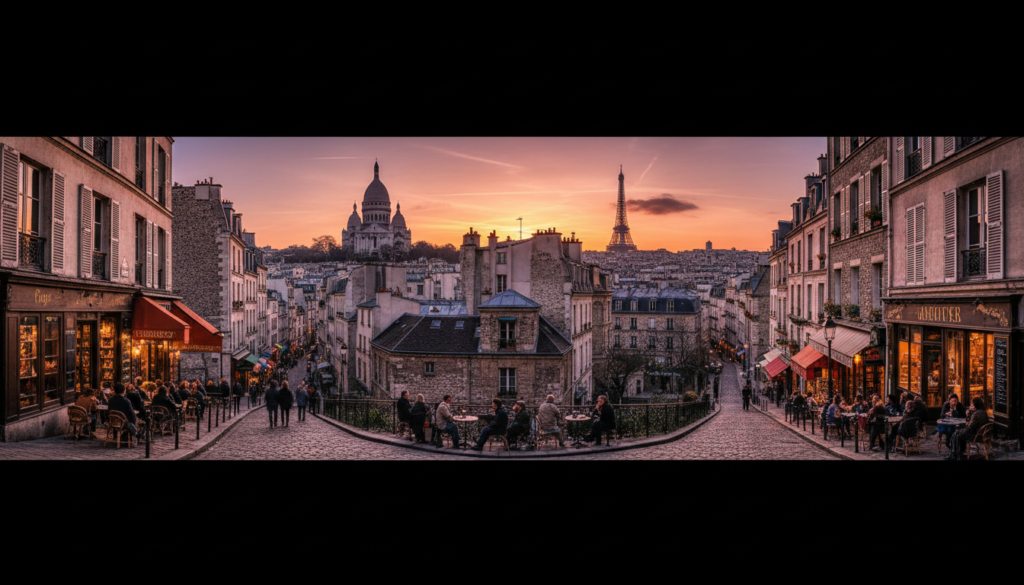
Paris has many areas that tell the city’s story through the ages. These historic neighborhoods Paris show off different architectural styles and cultural identities. Walking through them, you learn how Paris grew from a medieval town to a global cultural hub.
Each area has its own story. From grand mansions to student quarters, these places kept their unique feel through the years.
Medieval Mansions of Le Marais
Le Marais is home to some of Paris’s most beautiful mansions from the 16th and 17th centuries. It was once the place to be for nobles, who built grand hôtels particuliers in its medieval streets. Today, you can see these amazing buildings, showcasing Renaissance and classical French designs.
Hôtel de Sens is a real 15th-century castle with turrets and a beautiful French garden. Built between 1475 and 1519, it was once the Archbishop of Sens’s home. Later, Queen Margot lived there after her marriage to King Henry IV ended. Now, it houses Bibliothèque Forney, a public art library with amazing collections.
Other notable mansions include:
- Hôtel de Sully with its stunning courtyard and carved facades from 1625
- Hôtel Carnavalet, now home to the Paris history museum
- Place des Vosges, Paris’s oldest planned square from 1612
- Many private mansions showing 17th-century craftsmanship
Le Marais fell into disrepair in the 19th and early 20th centuries. But, thanks to preservation efforts in the 1960s, its architectural wonders were saved. Today, it’s a vibrant mix of Jewish heritage, LGBTQ+ culture, and trendy boutiques, all set in medieval streets.
Academic Heart of the Latin Quarter
The Latin Quarter and the Sorbonne University have shaped Paris’s intellectual heart since medieval times. This area got its name from the use of Latin in scholarship across Europe. For centuries, students and professors spoke Latin here, creating an academic vibe that still exists today.
The Sorbonne, founded in 1257, made this area France’s learning center. It attracted scholars from all over Europe and became a key theological school. Medieval colleges spread through narrow streets around Boulevard Saint-Michel, forming the dense student quarter we know today.
Key Latin Quarter landmarks include:
- The Panthéon, housing tombs of France’s greatest thinkers and writers
- Medieval streets like Rue de la Huchette, keeping 13th-century layouts
- The Sorbonne’s Renaissance chapel and classical facades
- Arènes de Lutèce, an ancient Roman amphitheater hidden behind buildings
Exploring the Latin Quarter historic sites connects you with centuries of learning. The area still has a student vibe, with bookshops, affordable eateries, and lively café debates. Ancient Latin Quarter monuments and modern university life coexist on the same cobblestone streets.
Birthplace of Modern Art in Montmartre
Montmartre became the center of Montmartre and its artistic revolution that changed art forever. Until 1860, it was a separate village with vineyards and windmills. Its affordable rents and bohemian atmosphere drew artists who couldn’t afford central Paris.
From the 1880s to the 1920s, Montmartre was home to artists who started new movements. Pablo Picasso developed Cubism in his Bateau-Lavoir studio. Vincent van Gogh painted the neighborhood’s streets and gardens. Henri de Toulouse-Lautrec captured the energy of its cabarets and dance halls.
The neighborhood fostered these artistic innovations:
- Impressionism evolved as artists painted Montmartre’s gardens and streets
- Post-Impressionism developed in studios across the hillside
- Cubism emerged from Picasso’s early 1900s experiments
- Modern sculpture found expression in local workshops and studios
Beyond the Sacré-Cœur Basilica, Montmartre keeps its artistic spirit alive. Place du Tertre is where painters still work outdoors. The Moulin Rouge continues to perform, making cabaret famous worldwide. The winding streets still have a village feel, offering glimpses of the atmosphere that inspired genius.
Elegant Refuge on Île Saint-Louis
Saint-Louis Island and its aristocratic heritage offer a peaceful contrast to busy Paris. This elegant island in the Seine emerged in the 17th century. Wealthy Parisians built beautiful hôtels particuliers along its quays and central street.
The island’s unified 17th-century architecture is rare in Paris. Its limestone facades, wrought-iron balconies, and classical proportions give it a harmonious look. No Metro stations reach the island, keeping it quiet and pedestrian-friendly.
Notable features include:
- Quai d’Anjou mansions with Seine views and private gardens
- Hôtel Lambert, one of Paris’s most prestigious private residences
- Saint-Louis-en-l’Île church with its unique baroque interior
- Rue Saint-Louis-en-l’Île lined with specialty shops and cafés
The island attracted famous residents like Voltaire, Baudelaire, and Curie. Its refined elegance and status as a historic district keep its aristocratic atmosphere alive. Walking its perimeter in twenty minutes, you feel transported to a more gracious era of Parisian life.
How to Explore Historical Attractions in Paris
Exploring Paris’s history doesn’t have to be hard. The city offers many ways to see its heritage. You can go on your own or with a guide, depending on what you like and how much you want to learn.
Knowing how to explore Paris’s history helps you make the most of your time. You can choose to explore at your own pace or with a guide. Paris has something for everyone.
Walking Routes That Connect Different Historical Periods
Self-guided walking tours let you dive into different eras of Paris. You can see famous landmarks along the way. These tours help you learn more about each site.
A Roman and Medieval route takes you through the Latin Quarter. You’ll see Notre-Dame and Sainte-Chapelle, then medieval houses in Le Marais. This walk is about three miles and takes four to five hours.
The French Revolution route starts at Place de la Concorde. You’ll visit the Conciergerie and the Panthéon. This journey is emotionally powerful and takes about three hours.
For Napoleonic enthusiasts, start at the Arc de Triomphe. Walk down the Champs-Élysées to Place de la Concorde, then to Les Invalides. This route shows Napoleon’s grandeur and is about two miles long.
A Belle Époque walk shows Paris’s elegant architecture. Start at Palais Garnier and walk to the Grand Palais. This walk is about two miles and takes three hours.
Paris’s historic center is great for walkers. You’ll see beautiful buildings and find hidden gems. Wear comfy shoes and bring a map and snacks.
Unlimited Access to Museums and Monuments
The Paris Museum Pass gives you access to over 50 sites. It saves you money and lets you skip long lines. It’s perfect for those who want to see a lot.
You can choose from three duration options: two, four, or six days. The pass starts when you first use it and is valid for the chosen number of days.
Big sites like Versailles and the Louvre are included. If you visit six major sites, you save €30-40. This is a great deal for those who see a lot of attractions.
The Paris Museum Pass makes sightseeing an adventure. You can enter any site without worrying about the cost.
Important exclusions include the Eiffel Tower and some special exhibitions. The pass is best for those who see many sites in one day. It’s not for slow explorers.
Buy your pass online or at museums and tourist offices. Keep it with you, as some places need to see the physical pass.
Digital Companions for Self-Guided Exploration
Audio guide apps turn your phone into a guide. They offer expert stories without needing a tour. You can explore at your own pace.
Rick Steves Audio Europe has free walking tours of Paris. The app works offline and gives detailed history. It’s perfect for those who like to explore on their own.
The official Paris je t’aime app has itineraries and audio tours. It also has augmented reality features. These help you see how sites looked in the past.
Many sites have site-specific apps like Versailles and the Louvre. These apps offer deep dives into specific locations. They’re better than general city apps.
Detour and VoiceMap offer audio walks by experts. These apps (€3-8 per tour) use GPS to give you commentary at the right time. They’re a great way to learn more about Paris.
Download your apps and audio before leaving your hotel. This way, you won’t have any problems with internet or roaming charges.
Expert-Led Historical Experiences
Hiring a licensed guide adds a lot to your visit. Guides know a lot and can show you things you wouldn’t find on your own. They wear official cards.
Private guides offer customized experiences based on your interests. They know Versailles and other sites well. They make history come alive.
Licensed guides can take you to restricted areas not open to everyone. This gives you a unique view of Paris. It’s a chance to see things most visitors don’t.
Book through official sources like the Paris Convention and Visitors Bureau. Make sure to check the guide’s credentials before the tour starts. This ensures you get a good experience.
Specialized tours focus on specific times or topics. They let you dive deep into what interests you most. Try a tour that matches your interests for a better experience.
| Exploration Method | Best For | Typical Cost | Key Advantage |
|---|---|---|---|
| Self-Guided Walking Routes | Independent travelers who enjoy flexible schedules | Free (plus site admission) | Complete freedom and personal pacing |
| Paris Museum Pass | Intensive sightseers visiting 6+ sites | €62-92 for 2-6 days | Skip-the-line access and cost savings |
| Audio Guide Apps | Solo travelers wanting expert context | Free to €8 per tour | Professional narration with flexibility |
| Licensed History Guides | Depth-seekers and specialized interests | €200-400 for half-day private tours | Expert insights and exclusive access |
Using different methods gives you the best experience. Use the Paris Museum Pass for big sites, audio apps for walks, and a guide for Versailles. This way, you get a well-rounded view of Paris.
Your exploration plan should fit your style and energy. Morning is less crowded, and late afternoon is great for photos. Plan to balance structured visits with spontaneous finds.
Final Tips for Visiting Historical Attractions in Paris
Exploring historic Paris needs smart planning. Book tickets online early for sites like Versailles and Sainte-Chapelle. They get crowded during peak times. Also, check when monuments are open, as they might close on Mondays or Tuesdays.
Visit early mornings or late afternoons to dodge the crowds. Wear comfy shoes for the cobblestone streets and stairs. It’s cool inside churches and palaces, even in summer. Don’t forget to cover your shoulders and knees in churches, and watch for photo rules.
Know what you want to see before you go. Louis XIV’s story makes Versailles special. The Panthéon is deeper if you know about the French Revolution. Mix famous spots with hidden gems like the Luxembourg Palace, which you can see from outside. Check out must-see monuments in less busy areas too.
Choose a few eras to focus on to avoid getting tired. Enjoy the gardens and squares, thinking about all the history they’ve seen.
These tips are about respect. Parisian sites are not just for tourists but also for locals. Showing respect for this connection makes your visit more meaningful and preserves the city’s heritage.
FAQ
Do I need to book tickets in advance for Notre-Dame Cathedral after its reopening?
Yes, you need to book tickets in advance for Notre-Dame Cathedral. You can reserve a free timed-entry ticket online through the official cathedral website. This helps manage visitor flow and protects the newly restored interior.
During peak tourist season (April through October), tickets often book up several days in advance. So, plan ahead and check availability early in your trip planning.
Is the Paris Museum Pass worth purchasing for visiting historical attractions?
The Paris Museum Pass is a great value if you plan to visit multiple sites. It covers over 50 museums and monuments, including Versailles and the Louvre. You can choose from 2, 4, or 6 consecutive days.
It provides skip-the-line access at most locations. If you visit at least four or five major sites, the pass pays for itself. However, the Eiffel Tower and Sacré-Cœur dome are not included.
What’s the best way to visit the Palace of Versailles from Paris?
The best way to reach Versailles is by taking the RER C train from central Paris stations. The journey takes about 40 minutes. Book your palace tickets online in advance.
Arrive early to avoid the largest crowds. Spend at least half a day exploring the palace and its gardens.
Can I visit Marie Antoinette’s actual cell at the Conciergerie?
You can visit a recreation of Marie Antoinette’s cell at the Conciergerie. The original cell no longer exists in its authentic state. The current display is based on historical documentation.
The Conciergerie also features the Chapel of the Girondins and exhibits detailing the lives of thousands of prisoners. It’s a place of great historical significance.
Which historical attractions in Paris are UNESCO World Heritage Sites?
Paris’s “Banks of the Seine” UNESCO World Heritage Site includes Notre-Dame Cathedral and Sainte-Chapelle. It also includes the Louvre, Place de la Concorde, and the Eiffel Tower.
The Palace of Versailles and its gardens are a separate UNESCO World Heritage Site. These designations recognize their outstanding universal value.
What are the must-see historical churches in Paris besides Notre-Dame?
Paris has several historically significant churches worth visiting. Sainte-Chapelle features the finest medieval stained glass windows in the world.
Saint-Germain-des-Prés is the oldest church in Paris. Basilique du Sacré-Cœur crowns Montmartre with its distinctive white architecture. Église Saint-Eustache blends Gothic structure with Renaissance decoration.
How long should I allocate for visiting Les Invalides and Napoleon’s Tomb?
Spend at least 2-3 hours at Les Invalides. The Dome Church, where Napoleon’s remains rest, typically requires 30-45 minutes.
The Army Museum spans multiple buildings with extensive collections. If you’re interested in military history, you could spend half a day here.
What happened at Place de la Concorde during the French Revolution?
Place de la Concorde was the primary execution site during the French Revolution’s Reign of Terror. Over 1,300 people were guillotined here, including King Louis XVI and Marie Antoinette.
Originally named Place Louis XV, it was renamed Place de la Révolution during this period. After the Terror ended, it received its current name “Concorde” to symbolize national reconciliation.
Are there free historical attractions in Paris worth visiting?
Yes, many historical sites in Paris offer free access. You can explore the Luxembourg Palace and historic neighborhoods like Le Marais.
Visit the Banks of the Seine, the Arènes de Lutèce, and Père Lachaise Cemetery. Many churches offer free entry, and the Mémorial des Martyrs de la Déportation is also free.
What historical sites in Paris relate to World War II and the Resistance?
Several sites commemorate World War II and the French Resistance. The Mémorial de la Shoah is Europe’s largest Holocaust documentation center.
The Musée de l’Ordre de la Libération honors the 1,038 Compagnons de la Libération. The Mémorial des Martyrs de la Déportation commemorates 200,000 people deported to Nazi concentration camps.
What makes Sainte-Chapelle’s stained glass windows so historically significant?
Sainte-Chapelle’s stained glass windows are the finest surviving example of 13th-century Gothic glazing. Commissioned by King Louis IX, they depict 1,113 biblical scenes.
Art historians consider these windows among the most significant medieval artworks. The deep blues and reds create an ethereal atmosphere, transforming the chapel into a “gateway to heaven.”
Can I climb to the top of the Arc de Triomphe, and what will I see there?
Yes, you can climb the 284 steps to the top of the Arc de Triomphe for panoramic views. From the viewing platform, you’ll see the twelve avenues radiating from Place Charles de Gaulle.
You’ll also see the Champs-Élysées, the Louvre, and the Grande Arche de la Défense. Inside the monument, a museum explains the Arc’s history and Napoleonic symbolism.
What’s the best historic neighborhood to stay in for easy access to historical attractions?
The Latin Quarter and Le Marais offer the best combination of historic atmosphere and proximity to attractions. The Latin Quarter is within walking distance of the Panthéon and Musée de Cluny.
Le Marais is amid medieval streets and aristocratic mansions. Both neighborhoods feature authentic Parisian character, historic architecture, and abundant dining options.
Which historical attraction offers the best introduction to the French Revolution?
The Musée Carnavalet provides the most comprehensive introduction to the French Revolution. It features artifacts, paintings, and reconstructed rooms from the revolutionary period.
The museum displays original guillotine blades, Robespierre’s personal effects, and models of the Bastille prison. It helps visitors understand the Revolution’s causes and legacy.
Are there combination tickets available for historical sites on Île de la Cité?
Yes, you can purchase a combination ticket for Sainte-Chapelle and the Conciergerie. This ticket offers modest savings and is valid for the same day.
Both sites are managed by the Centre des Monuments Nationaux. Visiting them together provides a comprehensive understanding of the island’s history.
What’s the best time of year to visit historical attractions in Paris to avoid crowds?
November through March (excluding the Christmas/New Year period) generally offers the smallest crowds. However, you’ll encounter colder weather and shorter daylight hours.
Late September through October provides an excellent compromise with pleasant weather and fewer tourists. If you must visit during peak season, book tickets well in advance.
What historical significance does the Louvre have beyond being an art museum?
Before becoming the world’s largest art museum, the Louvre served as a royal fortress and palace for nearly 700 years. Its foundations and the moat remain visible in the museum’s medieval section.
Charles V converted it to a royal residence in the 1360s, and subsequent monarchs expanded and embellished the complex. The palace became the center of royal court life until Louis XIV moved the court to Versailles in 1682.
How does Château de Vincennes differ from other royal palaces around Paris?
Château de Vincennes is a genuine medieval fortress rather than a Renaissance or classical palace. Its massive keep, completed in the 1360s, stands 50 meters tall.
Unlike Versailles, Vincennes maintained its defensive character with a moat, drawbridges, and fortified walls. French kings used it as a hunting lodge and a secure refuge during civil unrest.
What role did Montmartre play in Paris’s artistic history?
Montmartre was the epicenter of modern art’s revolutionary transformation from the 1880s through the 1920s. It attracted struggling artists with its cheap rents and Bohemian lifestyle.
Pablo Picasso lived and worked in the Bateau-Lavoir studios where he painted “Les Demoiselles d’Avignon.” Vincent van Gogh lived on Rue Lepic. Montmartre’s cabarets and dance halls inspired and supported artistic experimentation.