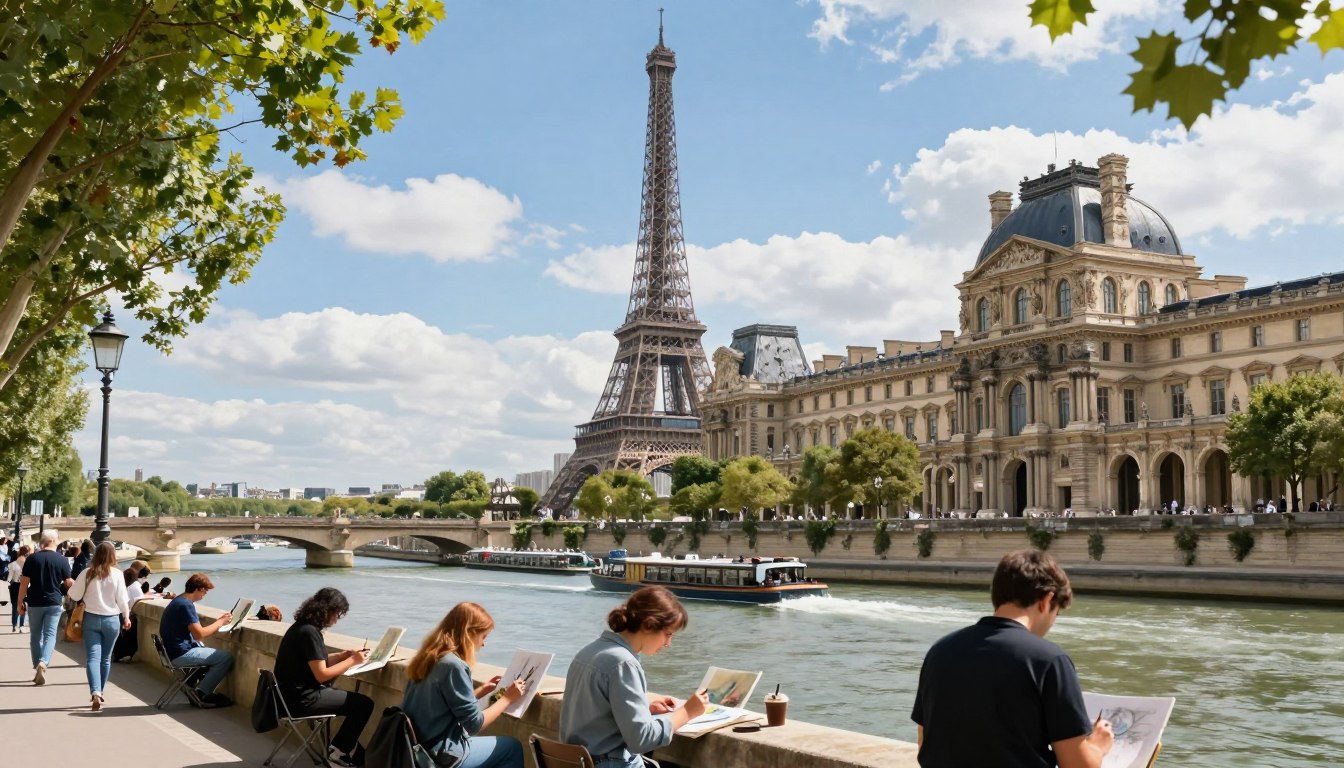
Ever wondered why the City of Light still feels like a storybook, even after you book your flight? I asked myself that on my first US-to-Europe trip, and the answer surprised me—it’s part history, part street lamps, and a lot about how the city is laid out.
I’ll set expectations for a first trip: iconic landmarks, a comfortable pace, and room for serendipity—not a minute-by-minute schedule. Paris earned its nickname for early gas street lighting, and that glow still shapes the mood of long evenings.
My list is organized with the core must-sees first—the ones we all dream about—then calmer, local-feeling stops that make a visit feel personal. Quick note on arrondissements: they’re numbered neighborhoods that can look far apart on a map but are often walkable, so cluster sights to avoid crisscrossing the city all day.
Expect big views, world-class museums, charming neighborhoods, and a couple of easy day trips when you want a change of scenery. I’ll also flag when to book timed tickets and when to simply sit at a café and do nothing. Practical tips follow—what to book, when to go, and how to skip the classic first-timer line traps.
Key Takeaways
- Plan a mix of iconic sights and relaxed local stops for a balanced trip.
- Cluster sights by arrondissement to save time and energy.
- Book timed entries for major museums and monuments.
- Leave gaps for unplanned discoveries and café moments.
- I’ll share practical tips to avoid common first-time mistakes.
Popular attractions in paris at a glance for first-time visitors
Treat your first visit like a sampler: pick a few big sights and leave room to wander. If you have two to three days, prioritize one major landmark each morning and a museum or garden in the afternoon. Save evenings for neighborhood walks and food.
With four to five days, add slower spots—Luxembourg Garden, the Marais, and a full museum day. My go-to pace: one big-ticket morning, one easy afternoon, and an open evening. This way you won’t burn out fast.
“Start with a Seine cruise or a guided walking tour—it’s the quickest way see the city’s layout.”
Time-savers: book timed tickets for major museums and monuments, cluster sights by arrondissement, and use skip-the-line tours when short on time. Neighborhoods and gardens are best saved for spontaneous exploration.
- Mini checklist: comfortable shoes; mix museum days with outdoor days; one buffer slot each day for café breaks.
- Remember: tours can speed access and add context—handy for first-time visitors on a short trip.
Eiffel Tower views, tickets, and the best ways to visit
Decide your Eiffel Tower plan before you go—stairs, elevator, or the full summit experience. I pick the experience first, then buy the matching tickets. That simple step saves time and disappointment.
Built by Gustave Eiffel for the 1889 World’s Fair, the tower has three visitor levels. The lower floors are reachable by stairs; elevators serve the higher platforms and summit.
The practical reality: queues can be brutal. A timed entry or a skip line option often turns a slog into a magic moment. For stress-free logistics, consider a short guided tour.
- Level 1: exhibits and decent city views.
- Level 2: classic panorama—no summit needed for great photos.
- Summit: highest lookout, plus the history note and a champagne bar.
“The tower sparkles for five minutes on the hour after dusk until 1 AM—time your evening for that show.”
Best photo spots? Trocadéro for the postcard shot, and bridges over the Seine for evening sparkle shots. If you want a drink up there, book ahead—restaurants and a champagne bar make the visit a real moment, not just a checklist item.
| Visit Type | How to book | Best for | Tip |
|---|---|---|---|
| Stairs to lower levels | Standard online tickets | Fitness, budget, fewer crowds | Buy timed tickets early |
| Elevator to Level 2 | Timed or priority tickets | Photos and views without summit | Arrive before dusk for golden light |
| Summit access | Summit ticket or guided tour | Highest views and the champagne bar | Book a slot that hits the sparkle show at night |
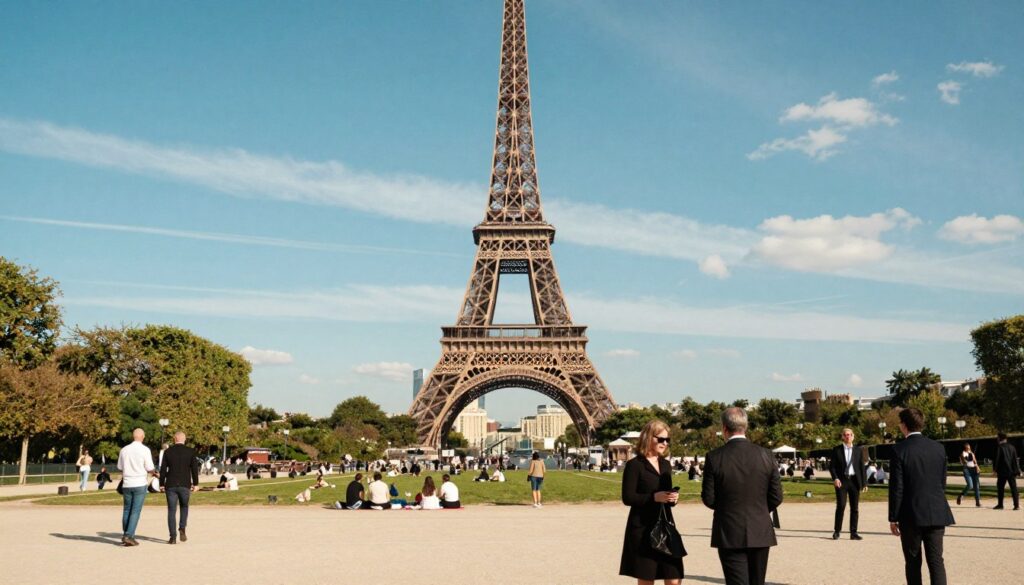
Louvre Museum masterpieces beyond the Mona Lisa
Step inside the Louvre and expect a labyrinth—then decide how deep you want to go. The museum is the world’s most visited, and yes, the Mona Lisa is there, but it’s only one stop on a huge map of art and history.
Beyond that small, crowded room you’ll find the Venus de Milo, the Winged Victory of Samothrace, and vast Egyptian galleries that feel like time travel. The Napoleon III apartments show the palace’s royal past—ornate, over-the-top, and surprisingly human.
Save time with a plan: choose a 2-hour highlights run, a focused half-day (French painting or antiquities), or a full day if you love art. Buy timed tickets or join a guided tour to skip confusion and make the most of your visit.
“Pick a handful of works you really want to see and accept you won’t do it all.”
Afterwards, decompress—walk the Tuileries or sit at a nearby café. Museum fatigue is real, and the best memories come from a few deep moments, not hurried checklist photos.
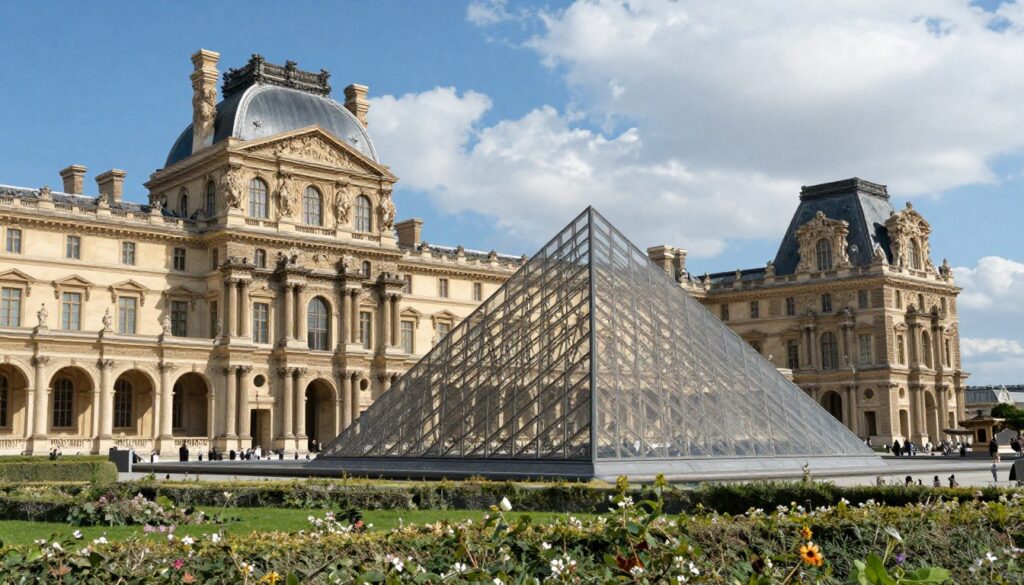
Notre-Dame Cathedral and the historic heart of Île de la Cité
Stand on Île de la Cité and you can feel where the city began. This small island holds layers of history—stone streets, old bridges, and the cathedral that anchors the place.
Notre-Dame reopened after the 2019 fire and still draws that quiet, emotional pull. Right now, focus on the Gothic architecture you can see: the façade, flying buttresses, carved portals, and the famous gargoyles.
Entry rules change during restoration. Check the official site before you go for possible free reservation windows so your visit isn’t slowed by lines.
Want a simple loop? Walk the river edge, cross to the east side, pause at the cathedral, then stroll toward Sainte-Chapelle—this route stitches together nearby places without backtracking.
Best time to photograph: mornings for calm light and fewer people; evenings if the façade is lit and you want drama. Towers and roof access may be limited, so expect parts to remain closed at time.
“Even under repair, Notre-Dame feels essential—a living page of the city’s long story.”
Bring a patient mood and a camera. The site connects you to centuries and still rewards a slow, curious walk.

Sainte-Chapelle and its stained glass wow factor
There’s a moment at Sainte-Chapelle when the room hushes and the glass seems alive. Step onto Île de la Cité and enter an ethereal Gothic jewel that often surprises visitors.
What makes it special: walls of stained glass that tell Biblical stories, soaring Gothic lines, and light that changes the whole mood depending on the time of day.
Best plan: aim for daylight hours—sunny mornings or early afternoons make the panels sing. Cloudy days mute the effect, so pick your time when you can.
- Buy tickets ahead when possible—this tiny space fills fast.
- What to look for: narrative panels, shifts in color, and the jewel-box feeling when you turn slowly.
- Quick payoff: it’s short but unforgettable, a compact stop among larger museums and other city attractions.
“A small visit with a huge payoff—Sainte-Chapelle feels like a piece of the medieval world wrapped in light.”

Arc de Triomphe for rooftop city views and Paris history
Climb the Arc de Triomphe and the city suddenly clicks—grand avenues radiate like a map. The rooftop gives that satisfying “Paris makes sense” view: straight lines, long boulevards, and instant orientation from above.
The monument honors Napoleon’s victories and the sculpted panels tell that history plainly. At the base you’ll find the Tomb of the Unknown Soldier and the eternal flame—quiet, moving, and part of daily ritual.
Please don’t try to cross the traffic circle. Use the underground tunnel to reach the arch safely. Lines can form at the entrance, so buy tickets ahead when possible to skip waiting.
“Time your visit for golden hour—sunset light and fewer crowds make the rooftop feel cinematic.”
- Plan the climb: set aside time for stairs or the lift and a short wait for the vantage point.
- Consider a guided tour for context—sculptures, dates, and stories come alive with a guide.
- Stick around at night for city lights or catch the 6:30 pm flame re-lighting—simple but meaningful after a river walk.
Pair the visit with a relaxed walk down the Champs-Élysées (without turning it into a shopping sprint). The arc is best as a viewpoint and a history stop—then let the avenue lead you onward.

Montmartre and Sacré-Cœur for bohemian streets and skyline overlooks
If you want a bohemian pause from museum days, Montmartre hands it to you—cobbles, cafés, and great views.
Montmartre sits on a hill with winding lanes and an art history that still hums. Sacré-Cœur crowns the skyline and gives one of the best city overlooks you’ll find.
Start near Sacré-Cœur to catch the morning light and the wide views, then drift into quieter streets away from the busiest spots around the basilica and Moulin Rouge. Those hidden corners feel more local and creative.
For a half-day: scenic overlooks first, then a café stop, a browse of tiny shops, and a slow walk down the hill. Wear shoes you trust—some streets are steep and uneven.
If you want to pair sightseeing with tasting, choose a pastry/wine/cheese walking tour. It’s a tasty way to sample local food without a full meal reservation.
“Montmartre feels like a little village inside the city—relaxed, artsy, and perfect when you need a breather.”
| What to do | Best time | Practical tip |
|---|---|---|
| Sunrise overlook at Sacré-Cœur | Early morning | Arrive before cafes open for calm views |
| Wander hidden lanes | Late morning or afternoon | Explore away from the main square for local finds |
| Tasting-style walking tours | Midday | Book a small-group tour for samples of pastries and cheese |
Take your time here—this little neighborhood rewards slow travel and curious feet. I always save Montmartre for a lighter, more playful day on the trip.
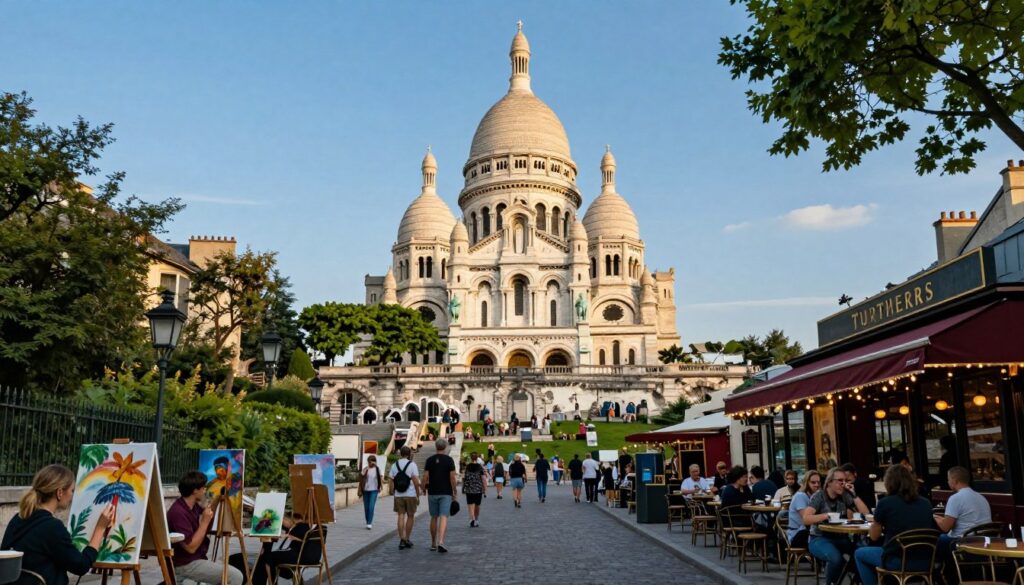
Seine River cruise ideas for daytime sightseeing or a night out
Gliding along the Seine is my go-to reset: you see major landmarks while your feet rest. A river cruise is a low-effort, high-reward choice—perfect after a long museum day.
Options I recommend:
- Daytime sightseeing — quick orientation and photo stops; great for first-half-of-trip planning (one-hour river cruise).
- Sunset/evening cruise — romantic light and illuminated facades; ideal for a relaxed night view.
- Dinner cruise — special occasions with a meal and table service; slower, dress-up vibe.
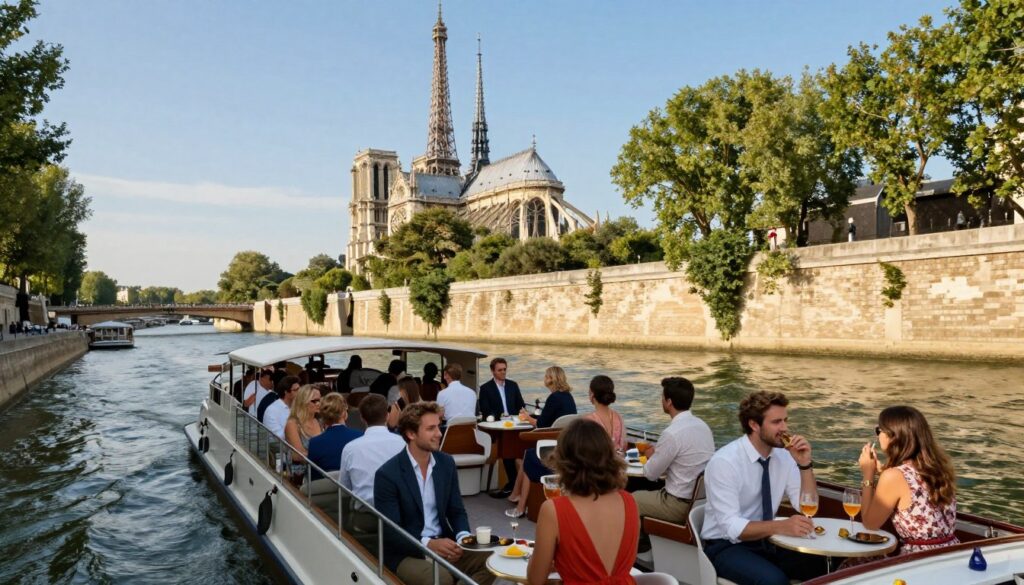
From the water you’ll pass the Eiffel Tower area, the Louvre stretch, Île de la Cité, Notre-Dame and the Orsay riverside—those are the big views that make the ride worth it.
Practical hack: the Batobus doubles as a hop-on hop-off water bus if you want transport and a short river tour combined. Book ahead in peak season and check weather for the best light.
“Do one cruise early so the landmarks click, then save a night cruise for the cinematic finish.”
| Cruise Type | Best for | Tip |
|---|---|---|
| One-hour sightseeing | Orientation and photos | Go mid-morning for even light |
| Sunset/evening cruise | Romance and skyline lighting | Book a slot near golden hour |
| Dinner cruise | Special occasions | Reserve a window table early |
Musée d’Orsay for Impressionist art in a former train station
For anyone wary of long museum days, Orsay is the perfect compromise—big art, smaller scale.
Why go? The building itself is a show: a Beaux-Arts former Gare d’Orsay with vast arched windows, soft natural light, and that signature clock you’ll spot from across the hall.
The collection holds the world’s largest grouping of Impressionist work, and many pieces are instantly familiar. Monet, Renoir, Degas, Van Gogh—they’re all here so a single visit feels rewarding, not overwhelming.
Plan for a focused visit: pick a handful of favorites, then wander the sculpture halls. I like to spend the first hour on paintings, then leave time to climb to the upper levels for sweeping views over the Seine and the city rooftops.
Practical tip: buy tickets ahead or choose a skip-the-line option during peak season so you don’t waste your time waiting outside. A short guided tour can also help you hit the highlights efficiently.
“Even if you’re not a museum person, Orsay often wins converts — the building makes the art feel alive.”

Palace of Versailles day trip for the Hall of Mirrors and royal gardens
For a true royal spectacle, a day trip to the palace versailles is the go-to choice when you want maximum wow outside the city.
Take the regional train (RER) from central Paris—about an hour door-to-door—or join a coach tour if you prefer a guided shuttle. Leave early; arriving at opening time saves hours in line.
Security and crowds are real here. Pre-booked tickets and timed entry cut waiting, and small-group tours often use a faster entrance (worth it if you want context and fewer headaches).
The highlight is the Hall Mirrors—notice the scale of the mirrors, the light, and how the room broadcasts royal power. Don’t rush past it; stand, look, and read a plaque or two.
- Allow a full day: palace, gardens, Grand and Petit Trianon, plus Marie Antoinette’s Hamlet for a softer, private vibe.
- On fountain-music days the gardens may require paid access—check ahead.
- If you’re short on time, prioritize the Hall Mirrors and the state apartments first.
“Versailles punishes tight schedules—go with time to spare and you’ll leave amazed, not exhausted.”

Monet’s Gardens at Giverny as a dreamy day trip from Paris
Giverny feels like stepping into one of Monet’s canvases—soft light, floating lilies, and paths made for slow walks.
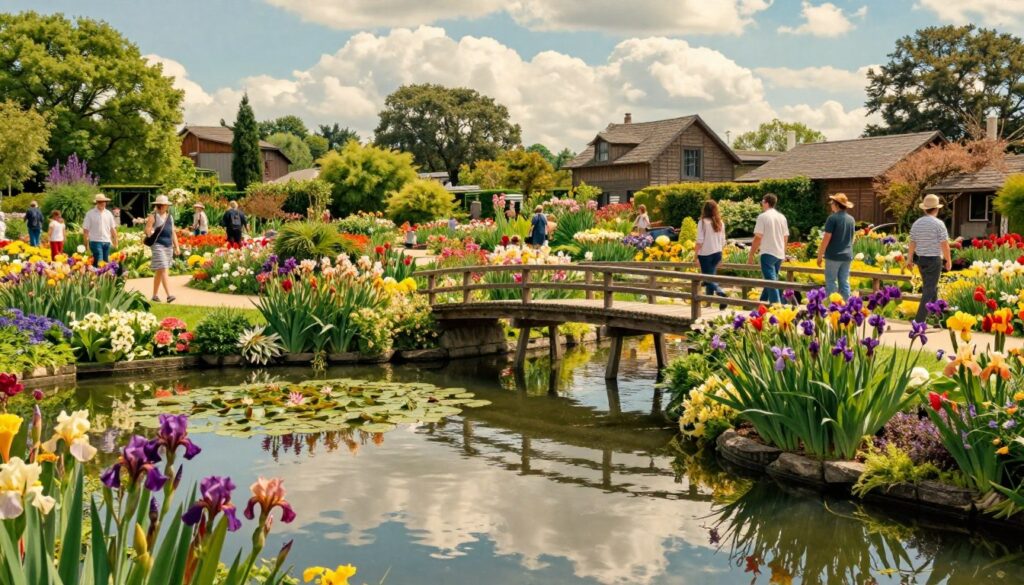
About 50 miles (80 km) northwest of Paris, this spot is where Monet lived and painted. The site has two clear areas: the water garden with the Japanese Bridge and the famous lily pond, and the flower garden bursting with seasonal color.
The simplest way there is by train to Vernon, then a short shuttle or taxi to the village—no car needed. Go early for fewer crowds and better photos, and check opening windows so you don’t pick a closed day.
Ticket strategy: book skip-the-line options when possible. A short guided tour adds context to the scenes you’ll recognize from famous canvases.
“Giverny is a softer, calmer day trip—less royal spectacle, more a walk through a painting.”
| Travel option | Duration round-trip | Best tip |
|---|---|---|
| Train to Vernon + shuttle | 3–5 hours | Buy train and entry tickets early |
| Guided coach tour | Full day | Includes transport and skip lines |
| Self-guided | Flexible | Arrive at opening time for calm gardens |
Jardin du Luxembourg for classic Paris gardens and people-watching
The green chairs and formal paths at Luxembourg Gardens are my go-to pause button on a busy day. The grounds flank the Luxembourg Palace (now the French Senate) and feel like a soft public room for the city.
Why it works: statues, the Medici Fountain, a rose garden, and a pond where kids sail tiny boats give the place a calm, lived-in rhythm. Locals use it heavily, so it rarely feels like pure sightseeing.
Choose your vibe: stroll to the fountain; grab a green chair with a coffee; picnic on the lawn; or watch a boules match. Families will love the puppet theater, pony rides, and small events for young visitors.
“I treat Luxembourg as the breathe button—ten quiet minutes here reset an entire day.”
| Activity | Best time | Tip |
|---|---|---|
| Stroll to Medici Fountain | Late morning | Go slowly and linger by the water |
| Picnic with bakery finds | Afternoon | Buy pastries nearby for an easy, cheap meal |
| Family play & puppet shows | Midday | Bring a blanket and expect playful crowds |

Le Marais for historic streets, boutiques, and Parisian food finds
Le Marais is the neighborhood I send people to when they want charm, not a checklist. It spans the 3rd and 4th arrondissements and feels like a small maze of cobblestone lanes, historic mansions, boutiques, cafés, and art galleries.
What to do: wander the narrow streets, pop into small shops and galleries, and plan your day around snacking your way through local bakeries and market-style bites. I treat Place des Vosges as a built-in pause point—sit, breathe, and watch the neighborhood settle around you.
Practical strategy: pick one or two anchor spots (a museum or favorite bakery), then let yourself get a little lost. That’s the best way to find hidden cafés and quiet courtyards.
- Focus on bakeries and small cafés rather than formal meals for maximum flexibility and sampling of local food.
- Combine a Le Marais stroll with a Seine walk and book-seller browsing to turn the afternoon into a full, satisfying outing.
“Le Marais feels alive—old-world charm and modern energy folded into one easy, walkable part of the city.”

Musée Rodin for sculpture gardens and an unhurried museum day
Musée Rodin lets you trade crowds for quiet—sculpture, sunlight, and time to linger.
The museum sits in the 7th arrondissement near Les Invalides, an easy stop on a relaxed route. Start inside to see Rodin’s sketches and small studies; those rooms add context to what you’ll find outside.
The real magic is the sculpture garden. It’s designed for lingering—benches, clipped lawns, and views of major works like The Thinker and The Kiss.
Don’t miss the large pieces that stop you cold: The Gates of Hell and The Burghers of Calais feel monumental when seen up close.
Practical tip: come earlier in the day for peaceful garden time and plan extra minutes—you’ll stay longer than you expect.
Buy tickets ahead in peak season; the Paris Museum Pass may apply, and pre-booking still saves stress at smaller sites.
“A slow museum day here feels like a gift—less rush, more connection to the work.”
If you want deeper stories, a guided tour helps explain Rodin’s process and why his sculpture changed the world of modern art.

Hidden gems and off-the-beaten-path places to visit in Paris
Once major stops are done, the best way to see the city is to wander sideways. I mean follow curiosity—down alleys, along canals, or into tiny shops.
Pick your mood: eerie—Catacombs (an ossuary that’s not for the faint-hearted); cinematic—Canal Saint-Martin (boat tour options and some underground stretches); treasure hunting—Saint-Ouen or Vanves flea markets; literary—Shakespeare and Company and the bouquinistes along the Seine.
Père Lachaise is quieter than you expect. Graves of Oscar Wilde, Jim Morrison, and Edith Piaf sit among shaded paths. It’s a moving place to visit if you like history and names that echo across years.
La Promenade Plantée is an elevated green walk—free, easy, and great when you want trees without a whole park day. Belleville shows the city’s multicultural, street-art side and feels alive and local.
Quick reality check: Centre Pompidou is closed for repairs until 2030, so plan alternatives for contemporary galleries and tours.
“Go sideways once—those small stops often become your favorite memories.”

Conclusion
Wrap your visit with a simple plan: pick two anchors (Eiffel Tower and a major museum or the Notre Dame area), add one neighborhood day and a garden reset. This keeps the trip lively without burning time on long lines.
I recommend booking timed tickets for top sites and using a guided tour for complex places like big museums or Versailles. Go solo for Le Marais or Montmartre—those are made for wandering.
Be sure to schedule at least one views moment—Arc de Triomphe rooftop or the tower sparkle at dusk. Confirm opening hours, lock in entries, leave buffer time, and pick a couple of meals you truly want to savor.
Go, wander, and let an unexpected café or street corner become your favorite memory of the city.
FAQ
What are the top must-see sights for a first-time trip to Paris?
For a first visit I always pick a mix — climb or take the lift at the Eiffel Tower for those classic views, walk the Champs-Élysées up to the Arc de Triomphe, spend a few hours at the Louvre (don’t stop at just the Mona Lisa), and wander Île de la Cité to feel the city’s history around Notre-Dame. Add a Seine river cruise for instant orientation and an evening in Montmartre for the skyline at sunset.
How can I skip the line at major sites like the Eiffel Tower and the Louvre?
Book timed-entry tickets in advance — official tower and museum tickets release set slots. Opt for “skip-the-line” guided tours when available (they’re pricier but save time). For the Louvre, arrive at less popular entrances (like the Porte des Lions sometimes) or go late on Wednesday/Friday nights when the museum stays open longer.
Which Eiffel Tower experience should I choose — summit, second floor, or dinner?
If you want sweeping views, the summit is unbeatable. The second floor still offers great panoramas with shorter waits. For romance, dinner at a nearby restaurant or a cruise with dinner on the Seine is more relaxed than eating inside the tower. Consider the time of day — sunset or night gives sparkling-city views.
What should I see at the Louvre besides the Mona Lisa?
Don’t miss the Venus de Milo and Winged Victory, the Egyptian antiquities, and the vast Napoleonic apartments with the Hall of Mirrors’ spirit in mind. Pick a wing (Denon for Italian and French paintings, Sully for antiquities, Richelieu for decorative arts) and focus — the museum is huge, so avoid museum fatigue by timing breaks in the Tuileries Garden.
Is Notre-Dame open to visitors after the restoration, and what else is on Île de la Cité?
The cathedral’s full public access is still limited while restoration continues, but the area is lively — you can stroll the quays, visit the nearby Sainte-Chapelle for its stained-glass spectacle, and explore the Conciergerie (medieval prison). Check current reopening updates before you go, since access changes with conservation work.
What makes Sainte-Chapelle worth a visit?
Sainte-Chapelle houses one of the world’s most stunning medieval stained-glass collections — the upper chapel’s windows fill the space with saturated color. It’s compact, so it fits well into a half-day itinerary with Notre-Dame and the Conciergerie. Buy a combined ticket or timed entry to avoid long waits.
How do I get the best rooftop views from the Arc de Triomphe?
Reserve a ticket for the Arc’s rooftop terrace and climb the steps (or use the elevator partway). The 360-degree panorama centers the Champs-Élysées and offers a dramatic view of Paris’ layout — perfect for photos at golden hour. Note: access can be limited on windy or stormy days.
What should I do in Montmartre to feel the neighborhood’s bohemian vibe?
Wander the cobbled streets around Place du Tertre, peek into small art studios, and visit the Sacré-Cœur basilica for views over the city. Stop at a café or creperie for a long pause — the neighborhood rewards slow walking. Avoid the most touristy stalls on the main squares if you want an authentic feel.
Are Seine river cruises worth it during the day or at night?
Both have their charm. Day cruises are great for sightseeing and learning city layout; evening cruises show the monuments lit up and the Eiffel Tower’s sparkle — quite romantic. For dinner cruises expect longer trips and higher prices; budget-friendly options include short sightseeing cruises with audio guides.
What makes Musée d’Orsay unique compared to other museums?
Housed in a former Beaux-Arts train station, Musée d’Orsay showcases Impressionist and Post-Impressionist masters — Monet, Renoir, Van Gogh — in a bright, airy space. The building itself is a highlight (see the giant clock faces), and the layout is easier to navigate than the Louvre for focused art lovers.
Is Versailles doable as a day trip and what should I prioritize there?
Yes — Versailles is a classic day trip by RER train. Prioritize the Hall of Mirrors, the King’s State Apartments, and the extensive formal gardens. If you can, rent a bike or a golf cart to explore the grounds faster. Add the Petit Trianon and Marie Antoinette’s estate for a quieter, intimate look at royal life.
How do I plan a visit to Monet’s Gardens at Giverny?
Take a train from Paris to Vernon, then a short bus or bike ride to Giverny. Book the garden entrance in advance during high season — the water-lily pond and flower borders are busiest late spring and summer. Arrive early to avoid crowds and enjoy the light that inspired Monet’s work.
What makes Jardin du Luxembourg a good pit stop during a city day?
It’s a perfect place to rest — locals picnic, play chess, and watch tennis on the lawns. The gardens offer formal parterres, statues, and a calm pond where kids sail toy boats. I always plan a mid-afternoon break here between museum visits to recharge and people-watch.
What should I explore in Le Marais for food and local shopping?
Le Marais mixes historic streets with independent boutiques, bakeries, and falafel shops on Rue des Rosiers. Hunt for vintage stores, specialty cheese shops, and small art galleries. Stop for a pastry and stroll — it’s a great neighborhood for wandering and finding unique Parisian souvenirs.
Why visit Musée Rodin and how much time should I allow?
Musée Rodin pairs beautiful sculpture with peaceful gardens — works like The Thinker and The Gates of Hell feel perfectly placed outdoors. Plan 1.5–2 hours to see the house collection and the garden sculptures without rushing, and grab a coffee at the museum café afterward.
Any tips for finding lesser-known spots and off-the-beaten-path places?
Walk beyond main boulevards early in the morning, explore neighborhoods like Canal Saint-Martin or Belleville, and ask locals for café or bookshop recommendations. Small museums, artisan workshops, and quiet market streets often reveal a more authentic side of the city than the busiest sites.
How do I balance museum time with outdoor sights during a short trip?
Mix one major museum day (Louvre or Musée d’Orsay) with days focused on neighborhoods, rooftop views, and a park or gardens. Use a river cruise or bike rental to move between areas quickly. That way you get art, architecture, and local life without museum fatigue.
What practical tips help visitors save time and money on tickets and tours?
Buy combined or timed tickets online, consider a city pass only if you’ll visit many paid sites, and compare official sites with reputable tour operators for skip-the-line options. Travel by metro and walk when possible — it’s faster and cheaper than taxis for short hops.