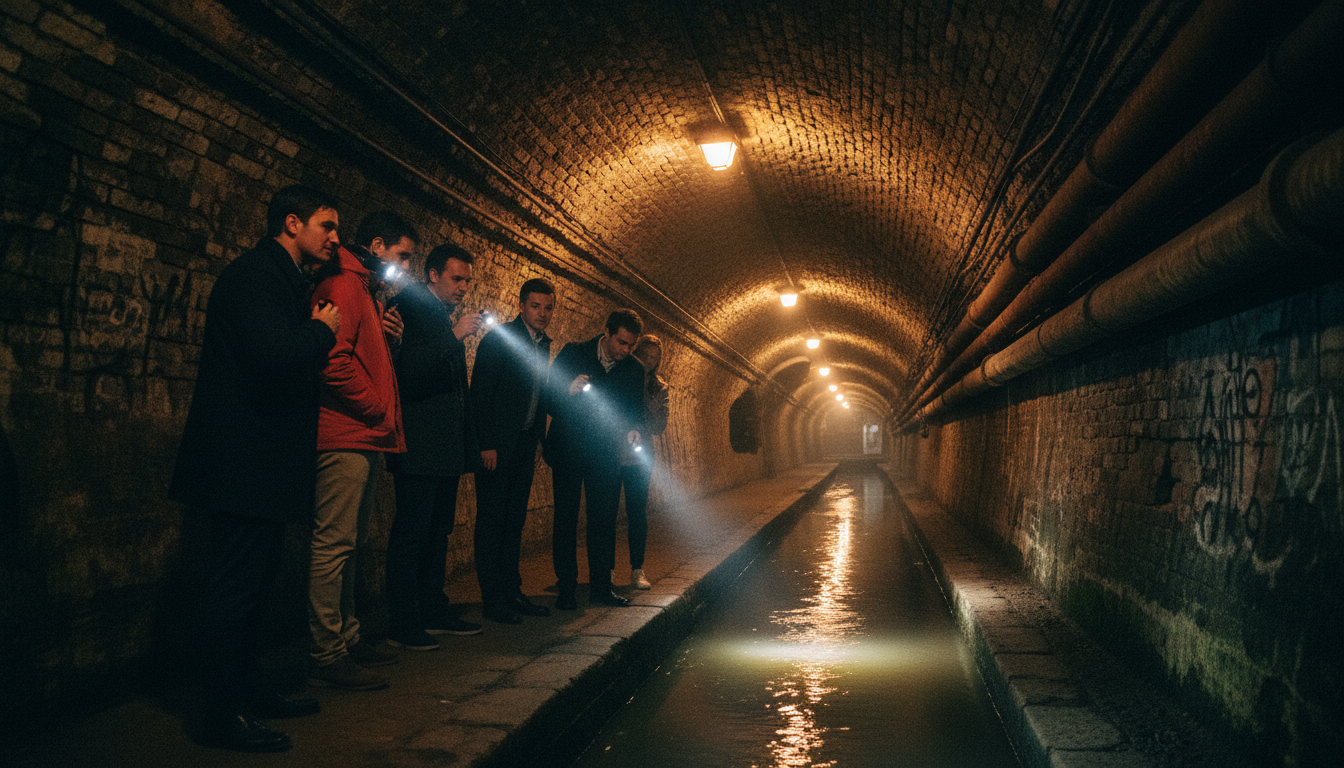
Ever wondered what’s under the romantic streets of the City of Light? Most people see the Eiffel Tower and Louvre. But, there’s a hidden world beneath.
The Musée des Égouts de Paris offers a unique Paris experience. This paris sewer museum shows you the city’s hidden infrastructure. It’s what keeps Paris running every day.
After a big renovation in 2021, the museum is now modern. You can see its design from the Seine River. It looks amazing.
Inside, you’ll find virtual reality experiences, interactive displays, and real tunnels. The paris underground attractions tell the story of sanitation and engineering. They changed urban life.
If you love history, engineering, or just want something different, visiting the Musée des Égouts de Paris is great. You can book tickets online. There are packages for all kinds of groups and interests.
Key Takeaways
- The Paris Museum of Sewers reopened in 2021 with completely renovated facilities and modern exhibition design
- You can explore authentic operational tunnels and learn about centuries of sanitation engineering history
- Virtual reality experiences and interactive displays make your visit engaging and educational
- The museum offers tailor-made packages for professionals, groups, and individual visitors
- Online booking allows you to select your preferred date and visiting time in advance
- This underground attraction differs from the Catacombs by focusing on functional infrastructure rather than ossuaries
Sewer Tours in Paris and the History Behind the Network
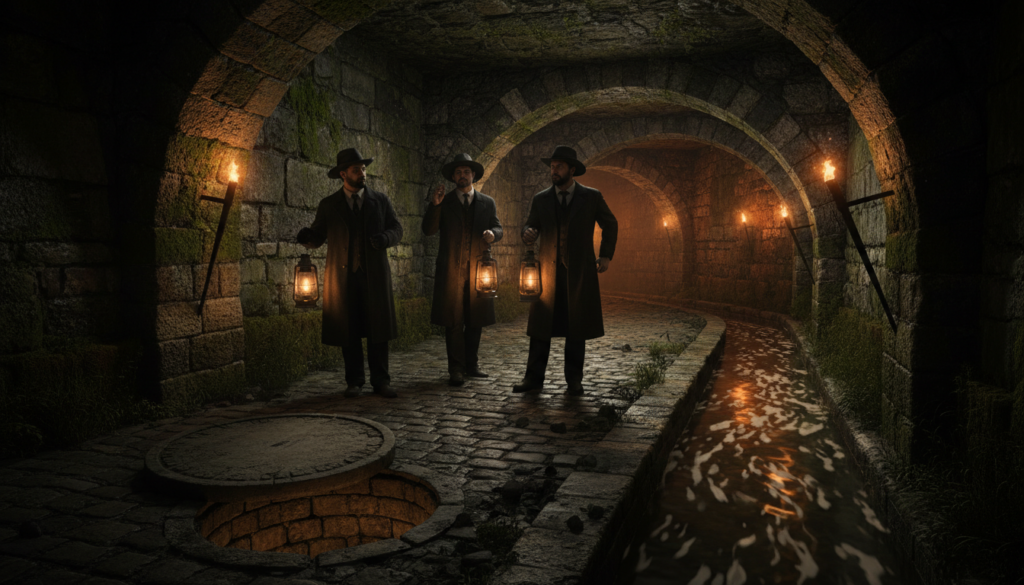
Beneath Paris’s elegant streets lies a remarkable engineering feat. The paris sewage system history spans nearly eight centuries. It evolved from simple trenches to a modern urban network.
Exploring this underground world shows scientific progress and public health revolution. It’s a physical sign of how cities have changed.
The sewers have always intrigued visitors. On a guided tour, you’ll learn how early 19th-century construction changed Paris. Without these sewers, Paris as we know it wouldn’t exist.
Early Drainage Systems and Medieval Innovations
In medieval times, Paris faced big sanitation challenges. Early solutions included open ditches alongside streets. These ditches often spread disease, causing epidemics.
By the 13th century, covered drains were needed. Philip Augustus paved streets and built stone gutters. This was a big step forward, but it wasn’t enough.
The tunnels of that time were not systematic. Waste management was based on cesspools and manual collection. This led to unsanitary conditions for centuries. Yet, it laid the foundation for future improvements.
The Second Empire’s Revolutionary Underground Redesign
Baron haussmann transformed Paris during the Second Empire (1853-1870). He aimed to make Paris a grand capital. His work above and below ground was groundbreaking.
Haussmann wanted the sewers to match the city’s grandeur. He linked sewer construction to street rebuilding. This ensured every new boulevard had advanced drainage.
The sewer network grew from 30 kilometers in 1800 to over 600 kilometers by 1870. This rapid growth showed technological progress and a commitment to public health.
Belgrand’s Technical Mastery and Lasting Impact
Eugène belgrand’s work defined the Paris sewer system’s technical excellence. Appointed by Haussmann in 1854, Belgrand brought scientific rigor. His designs were functional for centuries.
Belgrand introduced a revolutionary double-level system. This separated sewage from fresh water. His design became a global sanitation standard.
“The sewer is the conscience of the city. Everything there converges and confronts everything else.”
Belgrand’s designs used gravity flow, reducing pumping needs. He also created ventilation shafts to prevent gas buildup. This made the tunnels safer for maintenance.
Wartime Refuge and Literary Fame
The sewers played a big role in Paris’s history. During the Paris Commune of 1871, they were used as escape routes. The network helped revolutionaries move undetected.
In World War II, the sewers helped the French Resistance. They used the tunnels to evade Nazis and conduct secret operations. The sewers became symbols of Paris’s resilience.
Victor Hugo’s “Les Misérables” immortalized the sewers. Jean Valjean and Marius’s journey through the tunnels captivated readers. Hugo’s research added authenticity to his story.
Today, the sewer system is over 2,400 kilometers long. Tours let you see this engineering marvel. The museum shows the system’s evolution, from medieval ditches to modern infrastructure.
On a historic sewers tour, you see more than just tunnels. You learn about the history of Paris’s sewers. These tours highlight engineering, public health, and social progress in modern cities.
Guided Sewer Tour Options
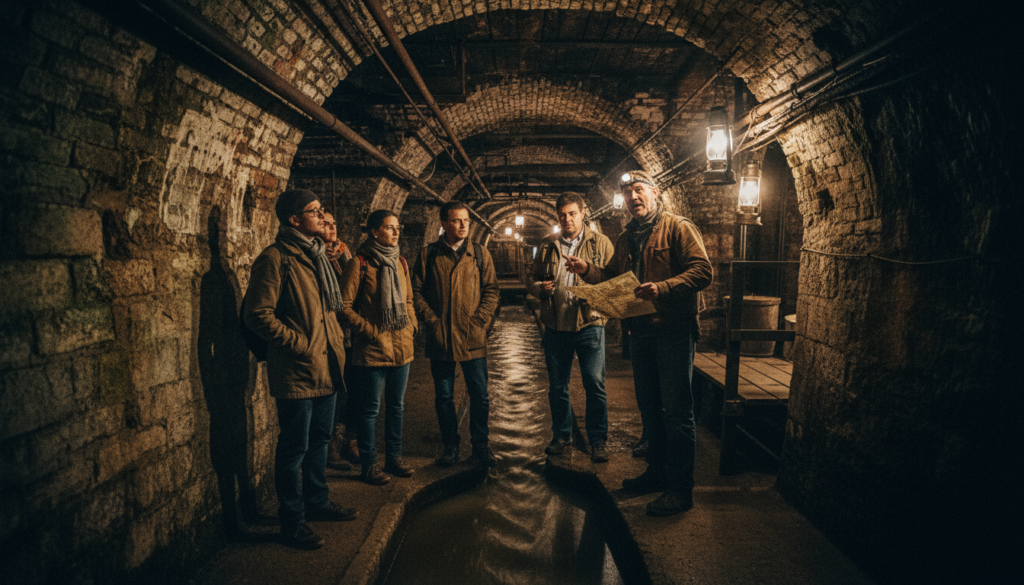
Choosing the right guided sewer tour in Paris depends on your budget and time. You can pick from self-guided museum visits or expert-led tours. Each offers a unique way to explore the sewer system.
It’s important to know what makes each tour different. Look at group size, guide expertise, and what’s included. Some tours focus on the museum, while others explore more underground areas.
Self-Guided Museum Experience
The official musée des égouts self-guided visit is a budget-friendly option. You get to explore the sewer history at your own pace. You can spend as much time as you want.
To book, visit the museum’s website. Choose your date and time, create an account, and buy your ticket online. This helps manage visitor numbers and keeps crowds down.
The self-guided tour lasts about one hour. You can take your time. Interactive panels explain the sewers’ history and how they work. You’ll also learn about water treatment and the animals living in the tunnels.
This option is great if you like to explore at your own pace. You won’t have to keep up with a group. But, you’ll miss out on the deeper insights that expert guides offer.
Expert Historical Commentary Tours
The Context Travel expert-led tour offers a scholarly look at the sewers. These tours are small, with up to six people. Your guide will be an expert in Paris’s infrastructure.
These guides share more than just facts. They talk about the sewers’ social impact and architectural innovations. You’ll learn about how the sewers influenced public health and city planning.
These tours last two to three hours. You’ll get a detailed look at the sewers. Your guide will answer your questions and adapt the tour to your interests.
These tours cost more than basic admission. But, you get specialized knowledge that makes the visit educational.
Professional Guided Museum Tours
The Get Your Guide tour is a middle option. Professional guides share interesting stories about the sewers. These tours are fun and educational.
These tours are available in multiple languages, including English, French, Spanish, and German. This makes them accessible to international visitors.
The tour lasts about 1.5 hours. Your guide will highlight key exhibits and share interesting facts. Group sizes are usually 10 to 20 people.
Book these tours through the tour operator’s platform. The price includes museum admission and the guided tour. You’ll get all the details and meeting instructions after booking.
Combined Underground Exploration Packages
The Viator tour combines sewer visits with other underground attractions. You’ll see hidden crypts and tunnels. This tour gives you a comprehensive look at Paris’s underground.
Package combinations vary. Some tours include Seine River history or urban development themes. This provides a broader understanding of Paris’s underground.
These tours last three to four hours or more. You’ll move between locations with your guide. Transportation may be included or you might walk.
These packages cost more but offer great value. You’ll learn a lot about Paris’s underground infrastructure and see different locations.
Understanding Tour Pricing and Inclusions
Some people get confused about what’s included in guided tours. Basic museum admission only covers self-guided visits. Any tour with a guide requires separate booking and payment.
Guided tours are worth the extra cost if you value expert insights. They offer more than just reading panels on your own.
| Tour Type | Group Size | Duration | Languages Available | Price Range |
|---|---|---|---|---|
| Self-Guided Museum | Individual | 1 hour | Exhibits in French/English | €15-20 |
| Expert Historian Tour | 2-6 people | 2-3 hours | English, French | €85-120 |
| Standard Guided Tour | 10-20 people | 1.5 hours | Multiple languages | €35-50 |
| Combined Underground | 8-15 people | 3-4 hours | English, French, Spanish | €75-95 |
Comparing the different tours helps you choose the best one for you. Think about your budget, time, language needs, and whether you prefer small groups or not. Each tour has its own benefits.
Booking in advance is key, especially during peak seasons. Most operators offer free cancellation up to 24-48 hours before. This gives you flexibility if your plans change.
Sewer Tours in Paris Combined with Other Underground Experiences
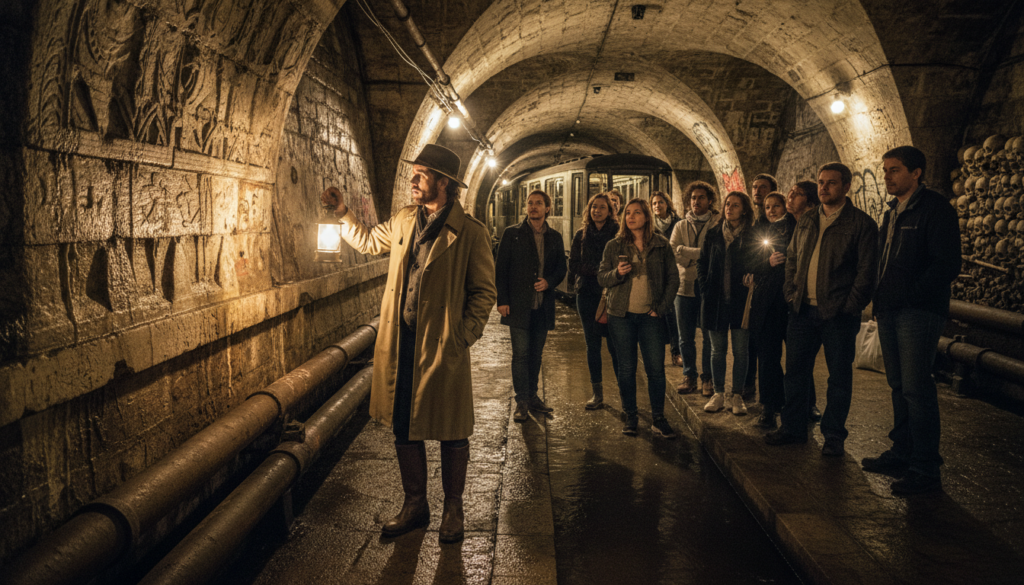
If you’re fascinated by what lies beneath Paris, pairing the sewer museum with other underground experiences creates an unforgettable journey through hidden history. Combination packages allow you to explore multiple subterranean paris attractions in a single day while saving money and gaining deeper context. These bundled underground paris tours connect different historical periods and infrastructure types that shaped the city.
You’ll discover that booking combination tours typically offers cost savings of 15-25% compared to individual admission prices. Beyond financial benefits, these packages eliminate navigation stress between attractions and provide cohesive narratives. Expert guides connect the experiences thematically, helping you understand how different underground systems interact.
Tour operators design these experiences for diverse audiences, from history enthusiasts to families with older children. You should consider your physical stamina when booking full-day underground tours. Walking distances, numerous stairs, and extended time below ground can be demanding.
Sewer Museum and Catacombs Combined Day Tour
The sewer museum and catacombs combined day tour represents the most popular pairing for visitors seeking comprehensive underground exploration. You’ll experience two completely different worlds—the functional infrastructure of sewers and the haunting ossuary containing remains of six million Parisians. This combination showcases both practical engineering and macabre history.
Your guide manages skip-the-line access at both locations, saving you hours of waiting that would otherwise consume your day. The Catacombs regularly have queue times exceeding two hours during peak season. With guided access, you bypass crowds and maximize exploration time.
The narrative connection between paris catacombs and sewers reveals fascinating parallels. Both systems emerged from Paris’s growth challenges—the sewers addressed sanitation needs while the Catacombs solved overcrowded cemetery problems. Your guide explains how 19th-century engineers approached these underground projects with similar technical innovations.
Tours typically begin with the sewer museum in the morning when temperatures underground remain cooler. After lunch, you descend into the Catacombs’ limestone tunnels. This sequencing helps you appreciate the contrast between wet, functional infrastructure and dry, memorial spaces.
Underground Paris Full-Day Walking Tour Package
The underground paris full-day walking tour package expands beyond sewers and catacombs to include lesser-known subterranean paris experiences. You’ll visit medieval crypts beneath historic churches, Roman arena remnants at Arènes de Lutèce, and hidden tunnel networks. These comprehensive packages provide insight into multiple historical layers beneath Paris streets.
Your day typically spans 7-8 hours with strategic breaks for meals and rest. Tours include transportation between distant sites, whether by metro or private vehicle. This logistics support proves invaluable when navigating between neighborhoods like the Latin Quarter, Montparnasse, and the Right Bank.
The archaeological chronology these tours present helps you understand Paris’s evolution. You’ll see Roman foundations from 2,000 years ago, medieval construction from the Middle Ages, and 19th-century engineering. Each era’s underground approach reflects contemporary technology and urban priorities.
“Paris is a moveable feast, but beneath the streets lies a city frozen in time—each underground layer preserving moments from centuries past.”
Package tours often include entrance to locations not readily accessible to independent visitors. Certain church crypts and archaeological sites require advance permission or guided access. Your tour operator handles these arrangements, opening doors to weird attractions in Paris that most tourists never discover.
Sewer Tour with Seine River Cruise Combo
The sewer tour with seine river cruise combo offers an ingenious contrast between underground infrastructure and river-level perspectives. You’ll understand how the sewer system relates to the Seine and how wastewater management protects water quality. This pairing emphasizes Paris’s integrated approach to urban planning.
Tours sequence the experiences to maximize educational impact. You typically visit the underground infrastructure paris first, learning about treatment processes and discharge points. Afterward, your Seine cruise highlights where treated water returns to the river and how monitoring systems ensure environmental protection.
The river cruise provides welcome relief after underground exploration. You’ll appreciate fresh air and daylight while your guide points out sewer discharge locations and flood management infrastructure along the riverbanks. This above-ground context makes the underground systems more comprehensible.
These combination packages appeal particularly to engineering enthusiasts and environmental advocates interested in urban sustainability. You’ll gain appreciation for the complex systems maintaining Paris’s environmental health. The contrast between confined tunnels and open river views creates memorable sensory variety.
Hidden Crypts Tunnels and Sewer Museum Trail
The hidden crypts tunnels and sewer museum trail focuses on ecclesiastical underground spaces alongside municipal infrastructure. You’ll explore church crypts, medieval burial chambers, and tunnel networks before or after your sewer museum visit. This thematic approach reveals how different institutions created underground Paris.
Tours typically include the Crypte Archéologique beneath Notre-Dame’s forecourt, revealing Roman and medieval foundations. You’ll also visit lesser-known church crypts in the Marais or Latin Quarter. These sacred spaces contrast dramatically with the utilitarian sewers, yet share construction techniques and challenges.
Your guide draws connections between religious and civic underground projects across centuries. Both required excavation expertise, water management solutions, and structural support systems. The engineering principles applied to crypts informed later sewer construction.
These specialized trails attract visitors interested in architectural history and urban development. You’ll learn how underground construction evolved from simple burial chambers to sophisticated tunnel networks. The progression illustrates increasing technical sophistication and urban planning coordination.
| Tour Combination | Duration | Cost Savings | Best For | Physical Demand |
|---|---|---|---|---|
| Sewer Museum + Catacombs | 5-6 hours | 20-25% | History enthusiasts seeking contrasting underground worlds | Moderate (many stairs) |
| Full-Day Underground Walking Package | 7-8 hours | 15-20% | Comprehensive explorers wanting multiple sites | High (extensive walking) |
| Sewer Tour + Seine Cruise | 4-5 hours | 15% | Visitors wanting infrastructure education with scenic breaks | Low to Moderate |
| Hidden Crypts + Sewer Trail | 6-7 hours | 18-22% | Architecture and engineering specialists | Moderate |
When deciding between combination tours and separate visits, consider your available time and interests. Combination packages streamline logistics and provide cohesive narratives that independent visits can’t match. However, separate visits allow more flexibility in pacing and focus.
Families with children over 12 find combination tours engaging when guides incorporate storytelling elements. The variety of spaces maintains interest better than single-location visits. Younger children may struggle with the duration and physical demands of full-day underground exploration.
Tour operators provide different comfort levels and group sizes. Small group tours (8-12 people) offer more personalized attention and easier movement through tight spaces. Larger groups reduce per-person costs but may feel rushed at certain locations. You should verify group size limits when booking.
The transportation included in combination packages represents significant value beyond just cost savings. Navigating between underground attractions independently requires metro transfers, walking, and time reading maps. Your guide handles all logistics, allowing you to focus on the experience rather than directions.
What You Will See on Sewer Tours in Paris
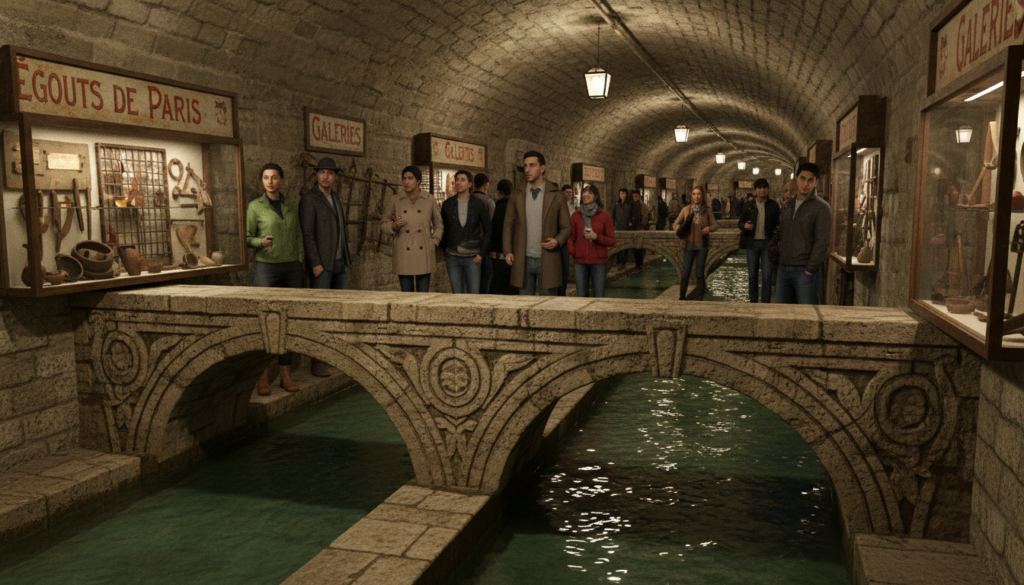
On sewer tours in Paris, you’ll see more than just dark tunnels. It’s a journey through a world of fascinating history and modern technology. The Museum of Sewers offers a unique look at a working facility where sewermen do their daily work. You’ll see exhibits that show how the sewer system has evolved over time.
Your tour takes place in a real environment where maintenance work happens every day. The museum combines modern design with historical artifacts. You’ll see multimedia presentations, interactive displays, and get to see the infrastructure that serves millions of Parisians.
Massive Stone Galleries and Vaulted Tunnel Walkways
The massive stone galleries and vaulted tunnel walkways are architectural wonders beneath Paris. They were built from limestone blocks from the same geological formations as the city above. The engineering skill is clear when you see these underground chambers.
Some galleries are wide enough for small boats used for maintenance. Workers used these boats to inspect tunnels and move equipment. The Victorian-era ceilings show the advanced engineering of the 19th century.
Walking through these spaces feels grand and permanent. The stonework has lasted over a century despite constant moisture. You can still see chisel marks and construction details that connect you to the craftsmen who built this system.
The sewers of Paris are as much a monument to municipal ambition as the boulevards above them, representing a commitment to public health that transformed urban life.
Historical Equipment and Maintenance Machinery Displays
The displays show the evolution of sewer cleaning technology. You’ll see the famous boule de curage, or cleaning ball, which revolutionized tunnel maintenance in the 19th century. This large spherical device was rolled through tunnels to flush debris downstream, requiring significant manual effort from sewer workers.
Manually operated sluice gates appear throughout the exhibits, showing how workers controlled water flow before motorized systems. These heavy metal gates required physical strength to operate. The contrast between these hand-powered tools and modern equipment highlights technological progress in sanitation engineering.
Contemporary mechanized cleaning equipment, pumps, and monitoring devices show what today’s sewermen use for their work. Electronic sensors now track water quality and flow rates continuously. Pumping stations featured in the displays process millions of liters daily, keeping the system functioning efficiently.
| Equipment Type | Historical Era | Primary Function | Operation Method |
|---|---|---|---|
| Boule de Curage | 1850s-1920s | Tunnel debris flushing | Manual rolling and water pressure |
| Hand-Operated Sluice Gates | 1860s-1950s | Water flow control | Manual crank and lever systems |
| Wagon Vannes (Flush Tank) | 1880s-1940s | Periodic tunnel cleaning | Gravity-fed water release |
| Modern Vacuum Trucks | 1970s-Present | Blockage removal and inspection | Motorized suction and high-pressure jets |
| Electronic Monitoring Systems | 1990s-Present | Water quality and flow tracking | Automated sensors and computer analysis |
Interactive Panels on Water Treatment and Sanitation
The interactive panels explain water treatment and sanitation in simple terms. They show how Paris processes millions of liters of wastewater daily. You’ll learn about the steps involved in treating water before it returns to the Seine River.
The panels discuss the challenges of managing a 19th-century system for a 21st-century population. Paris has grown a lot since Haussmann’s time, putting a lot of pressure on the infrastructure. The displays show how engineers adapt old systems to meet today’s environmental standards.
Your tour includes information on biological treatment, chemical filtration, and environmental protection. Touch screens let you explore water purification stages. Video presentations feature interviews with sanitation workers who explain their roles in maintaining public health.
The educational content covers topics from bacterial decomposition to heavy metal removal. You’ll understand why wastewater treatment is a key technological achievement. The displays also talk about the environmental impact of urban runoff and efforts to reduce pollution in the Seine.
Scale Models of the Sewer Network and City Above
The scale models show how the sewer system mirrors the city above. The tunnel system follows the streets, with sewer passages named after boulevards and avenues. This makes navigation and maintenance easier for workers.
These detailed miniatures show the vast extent of the network in metropolitan Paris. The models reveal how different sized tunnels branch from main collectors to smaller pipes. Color-coding distinguishes between systems for rainwater runoff and household wastewater.
You can trace specific routes from residential areas through treatment facilities and back to the Seine. The three-dimensional representations make it easy to understand vertical drops and pumping stations that move water uphill. Some models include tiny figures of sewermen, vehicles, and equipment that bring human scale to this massive infrastructure project.
Comparing the underground network to the city above reveals surprising facts about urban planning. Major boulevards often required larger sewer tunnels beneath them. The models demonstrate how engineers solved problems like crossing under the Seine or avoiding metro tunnels during construction.
Additional Exhibits and Living Conditions
Beyond the main attractions, you’ll learn about the surprising variety of animals living in these tunnels. Rats and insects are obvious residents, but fish and crustaceans have also adapted to this dark environment. Educational displays explain how these creatures survive without natural light and what they eat.
Historical photographs document sewer construction and the workers who built the system during Haussmann’s transformation of Paris. These images bring the human dimension of sewer work to life. You’ll see the faces of men who labored in difficult conditions to create infrastructure that still functions today.
Artifacts like old uniforms, tools, and safety equipment illustrate how working conditions have evolved. Early sewermen lacked proper protective gear that modern workers take for granted. The museum honors these laborers whose contributions to public health often went unrecognized.
Since you’re visiting an operating location where actual sewermen continue working, you may observe maintenance activities during your paris wastewater network tours. Authentic sewer odors are present, though ventilation systems keep them manageable. You’ll see evidence of the continuous work required to keep the system functioning reliably for millions of residents.
The permanent exhibition includes audio guides in multiple languages that provide deeper context for each display area. Temporary exhibitions rotate periodically, offering new perspectives on sanitation history and technology. Your visit to what lies beneath paris streets transforms infrastructure into a compelling story of innovation, persistence, and civic progress.
Sewer Tours in Paris for Families and Students
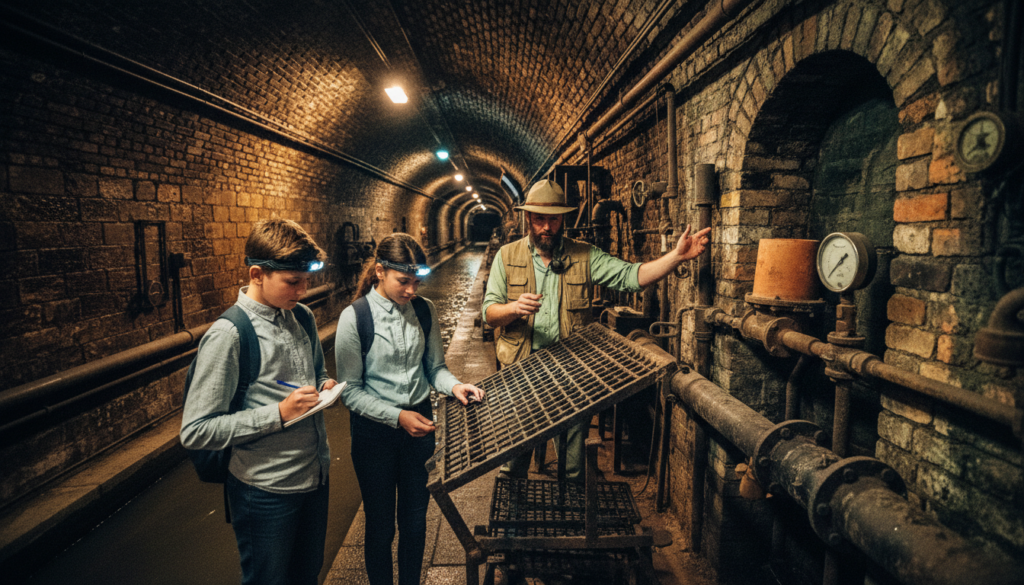
Families and students in Paris can explore an educational gem under the city streets. The Musée des Égouts offers special experiences that turn an unusual place into a fun learning spot. These sewer tours in Paris for families and students mix fun with learning, making city infrastructure exciting for kids.
The museum has packages for everyone, from professionals to individuals. It adds new activities and workshops all year. Visitors can try virtual reality to learn about the underground world.
Interactive Learning Experiences for Young Visitors
The kid-friendly sewer tour with interactive exhibits is designed to spark kids’ curiosity. It teaches them about city infrastructure in a fun way. Kids can learn about water treatment through games and hands-on displays.
Virtual reality lets kids explore the sewer system virtually. They see how water flows from homes to treatment facilities. These technologies make learning fun and visual for kids.
Exhibits have touch-screen panels for kids to answer questions and earn badges. They can see scale models up close. The museum staff keeps content age-appropriate while still educational.
Educational Programs for School Groups
The student group educational visit with workshop is for school groups from elementary to university. It has content for science, history, engineering, and environmental studies. Teachers get materials to prepare students before the visit.
Workshops let students try water filtration experiments. They examine historical artifacts and discuss urban planning challenges. Post-visit worksheets help reinforce what they learned.
Workshops include water quality tests, engineering challenges, and discussions on water conservation. Students present their findings to classmates. Group bookings need advance reservations, and schools get discounts.
Balanced Experiences for Mixed-Age Groups
The family-friendly underground discovery walk is fun and educational. Guides engage all ages with stories, questions, and activities. This keeps kids interested while adults learn too.
Guides adjust their style for different groups. They ask questions that make kids think. Your family will enjoy participating together, no matter their age or knowledge.
Tours are paced for everyone’s attention span. Stops include activities and visuals to keep everyone engaged. Bathroom facilities are available before and after the tour, which parents appreciate.
These paris historical tours last 45 to 60 minutes for families. The short time keeps everyone energized while covering key points. Your family can ask questions, making it a conversation, not a lecture.
Literary-Themed Underground Adventures
The les misérables themed storytelling sewer experience uses Victor Hugo’s famous novel. It brings history to life for families and students who know the book or its adaptations. This approach links literature to real historical infrastructure.
Guides explain how Hugo’s story reflects real sewer conditions in the 19th century. They clarify what’s true and what’s for storytelling. Your family will see tunnels like those in Jean Valjean’s escape.
The storytelling includes dramatic readings, comparisons, and discussions on social commentary. It offers photo opportunities at places that inspired Hugo. This experience is great for students studying French literature or history.
When visiting, remember the minimum age is usually seven for standard tours. Family tours might allow younger kids with adult supervision. Prepare children for the unusual sights, smells, and settings to make it exciting.
Consider the tour’s length when traveling with kids. Family tours are shorter than those for adults. This thoughtful pacing keeps everyone excited without overwhelming them.
Private and Specialist Sewer Tour Experiences
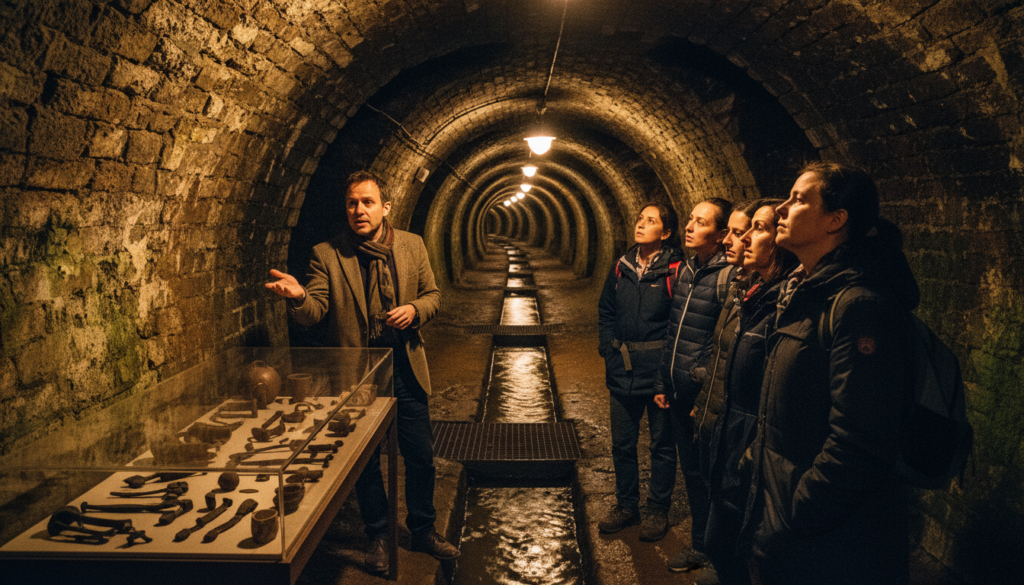
Exploring Paris’s historic sewer system becomes even more exciting with private tours. These tours are led by experts and focus on specific interests. They offer a deeper look and unique access, making your visit unforgettable.
These tours are tailored for different groups, including professionals and enthusiasts. They provide experiences that go beyond regular tourism. The museum works hard to meet the needs of all visitors.
Booking these tours usually takes two to four weeks. They cost per group, not per person. You can choose tours in several languages and customize them to fit your needs.
Exclusive Access With Academic Experts
A private tour with a historian offers deep insights into the sewers’ history. Your guide has a doctoral degree and can talk about the sewers’ development in detail. These tours are for small groups, so you can ask lots of questions.
You can pick what you want to learn about before the tour. Whether it’s about Paris’s transformation or public health, your guide will focus on it. The tour lasts about an hour and covers the sewers’ history and how they work.
Capturing the Underground Atmosphere
Photography lovers will enjoy the underground sewer walk. It’s designed to help you take great photos. You’ll have time to set up and take pictures in the best spots.
Your guide knows the best angles for photos and explains the history of each spot. This lets you take photos that are both beautiful and meaningful.
Technical Deep Dive for Professionals
For those interested in engineering and architecture, there’s a special tour. It’s led by guides with engineering backgrounds. They talk about the sewers’ design and how they work.
The tour looks at how the sewers fit into Paris’s infrastructure. It also covers maintenance and modern water treatment. It’s a chance to learn from experts and gain practical knowledge.
Unique Venue for Team Building
Corporate groups can book a tour for team-building. It’s a chance to do something different from usual meetings. The museum offers activities that can help teams work better together.
These tours can be tailored to fit your company’s goals. They can be for any size group. Booking takes three to four weeks, and prices reflect the customization.
The Parisian sewers are more than just engineering. They show a commitment to public health and urban dignity that changed the world.
The table below compares different private and specialist tours. It helps you choose the best one for you:
| Tour Type | Ideal Audience | Group Size | Duration | Booking Lead Time |
|---|---|---|---|---|
| Private Historian Tour | History enthusiasts, academics, curious learners | 2-10 people | 60-90 minutes | 2-3 weeks |
| Photography Walk | Photographers, visual artists, content creators | 2-6 people | 90-120 minutes | 3-4 weeks |
| Engineering Specialist Tour | Engineers, architects, urban planning students | 5-15 people | 75-90 minutes | 2-4 weeks |
| Corporate Group Event | Companies, organizations, professional teams | 10-30 people | 60-120 minutes | 3-4 weeks |
When booking, tell the museum about your group’s interests and goals. This helps them find the right guide for you. Pricing varies based on what you need, so ask for a quote.
These tours offer a unique way to explore Paris’s sewers. Whether you’re interested in history, photography, engineering, or team-building, the museum can tailor your visit to fit your interests.
Practical Information for Visiting the Paris Sewers
Before you explore the Paris sewers, knowing the basics is key. This knowledge helps you enjoy your visit more. It ensures you’re ready for the unique experience waiting for you underground.
The Paris Sewer Museum offers a special tour. Planning ahead means you’ll have tickets and know where to go. You’ll also know what to expect during your visit.
Opening Hours Ticket Prices and Seasonal Closures
The museum is open Tuesday through Sunday from 11:00 AM to 5:00 PM. The last entry is at 4:00 PM. It’s closed every Monday for maintenance and cleaning.
Always check the official website before visiting. Seasonal closures happen in January for maintenance. Extreme weather or emergencies can also cause extended closures.
You can buy tickets online. Choose your date and time. You’ll need to create an account or log in to buy and get your tickets digitally.
| Ticket Type | Standard Price | Special Conditions |
|---|---|---|
| Adult Admission | €9-12 | Ages 18-64 |
| Reduced Rate | €7-9 | Students, seniors with valid ID |
| Youth Ticket | €5-7 | Ages 6-17 |
| Free Admission | €0 | First Sunday monthly, World Water Day |
World Water Day on March 22 offers free admission. There are themed activities and special exhibitions. The museum has extended exhibitions like “Clothes of the sewer workers” until March 9, 2026.
Nearest Métro Station and Walking Directions
Pont de l’Alma station on Line 9 is the closest. It’s just a three-minute walk from the exit. This makes it easy to get to the museum, even if you’re new to Paris.
After exiting the Métro, head toward the Seine River. Look for the modern building near the Pont de l’Alma bridge at Quai d’Orsay on the Left Bank.
The museum’s modern facade is now visible from the river after its 2021 redesign. You’ll spot it by the clear signs and its unique style, contrasting with the historic stonework.
Accessibility and Mobility Considerations Underground
Knowing the accessibility before booking is important. The museum involves descending stairs to underground levels and walking through tunnels with uneven surfaces.
Wheelchair access is limited. The tunnel paths have uneven flooring, narrow passages, and multiple level changes. These present big challenges.
If you have mobility concerns or use a wheelchair, contact the museum before buying tickets. They can discuss possible accommodations or suggest alternative ways to see the exhibits without full tunnel access.
The museum offers locker facilities for bags and coats near the entrance. There are bathroom facilities before you go underground. However, there are no restrooms in the tunnel areas, so plan ahead.
Best Time of Day to Visit and Avoiding Queues
Visiting at the right time makes a big difference. The best times are right at opening (11:00 AM) or after 3:30 PM on weekdays.
Tuesday and Wednesday are less busy than weekends. French school holidays bring the most visitors. Checking the academic calendar helps you avoid the busiest times.
Booking your timed-entry ticket online in advance ensures admission. It also lets you skip the ticket queue. This is especially helpful during peak seasons when spots are limited.
- Weekday mornings are quiet with few crowds in the tunnels
- Late afternoon visits give you enough time to explore without rushing
- Avoid weekends in summer (June-August) when it’s busiest
- Winter weekdays (except January) are the quietest
Plan for 60 to 90 minutes for a self-guided visit. Guided tours take longer. Photography is allowed without flash, so you can capture your adventure.
Don’t bring food or drink into the tunnels. Finish any snacks or drinks before going down. The average visit time lets you explore without feeling rushed.
Health and Safety Tips for Sewer Tours in Paris
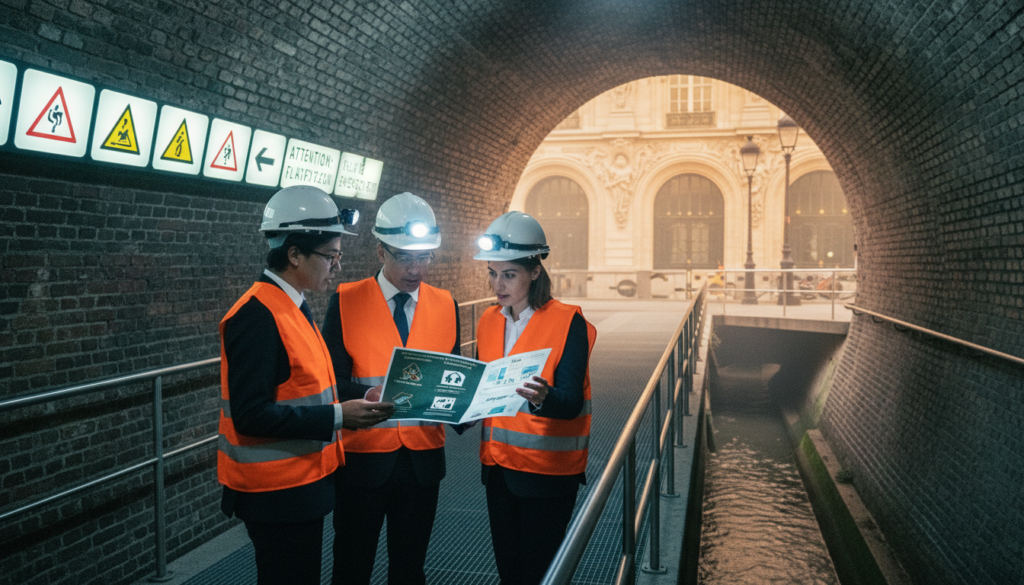
Knowing what to expect and how to prepare is key for a sewer tour in Paris. The Museum of Sewers is an active facility, unlike regular museums. These tips help you enjoy this unique attraction without worries.
Visitors often worry about feeling claustrophobic. But, the main galleries have high ceilings, making the space feel open. This design makes the underground feel less cramped.
Getting ready is crucial for a good experience. The Paris sewers are unlike any other attraction. Following these guidelines ensures you’re ready for the underground.
Appropriate Clothing and Sturdy Shoes
Choosing the right clothes and shoes is vital for safety. Wear closed-toe shoes with good traction, like sneakers or boots. Avoid sandals, heels, or smooth-soled shoes.
The floors can be damp and slippery. Your shoes need to grip on stone and metal. Water-resistant shoes are a good choice, as you might find wet spots.
Comfortable walking clothes are best. Some areas have lower ceilings, so you might need to duck. Don’t wear your best clothes, as you might touch walls or railings.
Layering your clothes is smart. A light jacket or sweater is useful, even in summer. Leave expensive jewelry at home, as the damp air isn’t good for it.
Smell and Air Quality in the Tunnels
Be prepared for some smell, but it’s not as bad as you might think. The museum has good ventilation, making the air quality better. The smell is more like a damp basement than sewage.
How you react to smells can vary. If you’re easily bothered by odors, think about this before going. The sewer’s smell is part of its educational value.
The air moves well, but you’ll still feel the underground. This balance makes the museum accessible while keeping its unique feel.
Cool and Humid Underground Climate
The temperature stays between 12-15°C (54-59°F) all year. On hot days, this feels cool at first but can get chilly. The humidity is high, making everything feel damp.
This constant temperature helps the sewers work well all year. It prevents freezing and limits bacteria growth. The conditions you experience are the same as the sewers’ environment.
Dress in layers for the cool, damp air. What’s comfortable outside might be too light underground. In winter, your coat will be too warm.
Visitor Age Limits and Medical Considerations
Knowing the age limits and health notices is important. Children under 7 might find it too much. Older kids usually enjoy it, finding it educational and fun.
Some health conditions need careful thought before going:
- Respiratory conditions: People with asthma or COPD should talk to their doctor, as the air might trigger symptoms
- Claustrophobia: While main areas are wide, some passages are narrower, which might cause anxiety
- Pregnancy: Pregnant visitors should think about the walking, stairs, and damp conditions
- Mobility limitations: The tour has stairs and uneven surfaces that are hard for wheelchairs and walkers
The museum is open and not cramped, but if you’re really scared of enclosed spaces, this might not be for you.
No health check is needed for tickets. Just make sure you can handle the environment and your health.
Safety Protocols and Emergency Procedures
Staff are everywhere to help and watch over you. There are handrails and good lighting. Emergency exits are clear, but evacuations are rare.
Always stay on the marked paths. This is a working place where sewermen are at work and real wastewater flows by. Barriers keep you safe, but straying is dangerous.
If you’re not feeling well, tell a staff member right away. There are rest areas and they can show you the exit. Most people do fine, but listening to your body is important.
With the right preparation and awareness, your sewer tour will be safe and fun. These tips help you explore this fascinating infrastructure with confidence.
Final Tips for Enjoying Sewer Tours in Paris
Booking tickets in advance makes your visit smoother. The sewer tour is popular, so it gets crowded. Check the museum’s website for the latest hours before you go.
Wear comfortable shoes that cover your feet. The floors can be wet or slippery. Also, bring a phone with a flashlight for dark areas.
Follow the museum on Facebook and Instagram for updates. They post about special events like night tours and VR experiences. These hidden Paris experiences make your tour more interesting.
Be curious, not scared, about this unique Paris experience. The air is fresh thanks to the ventilation system. Most people find it fascinating, not gross.
Visit nearby attractions in the 7th arrondissement too. The Eiffel Tower is just a 15-minute walk away. You can also enjoy Seine walks and the Musée du Quai Branly for a full day.
Remember, this is a working place. Stay in visitor areas and don’t touch the equipment. It’s a tribute to the engineers and sewermen who made Paris clean.
FAQ
What exactly are sewer tours in Paris and what do they involve?
Sewer tours in Paris let you explore the Musée des Égouts de Paris. This underground attraction shows the city’s sewer system. You’ll see stone galleries, vaulted tunnels, and historical equipment.
There are interactive exhibits on water treatment and sanitation. You’ll also see scale models of the sewer network. The museum was renovated in 2021, making it more modern and accessible.
Your visit combines history with a walk through real tunnels. Sewermen work there today.
Are sewer tours in Paris claustrophobic or overwhelmingly smelly?
The main galleries at the Musée des Égouts are spacious. They are not as cramped as many expect. Some passages are narrower.
Regarding smells, the sewer system has a noticeable odor. But the museum is well-ventilated after the 2021 renovation. Most visitors find the smell musty or damp, not foul.
If you have claustrophobia or are very sensitive to smells, think carefully before going. Most people find the experience manageable.
How do I book tickets for the Paris Sewer Museum and what are the prices?
Book your timed-entry ticket on the museum’s official website. This ensures admission and skips the ticket line. Adult tickets cost about €9-12, with discounts for students, seniors, and kids.
Free admission is offered on the first Sunday of each month and during World Water Day (March 22). The museum is open Tuesday through Sunday, 11:00 AM to 5:00 PM. It’s closed on Mondays and in January for maintenance.
What’s the difference between self-guided and guided sewer tour options?
The basic museum admission includes a self-guided visit. You can explore at your own pace. Guided experiences offer deeper insights and require separate booking.
Context Travel offers small-group tours with historians or engineers. Get Your Guide provides guided tours in multiple languages. Viator combines sewer tours with other underground attractions.
Can I combine my sewer tour with visits to the Paris Catacombs or other underground attractions?
Yes, you can combine sewer tours with other underground attractions. The Sewer Museum and Catacombs Combined Day Tour is popular. It offers two different underground worlds.
Underground Paris Full-Day Walking Tour Packages include sewers, catacombs, and more. The Sewer Tour with Seine River Cruise Combo offers a contrast. Combination packages save 15-25% and include transportation.
Are sewer tours in Paris appropriate for children and families?
The museum offers age-appropriate options for families with children aged 7 and older. Kid-Friendly Sewer Tours engage children with interactive exhibits and games. Family-Friendly Underground Discovery Walks balance education and fun.
Les Misérables Themed Storytelling Sewer Experience uses literature to make history exciting for families. Children under 7 are not recommended due to the environment. Prepare children for the unusual setting.
What should I wear for a sewer tour and what physical condition is required?
Wear closed-toe shoes with good traction and comfortable clothing for walking. Layers are recommended since it’s cool underground. Avoid wearing your best clothes.
The visit involves stairs, uneven surfaces, and low ceilings. Those with mobility issues or respiratory conditions should consider carefully. The average visit lasts 60-90 minutes.
How do I get to the Musée des Égouts de Paris?
The nearest Métro station is Pont de l’Alma (Line 9). It’s a 3-minute walk to the museum. The museum is now visible from the Seine River after its 2021 redesign.
You can combine your visit with other attractions in the 7th arrondissement. The Eiffel Tower is a 15-minute walk away.
When is the best time to visit the Paris sewers to avoid crowds?
Arrive at opening (11:00 AM) or after 3:30 PM on weekdays for fewer crowds. Weekends and school holidays are busier. Booking online in advance guarantees admission and skips the queue.
The museum is closed on Mondays and in January for maintenance. Always check the official website for updates.
What historical significance do the Paris sewers have beyond their practical function?
The Paris sewer system is a monumental achievement in public health and urban engineering. It transformed Paris from a city plagued by cholera outbreaks into a model of urban sanitation.
Baron Haussmann revolutionized Paris with an underground network to match his grand boulevards. Eugène Belgrand’s engineering vision created the sophisticated double-level sewer system. The sewers played roles during major historical events, serving as escape routes and appearing in “Les Misérables.”
Can I take photographs during my sewer tour?
Yes, photography is generally allowed without flash in most areas. Photography-Focused Underground Sewer Walk experiences offer extended time for capturing dramatic lighting and architectural features.
These tours allow time for setting up shots and experimenting with exposures. Bring a small flashlight or ensure your phone is charged for its flashlight function.
Are there private or specialist sewer tour options for specific interests?
Yes, several specialized options cater to specific interests. Private Guided Sewer Museum Tours with Historian provide exclusive access with academic experts. Engineering and Architecture Specialist Sewer Tours are led by professionals discussing technical aspects.
Custom Group Tours for Corporate or Team Events transform the museum into an unusual venue for team-building activities. These private and specialist tours require advance reservation and use per-group pricing.
What specific exhibits and displays will I see during my sewer tour?
You’ll see massive stone galleries and vaulted tunnel walkways. There are displays of historical equipment and maintenance machinery. Interactive panels explain water treatment and sanitation.
Scale models show how the sewer network mirrors the street layout above. The permanent exhibition includes multimedia presentations, historical photographs, and artifacts. There’s also a special “Clothes of the sewer workers” exhibition.
Does the Paris Sewer Museum offer educational programs for student groups?
Yes, the museum offers educational programs for different age groups. Student Group Educational Visit with Workshop programs cater to school groups from elementary through university level. These programs include pre-visit materials and post-visit worksheets.
Workshops provide hands-on activities and discussions about urban planning challenges. The museum’s virtual reality experiences make learning about water flow and treatment engaging for students.
What health and safety precautions should I be aware of before visiting?
You’re visiting an active operational facility where sewermen work. Stay on marked paths and not touch equipment. Follow staff instructions.
Those with respiratory conditions, claustrophobia, pregnancy, or mobility limitations should consider carefully. The museum addresses safety through emergency exit procedures and staff presence.
How does the Paris Sewer Museum differ from the Catacombs?
The Musée des Égouts de Paris and the Catacombs offer different underground experiences. The sewer museum showcases functional infrastructure and offers insights into engineering and public health history.
The Catacombs are an ossuary with the remains of approximately six million Parisians. They offer a haunting historical and cultural experience focused on mortality and burial practices. The sewer museum is more suitable for those interested in technology and infrastructure, while the Catacombs appeal to those fascinated by history and archaeology.
Can I visit the Paris sewers during special events or after regular hours?
The museum occasionally hosts special events with extended hours and themed activities. World Water Day (March 22) features special programming and sometimes free admission. Follow the museum’s social media for updates on special exhibitions, closures, and events.
For after-hours or exclusive access, inquire about private guided tours. These can be arranged outside regular hours for groups, requiring advance booking and subject to operational constraints.
What accessibility accommodations are available for visitors with mobility challenges?
Wheelchair accessibility is limited at the Musée des Égouts due to its historical nature. The museum involves stairs, uneven surfaces, and low ceilings. Those with mobility issues or respiratory conditions should contact the museum in advance to discuss accommodations.
The 2021 renovation improved some accessibility features. However, the fundamental constraints of the historical infrastructure remain. Visitors requiring accessibility support should plan accordingly and may find combination tours or private arrangements more flexible.
How does the virtual reality experience at the sewer museum work?
The museum’s virtual reality experiences allow you to “travel” through the sewer system virtually. You see how water flows from households through treatment facilities and back to the Seine River. These VR experiences make learning about urban water management engaging, especially for younger visitors.
Check the museum’s official website or social media for information about VR experience availability. These attractions may have separate scheduling or capacity limitations beyond general museum admission.
What souvenirs or gift shop items are available at the Paris Sewer Museum?
The museum gift shop offers unusual Paris-themed items related to sewers and urban infrastructure. You can find books, engineering publications, children’s educational materials, postcards, and unique memorabilia. These items make great conversation pieces or gifts for those interested in infrastructure and city systems.