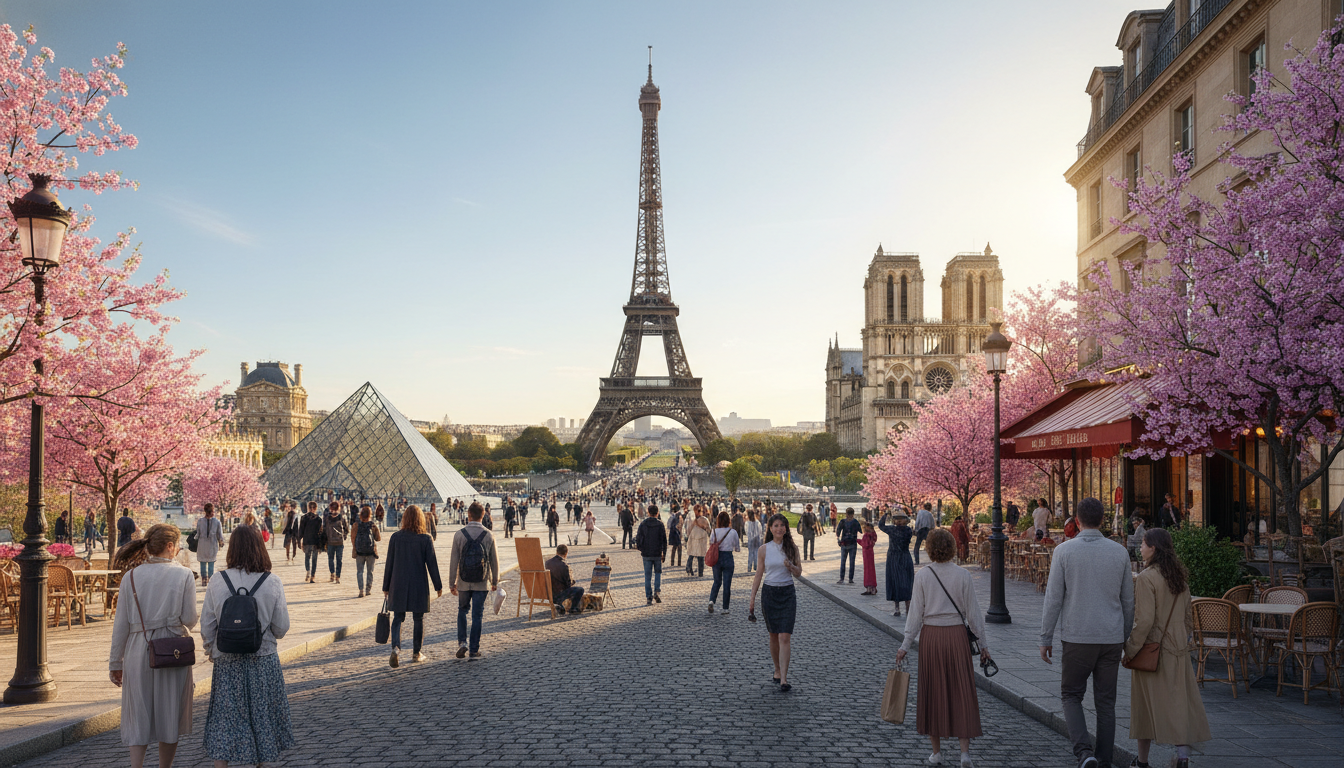
Have you ever wondered why a slow, aimless afternoon here can feel more true to the place than a packed, hour-by-hour plan?
I’ll be honest: I prefer leaving room for surprise. Paris is divided into numbered neighborhoods that often blend together. You can walk farther-numbered arrondissements and still see the skyline icons—Eiffel Tower, Sacré-Cœur, Arc de Triomphe—peeking over rooftops.
This guide gives you a clear, prioritized list of must-see landmarks while showing where timed entry or a guide really saves time.
Think of this as a choose-your-own adventure. I’ll frame each place by what you actually feel there—views, mood, and how it fits into a realistic day. I’ll also share practical notes for U.S. travelers on pacing, lines, and when a quick look outside is enough.
Key Takeaways
- Flexible plans win: leave gaps for small discoveries.
- Skyline icons are visible from many spots—you don’t always have to go inside.
- Use timed entry or guided access to skip long waits.
- Balance famous sites with slow neighborhood walks for a richer trip.
- I’ll help you build a realistic list so your visit feels personal, not rushed.
Tourist attractions in Paris to prioritize for your trip
Pick a few must-sees and build gentle days around them rather than racing the clock. I’ll help you match priorities to the length of your trip paris so you don’t cram too much into one time slot.
Short trips: choose one big sight, one neighborhood stroll, and one low-effort stop per day. That mix is the best way to feel rested and curious rather than exhausted.
Longer stays: map museums, viewpoints, and a day trip (Versailles or Giverny) to separate days so you’re not sprinting across the city.
I’ll show which places are fine to see only from the outside and which deserve a full visit. Group nearby sights to save time, and give yourself permission to skip a famous spot if it doesn’t fit your mood—you can always come back.
Eiffel Tower experiences for iconic views of Paris
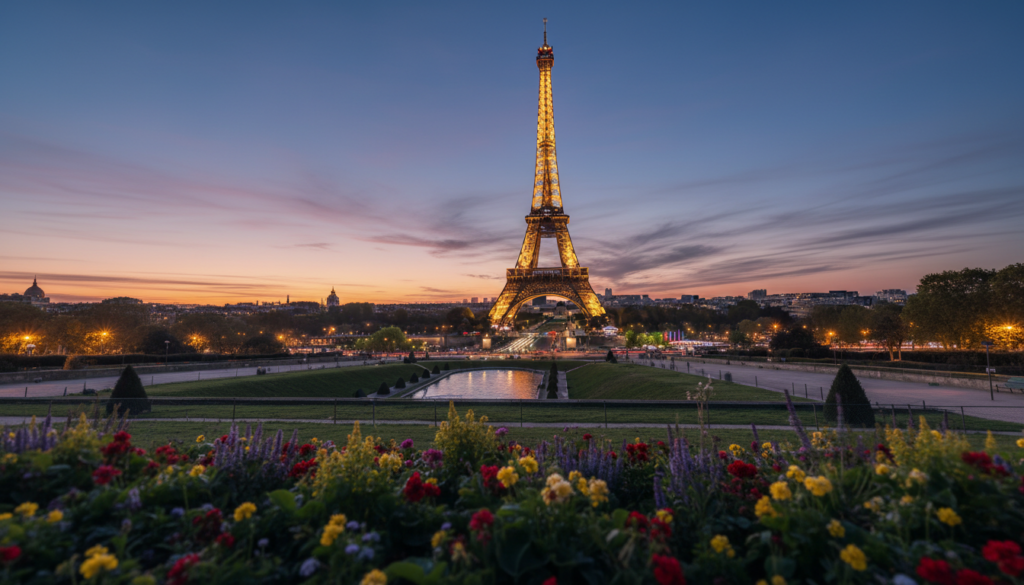
Deciding how to experience the Eiffel Tower starts with one question: stairs or elevator? The iron landmark was built for the 1889 World Fair and has three observation levels. You can climb 674 steps if you want the work-and-reward feeling, or buy an elevator ticket for a faster rise.
Lines can be brutal. In peak months, waits for regular tickets can reach about four hours. My advice: book timed entry or a skip-the-line option when possible. That saves precious hours on a short trip.
The experience varies by level. The second floor often feels “enough” for most people—great views and fewer nerves than the summit. For classic photos and the best views paris, head to Trocadéro at golden hour.
- Practical tip: pair a tower visit with a Seine cruise or a Champ de Mars picnic to make the day flow.
- Splurge smart: a single glass at the champagne bar makes the moment special without breaking the bank.
- Photo option: pro shoots near the tower are easy to book and beat another keychain.
If heights or crowds bother you, enjoy the view from the riverside and call it a win. You’ll still have an iconic memory without the long lines or the summit scramble.
The Louvre Museum highlights, including the Mona Lisa
Start your Louvre visit with a short plan so the building’s scale doesn’t swallow your day. The museum welcomes over 10 million visitors a year and spreads across roughly 60,000 sqm of galleries, so a little direction helps.
Quick plans that work:
- Two hours: head for the Mona Lisa, then the Winged Victory and Venus de Milo—hit the highlights without marathon fatigue.
- Half a day: add the Egyptian rooms and the Napoleon III apartments for variety and atmosphere.
- Full day or more: let yourself wander galleries that call to you; the museum rewards slow curiosity.
Seeing the Mona Lisa honestly: expect crowds. Go early with timed entry or join a guided group to get context and avoid the herd mentality. A guide turns a snapshot into a story.
Don’t miss the basement fortress remains—they’re a quiet, surprising reminder that this building began as a medieval stronghold. Plan your route, pick a few targets, and leave inspired rather than exhausted.
Notre-Dame Cathedral and the historic heart along the Seine
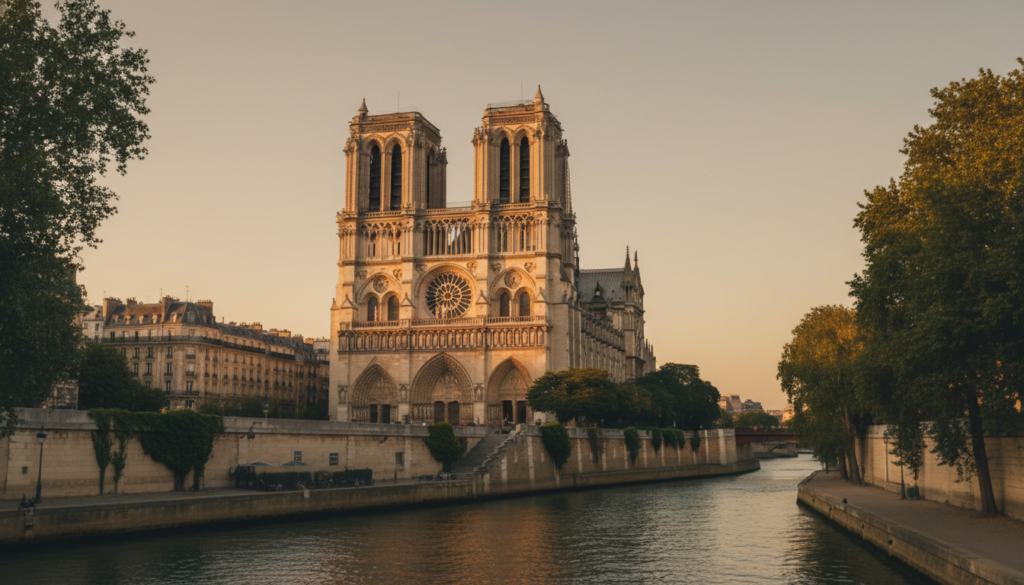
Walk the Île de la Cité slowly and you’ll feel centuries folding under your feet. This is the island where the city began; Notre-Dame sits at its center and now welcomes visitors again after the 2019 fire.
You can enter the cathedral; free advance reservation tickets are available on the official site and they save real time. Tower and roof climbs are not open yet, so plan viewpoints elsewhere.
- Start: circle the island to notice Gothic details and flying buttresses.
- Best view: pause on the Left Bank for classic, softer light.
- Timing: early morning or late afternoon to avoid crowds.
“The point here is the feeling — slow down and let the place land.”
| What to do | Where | Why it matters |
|---|---|---|
| Walk the perimeter | Île de la Cité | Layers of history underfoot |
| Reserve entry | Cathedral official site | Saves waiting time |
| View from riverbank | Left Bank quays | Best light and photo angles |
Montmartre and Sacré-Cœur for Paris skyline views
Montmartre sits like a small village above the city, where winding lanes lead to sudden viewpoints.
Start at Sacré-Cœur for the classic view, then drift off the main square to find the neighborhood that actually breathes. The basilica’s interior mosaics are worth a look if you want quiet art and light; otherwise, treat it as an exterior-and-view stop and save time.
I recommend early morning or late evening. Those hours thin the crowds and let you feel the bohemian rhythm—street musicians, cafés opening, and lanes that still read like old Paris.
Go beyond the obvious: seek small museums, pocket parks, and the windmills tucked on side streets. Sit on a bench and people-watch; Montmartre is one of the best places to do nothing and still feel full.
- Simple route: Sacré-Cœur → side streets → vineyard corner → hidden square.
- Timing tip: October adds a harvest festival if your trip aligns with the season.
Seine River cruise and riverside strolls
One hour on the Seine can reorder your day: landmarks glide by while you actually relax.
Why it works: a 1-hour cruise passes the Eiffel Tower area, Notre-Dame, and Musée d’Orsay—so you see a lot without extra walking.
Options matter: choose a simple one-hour tour for clear landmark spotting, a sunset ride for mood, or use the Batobus as a practical way to hop between riverside sights.
Walking the banks is equally rewarding. Look for bouquinistes and the pedestrian-only stretches like Parc Rives de Seine. In summer, Paris Plages (mid-July to mid-August) turns the riverside into a local beach scene.
- Best time: midday for clear views; golden hour for atmosphere.
- Pairings: cruise + Notre-Dame area, cruise + Trocadéro photos, or a stop at Musée d’Orsay.
- Bonus: some cruises connect to Canal Saint-Martin for a different slice of the city.
“Treat the Seine as a thread that organizes your days—one gentle ride can reset your pace and show you many things.”
Musée d’Orsay for Impressionist art and rooftop views
The Musée d’Orsay sits inside a former Beaux-Arts train hall, and the building is part of the show. I love how the light through the big clock feels like a welcome before the galleries open.
This museum concentrates Impressionist and Post‑Impressionist masters—Monet, Renoir, Cézanne, Gauguin, Van Gogh—so a focused visit works well. Expect crowds around the famous canvases; guided tour options help you dodge the busiest moments.
Plan about time: 2–4 hours lets you see highlights without burning out. Buy timed tickets if your schedule is tight; they cut waiting and keep the day moving.
Don’t miss the almost-hidden rooftop terrace. That quiet pause with sweeping views feels like a small reward after gallery rooms full of people.
“Orsay is a balance: a stunning hall, a compact set of masterpieces, and a rooftop moment that changes the whole visit.”
| What | Why | Best time |
|---|---|---|
| Highlights | Monet, Van Gogh, Renoir | Morning |
| Visit length | Focused 2–4 hours | Afternoon works too |
| Extras | Rooftop views, Seine strolls | After museum |
Arc de Triomphe and the Champs-Élysées viewpoint
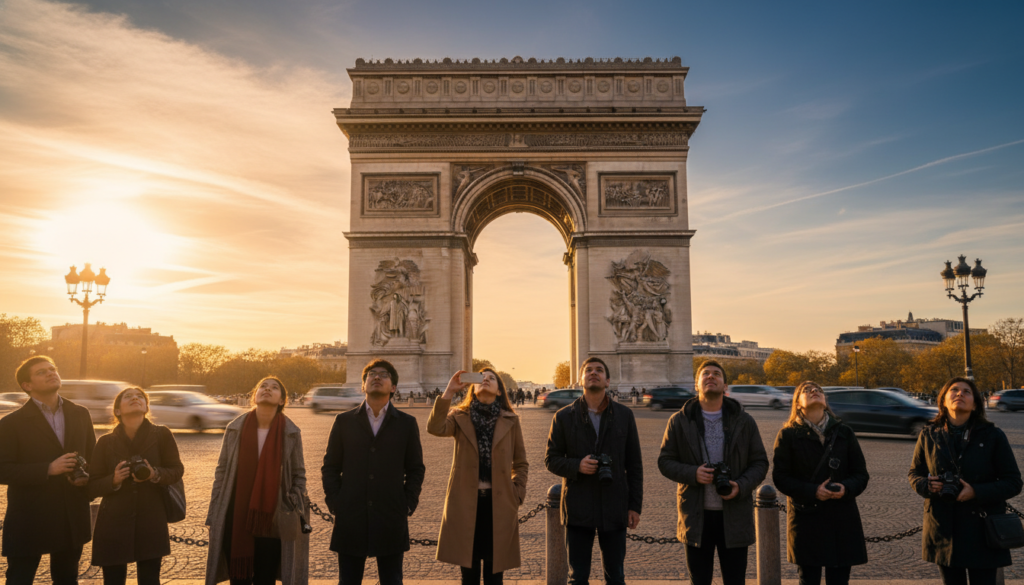
An ascent up the Arc reveals a 360° portrait of the city that a street view can’t match. Commissioned by Napoleon in 1806, the monument sits where twelve avenues meet and rewards the short climb with clear, wide views.
The base holds the Tomb of the Unknown Soldier and an eternal flame relit daily at 6:30 pm — a quiet, moving moment worth planning your time around.
Practical notes: buy advance tickets to save waiting and protect a tight schedule. Use the underground passage to avoid the hectic traffic circle and approach safely.
- Why climb: the 360° view makes the city’s layout click.
- Best moments: late afternoon for soft light; the flame at 6:30 pm for atmosphere.
- Pairing: a Champs-Élysées walk can be rewarding — choose cafés and small galleries over shops if you want depth.
- Car-free Sundays: the first Sunday of the month gives better photos and breathing room.
“Treat the Arc as a viewpoint, not just a landmark you glance at from the sidewalk.”
| Feature | Why it matters | Best time |
|---|---|---|
| Observation deck | 360° perspective of the city | Late afternoon |
| Tomb & flame | Solemn ritual, daily relighting | 6:30 pm |
| Access | Underground passage avoids traffic | Any visit with tickets |
Versailles Palace as a classic Paris day trip
Plan for a full day when you head to Versailles; it’s a world of its own and deserves unhurried time.
The palace has over 700 rooms and the famous Hall of Mirrors, plus expansive gardens and Marie Antoinette’s Hamlet. Trains run there for about €4 each way, which is the budget-friendly option.
Security lines can stretch 2–4 hours. Guided tours sometimes use faster entry, and “full access” tickets include the Petit Trianon and the Hamlet—worth the extra cost if you want more than a quick look.
Decide early: train solo for flexibility, or join a tour with transport to save time and stress. Pack comfy shoes, snacks or a lunch plan, and realistic expectations—this trip involves a lot of walking.
Treat Versailles like its own day at home—slow your pace and let the place unfold.
- Must-see: Hall of Mirrors, gardens, Hamlet.
- Timing tip: arrive early or use guided access to avoid long security waits.
- Pacing tip: don’t rush back to the city; let this be a centerpiece of your trip.
| Option | Cost & ease | Best for |
|---|---|---|
| Train solo | Low cost (~€4 each way), flexible | Budget travelers who like independence |
| Organized tour with transport | Higher cost, often faster entry | First-timers or tight schedules |
| Full access tickets | Extra fee, includes Petit Trianon & Hamlet | Those wanting the full estate |
Monet’s Gardens in Giverny for art, flowers, and a slower day
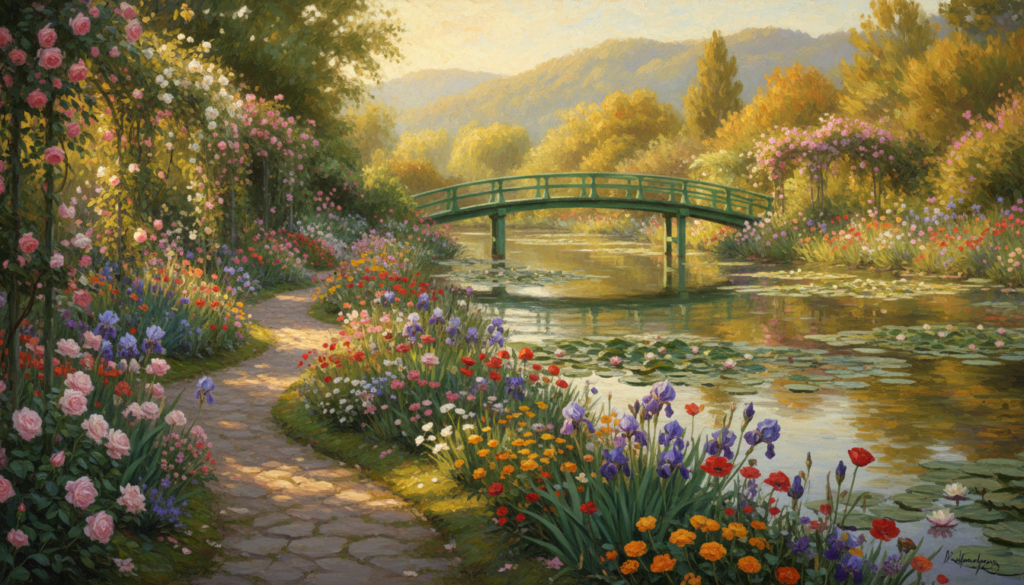
A day at Giverny feels like stepping into a quiet watercolor where every path pauses for you.
Why go: Monet lived here and painted the Water Lilies series; the Japanese Bridge and the water garden are the real deal—more than a photo, they feel like a lived painting.
How to get there: take a train to Vernon (about 80 km from the city), then hop a shuttle or taxi for the short ride. Time your trip to avoid peak commute hours—early trains give you calmer gardens.
Seasons matter: blooms change the mood. Spring and summer are peak color; late season has quieter light. Check opening dates and what’s flowering before you book a tour or plan a day.
“Giverny is an exhale—a slower day that rewards seeing, not racing.”
- Best for: garden lovers, art-minded visitors, anyone craving quiet beauty.
- Skip if: you have only 2–3 days and prefer major museums.
- Combo note: combined tours with Versailles exist but expect a long, rushed day.
| Feature | Why it matters | Best time |
|---|---|---|
| Japanese Bridge | Iconic Monet subject | Morning |
| Water Garden | Reflective, painterly views | Late spring–summer |
| Access | Train to Vernon + shuttle/taxi | Early departure |
Sainte-Chapelle for stained glass you’ll remember
Step inside and the light itself becomes the show—Sainte‑Chapelle feels like a stained glass theater.
Why go: this is one famous place where the panels do the talking. The upper chapel is filled with tall windows that tell biblical scenes in saturated blues and reds.
Timing tip: plan your visit for late morning to early afternoon when sunlight makes the stained glass glow. That is when the effect feels almost unreal.
- Look for storytelling panels and the rose composition; notice how colors shift as clouds pass.
- Keep your stay short—30–45 minutes is realistic and enough for the wow factor.
- Expect crowds; the chapel is compact, but patience rewards you with a clear moment of light.
“It often converts people who say they ‘aren’t into churches’—this feels like art first.”
| Feature | Why it matters | Best time |
|---|---|---|
| Upper chapel windows | Immersive stained glass storytelling | Late morning–early afternoon |
| Visit length | Short but intense experience | 30–45 minutes |
| Pairing ideas | Combine with Notre‑Dame exteriors or a Seine walk | Same half‑day |
Latin Quarter and Left Bank classics for a timeless Paris feel
A short walk through this neighborhood ties Roman ruins to bookshop windows and simple bistros.
The latin quarter dates back to 1st-century Roman settlement. You’ll notice narrow medieval streets, old bookstores, and cafés that still feel local. Key stops are the Panthéon, the Cluny Museum with the Lady and the Unicorn tapestries, and the Arènes de Lutèce ruins.
Skip the shoulder-to-shoulder bustle on Rue de la Huchette. Instead, drift onto quieter side lanes. Pop into Shakespeare and Company near the Seine, or sit for tea at the Grand Mosque of Paris tea room for a calm pause.
I’ll show you how to do this part like a real stroll, not a sprint. Pick one anchor stop, then let the streets decide the rest. The area makes a great home base—walkable, historic, and full of everyday life.
“Take your time here; small moments add up to the best memories.”
- Mini-menu: Roman ruins, bookshops, cafés.
- Crowd tip: avoid Rue de la Huchette at peak hours.
- Why go: this is perfect for slow travel and a flexible trip paris itinerary.
Paris gardens and parks for breaks between big attractions
Schedule a park stop like you would a museum visit—your mood will thank you. A short pause in green space saves energy and makes the rest of the day feel easier.
Jardin du Luxembourg is the classic choice: roughly 23 hectares (about 60 acres) of lawns, chairs, statues, and kids’ play areas. Bring a sandwich, watch toy sailboats, or catch a puppet show while you recharge.
Nearby, the jardin des Tuileries sits between the Louvre and Place de la Concorde and houses the Musée de l’Orangerie with Monet’s Water Lilies. Place des Vosges offers a perfect square for a quick pause in the Marais.
For a different pace, try La Coulée Verte / Promenade Plantée. It’s an elevated, leafy walk that feels like walking without walking—quiet views above street level.
- Why block garden time: it prevents burnout and often becomes the trip’s sweetest memory.
- How I use them: buy something simple, sit among people, and let your day settle.
“If your plan has no garden stop, you’re skipping one of the easiest joys of the city.”
Hidden gems and alternative Paris walks beyond the main landmarks
Give yourself permission to wander; some of the best finds happen with no agenda. I favor the flâneur approach—slow walking that lets the street decide what matters.
Why this works: the city rewards aimless moments. Le Marais and Canal Saint‑Martin offer calm canal-side routes and quiet side streets where local cafés and tiny courtyards appear without effort.
Look for small details: worn doorways, a fenced garden on Île de la Cité, or a narrow lane in Montmartre away from the crowds. These are the hidden gems that feel more like everyday life than a checklist.
- Easy walks: Canal path from République to the Bassin de la Villette.
- Le Marais: sidestep the main avenues and find tucked-away squares.
- Île corners: small parks and old passages that reward a short detour.
| Route | Why go | Best time |
|---|---|---|
| Canal Saint‑Martin | Relaxed waterside stroll | Morning or late afternoon |
| Le Marais side streets | Shops, courtyards, cafés | Anytime for wandering |
| Montmartre lanes | Quieter views above the city | Early morning |
Pacing tip: use these walks as flexible gaps between ticketed visits. They cost nothing, slow your pace, and often become the trip’s best stories.
“Let the neighborhood be the plan—you’ll see more real life than any guide can list.”
Underground and unusual attractions for adventurous travelers
Below street level, the city flips into a quieter, stranger world that rewards curiosity. Here I’ll point to the darker, the weirder, and the oddly beautiful—an easy way to add texture to your trip without overdoing it.
The Catacombs are an ossuary of tunnels lined with bones. The vibe is eerie and not for the faint‑hearted. Book a timed tour and bring sensible shoes; stairs and narrow passages take more energy than you expect.
A gentler alternative is a Canal Saint‑Martin cruise that slips under locks and low bridges. It gives an underground-ish feeling without the same intensity. This counts as a short tour and a good contrast to darker things.
Practical note: the Pompidou Center is closed for repairs and won’t reopen until 2030, so don’t plan a visit there now. Balance a heavy underground stop with a café or a park later the same day so your afternoon has lightness as well as depth.
“Try one unusual stop per itinerary—enough to surprise you, not to wear you out.”
| Spot | Why go | Best plan |
|---|---|---|
| Catacombs | Eerie, historical underground ossuary | Timed tickets; allow extra walking time |
| Canal Saint‑Martin | Locks and low bridges—mild underground feel | Short cruise; pair with a canal-side café |
| Pompidou (status) | Modern art center—temporarily closed | Skip now; revisit after 2030 |
- Tip: these stops often take more time and energy than expected—plan only one per day.
- Balance: follow an underground experience with something light and fresh.
Markets, literature, and memorial sites to round out your visit
Round out your days with small, human-scale stops that often become the trip’s favorite memories. These are the places that feel like a quiet exchange, not a checklist.
Père Lachaise Cemetery deserves a calm, respectful pace. At père lachaise cemetery you can find the graves of Oscar Wilde, Jim Morrison, and Édith Piaf while wandering tree-lined paths.
Approach with quiet curiosity: map a few names, then let yourself get pleasantly lost among the stones. A short self-guided tour works well; bring water and wear comfy shoes. Père lachaise is peaceful rather than morbid—think of it as a garden of memory.
Literature and markets: stop at Shakespeare and Company for pages and atmosphere, then head to Marché aux Puces de Saint-Ouen or Vanves for treasure hunting. Bouquinistes along the Seine sell vintage books and prints that fit easily in a suitcase—small souvenirs that feel like home.
| Spot | Why go | Best plan |
|---|---|---|
| Père Lachaise | Historic graves and quiet walks | Self-guided map; 1–2 hours |
| Shakespeare & Company | Cozy shop with history | Browse; buy a small book |
| Saint-Ouen / Vanves | Flea markets for vintage finds | Morning visit; bargain gently |
| Bouquinistes | Three-hundred-year tradition of book stalls | Pick a print or postcard |
“These in-between places often feel more personal than any big landmark.”
Conclusion
A clear takeaway: mix the big sights with slow hours and your trip will feel real. I’ve covered the must-sees, practical timing, and where a timed ticket saves you precious minutes.
Best way to plan is simple: one big sight, one neighborhood, and one easy pleasure each day. That keeps your days varied and gives you room to wander the city without stress.
If you want to see eiffel views, choose from going up, cruising the Seine, or grabbing a classic viewpoint moment—each works and none is the only right option.
Don’t try to do everything. Prioritize what matches your energy, book skip-the-line when time is tight, and let small pauses become the trip’s best memories.
FAQ
What should I prioritize for a first-time trip to Paris?
I’d start with a mix of landmarks and neighborhoods: the Eiffel Tower for views, the Louvre to see the Mona Lisa, a walk along the Seine, and the Latin Quarter for cafés and narrow streets. Add a relaxed afternoon in Jardin du Luxembourg or a cruise on the river to balance busy museum days.
What’s the best way to see the Eiffel Tower without long lines?
Buy timed-entry tickets in advance and consider the stairs for lower levels if you’re fit — lines are shorter. Evening visits give dramatic city lights; daytime climbs offer clearer views. Combine your tower visit with a stroll along the Champ de Mars or a Seine walk for different perspectives.
How much time should I plan for the Louvre and is seeing the Mona Lisa worth it?
Plan at least three hours; you can easily spend a full day. The Mona Lisa is tiny but iconic — I recommend a focused route: hit the Denon wing for the Mona Lisa and other highlights, then explore less crowded galleries to soak up Impressionist and European art.
Can I visit Notre-Dame’s interior and towers after the fire?
The interior and towers remain closed during reconstruction, but you can still walk the Île de la Cité, admire the façade and visit nearby Sainte-Chapelle for stunning stained glass. Follow restoration updates for reopening timelines and possible guided access.
What’s the charm of Montmartre and Sacré‑Cœur for skyline views?
Montmartre’s steep streets, artists’ corners, and the white basilica make it feel like a village above the city. Climb the Sacré‑Cœur dome or the steps in front of the basilica for one of the best panoramic views of Paris, especially at sunset.
Are Seine River cruises worth it and which type should I choose?
Yes — a cruise gives a calm, scenic way to see bridges and façades along the river. Opt for a short sightseeing cruise for orientation, or choose a dinner cruise for romance. Daylight cruises show details; evening cruises highlight illuminated monuments.
What makes Musée d’Orsay different from other museums?
Housed in a converted railway station, Musée d’Orsay focuses on 19th-century and Impressionist art — Monet, Renoir, Van Gogh — and offers lovely rooftop views of the Seine and Tuileries. It feels more intimate than the Louvre and is ideal for art lovers who favor this era.
Is the Arc de Triomphe worth visiting and how do I get the best view?
Absolutely. The Arc’s terrace gives a centered view down the Champs-Élysées and across the city grid. Buy a skip-the-line ticket or combine it with a stroll along the avenue; sunset captures Parisian light and traffic radiating from the roundabout.
How do I plan a day trip to the Palace of Versailles?
Allocate most of a day. Arrive early, tour the State Apartments and Hall of Mirrors, then wander the expansive gardens and the Grand Trianon. Buy timed-entry tickets and consider the smaller palaces and fountains if you want a deeper visit.
Can I visit Monet’s Gardens in Giverny easily from the city?
Yes — it’s a popular day trip. Trains or guided tours from Paris reach Vernon; from there a short bus or taxi brings you to Giverny. Visit in spring and summer for the best blooms and quieter mornings before tour groups arrive.
Why is Sainte‑Chapelle a must-see for stained glass lovers?
Sainte‑Chapelle’s upper chapel has some of the most complete and vibrant 13th-century stained glass in the world. The jewel-like light inside is unforgettable; arrive early to avoid crowds and stand in the central nave to take it all in.
What should I explore in the Latin Quarter and the Left Bank?
Wander narrow streets, visit the Sorbonne area, browse secondhand bookshops like Shakespeare and Company, and relax in Luxembourg Gardens. The vibe feels timeless; cafés and small museums reward slow exploration and wandering without a strict plan.
Which gardens and parks are best for a break between sightseeing?
Jardin du Luxembourg is perfect for lounging and people-watching; Jardin des Tuileries sits between the Louvre and Place de la Concorde for a scenic pause; Parc des Buttes-Chaumont offers a wilder, local feel away from major sites.
What hidden gems and alternative walks do you recommend beyond the main landmarks?
I love walking Canal Saint‑Martin for canal-side cafés, exploring the covered passages like Passage des Panoramas for vintage shops, and visiting Père Lachaise Cemetery to find graves of famous artists. These spots reveal a quieter, everyday Paris.
Are there unusual or underground attractions worth visiting?
Yes — the Catacombs offer a unique, eerie look beneath the city, and the Musée des Arts Forains or the Musée de la Chasse et de la Nature show quirky collections. Book ahead for limited-entry sites and wear comfortable shoes for steep descents.
Which markets, literary sites, and memorials round out a cultural visit?
Don’t miss Marché d’Aligre or Marché des Enfants Rouges for food and atmosphere. Visit Shakespeare and Company for literary history, and Memorials like Place de la Concorde and sites related to World War II for historical perspective. These places add texture to museum-heavy days.