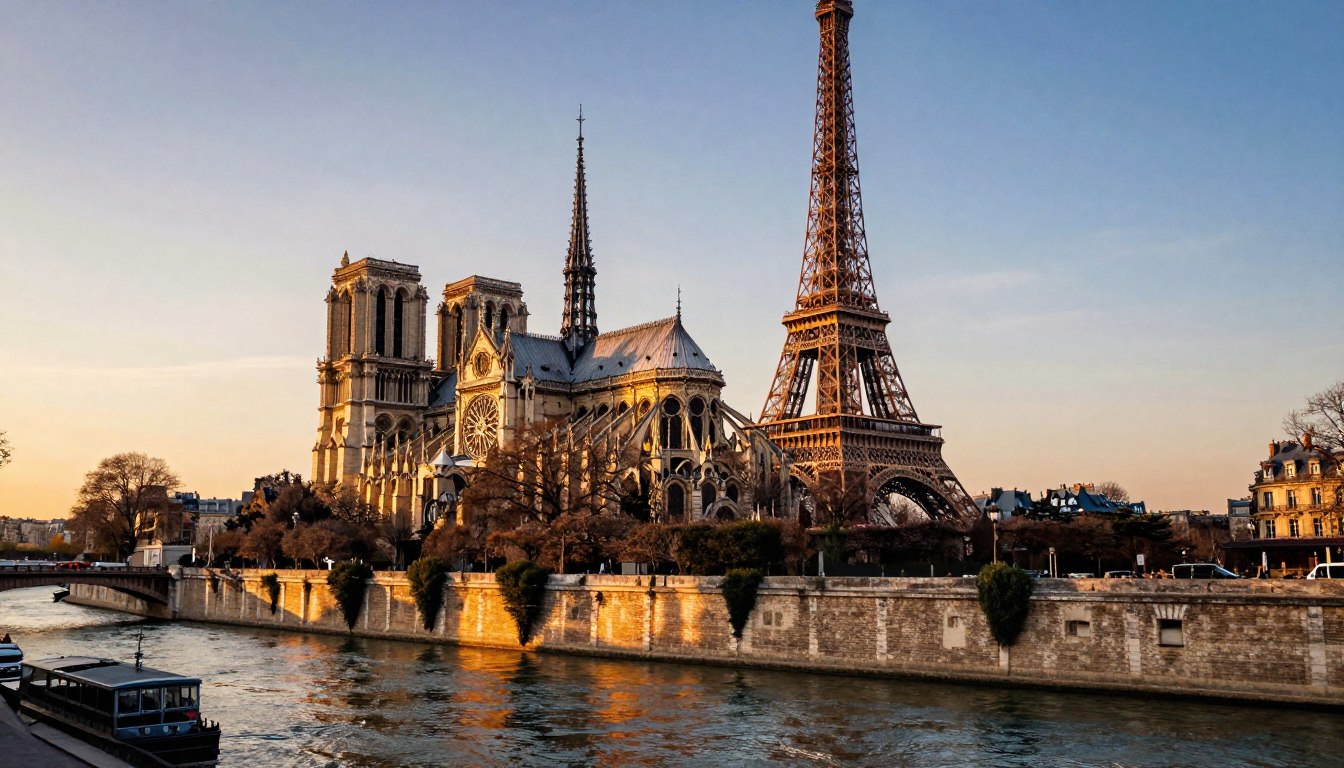
Is it possible to truly fall in love with a city you expect to dislike? I arrived in Paris braced for overrated sites and crowds. But this incredible city completely won me over.
I discovered a place with layers of history stretching back millennia. It’s so much more than the famous spots you see online. Beyond the well-known landmarks, secret corners tell rich stories.
Planning my trip felt overwhelming at first. How could I possibly see all the best places in one visit? I wanted to find the soul of the city, not just check boxes.
This guide shares my personal journey. I’ll show you the world-famous monuments you can’t miss. Plus, I’ll reveal the hidden gems that made my experience unforgettable.
My goal is to help you explore with wonder and curiosity. Let’s discover the magic together.
Key Takeaways
- Paris offers a depth of history beyond its most famous landmarks.
- Personal exploration often leads to the most memorable experiences.
- A good plan helps you make the most of your time in the city.
- Some of the best places are hidden away from the main tourist paths.
- Approaching the city with an open mind can lead to a wonderful visit.
Overview of Paris’s Timeless Charm
I quickly discovered that Paris isn’t just a destination—it’s a timeline you can walk through. Every street corner, building, and bridge tells a story spanning centuries. The city feels like a living history book where the past whispers to you at every turn.
Understanding the layout helped me navigate better. Paris is divided into 20 arrondissements, which are administrative districts. The 1st through 4th districts form the Paris Centre, where many significant sites cluster together.
What truly amazed me was learning about the city’s deep roots. Paris has more than 2,000 years of history! It evolved from a Roman settlement called Lutetia into the cultural capital of the world. That depth of time gives every landmark extra meaning.
The beauty of this place is how its charm isn’t locked away in museums. It’s everywhere—from medieval architecture to grand 19th century boulevards. Even a little historical knowledge transforms old buildings into stories of revolution and art movements.
Whether you have four days or just a weekend, Paris rewards every moment spent exploring. The Seine River connects many significant sites, making it easy to hop from one incredible experience to another. I found that understanding the city’s layout and history made my visit profoundly meaningful.
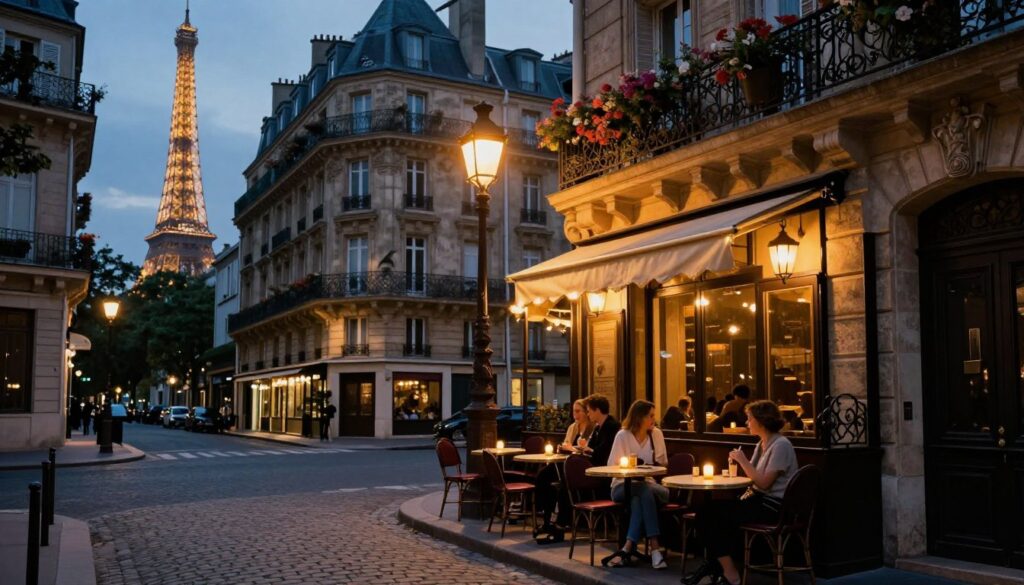
Historic Attractions in Paris
My first attempt at mapping out Paris’s treasures quickly turned into an exercise in joyful overwhelm. This city is absolutely packed with incredible sites that span centuries of rich history.
What struck me most was the incredible variety. The landmarks here aren’t just typical tourist spots. They’re a genuine mix of renowned museums, medieval churches, massive monuments, and ornate buildings.
I loved discovering that many top historic places cluster near the Seine River. This made my exploration totally walkable with comfortable shoes and a sense of adventure. The architecture alone is worth the trip.
From Gothic cathedrals to Beaux-Arts palaces, every building style is represented. I found the best approach was mixing famous landmarks with lesser-known spots. This gave me a more authentic feel for the city’s layered past.
Today, these historic buildings aren’t just relics. They’re living parts of the city where locals gather and celebrate their heritage. The diversity means there’s literally something for everyone on any must-see list.
Famous Landmarks: Eiffel Tower and The Louvre
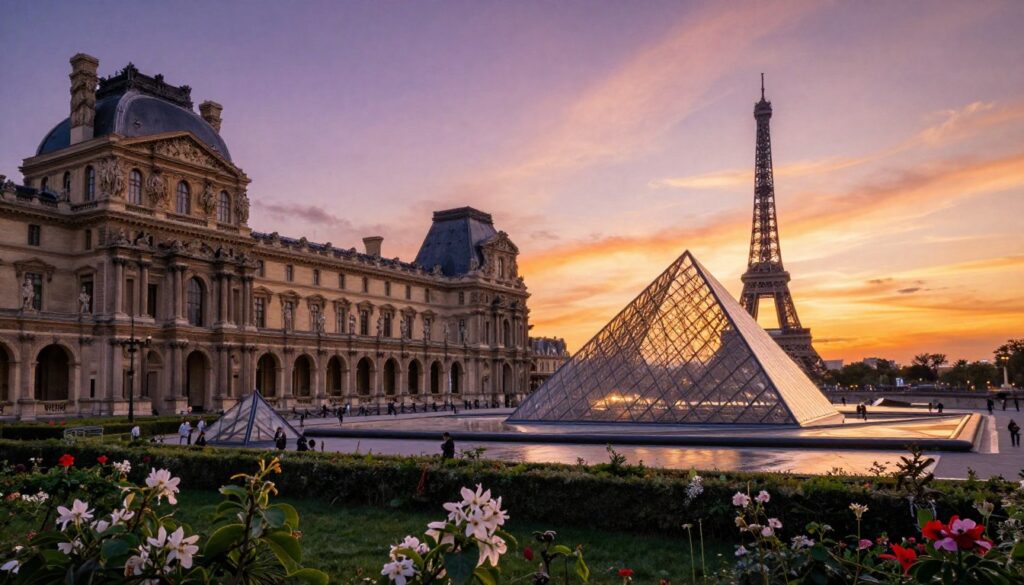
Standing before these legendary sites, I realized why they’ve captured the world’s imagination for generations. The Eiffel Tower and Louvre Museum truly live up to their iconic status.
Built for the 1889 World Fair, the Eiffel Tower amazed me with its engineering. It took just two years to construct! Today, it’s the most visited monument on earth.
My biggest tip: purchase tickets online before your visit. Arrive early to avoid long lines. Budget 3-4 hours for the full experience.
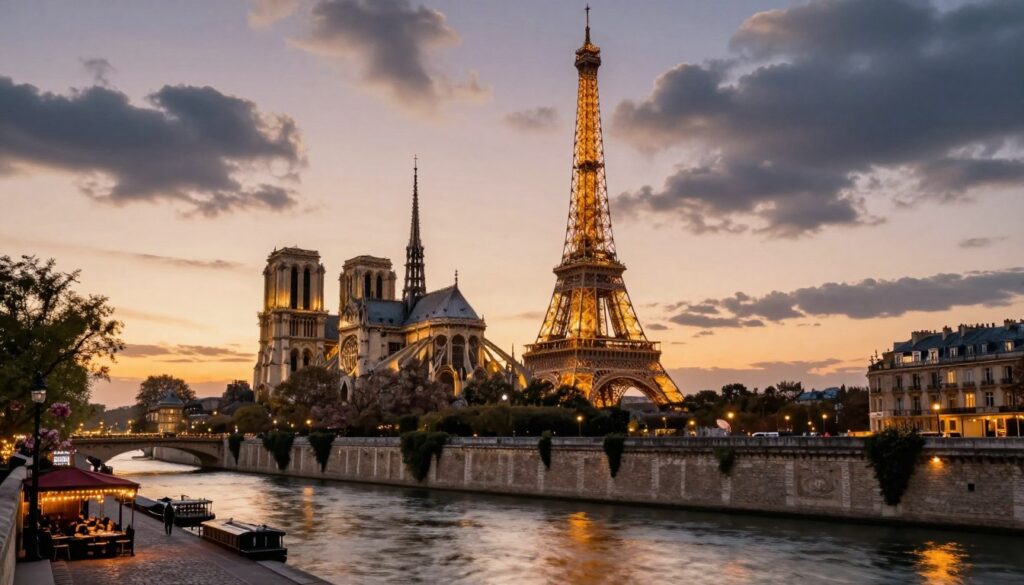
The elevator takes you to incredible views. Time your visit around sunset to see the magical light show. The tower sparkles beautifully every hour after dark.
The Louvre Museum is an overwhelming treasure house of art. Home to the Mona Lisa and Venus de Milo, it displays 35,000 works across massive galleries.
Book the first time slot to beat crowds. The Mona Lisa always draws long lines. Wear comfortable shoes and grab a map—you’ll need them!
| Landmark | Best Time to Visit | Ticket Advice | Time Needed |
|---|---|---|---|
| Eiffel Tower | Early morning or sunset | Purchase online in advance | 3-4 hours |
| Louvre Museum | First opening slot | Skip-the-line tickets essential | 4+ hours |
Both landmarks deserve proper planning. They offer unforgettable experiences that make your trip truly special.
Architectural Marvels and Iconic Cathedrals
Walking between these iconic buildings felt like traveling through different eras of French design. Each structure tells a unique story through its architecture and purpose.
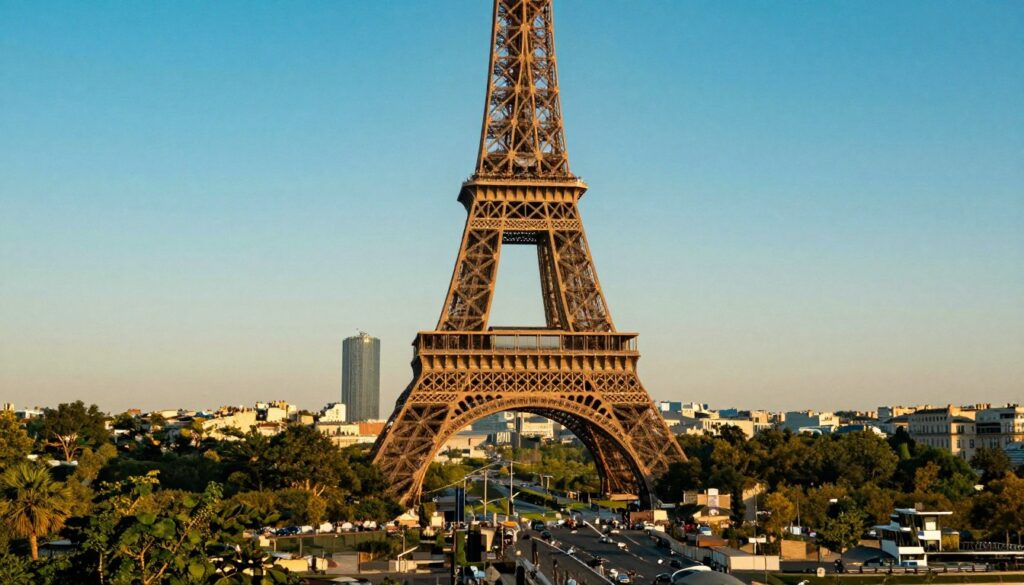
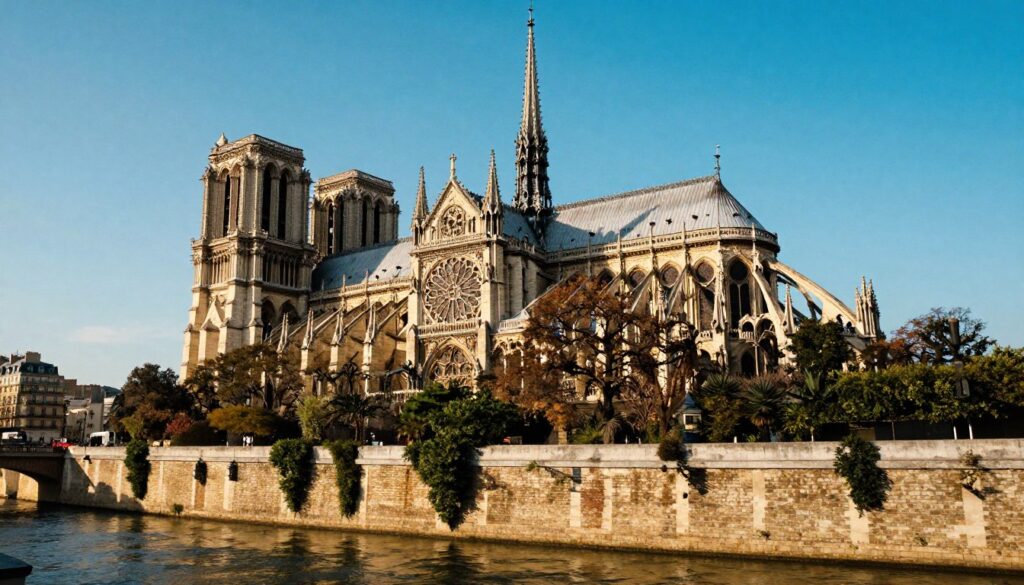
The Notre Dame Cathedral took my breath away. This Gothic masterpiece was completed in 1260 and modified over many years. Victor Hugo’s novel brought it worldwide fame.
After the 2019 fire, the restoration work is remarkable. The cathedral reopened in 2025. Today, the surrounding area in the 4th arrondissement offers charming cafes.
Napoleon commissioned the Arc de Triomphe in 1806. The monument honors French soldiers and features incredible city views. Always use the pedestrian tunnel to access it safely.
The Palais Garnier opera house inspired “Phantom of the Opera.” Its opulent design includes a massive chandelier and gold-winged statues. This building requires a ticket for full access.
| Landmark | Construction Years | Key Feature | Visit Time |
|---|---|---|---|
| Notre Dame Cathedral | Completed 1260 | Gothic architecture | 1-2 hours |
| Arc de Triomphe | 1806-1836 | City views | 1 hour |
| Palais Garnier | Opened 1875 | Opulent interior | 2-4 hours |
Each building showcases different aspects of French architectural genius. They remain must-see destinations for any visitor.
Exploring Hidden Gems and Secret Paris Spots
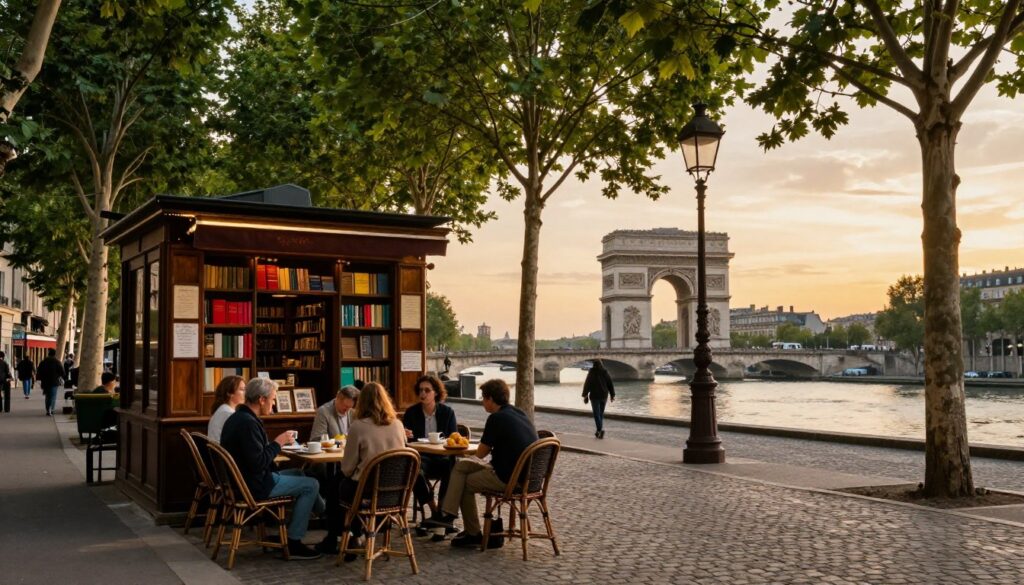
What surprised me most about Paris wasn’t the famous monuments but the secrets hiding in plain sight. Beyond the well-known landmarks, I found an entire layer of discovery that most people walk right past.
With over 2,000 years of history, this city is bound to have treasures tucked away. Discovering hidden statues, quiet courtyards, and forgotten fountains made my visit feel uniquely personal.
My favorite memories aren’t from the top tourist attractions but from stumbling upon quiet places where locals gather. These spots became part of my Paris story in a way that crowded sites never could.
The best way to find these gems? Do some research but also wander freely. Paris rewards curious explorers who turn down unfamiliar streets or investigate interesting doorways.
Whether it’s a bronze plaque marking the city’s exact center or a tucked-away garden, these discoveries add richness to any visit. They offer a different perspective that sets your experience apart.
Some of these hidden sites feel like stepping back in time. You’ll see residents going about their day rather than tourists taking selfies. That authenticity made my adventure truly special.
Roman Roots and Medieval Heritage
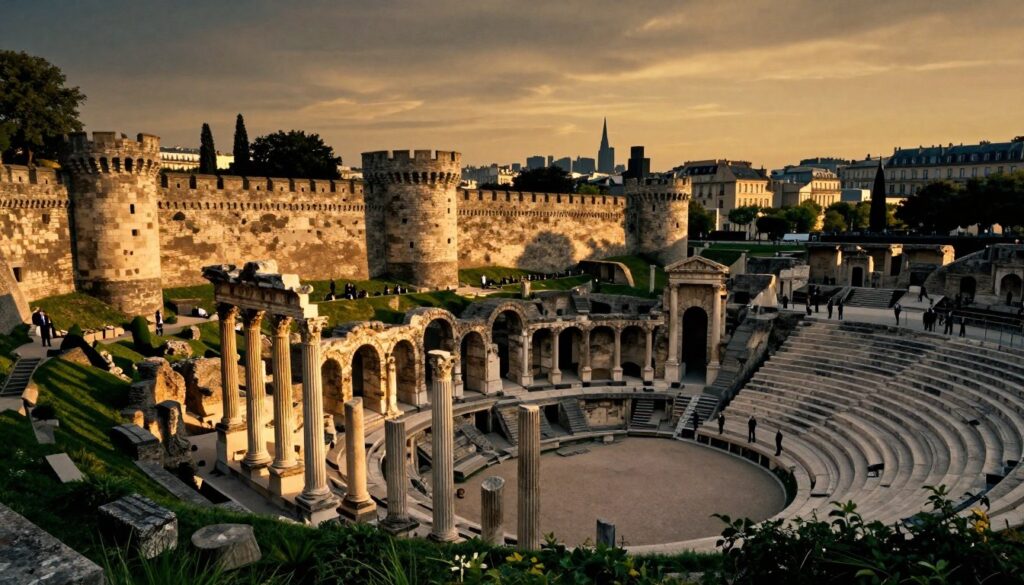
Digging into Paris’s ancient layers revealed a city far older than I ever imagined. The Arenes de Lutece absolutely captivated me with its accidental discovery story.
Workers found these Roman ruins in 1869 while building Rue Monge. This first-century arena once held 15,000 spectators for gladiator games. Victor Hugo fought to preserve this piece of history.
Today, it’s a peaceful garden where locals play boules. I entered through the passageway at 57 Rue Monge. The hidden entrance made finding it feel like a special discovery.
Pont Neuf surprised me as Paris’s oldest standing bridge. Completed in 1607 after 28 years of construction, it uses Roman building techniques. The scary stone masks called Mascarons are copies from the 16th century.
Walking across this bridge on my way to Notre Dame felt magical. Louis Daguerre took the first human photograph here in 1838. That bit of history adds another layer to this 17th-century structure.
| Site | Time Period | Key Feature | Access Point |
|---|---|---|---|
| Arenes de Lutece | 1st Century | Roman amphitheater | 57 Rue Monge |
| Pont Neuf | Completed 1607 | Oldest standing bridge | Ile de la Cite |
Artistic and Cultural Landmarks
What truly made my Paris experience unforgettable was discovering how deeply art and culture breathe life into every corner of the city. Beyond the famous museum giants, I found spaces where creativity feels immediate and personal.
The Musée d’Orsay absolutely captivated me. It’s the world’s sixth most-visited art museum, welcoming 3.2 million people in 2022. Its collection of Impressionist works is the most extensive anywhere.
Famous artists like Monet, Renoir, and Van Gogh are all represented here. I visited with my daughter Abby, and we loved exploring French art history together. The space feels much more approachable than the Louvre.
You won’t find massive crowds or long lines. It’s a perfect 2-3 hour trip that feels inspiring rather than exhausting.
Montmartre is another essential part of the city’s creative soul. This hill in the 18th arrondissement was frequented by legendary artists. Picasso, Degas, and Van Gogh all spent time here.
Today, you’ll still see painters in Place du Tertre square. The area retains a lovely charm with beautiful architecture. Make sure to visit Sacré-Cœur, the stunning white church at the hill’s top.
I was fascinated by Picasso’s studio at 7 Rues des Grands-Augustins. He lived and worked there from 1936 to 1955, painting Guernica during the Nazi occupation. It’s now a French historical monument.
For a completely different experience, Père Lachaise Cemetery is worth a tour. This huge, free cemetery lets you pay respects to incredible people. Jim Morrison, Edith Piaf, and Oscar Wilde are buried here.
I recommend a guided tour or using a map to navigate Père Lachaise Cemetery. It’s a peaceful escape from the city’s bustle that adds depth to any visit.
Scenic Walks and Vibrant Gardens
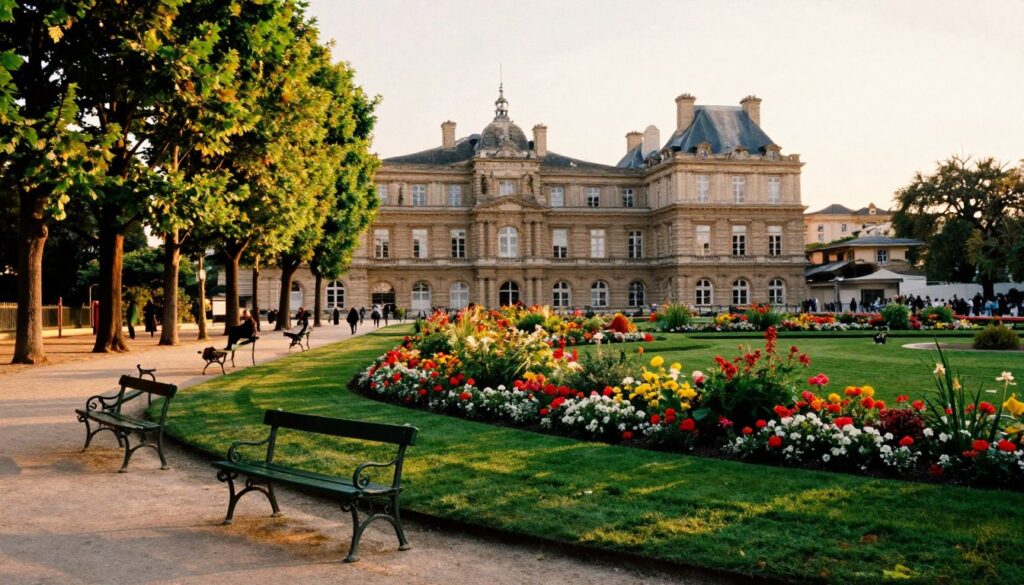
Finding a peaceful oasis in the middle of a bustling city felt like discovering Paris’s best-kept secret. The Luxembourg Gardens became my favorite escape from the tourist crowds.
This sprawling green space covers 25 hectares with 106 statues scattered throughout. At the heart stands the magnificent Luxembourg Palace, built in 1612 as Marie de Medici’s residence.
She designed this palace to resemble one from her native Florence. The Italian influence creates a unique atmosphere in these beautiful gardens.
I loved discovering hidden art pieces throughout the landscape. The Medici Fountain tucked away near the palace felt particularly magical.
On a warm day, the Grand Bassin lake comes alive with toy sailboats. Locals sunbathe on blankets while families enjoy picnics throughout the space.
These gardens appear in Victor Hugo’s Les Misérables, adding literary significance. I spent hours relaxing here with a book, soaking in the tranquil atmosphere.
The 6th arrondissement location makes it easily accessible. Best of all, entry to these stunning gardens is completely free.
Bridges and Riverfront Wonders
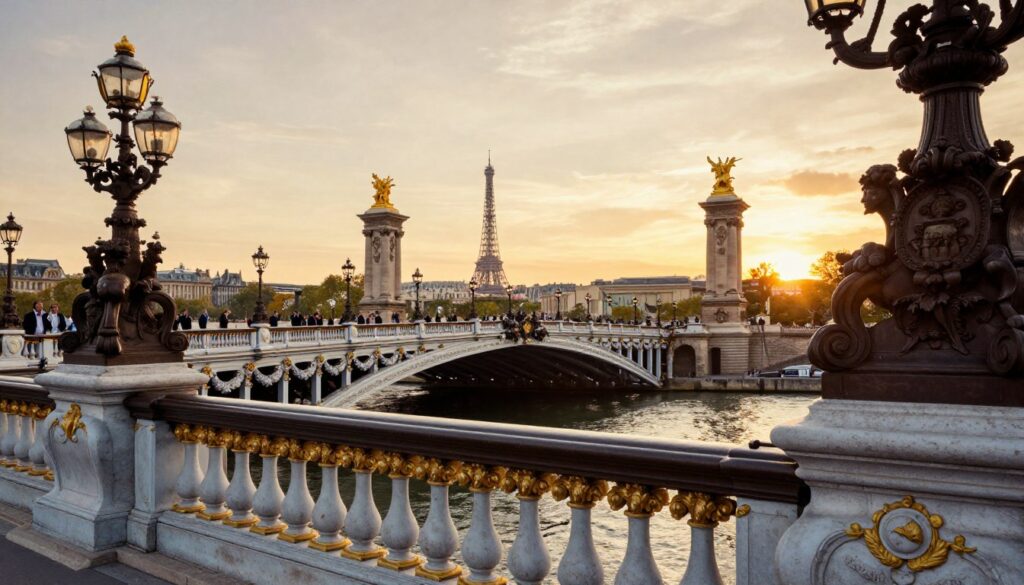
The bridges of Paris aren’t just crossings—they’re works of art that frame the city’s beauty. Pont Alexandre III absolutely took my breath away with its extravagant beaux-arts style.
This stunning bridge near the Eiffel Tower features elaborate stonework and carvings that are simply breathtaking. Four gilt-bronze statues at each end shine like pure gold in sunlight.
I recognized it immediately from James Bond films and The Sopranos! Taking a Seine River cruise gave us amazing pictures from underneath. You really appreciate the intricate design from that angle.
The Arc de Triomphe du Carrousel offers a magical visual trick. This triumphal marble arch with pink pillars sits between the Louvre and Tuileries. Napoleon built this building in 1808 to celebrate military victories.
Here’s the cool part: line up your view through the arch. You’ll see the Tuileries Fountains, Egyptian Obelisk in the Place de Concorde, Champs-Elysées, and the Arc de Triomphe perfectly aligned. The intentional architecture gave me goosebumps!
| Bridge/Monument | Key Feature | Best Viewing Method | Historical Significance |
|---|---|---|---|
| Pont Alexandre III | Beaux-arts style with gilt statues | Seine River cruise or walking across | Movie famous, extravagant design |
| Arc de Triomphe du Carrousel | Perfect alignment with Arc de Triomphe | Stand at arch looking toward Place de Concorde | Napoleon’s 1808 victory monument |
Both structures showcase Paris’s incredible attention to visual harmony. They prove how every element works together in this magnificent city.
Secret Sites: From Underground Catacombs to Urban Art
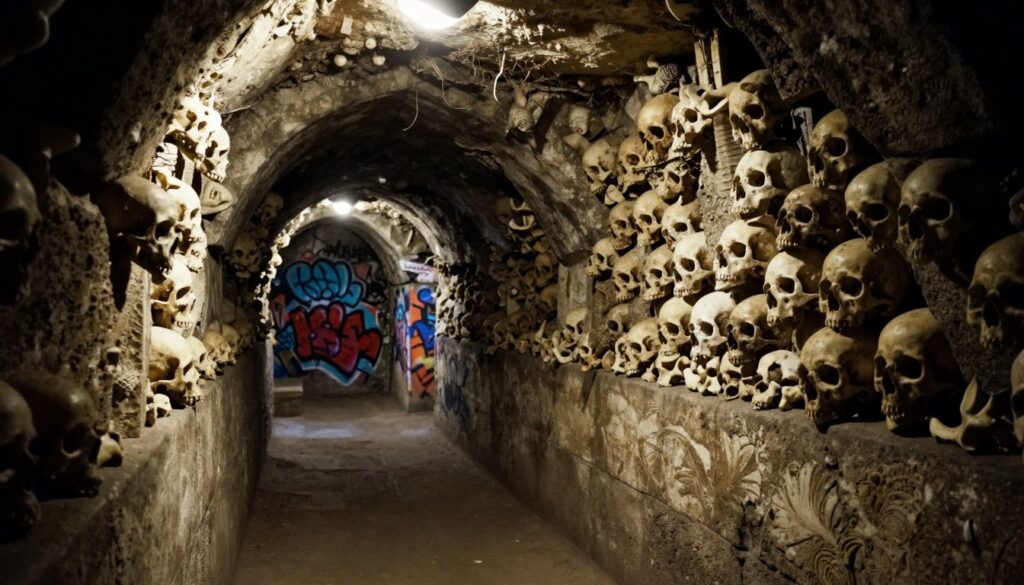
Paris holds secrets that go far beyond its famous skyline—some are buried deep underground, while others hide in plain sight. I’ll admit I skipped the Catacombs (my kid wasn’t into the creepiness!), but this underground site fascinates many people.
Back in the late 18th century, health concerns led officials to move bones from cemeteries to tunnels. Workers removed bodies at night to avoid upsetting people. The entrance opened in 1809, and today skip-the-line tickets are essential for any tour.
Above ground, Point Zero marks Paris’s exact center right before Notre Dame cathedral. All French road distances measure from this bronze star. Nearby, a green plaque shows the Seine’s 1910 flood level—when people used rowboats on streets!
The Statue of Sainte Genevieve honors the saint who halted Attila the Hun. Created by Paul Landowski (who made Christ the Redeemer), it stands 14 meters high.
For evening entertainment, the Moulin Rouge offers spectacular shows at night. Founded in 1889, this legendary spot birthed the can-can dance. Book the 9pm show early—it sells out fast!
The Fontaine des Quatre Saisons took seven years to complete. Victor Hugo might have appreciated this artwork, though Voltaire criticized its practicality. Each discovery adds layers to Paris’s story.
Practical Tips: Tours, Tickets, and Navigating Arrondissements
I quickly learned that smart planning was the key to unlocking Paris’s treasures without the stress. Understanding the city’s layout made everything flow smoothly.
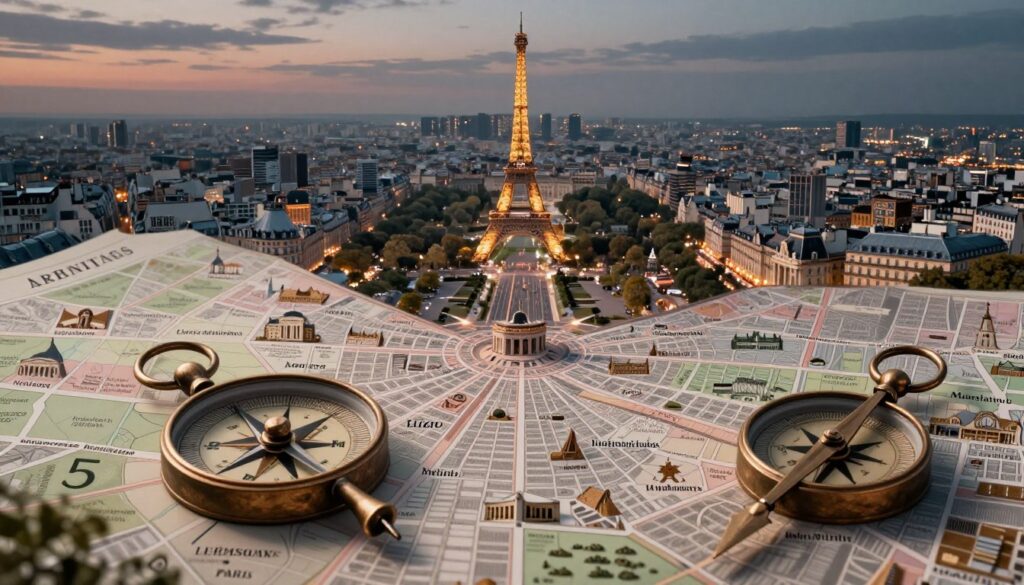
Paris divides into 20 arrondissements—administrative districts that spiral outward. The 1st through 4th arrondissements form Paris Centre, where many famous sites cluster together. This central location makes walking between landmarks incredibly convenient.
My number one tip: purchase tickets online before your visit. Skip-the-line options saved me hours of waiting, especially at popular spots. Book the first time slot of the day to beat the crowds.
Guided tours transformed my experience. Walking tours in areas like Montmartre provided incredible insights from knowledgeable guides. Seine River boat tours offered stunning perspectives of the city.
| Transport Method | Best For | Time Efficiency | Cost |
|---|---|---|---|
| Walking | Central arrondissements | Excellent for nearby sites | Free |
| Metro | Cross-city travel | Fast and reliable | Affordable |
| Uber/Taxi | Late night or groups | Quick but variable | Moderate to high |
Budget your time wisely. Some attractions require half a day, while others work well for shorter visits. Group sites by arrondissement to minimize travel time between them.
Many locations have shops and cafes nearby, making it easy to spend a full day exploring without venturing far for refreshments. This approach helped me maximize every moment.
Daytime Strolls and Evening Adventures
The city’s daytime energy gives way to evening enchantment in ways I never expected. Paris truly comes alive when you experience it at different hours.
During the day, I loved wandering through the Luxembourg Gardens. On warm afternoons, you’ll find plenty of people sunning themselves on blankets or enjoying family picnics. It’s the perfect way to spend a sunny afternoon.
The Notre Dame area offers charming restaurants and cafes perfect for lunch breaks. These spots let you soak in the atmosphere while resting your feet between explorations.
As night falls, the city transforms completely. The Eiffel Tower lights up after dusk with a gorgeous light show. The lights sparkle at the top of every hour after sunset.
I planned my tower visit for the hours just before sunset. This let me see the city in daylight and watch the magical transition to night. It was absolutely spectacular!
| Experience | Best Time | Atmosphere | Crowd Level |
|---|---|---|---|
| Luxembourg Gardens | Daytime | Relaxed, family-friendly | Moderate |
| Notre Dame Area | Day | Charming, historic | Busy |
| Eiffel Tower Lights | Evening | Magical, romantic | High |
| Moulin Rouge | Night | Energetic, theatrical | Very high |
For night adventures, the Moulin Rouge offers shows at 9pm and 11pm. Evening walks along the Seine are romantic with beautiful reflections of city lights.
Mixing daytime strolls with evening adventures gave me the fullest experience. Timing your visit strategically makes a huge difference today.
Conclusion
What started as a skeptical trip planner’s challenge ended up being a transformative experience that taught me the value of balancing structure with spontaneity.
Creating a smart list before your visit is essential—there are simply too many incredible landmarks to see in one trip. But leave room for unexpected discoveries too.
This amazing city will leave you with unforgettable memories. The combination of world-famous sites and personal finds creates the perfect adventure.
Today, I encourage you to visit both the iconic spots and wander off the beaten path. Take your time to truly experience this magnificent city. That balance made all the difference for me.
FAQ
What is the best way to buy tickets for popular spots like the Louvre or the Eiffel Tower?
I always book tickets online in advance! For the Louvre, this lets you skip the long lines at the glass pyramid entrance. For the Eiffel Tower, booking ahead is essential, especially if you want to go all the way to the top. It saves so much time and stress.
I only have one day. Which arrondissement should I focus on for the best experience?
If it’s your first visit, I’d suggest starting around the 1st arrondissement. You can see the Louvre, walk through the Tuileries Garden to Place de la Concorde, and then head towards the cathedral of Notre-Dame. It packs a lot of history into a manageable walk.
Are there any interesting tours that go beyond the typical tourist path?
Absolutely! One of my favorites is a tour of the Paris Catacombs. It’s a fascinating and slightly eerie look underneath the city. For something completely different, seek out tours focused on urban art or the history of the French Revolution—they reveal a whole other side of the city.
What’s a good hidden gem for art lovers who want to avoid the crowds at the Musée d’Orsay?
A> I love the Musée de l’Orangerie. It’s smaller and often less crowded, but it houses Monet’s breathtaking Water Lilies in a beautiful, serene space. It’s a peaceful art experience right near the Place de la Concorde.
Is it worth visiting Père Lachaise Cemetery, and who are some famous people buried there?
It’s totally worth it! It’s more like a beautiful, hilly park than a gloomy cemetery. You can pay your respects to icons like Jim Morrison, Oscar Wilde, and Frédéric Chopin. I find it a peaceful place for a reflective stroll.
Can you recommend a scenic walk that combines architecture, gardens, and great views?
My top pick is starting at the Arc de Triomphe, walking down the Champs-Élysées, through the gardens of the Tuileries, and ending at the Louvre. You get iconic architecture, lovely green space, and fantastic people-watching all in one go.