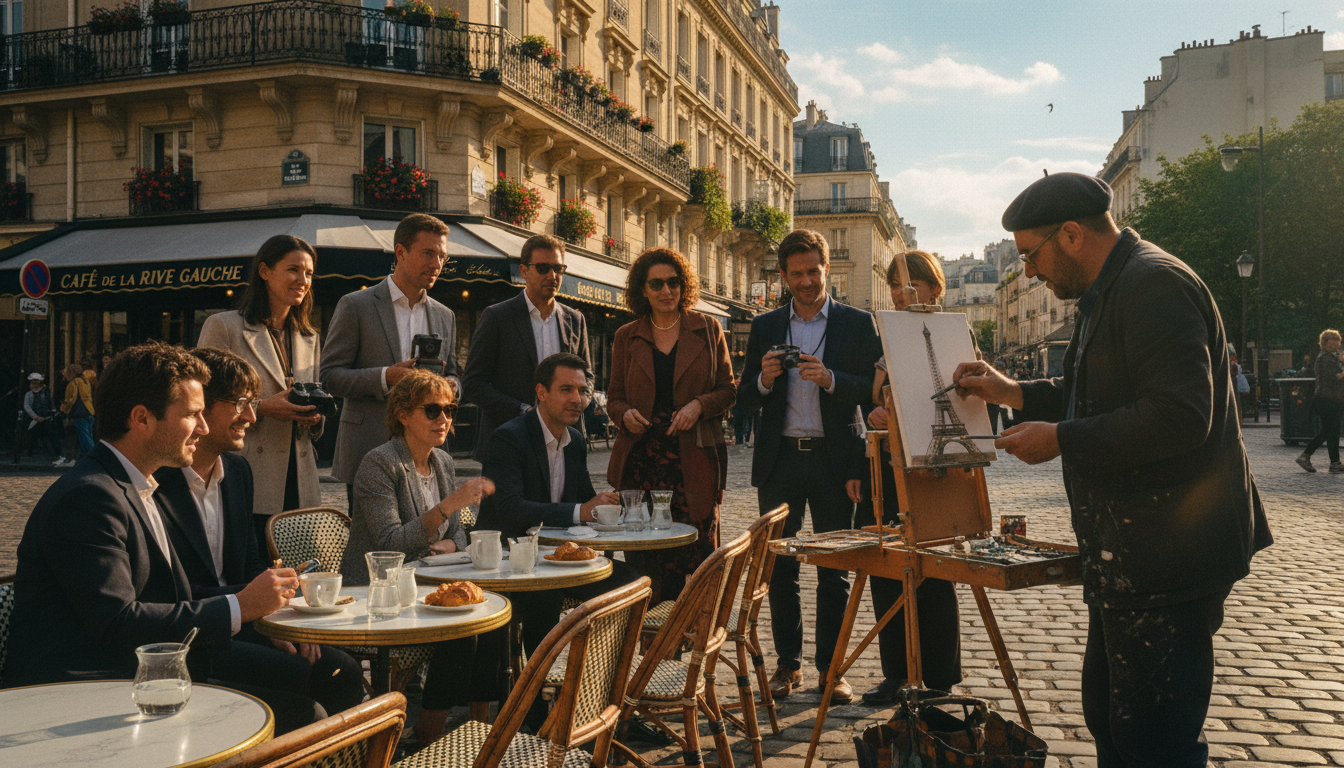
Ever wondered why some travelers come back from Paris with amazing stories? It’s because they found real experiences that show the city’s deep history and culture.
French cultural experiences turn your trip into a journey through history, art, and everyday life. Walking through places like Le Marais, Montmartre, and the Latin Quarter, you’ll see things most visitors don’t. You’ll notice buildings and stories that are hidden in plain sight.
The city is easy to walk around, making Paris historical walking tours a great way to learn. You’ll see how old universities, Enlightenment salons, and revolutions shaped today’s world. Travel experts say 3 to 5 days is the best time to see the main sights, museums, and food without feeling rushed.
Guided art & culture tours give you a deeper understanding of the city. They connect buildings, politics, and art into stories that make sense. This way, you see why Paris has influenced the world for centuries.
Key Takeaways
- Parisian cultural immersion goes beyond famous landmarks, connecting art, history, and daily life into meaningful narratives
- The city’s walkable neighborhoods like Le Marais and Montmartre reveal architectural details best discovered on foot
- Plan 3 to 5 days to experience major museums, historic districts, and authentic food culture without rushing
- Guided experiences provide historical context that enriches all subsequent museum visits and explorations
- Spring and fall offer mild weather and smaller crowds, making them ideal seasons for walking-based discovery
- Local guides transform the city from a collection of sights into stories about human creativity and intellectual achievement
Art and Museum Cultural Tours
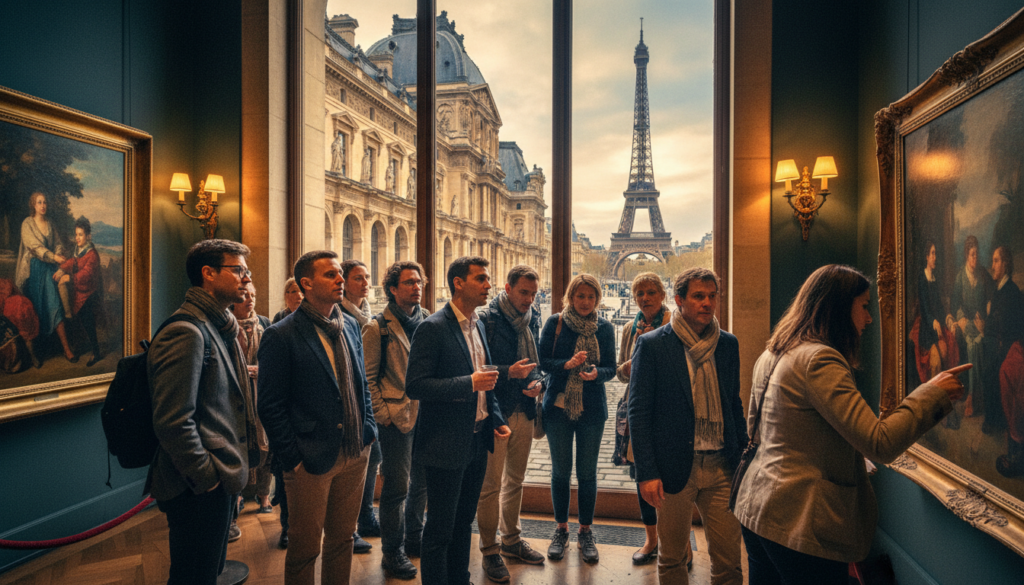
Expert-led tours in Paris turn your visit into a deep dive into culture. The city’s museums showcase art from ancient times to today. Guides share the stories and history behind each piece, bringing it to life.
Paris has art for everyone, from Renaissance to Impressionism. Book ahead for popular spots to avoid long lines.
Louvre Skip-the-Line Guided Art History Tour
The Louvre tour gives you fast access to the world’s top museum. Guides focus on key works like the Mona Lisa. This saves you time in the huge galleries.
Without tickets, lines at the Louvre can be over two hours. Timed entry slots make this wait disappear. Your guide explains the art’s history, making your visit more meaningful.
These tours last three hours and cover key areas. You’ll learn about Napoleon’s impact and why some art is so famous. Your guide’s knowledge makes the art more interesting than audio tours.
Musée d’Orsay Impressionism and Post-Impressionism Walk
The Musée d’Orsay tour highlights 19th-century art in a beautiful old station. You’ll see Monet’s water lilies and Van Gogh’s landscapes. Your guide talks about how these artists changed art.
Many Impressionist artists painted Paris’s life. The museum has stunning architecture, like its famous clock. Louvre and orsay guided tours together offer a wide art history view.
This tour focuses on Impressionism, letting you explore more deeply. You’ll see both famous and lesser-known artists. Your guide explains how Paris reacted to these new art styles.
Centre Pompidou Modern and Contemporary Art Tour
The Centre Pompidou tour shows 20th and 21st-century art in a unique building. The building’s design matches the art inside. Your guide covers Cubism to digital art.
Modern art needs context, which guides provide well. You’ll see works by Picasso and Warhol. Your guide helps understand abstract art.
These tours include rooftop views of Paris. The building’s design was once controversial. Your guide connects art to cultural changes, making it relatable.
Montmartre Art Heritage and Bohemian Culture Walk
The Montmartre tour takes you to where Picasso and others lived. This hilltop village is full of art history and charm. You’ll see the Sacré-Coeur Basilica and hidden vineyards.
Place du Tertre is still an artist square today. Your guide tells stories of artists who changed modern art here. Montmartre art history tours show studios and cabarets.
These tours follow streets from famous paintings. You’ll see how Montmartre attracted creative people. Today, it’s a living neighborhood and museum.
Immersive tours offer unique experiences that bring places to life. Art tours in Paris give you deep insights. Whether you like classic or modern art, expert tours reveal Paris’s treasures.
Cultural Tours in Paris Focused on Architecture and Monuments
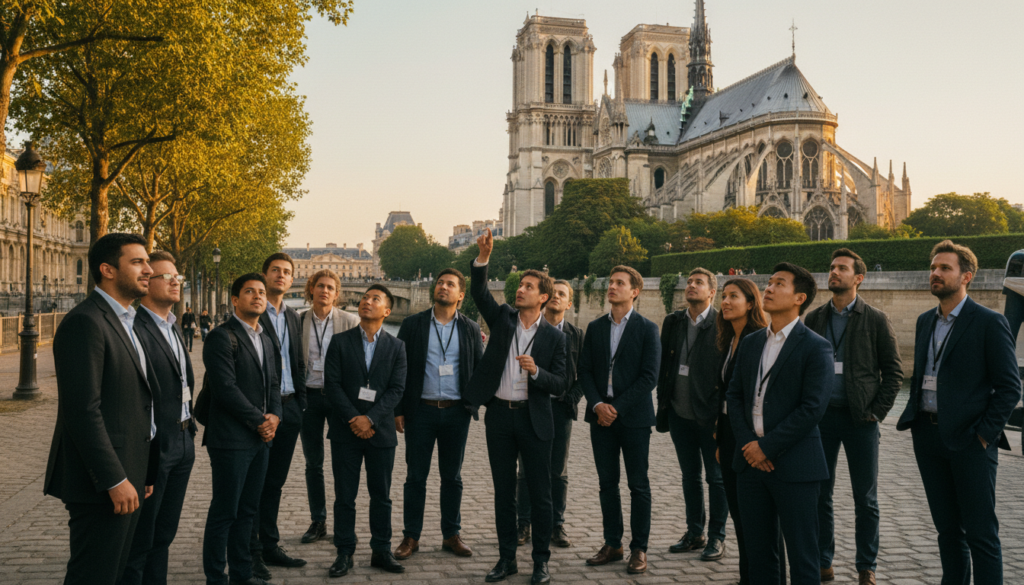
Cultural tours in Paris show the city’s history through its buildings. Each building tells a story of the people who built it and the times they lived in. These tours take you through 2,000 years of history in just one afternoon.
These tours reveal how politics shaped Paris’s buildings. You’ll see how religion, empires, and art movements left their mark. Paris’s skyline is a timeline of architectural styles.
These tours are more than just looking at buildings. Guides explain the symbols and stories behind each facade. You’ll learn how Paris became the city we know today.
Gothic Paris Sainte-Chapelle and Notre-Dame Heritage Tour
This tour focuses on Medieval Paris. You’ll see Sainte-Chapelle, a Gothic masterpiece with stunning stained glass. Built in 1248, it houses sacred relics.
Guides explain how Gothic architects solved structural challenges. They used flying buttresses and pointed arches. These innovations allowed buildings to reach new heights.
Notre-Dame Cathedral is another highlight. Despite a 2019 fire, its exterior remains. Guides talk about its original construction and ongoing restoration.
The tour shows how Medieval buildings reflect the times. Gargoyles and rose windows had spiritual meanings. Each element told a story beyond its function.
Many tours offer behind-the-scenes access. You might see the cathedral treasury or learn about stone carving. Some tours include classical music concerts at Sainte-Chapelle.
Haussmann Boulevard and Belle Époque Architecture Walk
This walk explores 19th-century Paris. Baron Georges-Eugène Haussmann transformed the city between 1853 and 1870. He created wide boulevards and uniform buildings.
Guides explain Haussmann’s architectural rules. Buildings had to match the boulevard’s width. This created Paris’s elegant look.
The tour reveals Haussmann’s political goals. Wide boulevards helped control revolutions and improved public health. The renovation showed Second Empire’s priorities.
You’ll see Belle Époque structures that show Paris’s prosperity. Grand department stores and covered passages showcase the era’s beauty. These buildings show how commerce and culture merged.
The tour also talks about the social costs. Working-class residents were displaced. Guides offer balanced views on Haussmann’s vision.
Palais Garnier Opera House Interior Cultural Visit
This visit takes you into the Second Empire’s opulence. The Palais Garnier, finished in 1875, reflects Napoleon III’s vision. Its exterior combines Baroque and classical styles.
The tour starts with the grand staircase. It was designed for dramatic entrances. The staircase shows how architecture shaped social rituals.
The main auditorium has red velvet seating and a Chagall ceiling. Crystal chandeliers light up the space. Every detail shows the era’s decorative excess.
Behind-the-scenes, you’ll see spaces that supported grand productions. You might visit costume workshops or underground lakes. These areas show the practical side of stage magic.
Guides explain the symbolism in the building. Apollo and muses are depicted in sculptures. The foyer’s mirrors and gold decorations dazzled audiences. The opera house was a temple of high culture.
Art Nouveau and Art Deco Architectural Discovery Tour
This tour explores Paris’s modernist design movements. Art Nouveau emerged in the 1890s, celebrating organic forms. Art Deco appeared in the 1920s, with geometric patterns and machine-age aesthetics.
Hector Guimard’s Metro entrances are iconic Art Nouveau landmarks. Guides explain the plant-like curves and nature-inspired ornament. Guimard’s work made Metro entrances urban art.
You’ll see residential and commercial buildings showcasing Art Nouveau. Look for whiplash curves, stained glass, and ironwork balconies. The style rejected historical references for a new aesthetic vocabulary.
Art Deco architecture shows a stylistic shift in Paris. The 1925 Exposition Internationale des Arts Décoratifs named this movement. You’ll see buildings with ziggurat profiles and stylized motifs.
The contrast between Art Nouveau and Art Deco reveals changing attitudes toward modernity. Art Nouveau embraced handcraft and organic complexity. Art Deco celebrated machine production and simplicity. Guides connect these architectural choices to cultural shifts.
Specialist tours often include lesser-known treasures. You might see private apartment buildings, theaters, or commercial spaces. These discoveries show how architectural movements influenced everyday spaces.
| Tour Type | Key Features | Typical Duration | Best For | Accessibility |
|---|---|---|---|---|
| Gothic Heritage Tour | Sainte-Chapelle stained glass, Notre-Dame exterior, Medieval architecture techniques, restoration discussions | 2.5-3 hours | History enthusiasts, architecture students, religious art admirers | Moderate stairs at Sainte-Chapelle, exterior viewing at Notre-Dame |
| Haussmann Boulevard Walk | 19th-century urban planning, Belle Époque facades, covered passages, department store interiors | 3-4 hours | Urban planning interest, photography, shopping culture history | Street-level walking with occasional steps |
| Palais Garnier Visit | Grand staircase, auditorium interior, Chagall ceiling, behind-the-scenes spaces, theatrical architecture | 1.5-2 hours | Opera lovers, decorative arts fans, Second Empire history interest | Elevator available but stairs enhance experience |
| Art Nouveau/Deco Tour | Guimard Metro entrances, residential buildings, geometric vs organic design, early modernism | 3-3.5 hours | Design professionals, 20th-century art enthusiasts, decorative arts admirers | Scattered locations requiring metro travel between sites |
Paris history and architecture tours offer a deeper understanding. You learn to see buildings as documents of history. These tours enrich every visit to European cities.
The best tours in Paris balance facts with stories. Guides connect architectural details to human experiences. This makes complex concepts easy to remember.
Literary and Intellectual Heritage Tours
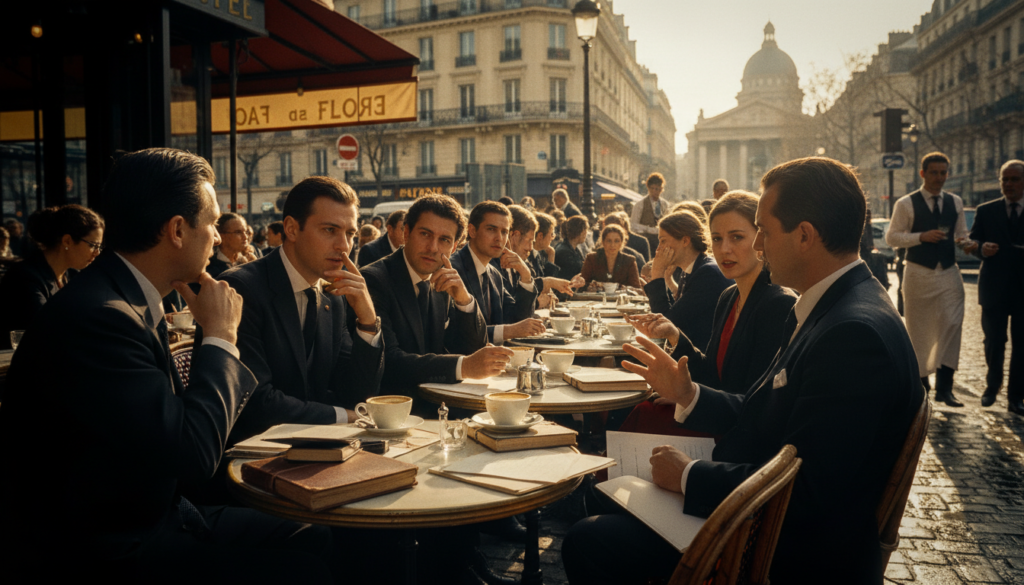
Paris has always been a hub for thinkers and writers. It’s where ideas were born in cafés. You can walk the streets that inspired Hemingway, Joyce, and Sartre.
These tours connect you with the spirit of intellectual freedom in Paris. The city drew creative minds from the 1920s to the post-war era. You’ll see where famous works were written.
Left Bank Writers and Existentialist Café Culture Walk
This walk takes you to the heart of 20th-century Paris. You’ll visit famous cafés like Café de Flore and Les Deux Magots. There, Sartre and de Beauvoir developed existentialist philosophy.
Guides share how these thinkers wrote in public. You’ll learn about the Boulevard Saint-Germain district and its thinkers. Their ideas on freedom and authenticity came from Paris’s cafés.
The tour also shows the bohemian lifestyle of the 1940s and 1950s. Guides tell stories of debates and love. A Saint-Germain private tour offers deeper insights.
Shakespeare and Company and Latin Quarter Literary Tour
This tour focuses on Sylvia Beach’s bookstore, Shakespeare and Company. It was a hub for expatriate writers. Joyce’s “Ulysses” was first published there.
The tour also includes the Sorbonne and narrow streets. These places have debated ideas for centuries. The district’s academic atmosphere attracted writers.
Guides visit The Red Wheelbarrow and other bookstores. These places keep the literary community alive. The tour shows the neighborhood’s rich history.
Victor Hugo and Romantic Era Paris Heritage Walk
This walk explores Victor Hugo’s Paris. You’ll see his residences and the settings of his works. Hugo’s writing shaped French identity.
Guides explain Hugo’s Romantic vision. You’ll learn about 19th-century Paris. Hugo’s work made him a symbol of French culture.
“To love another person is to see the face of God.”
The tour highlights Hugo’s influence on architecture. His writings preserved Notre-Dame Cathedral. This walk shows how literature can change public views.
Hemingway’s Paris Moveable Feast Walking Tour
This tour follows Hemingway’s Paris. You’ll see his apartment and Shakespeare and Company. Hemingway wrote in these places.
Guides share stories of Hemingway’s friends. You’ll visit cafés where he wrote. Paris shaped his writing style.
The tour explores the expatriate community of the 1920s. Writers like Miller and Orwell found inspiration in Paris. The city’s bohemian tolerance and artistic energy fueled their creativity.
| Literary Tour Focus | Key Locations | Historical Period | Main Writers Featured |
|---|---|---|---|
| Existentialist Café Culture | Café de Flore, Les Deux Magots, Boulevard Saint-Germain | 1940s-1950s | Sartre, de Beauvoir, Camus |
| Shakespeare and Company | Latin Quarter, Sorbonne, English bookstores | 1920s-Present | Joyce, Beach, expatriate community |
| Victor Hugo Heritage | Place des Vosges, Notre-Dame, Romantic Paris | 1830s-1880s | Victor Hugo, Romantic writers |
| Hemingway’s Moveable Feast | Latin Quarter apartments, Luxembourg Gardens, literary cafés | 1920s | Hemingway, Fitzgerald, Stein, Pound |
Literary tours offer a unique view of Paris. They connect you with the city’s ideas and creativity. Whether you’re interested in existentialism or the Lost Generation, these tours bring history to life.
Left bank cultural walks show Paris’s ongoing influence. You can sit in cafés where history was made. These tours transform Paris from a beautiful city to a living archive of human thought.
Cultural Tours in Paris for Music and Performance
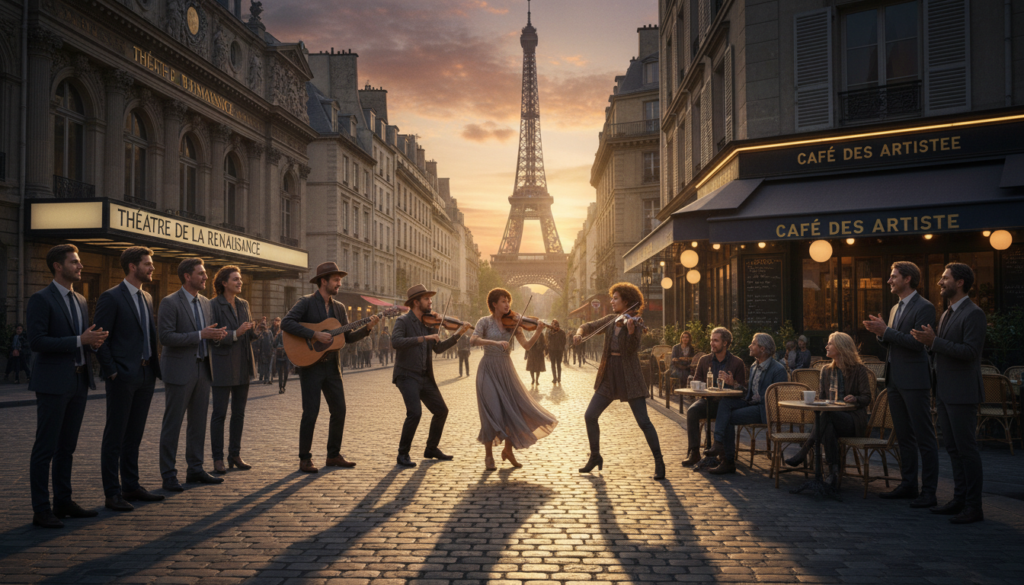
Paris is alive with music in its jazz cellars, cabarets, and chapels. These places turn stone and glass into art. Cultural tours let you see where music history was made.
Each neighborhood in Paris has its own music story. You’ll see how clubs and theaters shaped the city’s culture. From Montmartre’s bohemian vibe to Saint-Germain-des-Prés’ jazz, these tours show where art and society met.
Montmartre Jazz Age and Cabaret History Tour
A Montmartre jazz age and cabaret history tour takes you through Paris’s nightlife hub. You’ll see famous spots like the Moulin Rouge and Le Chat Noir. This montmartre cultural exploration shows how the area became a bohemian center.
Henri de Toulouse-Lautrec’s posters brought these cabarets to life. His art shows the dancers and performers of the time. You’ll see how art and entertainment marketing merged.
Place du Tertre is where street artists keep traditions alive. The square is Montmartre’s artistic heart. Tours also visit hidden venues with experimental performances.
Saint-Germain-des-Prés Jazz Club Heritage Walk
The saint-germain-des-prés jazz club heritage walk dives into Paris’s jazz scene after World War II. You’ll see places like Le Tabou and Café de Flore. These spots were where jazz and philosophy met.
Writers and musicians like Jean-Paul Sartre and Miles Davis hung out here. The saint-germain-des-prés art and café culture stroll shows how music and philosophy mixed. It’s a unique blend of art and rebellion.
Learn about the cave à jazz, secret music spots in cellars. These places helped shape Parisian jazz. You’ll hear stories of legendary jam sessions and cultural exchanges.
Classical Music Concert at Sainte-Chapelle Experience
A classical music concert at sainte-chapelle experience lets you hear music in a stunning Gothic chapel. The chapel’s beauty enhances every note. Concerts feature Bach, Vivaldi, and Mozart, fitting the space perfectly.
The acoustics in the chapel are amazing. It’s like nowhere else. This experience combines sight and sound in a special way.
Evening concerts in the chapel are unique. The dim light and focus make it special. You’ll see how medieval music was a key part of worship, and enjoy modern performances too.
Moulin Rouge and Parisian Cabaret Culture Evening Tour
The moulin rouge and parisian cabaret culture evening tour shows how entertainment changed in Paris. You’ll learn about the cancan dance and how it challenged old norms. These cabarets were where social boundaries blurred.
See how cabarets evolved from dance halls to theatrical shows. The Moulin Rouge led the way with its spectaculars. You’ll see how these venues attracted tourists while staying true to Paris.
Cabarets tackled big themes like sex and politics through satire. Performers became stars who influenced fashion and culture. This tour shows how Paris’s entertainment scene influenced the world.
Every music and performance tour shows Paris’s role in artistic innovation. You’ll see why artists came to Paris to try new things. These tours connect you with the city’s cultural history through music and performance.
French Gastronomy and Culinary Culture Tours
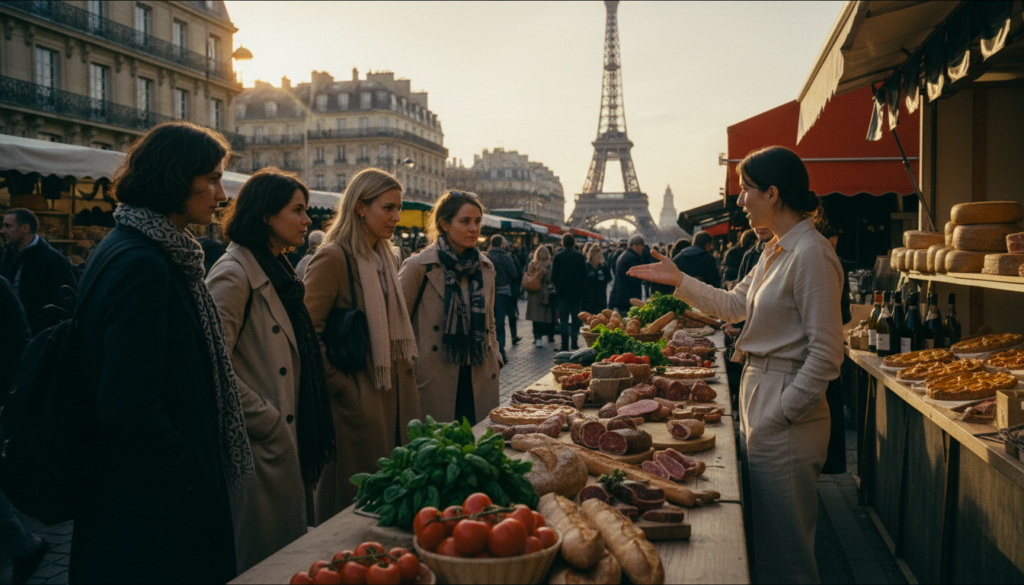
Every cheese shop, market stall, and bakery in Paris tells a story. They share French values, regional traditions, and the art of living well. Joining these tours, you’re not just tasting food. You’re experiencing centuries of cultural refinement through ingredients, techniques, and social rituals.
Food culture in Paris is like a living museum of French heritage. Each neighborhood has its own culinary identity shaped by history, immigration, and regional connections. The shops you’ll visit have often served families for generations. The techniques you’ll observe represent knowledge passed down through apprenticeships spanning decades.
Most travelers find that understanding Paris requires engaging with its gastronomic traditions. The city shaped global cuisine with an emphasis on proper technique, seasonal ingredients, and the social importance of shared meals. These cultural tours transform eating into an educational journey through French identity.
Gourmet Walking Experience in Le Marais
The le marais gourmet food and cultural tasting walk takes you through one of Paris’s most diverse culinary landscapes. This historic district combines medieval streets with a food scene shaped by centuries of Jewish heritage and modern innovation. You’ll visit traditional bakeries where challah and rugelach follow recipes brought from Eastern Europe generations ago.
Your guide leads you to specialty fromageries where aging rooms hold hundreds of cheese varieties from every French region. At historic charcuteries, you’ll learn how preservation techniques developed before refrigeration created distinctive flavors that define French terroir. Each stop explains the cultural context behind the products, connecting recipes to immigration patterns and social history.
The Le Marais tour also includes visits to specialty shops selling products you won’t find elsewhere in Paris. Tahini producers, halva makers, and Eastern European delicatessens represent how Jewish culinary traditions merged with French gastronomic standards. You’ll taste products that embody multicultural Paris, where tradition and innovation create unique food identities.
Artisanal Tastings in Saint-Germain
The saint-germain cheese wine and pâtisserie culture tour focuses on artisanal craftsmanship and proper tasting techniques. This elegant neighborhood houses some of Paris’s most respected food artisans. Your guide explains the structure of professional cheese tasting, teaching you to identify texture, aroma, and flavor progression in varieties from Normandy’s creamy Camembert to Savoy’s alpine Beaufort.
Wine pairings during this tour follow traditional French principles. You’ll learn why certain wines complement specific cheese textures and fat contents. The guide demonstrates how to taste wine properly, using all your senses to evaluate quality. These french culture experiences teach you appreciation methods used by French connoisseurs for generations.
Pâtisserie visits reveal the precision required for classic French pastries. You’ll watch chocolatiers tempering couverture and pastry chefs creating pâte à choux for éclairs and profiteroles. The tour explains how French pastry elevated dessert-making to high art through mathematical precision and technical mastery. Each tasting includes context about regional origins and the cultural significance of specific desserts in French celebrations.
Wholesale Market Heritage Tour
The rungis market behind-the-scenes french food heritage visit offers access to spaces usually closed to the public. Rungis is the largest wholesale food market in the world, supplying Paris’s restaurants with products that define French cuisine. This privileged visit begins before dawn when fish auctions and produce trading reach peak activity.
You’ll observe the supply chain that feeds Paris’s gastronomic culture. Fishmongers display Atlantic catches brought in overnight. Produce wholesalers arrange vegetables and fruits according to season and regional origin. Butchers break down entire animals using techniques refined over centuries. The scale of operations reveals France’s agricultural traditions and commitment to quality standards that govern food production nationwide.
Your guide explains how Rungis maintains French culinary excellence through strict sourcing requirements. The market enforces standards for organic certification, regional designations, and traditional production methods. This behind-the-scenes access shows you the infrastructure supporting Paris’s reputation as a global food capital. The experience provides context for understanding why ingredient quality matters so deeply in French cooking culture.
Market-to-Table Cooking Experience
A french cooking class with market cultural immersion combines shopping, technique instruction, and shared dining. These experiences begin at neighborhood markets where you’ll select ingredients alongside your chef instructor. You learn to identify quality through visual inspection, touch, and aroma—skills French home cooks develop from childhood.
The cooking instruction focuses on fundamental French techniques applicable to countless recipes. You’ll practice proper knife skills, sauce construction, and timing methods that ensure dishes finish simultaneously. Your chef explains the cultural context of home cooking in France, where daily meals follow seasonal patterns and regional traditions. This hands-on approach transforms cooking from recipe-following into cultural practice.
The class concludes with a shared meal where you enjoy the dishes you’ve prepared. This social ritual embodies French attitudes toward food as communal experience rather than mere sustenance. You’ll understand why French meals traditionally extend for hours, with conversation and multiple courses creating connection among diners. These french culture experiences demonstrate that gastronomy encompasses not just food preparation but also the social rituals surrounding shared meals.
| Tour Type | Duration | Key Experiences | Best For |
|---|---|---|---|
| Le Marais Gourmet Walk | 3-4 hours | Jewish bakeries, fromageries, charcuteries, specialty shops, multicultural food heritage | Food lovers interested in immigration history and diverse culinary traditions |
| Saint-Germain Tasting Tour | 3 hours | Artisanal cheese and wine pairings, pâtisserie techniques, proper tasting methods | Those seeking refined experiences and professional appreciation techniques |
| Rungis Market Visit | 4-5 hours (early morning) | Wholesale fish auctions, produce trading, supply chain observation, quality standards | Culinary professionals and serious food enthusiasts wanting industry insight |
| Cooking Class with Market | 4-5 hours | Ingredient selection, technique instruction, recipe preparation, shared meal | Hands-on learners who want practical skills and social dining experience |
These culinary tours frame food as cultural expression rather than entertainment. You’ll discover how French attitudes toward seasonality, regional specificity, and proper technique reflect values about craftsmanship and quality of life. The emphasis on terroir—the connection between place and product—reveals French respect for agricultural traditions and geographical identity.
When booking these tours, consider your interest level and physical requirements. Market tours require early morning availability and comfortable walking shoes. Cooking classes need several hours and hands-on participation. Tasting walks involve standing while sampling products at multiple locations. Most providers accommodate dietary restrictions with advance notice, though some traditional products may contain allergens fundamental to recipes.
The social ritual of French dining appears throughout these experiences. You’ll observe how meals structure daily life, how conversation accompanies every course, and how proper technique shows respect for ingredients and producers. These lessons about food as cultural practice provide context for understanding French society beyond tourism attractions.
Paris’s role in shaping global gastronomy makes these tours essential for cultural understanding. The city’s chefs, food artisans, and home cooks maintain standards that influence culinary traditions worldwide. By participating in french gastronomy and culinary culture tours, you gain insight into why France protects its food heritage through designations, regulations, and education systems that preserve traditional knowledge for future generations.
Cultural Tours in Paris Through Historic Neighbourhoods
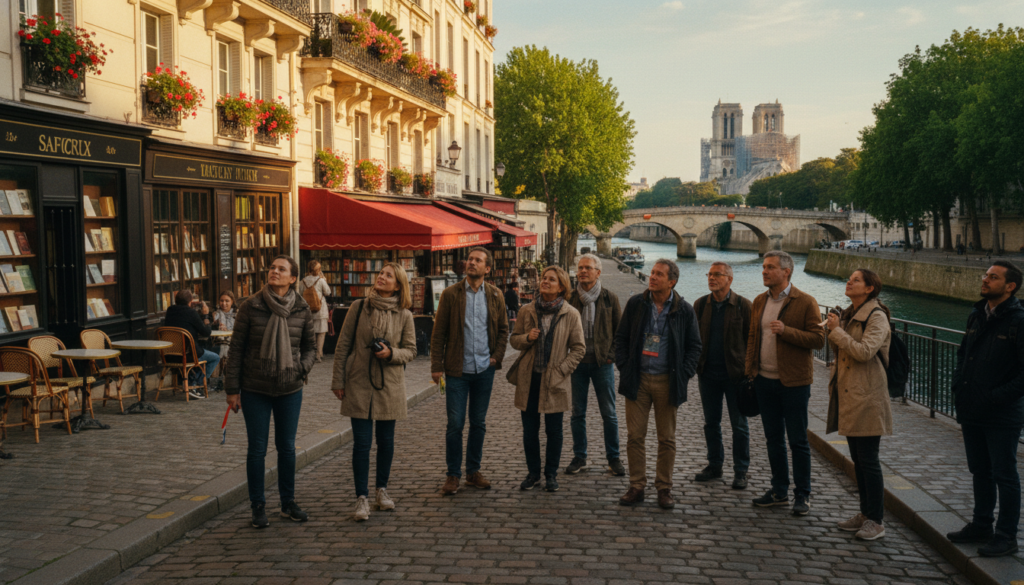
Cultural tours in Paris through historic neighbourhoods show the city’s true character. They reveal how different communities shaped Paris into what it is today. Each neighbourhood has its own culture, architecture, and history.
Walking through these areas, you see details and cultural nuances missed by car or metro. Each district kept its unique character through history, art, and new residents. Your guide will tell you how geography and social changes influenced each area.
These guided heritage walks paris show Paris as a collection of communities. Each neighbourhood added its own piece to French culture, from politics to art to food.
Jewish Heritage and Medieval Architecture in Le Marais
The le marais jewish heritage and medieval culture walk takes you through a layered neighbourhood. You see magnificent mansions from the 16th and 17th centuries. The narrow medieval streets show the area’s history before Haussmann’s changes.
This area became the heart of Jewish life in Paris from the 13th century. You visit active synagogues, kosher bakeries, and memorials. Your guide talks about Jewish immigration and its impact.
Le Marais also became a centre for LGBTQ+ culture since the 1980s. It balances its Jewish heritage with modern diversity. You see how gentrification changed streets while keeping heritage sites.
Architecture fans will love the Hôtel de Sully and Place des Vosges. These show Renaissance urban planning that influenced Europe for centuries.
Academic Tradition at the Latin Quarter
The latin quarter sorbonne and intellectual heritage tour focuses on Paris’s educational role since medieval times. The area got its name from the Sorbonne, founded in 1257. Your guide talks about how student life shaped the area for over seven centuries.
You see the Panthéon, where France’s greatest thinkers rest. The guide connects these figures to intellectual movements in Latin Quarter cafés and lecture halls. This area was key in challenging monarchies and social structures across Europe.
Walking through, you see medieval street patterns still intact. You visit small squares where students debated philosophy and politics. The area’s bookstores and publishers keep its intellectual tradition alive.
Your guide explains how the May 1968 student protests started here. This continues the Latin Quarter’s role as a birthplace of progressive social movements. The area’s layout encouraged the exchange of ideas that shaped French and European history.
Artistic Legacy in Saint-Germain-des-Prés
The saint-germain-des-prés art and café culture stroll shows how this area became an artistic hub. The ancient abbey that named the area once controlled vast lands. Your guide explains how it evolved into a place for writers and artists.
You visit historic cafés where existentialist philosophers like Sartre and Beauvoir met in the 1940s and 1950s. These cafés still have their literary atmosphere and original décor. Parisian heritage tours highlight how café culture enabled intellectual exchange.
The area’s art galleries and antique shops show its cultural importance. Your guide points out buildings where famous writers lived and worked. This connects physical locations to literary masterpieces. The narrow streets preserve the intimate scale that attracted creative communities.
Saint-Germain also has high-end fashion boutiques and design studios. This shows how artistic heritage evolved into contemporary creative industries. The area balances preservation and innovation in its cultural heritage.
Bohemian Spirit on Montmartre’s Hills
The montmartre village life and artistic revolution tour reveals the area’s unique history. It remained separate from Paris until 1860. Its village character attracted artists seeking cheap rent and tolerant social attitudes. Your guide explains how this environment enabled radical artistic experimentation that birthed Cubism and other modern art movements.
You walk streets where Picasso, Modigliani, and Toulouse-Lautrec lived and worked in poverty before fame. The neighborhood’s steep hills and distant location from central Paris created a community apart from mainstream French society. This isolation allowed artistic freedom that would have faced censorship elsewhere.
Paris heritage sites tours include the Bateau-Lavoir, where Picasso painted “Les Demoiselles d’Avignon,” launching Cubism. Your guide describes the collaborative atmosphere where artists shared ideas, models, and materials. The neighborhood’s cabarets and dance halls provided both entertainment and subject matter for artistic works.
Montmartre maintains its village atmosphere with small squares, vineyard remnants, and winding pedestrian streets. Your guide contrasts this with the tourist-focused Sacré-Cœur area, explaining how different parts of the neighborhood serve different purposes today. The artistic legacy continues in contemporary studios and galleries scattered throughout residential streets.
“Paris is not a city; it is a collection of villages, each jealously guarding its own personality, its own history, its own soul.”
| Neighborhood | Historical Period | Cultural Significance | Key Heritage Sites |
|---|---|---|---|
| Le Marais | Medieval to 17th Century | Jewish heritage, aristocratic architecture, LGBTQ+ culture | Place des Vosges, synagogues, Hôtel de Sully |
| Latin Quarter | 13th Century to Present | Academic tradition, revolutionary politics, intellectual movements | Sorbonne, Panthéon, medieval streets |
| Saint-Germain-des-Prés | Medieval Abbey to 20th Century | Existentialist philosophy, literary cafés, art galleries | Abbey church, Café de Flore, Les Deux Magots |
| Montmartre | 19th-20th Century | Birthplace of modern art, bohemian culture, village atmosphere | Bateau-Lavoir, Place du Tertre, vineyard |
These parisian heritage excursions show the value of walking through neighbourhoods. Each district’s architecture, street layout, and community traditions reveal Paris’s cultural diversity and complexity. You gain a deeper appreciation for the city’s richness through these intimate explorations.
Multicultural and Diaspora Heritage Tours
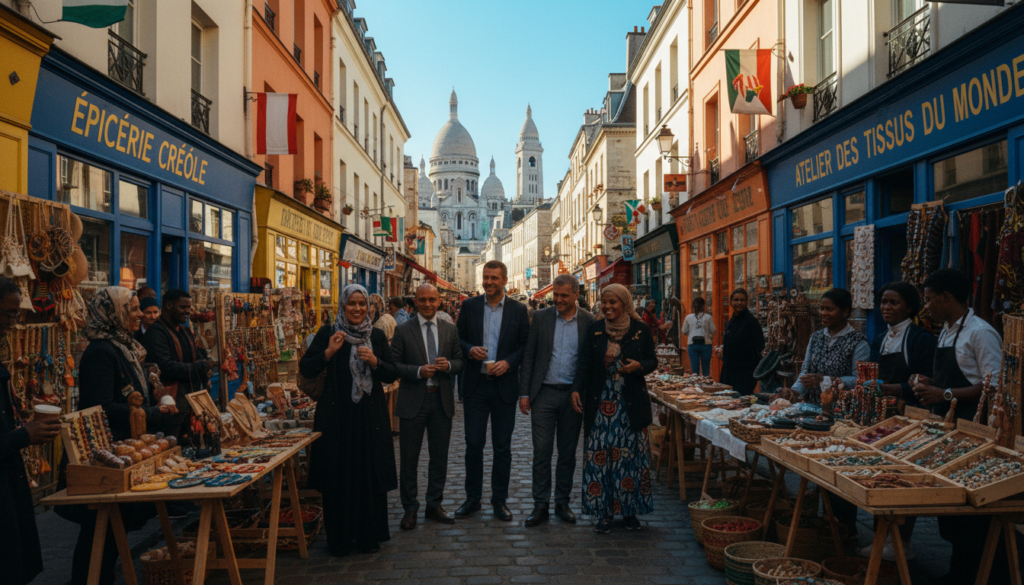
Multicultural and diaspora heritage tours reveal a Paris beyond the usual tourist spots. These tours take you to neighborhoods shaped by immigrant communities for generations. You’ll see how immigrants from Africa, the Caribbean, Asia, and more have made Paris vibrant.
These tours show the layers of identity in Paris. Immigration has changed what it means to be Parisian. You’ll learn about global connections and colonial history that have made Paris multicultural.
African and Caribbean Diaspora Culture Walk in Château-Rouge
The African and Caribbean diaspora culture walk in Château-Rouge takes you to the 18th arrondissement. This area is full of West African, North African, and Caribbean culture. You’ll see colorful fabric shops and hair salons with African styles.
Your guide talks about how French colonialism and migration created Little Africa. You’ll visit markets with yams, plantains, and spices. The smell of grilled fish and jollof rice fills the air.
This walk also talks about the challenges these communities face. Your guide shares the cultural richness and the struggles in Château-Rouge. It’s a real look at the neighborhood’s complexity.
“Paris is not just the city of light—it is also a city of many cultures, each bringing its own brightness to the streets.”
Black Paris Jazz and Literary Heritage Tour
The Black Paris jazz and literary heritage tour uncovers hidden stories. You’ll follow the paths of Josephine Baker, Sidney Bechet, and others. They found freedom in Paris during the 1920s and 1930s.
Then, you’ll visit places connected to James Baldwin and Richard Wright. You’ll see cafés where Baldwin wrote about racism and colonialism. Paris became a refuge for Black intellectuals and artists in the 20th century.
Today, you’ll learn about Black French artists and activists. The tour shows how Afro-French communities shape Parisian culture. It connects past and present in meaningful ways.
Asian Cultural Heritage Walk Through the 13th Arrondissement
The Asian cultural heritage walk in the 13th arrondissement explores Europe’s largest Chinatown. You’ll see Vietnamese, Cambodian, Laotian, and Chinese communities. Asian supermarkets are stocked with ingredients from across the continent.
You’ll visit Buddhist temples with incense and ornate altars. Your guide talks about Southeast Asian immigration to France. The neighborhood’s architecture tells its own story.
Food is a big part of this tour. You’ll try bánh mì sandwiches, pho, and bubble tea. You’ll learn how these dishes adapted to French tastes. The tour shows how Asian communities preserved their heritage in Paris.
Belleville Multicultural Neighbourhood Culture Stroll
The Belleville multicultural neighbourhood culture stroll takes you through a truly diverse district. Belleville has welcomed Jewish refugees, North Africans, Chinese, and West Africans. Walking here feels like traveling through different countries.
Kosher butchers and halal meat shops stand next to Chinese restaurants and Tunisian cafés. Street art shows messages in many languages. This diversity creates a dynamic cultural energy you won’t find elsewhere.
Your guide talks about how immigrants transformed Belleville. Artists and musicians have made it a creative hub. The tour shows how economic factors and immigration policies shape urban spaces.
| Tour Focus | Neighborhood | Cultural Communities | Key Highlights |
|---|---|---|---|
| African and Caribbean Diaspora | Château-Rouge (18th) | West African, North African, Caribbean | Markets, fabric shops, restaurants, colonial history discussions |
| Black Paris Heritage | Various (Left Bank, Montmartre) | African American expatriates, Afro-French | Jazz clubs, writer residences, artistic refuge narratives |
| Asian Cultural Heritage | 13th Arrondissement | Vietnamese, Chinese, Cambodian, Laotian | Chinatown, Buddhist temples, Southeast Asian cuisine |
| Multicultural Belleville | Belleville (19th/20th) | Jewish, North African, Chinese, West African | Diverse markets, street art, working-class history |
These tours give you a deeper understanding of Paris today. They show how global connections have made Paris a multicultural city. You’ll appreciate the immigrant communities that enrich Parisian life.
Booking these tours supports local guides from these communities. Many guides have personal stories to share. Their experiences add depth to the tours.
Exploring these neighborhoods offers genuine cultural adventures. You’ll see Paris in a new light. These tours challenge simple stories and reveal Paris’s true complexity.
Cultural Tours in Paris for Families and Students
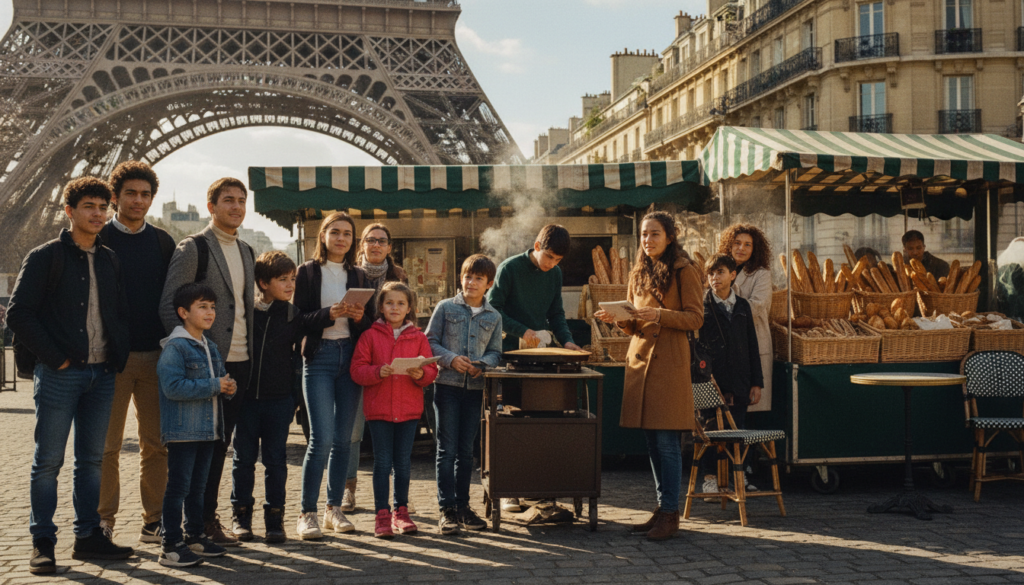
Bringing young people to Paris can be a game-changer. The right cultural tour turns museums and monuments into fun learning experiences. These tours use stories, games, and pacing to connect young travelers with French culture.
Paris is full of educational adventures for kids and teens. Family walking tours make history and art interactive. Guides keep young minds engaged with fun discussions.
Kid-Friendly Interactive French Culture Walking Tour
A kid-friendly interactive french culture walking tour is perfect for kids 6-12. They go on scavenger hunts and hear stories that bring Paris to life. Guides turn neighborhoods into adventure zones where kids learn through fun challenges.
These tours last 90 minutes to two hours. Guides know how to keep kids focused and happy. They use props and small prizes to make learning fun.
These paris cultural attractions guided tours cover many themes for kids. They learn about fairy tales, medieval life, and more. The tours balance fun with learning, keeping kids interested.
Student Group Cultural Heritage and History Walk
The student group cultural heritage and history walk is for middle and high school students. It covers topics like the French Revolution and World War II. Guides lead discussions and encourage critical thinking.
Student tours last two to three hours and fit 15-25 students. Guides work with teachers to match the tour with classroom learning. This makes the visit an extension of school, not just a field trip.
These tours use primary sources and historical documents. Students learn by examining these materials. Discussion questions help them analyze what they see and connect it to broader themes.
Family Louvre Treasure Hunt Cultural Experience
The family louvre treasure hunt cultural experience turns the Louvre into a game. Kids get maps and clues to find artworks. This makes the museum visit interactive and educational.
These tours focus on 8-12 masterpieces. Kids search for specific artworks and learn about them through stories. Each discovery comes with a brief explanation that keeps the learning engaging.
Family Louvre tours include timed entry tickets to avoid long lines. They last 90 minutes to two hours, keeping kids engaged. The tours end with a creative activity, reinforcing what they’ve learned.
Teen-Focused Paris Through the Ages Cultural Tour
A teen-focused paris through the ages cultural tour covers topics like fashion and World War II. It treats teens as young adults, engaging them with complex history. Guides provide in-depth information without being condescending.
Teen tours use technology to compare historical photos with current sites. This helps teens see how Paris has changed. Topics like individual freedom and artistic rebellion connect with teens’ interests.
These tours last two to three hours and fit 10-15 teens. Guides encourage debate and critical thinking. Teens visit sites connected to youth movements, seeing themselves in Paris’s cultural evolution.
Each tour format considers factors like duration and age-appropriate content. These experiences make learning fun for young travelers. Families create lasting educational memories in Paris.
How to Choose the Best Cultural Tour in Paris
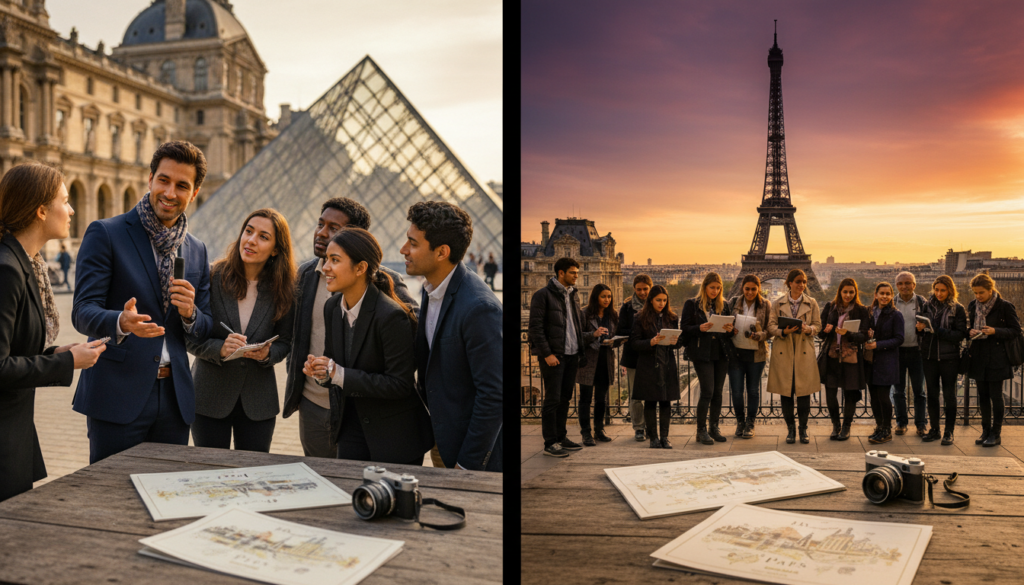
Paris has many cultural tours to choose from. Knowing how to pick the right one is key. The quality of your experience depends on the guide’s knowledge, the group size, and the tour’s structure.
Booking early is a good idea, especially when it’s busy. This guide will help you find tours that fit your interests, learning style, and budget.
Specialist Cultural Guides vs General Tour Operators
Having a knowledgeable guide makes a big difference. Specialist cultural guides know a lot about art, architecture, and history. They can answer detailed questions and provide deep insights.
General tour operators give a broad overview. They’re great for first-time visitors. But, they might not know as much about specific topics.
Specialist guides are worth the extra cost if:
- You’re interested in specific art movements or historical periods
- You’ve been to Paris before and want to learn more
- You study or work in art, history, or architecture
- You want to understand the cultural context
- You enjoy discussing and learning during tours
Overview tours are good for getting a basic understanding. They’re perfect for first-time visitors. They help you find places to explore more later.
Comparing Group Size Duration and Depth of Content
Group size affects your experience. Large groups move slowly and make it hard to ask questions. Medium groups are a good balance.
Small groups offer a chance to talk and learn more. They allow for personal attention and can go off the beaten path.
Choose a tour that fits your knowledge and attention span:
| Tour Duration | Best For | Content Depth | Typical Cost Range |
|---|---|---|---|
| 2-3 hours | Introduction to neighborhoods or single sites | Overview with key highlights | $30-$60 per person |
| 4-5 hours | Thematic deep dives or multiple related sites | Detailed exploration with context | $80-$150 per person |
| 6-8 hours | Comprehensive coverage or specialized topics | Academic-level discussion and analysis | $200-$350 per person |
| Full day+ | Multi-neighborhood or period-specific immersion | Expert-led intensive cultural study | $400-$600 per person |
Think about your energy when picking a tour length. Walking tours involve a lot of standing and walking.
Booking Platforms and Verified Review Comparisons
When choosing a tour, look beyond star ratings. Booking platforms like GetYourGuide and TripAdvisor have reviews. But, not all are reliable.
Watch out for fake reviews:
- Generic praise without details
- Multiple reviews on the same day
- Only five-star ratings
- Reviews about booking, not the tour
- Companies ignoring negative feedback
Verified review comparisons help spot trends. Look for consistent feedback about guides and tour quality.
Booking directly with tour companies can offer better service. Compare prices on different sites to find the best deal.
Private vs Group Cultural Tour Pricing and Options
Private tours are more expensive but offer flexibility. Private tours cost between $300 and $800 for half a day. They’re tailored to your interests.
Private tours are worth it if:
- Specific niche interests: You want to explore unique topics
- Mobility considerations: You need breaks or accessible routes
- Traveling with children: You need flexibility for young ones
- Professional research: You need detailed information for work
- Larger parties: Groups of four or more can find private tours cost-effective
Group tours are cheaper and social. They’re great for meeting others with similar interests. Well-run groups can make the experience more enjoyable.
Finding good private guides takes research. Look beyond booking sites. Professional associations like Paris Greeters offer free tours with knowledgeable locals.
Your learning style determines the best tour type. Group tours are good for listening. Private tours are better for asking questions and discussing.
Final Tips for Getting the Most Out of Cultural Tours in Paris
Getting ready is key for enjoying paris museum tours and guided heritage walks paris. Wear comfy shoes since you’ll walk 2-4 miles on cobblestone streets. Spring and fall are the best times with nice weather and fewer people at popular spots.
Be on time for your tours. Showing up late can mess up the group’s experience and you’ll miss important details. Book tours in the morning when you’re alert and places are less busy. Spread out your art and history tours over different days to avoid feeling overwhelmed.
Learn basic French phrases like “bonjour,” “merci,” and “excusez-moi” before you go. Parisians will appreciate your attempt to speak their language during french cultural experiences. This small act can make a big difference in your interactions.
Do some research on your tour topics before you go. Knowing a bit about the neighborhoods or artistic movements can help you ask better questions and connect with the material. Don’t forget to bring water and snacks for longer walks.
Your cultural tours in paris should inspire you to keep exploring. Use what you learn to visit places on your own later. Read books by authors or about artists you discover. Consider taking a seine river cultural cruise to deepen your understanding of what you’ve learned on walking tours.
Paris is a city with 2,000 years of history waiting to be explored. Cultural immersion is about being curious and diving deep into the experiences. Let your guided tours open doors to a deeper understanding that will enrich your perspective long after you return home.
FAQ
How long should I plan to spend in Paris to experience meaningful cultural tours?
You’ll want 3-5 days to enjoy Paris’s cultural tours without rushing. This time lets you fit in 1-2 tours a day. You’ll also have time for exploring on your own and resting.
If you love art and museums, spend a day at the Louvre and another at the Musée d’Orsay. For neighborhood tours, plan half-day walks in Le Marais, Montmartre, and the Latin Quarter. A week in Paris lets you dive deeper into topics like literature, architecture, or food.
What’s the best time of year to take cultural walking tours in Paris?
Spring (April-May) and fall (September-October) are the best times. The weather is mild, and there are fewer crowds. You’ll also get better light for photos.
Summer is busy with long days but also hot. Winter is rainy and cold, but museums and indoor tours are great. You’ll find fewer people and lower prices.
Are skip-the-line museum tours worth the extra cost compared to general admission tickets?
Yes, skip-the-line tours save time and offer more. At the Louvre and Musée d’Orsay, you’ll avoid long waits. Guides make your visit more meaningful by sharing history and insights.
These tours are worth the extra cost. They provide a deeper understanding of the art and history. You’ll see more and learn more than with general admission.
Can cultural tours help me understand Paris even if I don’t speak French?
Absolutely. Paris has many English-language tours. Guides are bilingual and knowledgeable about French culture.
These tours explain cultural references and customs. Learning a few French phrases shows respect. But you can still enjoy Paris’s culture without speaking French.
What’s the difference between specialist cultural guides and general tour operators?
Specialist guides have advanced degrees and deep knowledge. They focus on specific topics like Impressionism or Gothic architecture.
General tour operators offer a broader overview. They’re good for first-time visitors. Specialist guides cost more but offer richer experiences.
How physically demanding are cultural walking tours in Paris?
Tours cover 2-4 miles over 2-3 hours. You’ll walk on cobblestone streets and climb hills. Wear comfortable shoes.
Montmartre tours involve hills and steps. Le Marais and Latin Quarter walks have narrow streets. Museum tours require standing for hours.
Should I take cultural tours at the beginning or end of my Paris visit?
Start with major tours early in your visit. This sets the context for your exploration. Morning tours are best when you’re fresh.
Save lighter experiences like culinary tours for later. This way, you can enjoy them without feeling tired.
Are private cultural tours worth the significantly higher cost?
Private tours cost more but offer flexibility and customization. They’re great for families or those with specific interests.
They let you ask unlimited questions. For solo travelers or couples, small group tours are a better value.
How do I identify high-quality cultural tour operators among the many options?
Look for guides with advanced degrees. Check reviews on platforms like TripAdvisor and Google Reviews. Look for detailed itineraries and accessibility information.
Be wary of suspiciously perfect ratings. Established operators like Context Travel maintain quality. For specialized topics, ask museum bookshops for recommendations.
Can cultural tours accommodate dietary restrictions or food allergies during culinary experiences?
Most tour operators can accommodate dietary needs with advance notice. Vegetarian and pescatarian options are common. Gluten-free is also available.
For severe allergies, discuss specifics with the tour operator. Some tours focus on specific cuisines like Jewish or halal food.
What should I bring on a cultural walking tour in Paris?
Bring comfortable shoes, a backpack or crossbody bag, and a refillable water bottle. Wear layers for changing weather.
Take a notebook and pen if you like to take notes. A compact umbrella is useful for rain. Leave large bags at home.
How far in advance should I book cultural tours in Paris?
For peak season, book popular tours 4-8 weeks in advance. Small group tours fill quickly. During shoulder seasons, 2-3 weeks is enough.
Off-season, you can book just days ahead. Private tours need more lead time, especially for niche topics.
Are cultural tours appropriate for teenagers, or are they too academic and boring?
Age-appropriate tours can engage teenagers. Look for topics that interest them, like World War II or fashion history.
Guides should avoid condescending language. Teen-focused tours are more interactive and thought-provoking.
Do cultural tours operate year-round, including during holidays?
Most tours run year-round, but schedules change for holidays. Museums close on Christmas and New Year’s Day.
Summer hours are longer, but it’s busier. Winter is quieter, but it’s colder. Check operator policies for holiday schedules and weather cancellations.
Can I take photographs during cultural tours, including inside museums?
Photography rules vary. Guides will explain specific museum policies. Non-flash photography is usually allowed for personal use.
Some exhibitions ban all photography. Be respectful of other visitors. Don’t block views or use selfie sticks in museums.
What’s the etiquette for tipping cultural tour guides in Paris?
Tipping is not mandatory but appreciated. For group tours, €5-10 per person is standard. For private tours, consider €20-50.
Tip in cash directly to the guide. If service was poor, provide feedback to the tour operator. Don’t feel pressured to tip if service was not good.
How do multicultural and diaspora heritage tours differ from traditional Paris cultural tours?
Diaspora tours focus on marginalized perspectives. They explore how immigration and colonialism have shaped Paris. Traditional tours focus on French history and art.
These tours discuss complex topics like colonialism and racism. Guides often have personal connections to the communities they explore. They offer a deeper understanding of Paris’s diversity.
Should I schedule multiple cultural tours in one day or space them across different days?
Space tours across different days to avoid information overload. This way, you can fully absorb what you learn. Morning tours are best when you’re fresh.
Save lighter experiences for later. This allows you to enjoy them without feeling tired. Build in a day for spontaneous exploration.
Are evening cultural tours safe in Paris?
Evening tours in central Paris are generally safe. They conclude by 10-11 PM in well-trafficked areas. Neighborhoods like Montmartre and the Latin Quarter are vibrant at night.
Stay aware of your surroundings and keep valuables secure. Avoid displaying expensive items. Joining a group tour adds to your safety.
How do I extend my learning after completing a cultural tour?
Use tours as a starting point for deeper learning. Return to museums or sites that interest you. Read books or visit cafés related to your tour.
Practice identifying architectural styles or artists. Keep a Paris journal to document your experiences. Join online communities to continue learning.