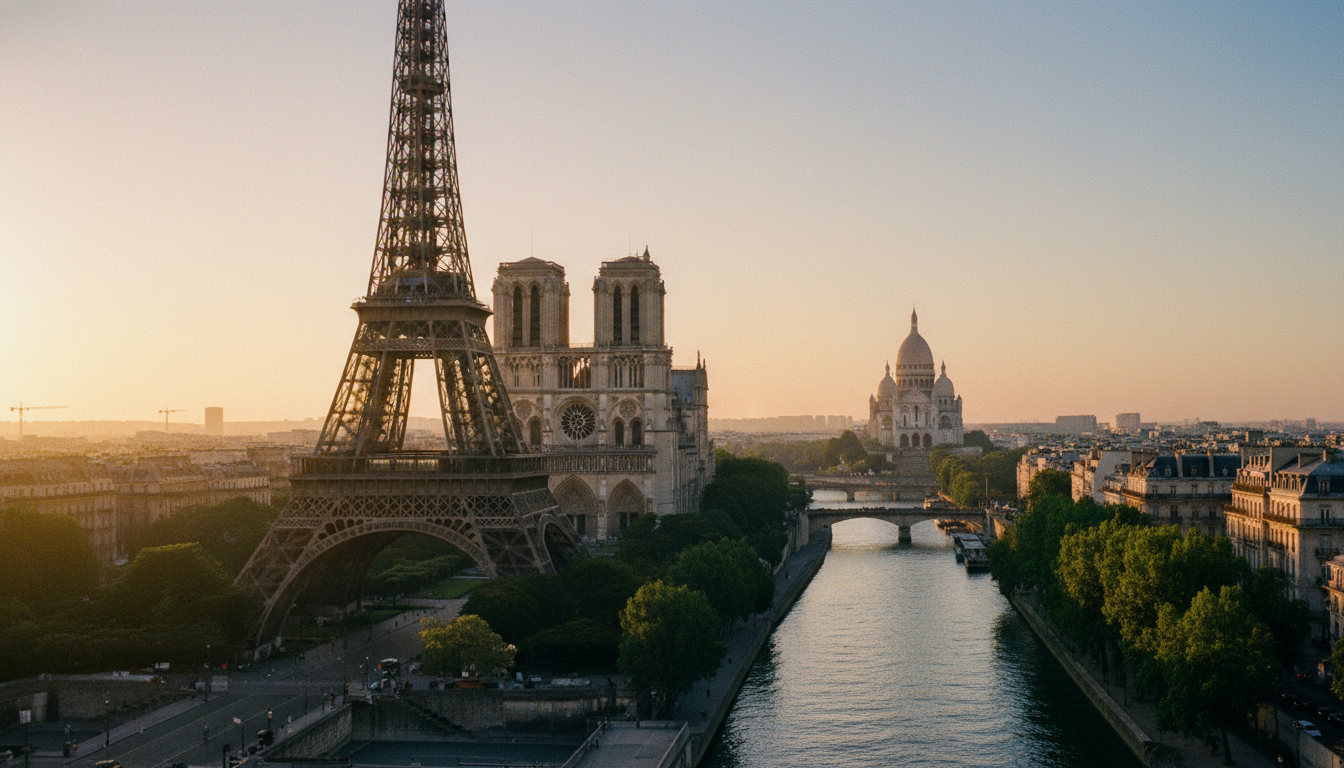
Have you ever wondered why Paris draws millions of visitors every year? It’s known as the City of Light for its history, culture, and romance. These qualities make it a unique place.
The city’s layout is easy to navigate, thanks to its spiral design. You’ll find famous spots like the Eiffel Tower and the Louvre. These Paris landmark destinations offer unforgettable experiences.
Whether you love art, history, or family trips, this Paris travel guide is for you. It highlights the best Paris monuments and sightseeing spots. You’ll explore charming areas and beautiful gardens.
This guide helps you plan your visit. It shows you how to pick attractions based on your interests. You’ll learn how to make the most of your time in Paris.
Key Takeaways
- Paris features unique spiral arrondissements that simplify navigation for visitors exploring the city’s diverse neighborhoods
- The city earned its “City of Light” nickname by pioneering gas street lighting in 19th-century Europe
- Top attractions include the Eiffel Tower, Louvre Museum, and numerous historic landmarks suitable for all travel styles
- Strategic planning with museum passes and skip-the-line tickets helps you avoid crowds and save valuable time
- Paris caters to diverse interests including art, history, family activities, and romantic experiences
- Understanding your priorities allows you to create a personalized itinerary that matches your travel preferences
Iconic Landmarks No Visitor Should Miss
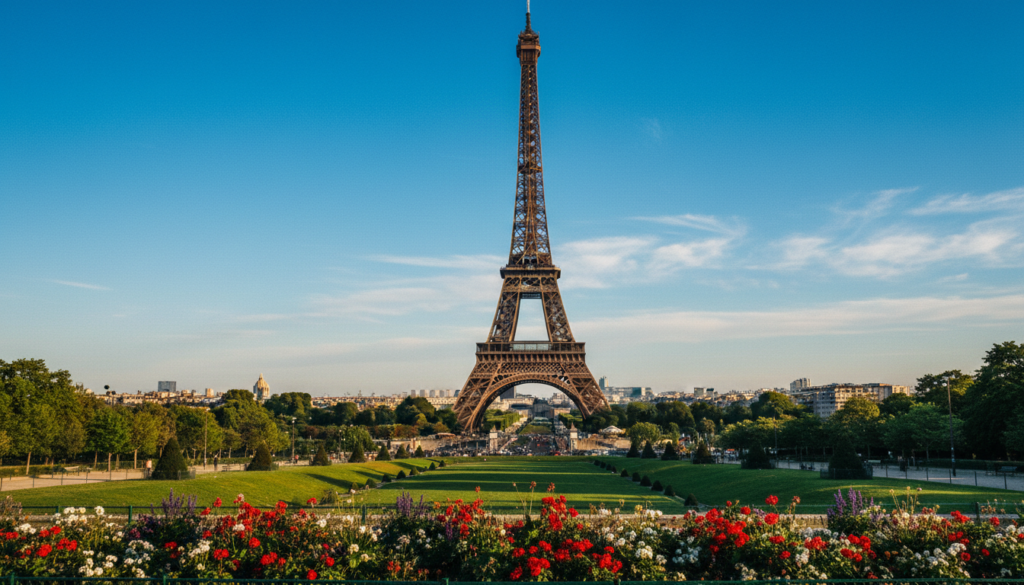
The heart of Paris beats strongest at its four most celebrated landmarks. Each offers a unique window into the city’s soul. These monuments represent the essential Paris experience that every traveler dreams about before their first visit. From soaring iron lattice to Gothic spires, these attractions showcase different eras of Parisian history and architecture.
Whether you’re seeking breathtaking panoramic views or intimate encounters with centuries-old artistry, these iconic sites deliver unforgettable moments. Planning your visits strategically helps you maximize your time while avoiding the longest queues at these popular destinations.
Eiffel Tower
The Eiffel Tower stands as the world’s most recognizable monument and the ultimate symbol of Paris. Gustave Eiffel constructed this engineering marvel in 1887 for the 1889 World Fair, creating a structure that was initially criticized but became universally beloved.
You’ll find 674 steps leading upward through the iron framework, though most visitors prefer the elevators that transport guests to various observation levels. The tower features three restaurants and a bar, allowing you to dine while enjoying spectacular city views.
Eiffel Tower visits require advance planning to avoid disappointment. Purchase timed tickets online several weeks before your trip, especially during peak summer months. You can choose elevator access to the second floor or splurge for summit tickets that take you to the very top.
For the best experience without crowds, consider viewing this magnificent structure from Trocadéro gardens across the Seine. This vantage point provides perfect photo opportunities and lets you appreciate the tower’s full scale without the expense or wait times of ascending.
Arc de Triomphe
The Arc de Triomphe monument honors those who fought and died in the French Revolutionary Wars, Napoleonic Wars, and World War I. This massive arch anchors the western end of the Champs-Élysées, surrounded by Paris’s most chaotic traffic roundabout.
What makes Arc de Triomphe visits truly special is the panoramic viewpoint at the top. You’ll climb 284 steps to reach the observation deck, but this ascent proves far more manageable than the Eiffel Tower’s crowds and queues.
The Arc de Triomphe viewpoints deliver 360-degree vistas that many travelers consider superior to other Paris landmarks. From this central location, you can spot the Eiffel Tower, spot the tree-lined Champs-Élysées stretching toward Place de la Concorde, and observe the geometric precision of Haussmann’s urban planning.
An Arc de Triomphe visiting guide should mention the underground passage that safely transports visitors beneath the surrounding traffic circle. Never attempt to cross the roundabout at street level—the designated tunnel keeps you safe while accessing the monument’s entrance.
Sacré-Cœur Basilica
Perched high atop Montmartre’s hill, the Sacré-Cœur Basilica combines spiritual beauty with commanding city perspectives. This Romano-Byzantine church opened in 1901, its brilliant white stone creating a beacon visible from across Paris.
The Sacré-Cœur Basilica Montmartre location makes it one of the best places for incredible views without purchasing tickets. The steps leading to the basilica serve as a popular gathering spot where locals and tourists alike sit to watch the sunset over the city.
Inside, you’ll discover stunning mosaics and peaceful chapels that invite quiet contemplation. Sacré-Cœur Basilica tours are self-guided and free, though you can climb the dome for a small fee to reach even higher viewpoints.
The neighborhood surrounding this landmark invites hours of exploration through cool attractions in Paris that include artist studios, charming cafés, and the famous Place du Tertre. Montmartre retains its village-like atmosphere despite being firmly within the city limits.
Notre-Dame Cathedral
Notre-Dame Cathedral Paris triumphantly reopened in December 2024 following extensive restoration after the devastating 2019 fire. This medieval masterpiece now shines cleaner and more beautiful than it has been in centuries, revealing stonework and details obscured by grime for generations.
The Notre-Dame Cathedral history stretches back to the 1200s, making it one of the finest examples of French Gothic architecture. Its flying buttresses, rose windows, and sculptural details represent the pinnacle of medieval craftsmanship.
You can visit the main cathedral interior for free by booking a time slot in advance through the official website. Notre-Dame Cathedral tours currently focus on the nave and transept, while the towers remain temporarily closed during ongoing restoration work.
The Treasury displays some of the church’s most important relics and sacred objects. Notre-Dame Cathedral tours of this special collection require a separate ticket but offer fascinating insights into the cathedral’s religious significance throughout French history.
When planning your visit, arrive early in the morning to secure the shortest wait times. The cathedral sits on Île de la Cité, the historic heart of Paris, making it easy to combine with exploring the surrounding medieval streets and riverside paths.
Pro tip: Purchase skip-the-line tickets for both the Eiffel Tower and Arc de Triomphe well in advance. These two monuments experience the longest queues, and advance booking saves you valuable vacation time while guaranteeing entry at your preferred time slot.
Must-See Tourist Attractions in Paris for Art Enthusiasts
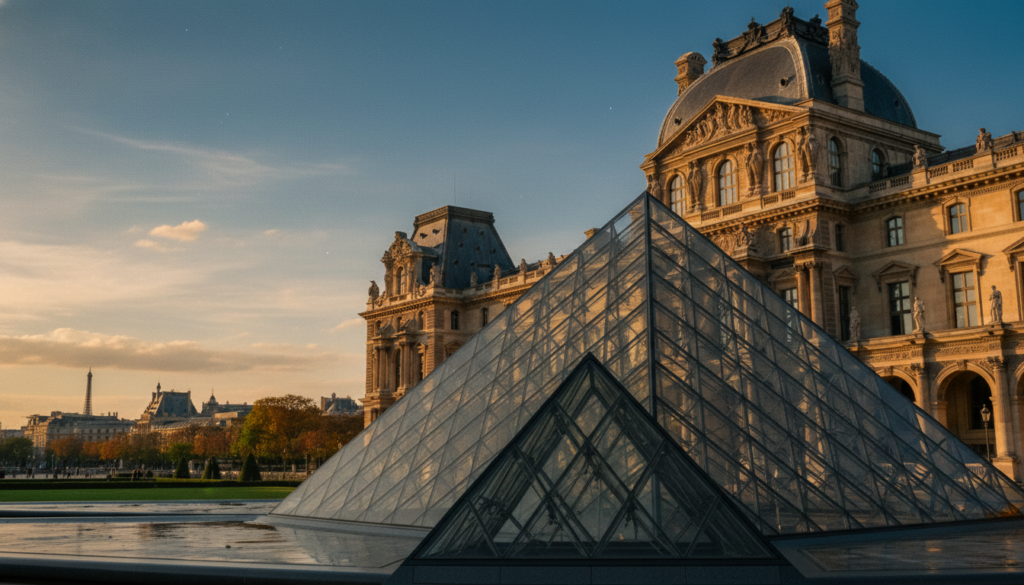
Paris is a treasure trove for art lovers, with museums showcasing humanity’s greatest creations. From vast palaces to cozy galleries, each offers a unique view of art history. Whether you love Renaissance, Impressionism, or modern art, Paris has something to inspire you.
Planning your museum visits can make your trip unforgettable. Exploring the best museums in Paris requires some prep to avoid crowds and make the most of your time.
The World’s Premier Art Museum
The Musée du Louvre is the world’s most visited museum, welcoming over 10 million annually. It’s housed in a former royal palace and boasts a vast collection spanning ancient to 19th-century art.
Highlights include the Mona Lisa, Venus de Milo, and Winged Victory of Samothrace. With about 35,000 objects on display, it’s a feast for the eyes.
However, the Louvre’s size can be overwhelming. You might spend days exploring without seeing everything. So, planning is key.
Booking louvre museum tours with guides is a smart move. They lead you to the best spots and share interesting stories. This way, you avoid long lines and focus on the highlights.
Here are some tips for visiting:
- Early morning sessions before 10 AM are peaceful and great for photos.
- Evening visits between 6-9 PM on Wednesdays and Fridays offer a calm atmosphere.
- Explore the Richelieu Wing for stunning Napoleon III Apartments instead of the Denon Wing.
- Book louvre museum tickets two weeks in advance to avoid sold-out days.
Visiting the Louvre highlights typically takes 3-4 hours with a guide or 5-6 hours on your own.
Impressionist Paradise in a Beaux-Arts Railway Station
The Musée d’Orsay is a gem in a converted train station. It focuses on French art from 1848 to 1914, with an impressive collection of Impressionist and Post-Impressionist works.
See masterpieces by Monet, Van Gogh, Degas, Renoir, and Cézanne. The building’s glass ceiling and gilded clock add to the experience.
Many prefer the musée d’orsay for its manageable size. You can see the highlights in two to three hours without getting tired.
Visit early or after 4 PM to avoid crowds. Start with the ground floor before heading upstairs.
Modern Art in an Inside-Out Building
The Centre Pompidou is a bold departure from traditional museums. Its colorful pipes and exposed structure make it a work of art itself.
Inside, find Europe’s largest modern and contemporary art collection. Discover works by Picasso, Matisse, and Warhol in a variety of mediums.
The centre pompidou offers a unique experience. It showcases abstract expressionism, pop art, and cutting-edge works that spark conversation.
Don’t miss the rooftop terrace for stunning views of Paris. It’s a highlight for many visitors.
Monet’s Water Lilies Sanctuary
The Musée de l’Orangerie is a serene haven in the Tuileries Gardens. It features eight monumental Water Lilies paintings by Monet in two oval rooms.
These murals envelop you in Monet’s world. The curved walls and natural light create a contemplative atmosphere.
The musée de l’orangerie also has an impressive collection of Impressionist and Post-Impressionist paintings downstairs. Discover works by Renoir, Cézanne, and Picasso.
Plan for about one hour to fully enjoy the Water Lilies and downstairs galleries. It’s a great addition to a day in the Tuileries Gardens or Musée d’Orsay.
For a comprehensive art experience, consider the Paris Museum Pass. It covers major museums and saves you time and money.
Historic Monuments and Architectural Treasures
Paris is full of historic monuments that tell amazing stories. These buildings show off the city’s art and royal past. They are some of the top sights for those who love history and design.
Each monument gives a peek into different times in French history. You’ll see everything from medieval chapels to grand buildings. Visiting these places helps you understand how Paris has changed over time.
A Masterpiece of Gothic Brilliance
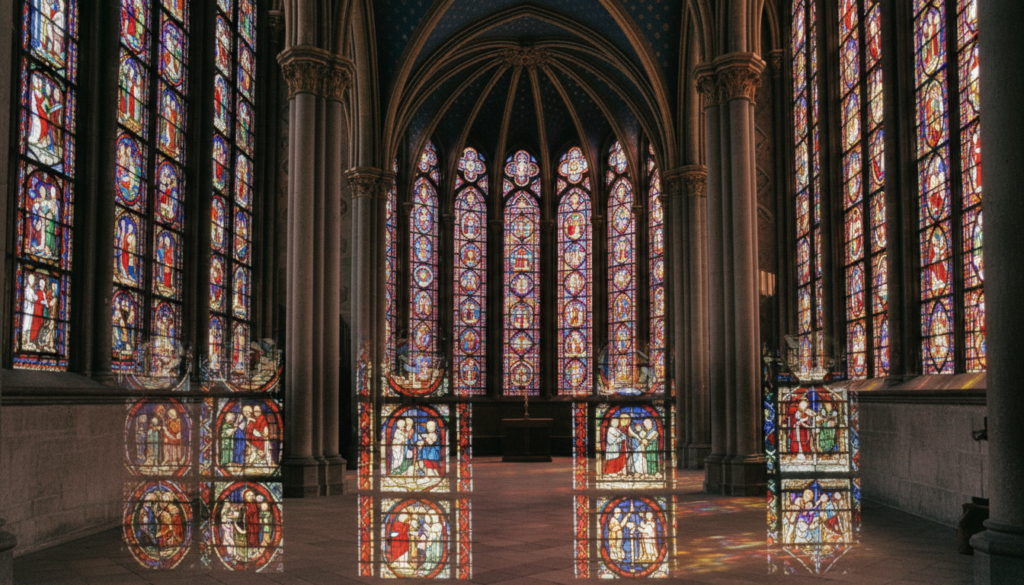
Sainte-Chapelle is a favorite among visitors. King Louis IX built it in the 13th century to house sacred relics. Its beauty is truly breathtaking.
Inside, you’ll see incredible stained glass windows. These windows show over 1,000 biblical scenes. Most of the glass is from the 1200s, making sainte-chapelle a treasure trove of medieval art.
Getting in costs €19. Book ahead to avoid long lines. It’s best to visit on a sunny day to see the stained glass at its best.
Key highlights include:
- Original 13th-century stained glass depicting biblical narratives
- Gothic architectural elements showcasing medieval craftsmanship
- Intimate chapel setting that creates powerful atmosphere
- Upper chapel with stunning rose window designs
Napoleon’s Final Resting Place and Military History
Les Invalides and Napoleon’s Tomb take you on a journey through French military history. Napoleon’s tomb is in a grand chapel that was once a royal church. The building also sheltered Allied pilots in World War II.
The complex has several military museums. These museums show French military history from medieval times to World Wars. You can see armor, weapons, uniforms, and more.
Visiting les invalides and napoleon’s tomb takes about two to three hours. The golden dome is a famous Paris landmark. You might also want to visit the nearby Rodin Museum.
The Nation’s Most Distinguished Citizens
The Panthéon was once a church but now honors France’s greatest minds. Famous people like Voltaire and Marie Curie are buried here. They made big contributions to literature, philosophy, science, and politics.
The building’s neoclassical design is impressive. The panthéon has a huge dome inspired by Rome’s Pantheon. Inside, you’ll see murals of French history and St. Genevieve’s life.
From the colonnade, you get great views of Paris. There’s even a science exhibit that shows the Earth’s rotation. This monument is a mix of history, architecture, and national pride.
Opulent Opera House Splendor
The Palais Garnier Opera House is a stunning example of Second Empire architecture. Napoleon III built it in the late 1800s for the Paris Opera. Its exterior is just a hint of what’s inside.
During the day, you can explore rooms that are even more impressive than you expect. The grand marble staircase and the Grand Foyer with gold leaf and chandeliers are breathtaking.
The 1,979-seat auditorium has a famous ceiling painting by Marc Chagall. You can see the theater and the Phantom of the Opera’s box. Tickets for a self-guided tour cost €15, and the multimedia guide is €8 more.
The multimedia guide offers:
- Fascinating historical context about the opera house construction
- Visual overlays that show original designs and changes
- 90-minute comprehensive tour through all accessible areas
- Stories behind the Phantom of the Opera legend
Check the palais garnier opera house opening times before visiting since they sometimes close for performances and rehearsals. The opera house operates as a working venue, so access to certain areas may vary daily. Booking tickets online saves time and guarantees entry during your preferred time slot.
These architectural treasures are part of Paris’s rich heritage. Each site offers a unique view of French history, art, and culture. Spending enough time exploring these monuments will give you unforgettable experiences and a deeper appreciation for Paris’s architectural legacy.
Must-See Tourist Attractions in Paris Along the Seine
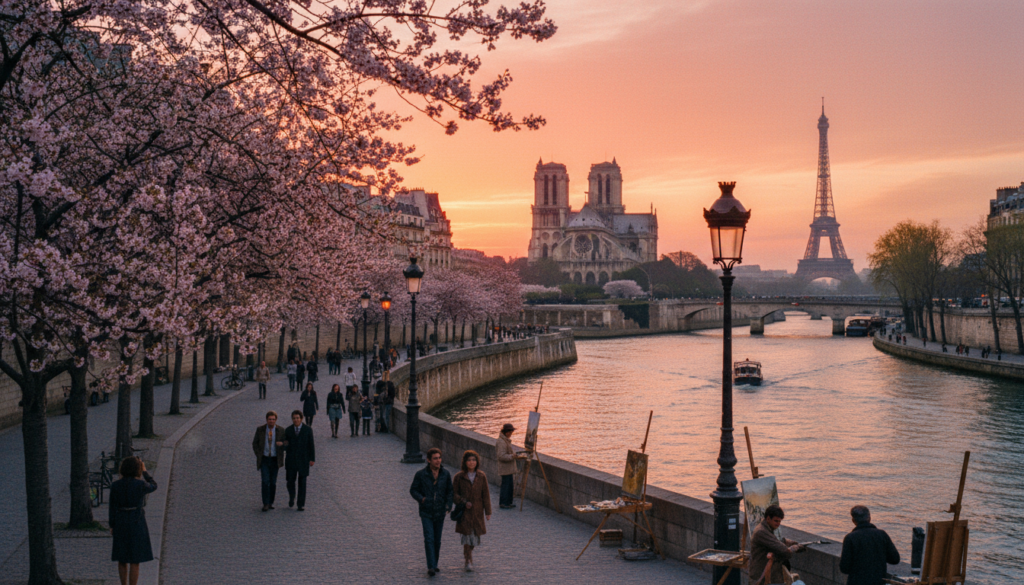
The Seine River is the heart of Paris, where history meets modern charm. Exploring the must-see tourist attractions in Paris along the Seine offers a romantic and picturesque experience. This waterway has been central to Parisian life for centuries, showcasing the city’s beauty.
The riverbanks offer a unique view of the city’s architecture and culture. You can stroll across ornate bridges, cruise past iconic monuments, or relax along walkways. Each attraction along the Seine tells a story of Parisian elegance and charm.
The Most Beautiful Bridge in Paris
Pont Alexandre III is the most ornate and photogenic bridge in Paris. Built for the 1900 World’s Fair, it features Art Nouveau designs and magnificent lamps. It symbolizes diplomatic friendship through architectural beauty.
Walking across this bridge offers stunning views. On one side, you’ll see Les Invalides with its golden dome. On the other, the Grand Palais showcases its Belle Époque architecture.
The best time to photograph Pont Alexandre III is during sunset. The golden light illuminates its decorative elements, creating a photographer’s dream scene.
Paris’s Oldest Standing Bridge
Pont Neuf and Île de la Cité offer historical charm. Despite its name, this is actually Paris’s oldest standing bridge. It connects both banks of the Seine at the western tip of Île de la Cité, the island that serves as the historical heart of Paris.
This island houses both Notre-Dame Cathedral and Sainte-Chapelle, making it a concentrated area of historical treasures. Strolling across the bridge gives you access to explore quiet corners and experience the very birthplace of Paris.
“The Seine is the only river in the world that runs between two bookshelves.”
Along the Pont Neuf and Île de la Cité area, you’ll discover the famous bouquinistes—book sellers in distinctive green boxes. They have been selling vintage books, prints, and art along the Seine for over 300 years. These vendors have become an iconic part of Parisian culture, recognized by UNESCO as part of the city’s intangible heritage.
Classic River Cruise Experience
A Bateaux Mouches sightseeing cruise offers a unique perspective of Paris. These classic riverboats depart from the Right Bank near the Eiffel Tower and glide past major monuments. You’ll see Notre-Dame, the Louvre, Musée d’Orsay, and numerous beautiful bridges—all from the comfort of your seat.
Seine river cruises offer excellent value for orientation and sightseeing. A standard one-hour cruise costs around €17 when departing from in front of the Eiffel Tower. If you’re planning to visit multiple attractions, seine river cruises paris are included in the Go City Pass, providing significant savings.
You don’t need to book an expensive dinner or lunch cruise to enjoy the experience. Simply sitting back and soaking in the romantic ambiance works perfectly well. However, if you want something special, dinner cruises with live music run around €75-€100 and create an unforgettable evening.
The best time for a seine river cruise paris is before dinner or around sunset. Evening cruises when monuments are illuminated create an especially magical and romantic experience. Some cruises even navigate underground through historic canal sections, adding an unexpected adventure to your journey.
Pedestrian-Friendly Riverside Walkways
The Berges de Seine Promenade transformed former highways into pedestrian-friendly spaces. You can stroll, jog, or simply relax along the water’s edge while enjoying beautiful views of the city’s architecture.
The Left Bank section between the Musée d’Orsay and Pont de l’Alma is particularly appealing. Here you’ll find floating gardens, outdoor cafés, and exercise areas that create a vibrant community atmosphere. The Berges de Seine Promenade shows a different side of Paris—one focused on quality of life and public spaces rather than just historic monuments.
These promenades are perfect for morning runs, afternoon walks, or evening picnics. You can discover quiet corners away from tourist crowds while still remaining in the heart of the city. Local Parisians use these spaces daily, making them ideal for authentic cultural immersion.
For the best Seine experience, consider these practical tips. Book your river cruise tickets in advance, especially during peak season. Time your cruise for late afternoon or sunset when the light is most beautiful. Allow yourself plenty of time to wander along the riverbanks without rushing. The timeless romance that defines Paris reveals itself most clearly when you’re not hurrying from one attraction to the next.
Essential Parks and Gardens
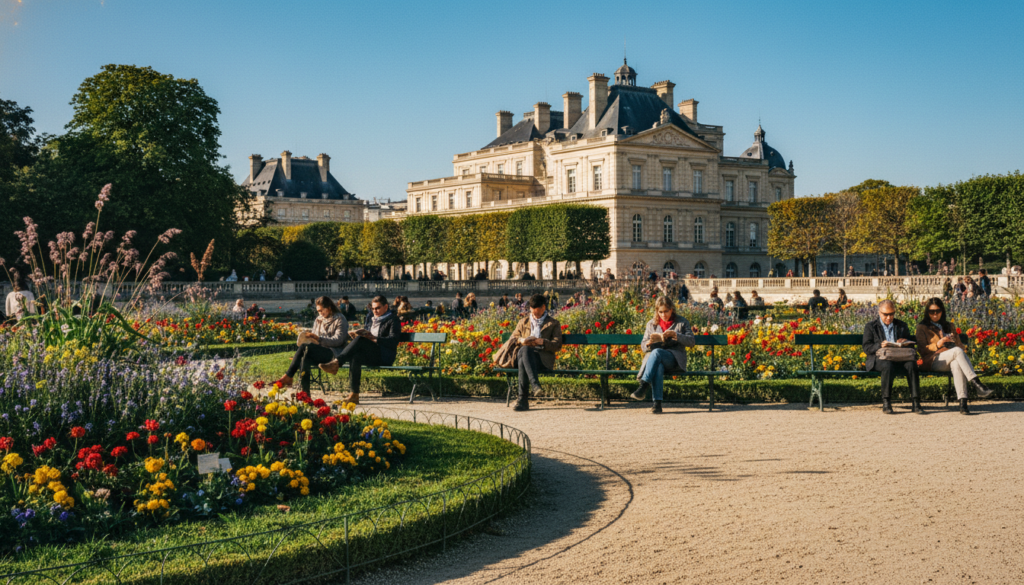
Paris’s parks and gardens are peaceful spots for a break. They offer a chance to see authentic Parisian life. You can find manicured lawns, historic fountains, and tree-lined paths where locals enjoy reading, picnicking, and the outdoors.
Each park shows a different side of French design and culture. From formal 17th-century gardens to dramatic 19th-century parks, they reveal Paris’s love for green spaces. Spend an afternoon here without spending a euro, making them great for your Paris trip.
A 23-Hectare Oasis of Parisian Elegance
The jardin du luxembourg surrounds the Luxembourg Palace with 23 hectares of perfection. It has geometric flowerbeds, tree-lined paths, and the iconic Grand Bassin. Here, children sail model boats, a tradition that delights many.
Over 100 statues, including a Statue of Liberty replica, decorate the park. You can find green metal chairs to read or people-watch. The park is a favorite for students, chess players, and more.
Free concerts and events happen here during warmer months. The Medici Fountain is a romantic spot with Renaissance-style architecture. This garden captures Parisian park culture, blending relaxation and elegance.
Historic Gardens Connecting the Louvre to Place de la Concorde
The jardin des tuileries stretches between the Louvre and Place de la Concorde. It has a grand promenade, trees, and fountain pools. Parisians gather here to sunbathe and rest.
Artists like Rodin and Maillol have sculptures here. You can see spectacular Eiffel Tower views from certain spots. The design reflects French love for order and symmetry.
The jardin des tuileries hosts a Christmas market with an ice rink and stalls. It’s open year-round, offering a peaceful break after the Louvre. Free admission makes it accessible to all.
A Dramatic Landscape in the 19th Arrondissement
Parc des buttes-chaumont offers a unique experience in a less touristy area. Built in the 1860s on a quarry site, it has dramatic landscapes unlike other French gardens. A man-made lake and a temple on a 50-meter cliff dominate the park.
Walking trails, waterfalls, and suspension bridges add charm to parc des buttes-chaumont. It follows the English garden style with irregular paths and natural planting. Locals enjoy picnics, jogging, and walking dogs here.
Views from the temple’s summit reward climbers. The park is a favorite for families and couples seeking a local experience. It’s a hidden gem beyond central Paris.
An Elegant Retreat Near the Louvre
The palais royal gardens offer tranquility near Rue de Rivoli and the Louvre. They have manicured hedges, gravel paths, and benches. The area’s arcades house upscale boutiques and restaurants, adding to the elegance.
Daniel Buren’s art installation contrasts with the 17th-century architecture. You can stroll through the gardens for free, enjoying the shade of mature trees. The peaceful ambiance makes this space feel like a secret in central Paris.
Must-See Tourist Attractions in Paris by Neighbourhood
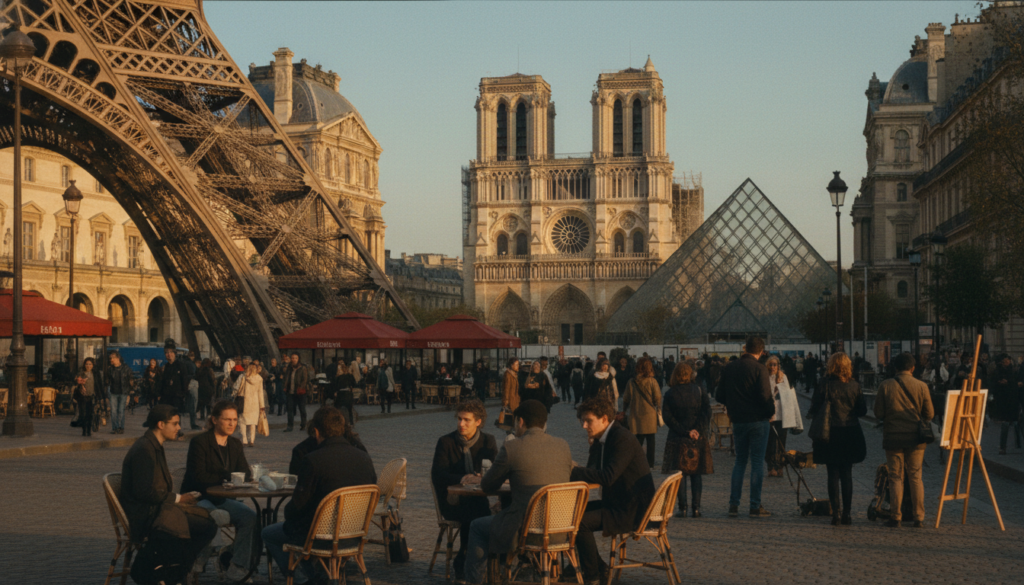
Paris is more than its famous landmarks. It’s the diverse neighborhoods that make it special. Each area has its own story and vibe. Exploring must-see tourist attractions in Paris by neighbourhood lets you feel the city’s true spirit.
Knowing the Paris arrondissements helps you find these unique spots. Each neighborhood has something special. From artistic hills to intellectual streets, Paris has much to offer beyond the usual views.
Le Marais and Place des Vosges
Le Marais is one of Paris’s most charming areas. Located in the 3rd and 4th arrondissements, it’s a historic gem. Its narrow cobblestone streets have stayed unchanged for centuries.
Place des Vosges is the heart of Le Marais. Built in the early 1600s, it’s a beautiful square with red-brick buildings. The manicured gardens in the center are perfect for a peaceful stroll.
Le Marais offers a mix of old and new. Rue des Francs-Bourgeois has trendy shops and cafés. You’ll find artisanal treats and hidden courtyards around every corner.
The area is also known for its diversity. Rue des Rosiers has authentic falafel in the Jewish quarter. Art galleries show contemporary works in 17th-century mansions. This blend creates a unique atmosphere.
Montmartre and Place du Tertre
The Montmartre district takes you back to bohemian Paris. Located on a hill in the 18th arrondissement, it was once home to famous artists. Picasso, Van Gogh, Degas, and Toulouse-Lautrec all lived here.
Today, Montmartre and Place du Tertre still celebrate their artistic heritage. Place du Tertre is filled with artists painting portraits. While prices can be high, watching them work captures the area’s creative spirit.
Exploring the Montmartre neighborhood reveals charming surprises. Narrow streets wind up the hill past historic windmills. Square Marcel Bleustein Blanchet offers stunning views of Sacré-Cœur without the crowds.
Keep in mind, Montmartre is hilly. Lots of stairs connect different levels. A small funicular runs from the carousel area up to Sacré-Cœur if you prefer to save your energy.
For the best experience, take Montmartre neighborhood walking tours in the early morning. Before the crowds arrive, you’ll see the authentic village charm. Local spots offer better value and atmosphere than the famous cafés.
Saint-Germain-des-Prés
The Left Bank’s Saint-Germain-des-Prés neighborhood is sophisticated. It’s the intellectual heart where philosophers once debated. Jean-Paul Sartre held court at cafés like Les Deux Magots and Café de Flore.
Today, the area is still refined. Beautiful boulevards have antique shops and designer boutiques. Art galleries showcase classic and contemporary works. The Saint-Germain-des-Prés church, dating to the 6th century, is the oldest in Paris.
There are wonderful boutique hotels and cafés throughout. The dining scene ranges from classic bistros to Michelin-starred restaurants. This atmosphere attracts visitors seeking elegance and culture.
Latin Quarter and the Sorbonne
The Latin Quarter and the Sorbonne are full of youthful energy. Students have studied here since the Middle Ages. The prestigious Sorbonne University anchors this lively neighborhood on the Left Bank.
Narrow medieval streets create a maze worth exploring. You’ll find the Panthéon, Shakespeare and Company bookstore, and ancient Roman ruins at the Cluny Museum. Luxembourg Gardens provides green space for relaxation.
Budget-friendly restaurants cater to students. You can enjoy excellent meals without breaking the bank. The scholarly tradition blends with vibrant nightlife, creating an energetic atmosphere.
Don’t miss the chance to wander and get lost. Some of Paris’s most magical moments happen when you stumble upon a perfect café or hidden courtyard. Food tours let you taste local specialties while learning neighborhood history.
| Neighborhood | Best Known For | Top Attraction | Ideal Visit Time |
|---|---|---|---|
| Le Marais | Medieval architecture, trendy boutiques, diverse culture | Place des Vosges | Afternoon to evening |
| Montmartre | Bohemian art scene, hilltop views, village atmosphere | Place du Tertre and viewpoints | Early morning |
| Saint-Germain-des-Prés | Literary history, sophisticated cafés, luxury shopping | Historic cafés and churches | Mid-morning to lunch |
| Latin Quarter | Academic heritage, student energy, medieval streets | Sorbonne and Panthéon | Any time of day |
Each neighborhood deserves at least half a day to explore. Montmartre neighborhood walks are best when you allow time to get lost. The winding streets and unexpected discoveries make this area rewarding for curious travelers.
Join guided walking tours for deeper insights. Hidden Montmartre tours reveal secrets that casual visitors miss. Food-focused tours combine tastings with historical context. These experiences enhance your understanding of how each neighborhood contributes to Paris’s unique character.
Palaces and Royal Estates Worth the Journey
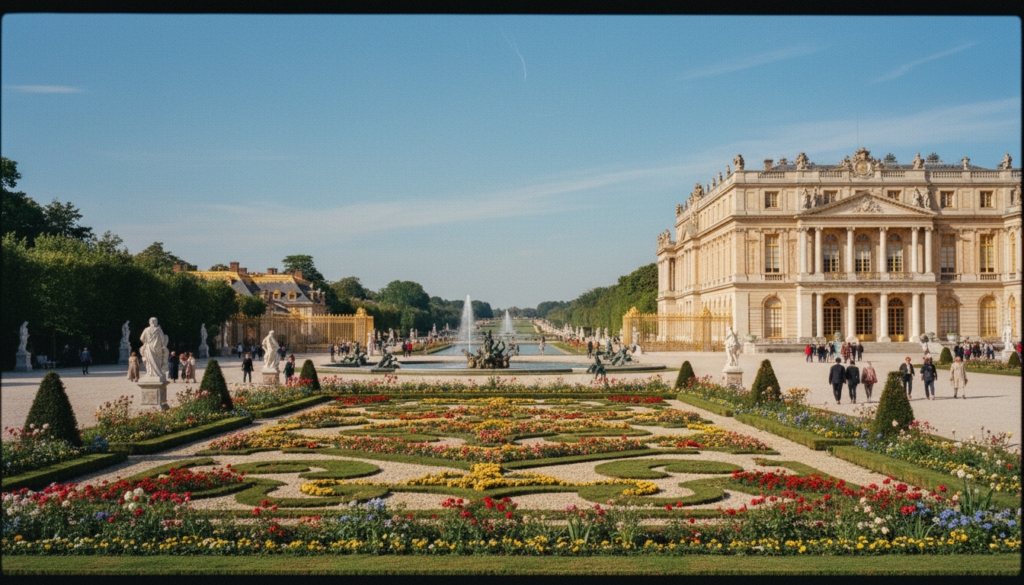
Exploring outside Paris reveals stunning royal estates. These places show the grandeur of French history. Each palace has its own story and architectural wonders.
The Palace of Versailles is a top choice for a day trip. It’s a symbol of French power and beauty. Visitors are amazed by its stunning beauty.
The Ultimate Royal Experience
The Palace of Versailles is a masterpiece of Baroque architecture. You can get there by train for €4 each way. Or, take a guided tour for easy travel.
The Hall of Mirrors is famous for its 357 mirrors. It’s where the Treaty of Versailles was signed. Walking through these halls feels like stepping into luxury.
Tickets to the palace and gardens cost €20-€27. Tours with transportation and skip-the-line access are available. Spend at least half a day to see it all.
The gardens have beautiful patterns and statues. They also have fountains with water shows. Marie Antoinette’s hamlet is a charming spot.
Versailles hosts special events all year. The Fêtes Galantes in June is a fancy celebration. The Grand Masked Ball is a night of 18th-century dress.
A Quieter Royal Alternative
Château de Fontainebleau is just as grand but less crowded. It was a royal home for centuries. You’ll see different architectural styles.
The château has medieval and Renaissance parts. Napoleon’s apartments show his taste. The park and forest are peaceful.
Château de Fontainebleau is less busy than Versailles. You can see details slowly. It’s perfect for a calm palace visit.
Medieval Fortress Within City Limits
Château de Vincennes is in eastern Paris. It’s a medieval fortress with a 170-foot-tall keep. It was a royal home before Versailles.
It was also a prison for famous people like the Marquis de Sade. Today, you can tour it and see the Sainte-Chapelle de Vincennes. It has beautiful stained glass.
The Bois de Vincennes park is nearby. You can get there by metro. It’s great for royal history close to home.
Elegant Arcades in Central Paris
The Palais Royal is in central Paris. The palace is not open, but the gardens are. It’s a peaceful spot in the city.
The gardens are surrounded by 18th-century buildings. They have arcades with upscale boutiques and restaurants. There’s also a modern art installation.
You don’t need to book the Palais Royal. It’s open anytime. It’s a mix of history and modern art.
Comparing Your Palace Options
| Palace | Distance from Paris | Best Features | Ticket Price | Recommended Visit Duration |
|---|---|---|---|---|
| Palace of Versailles | 12 miles southwest | Hall of Mirrors, fountains, Marie Antoinette’s hamlet | €20-€27 | Half day to full day |
| Château de Fontainebleau | 34 miles southeast | Napoleon’s apartments, 130-acre park, fewer crowds | €13 | 4-5 hours |
| Château de Vincennes | Within Paris (metro accessible) | Medieval keep, Sainte-Chapelle, Bois de Vincennes park | €9 | 2-3 hours |
| Palais Royal | Central Paris (walking distance) | Historic arcades, peaceful gardens, Buren columns | Free | 1-2 hours |
Book Versailles tickets early as they sell out. Visit weekdays for fewer crowds. Check fountain show times for water displays.
Each palace has its own charm. Versailles is grand, Fontainebleau is intimate. Vincennes is medieval, and Palais Royal is elegant. Together, they show French royal life through the ages.
Must-See Tourist Attractions in Paris for Culture and Entertainment
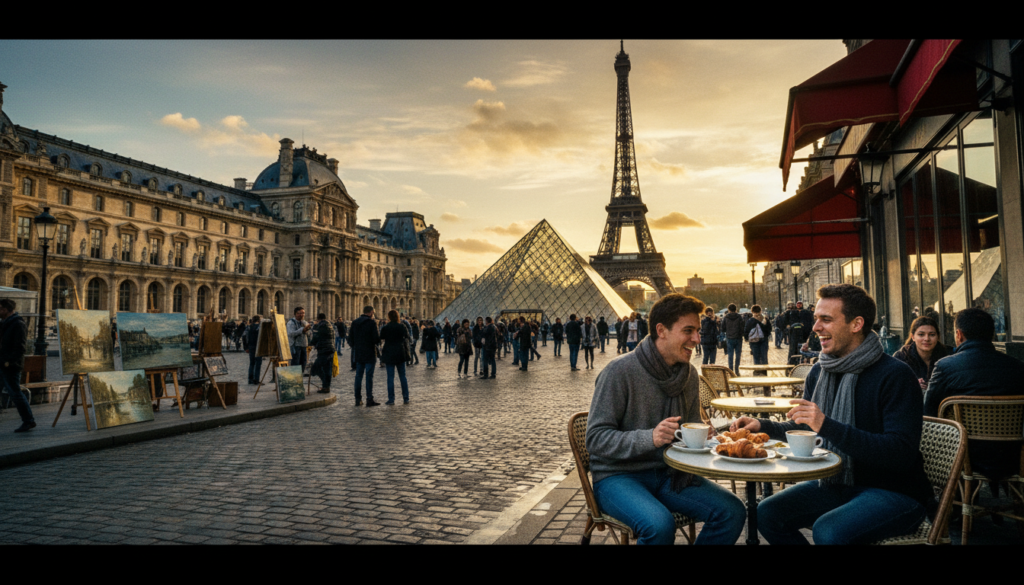
Looking to explore Paris beyond the usual spots? These must-see tourist attractions in Paris for culture and entertainment offer unique experiences. From legendary cabaret shows to underground ossuaries, they show the city’s creative and mysterious sides. Each attraction is different, whether you love spectacular performances or are fascinated by darker historical curiosities.
These cultural experiences cater to all interests and schedules. You can spend an evening watching world-class entertainment or explore underground tunnels. The variety ensures every traveler finds something memorable.
Moulin Rouge
The Moulin Rouge has been entertaining since 1889 with its iconic cabaret performances. This legendary venue delivers pure spectacle with elaborate costumes. The experience is touristy but remains one of Paris’s most famous entertainment destinations.
The show features high-energy can-can dancing by large companies of dancers, many of whom perform topless. Between the big dance numbers, you’ll see incredibly talented variety acts. The choreography is basic, but the visual extravaganza is the main attraction.
Shows run at 9pm and 11pm, making it a late night. Tickets start at over €118 per person for just the show with champagne. The venue packs guests into narrow, uncomfortable tables and chairs, so comfort isn’t a priority.
Skip the dinner show unless you enjoy cramped tables for nearly four hours. Instead, enjoy dinner at a quality restaurant beforehand. Book several weeks in advance, especially for the earlier 9pm show, and arrive early to secure better seat assignments.
The Catacombs of Paris
The Catacombs of Paris offer a haunting underground journey through tunnels lined with human bones and skulls. This macabre attraction descends 20 meters below the city streets into former limestone quarries. The bones of approximately six million Parisians rest here, artfully arranged into walls and decorative patterns.
The history dates back to the late 1700s when Paris’s cemeteries were overflowing and posed serious health hazards. Officials decided to move remains underground into abandoned quarry tunnels. Today, you’ll walk through dark, damp passages surrounded by these carefully stacked skeletal remains.
This experience isn’t for everyone. The confrontation with mortality and the eerie atmosphere can be unsettling. However, many find the historical significance and unique presentation absolutely fascinating.
The Catacombs limit daily visitors, so tickets sell out quickly. Book well in advance online to guarantee entry. Wear comfortable shoes and bring a light jacket, as temperatures remain cool underground year-round.
Père Lachaise Cemetery
Père Lachaise Cemetery transforms a typical graveyard visit into a beautiful cultural experience. Spanning 110 acres, this is Paris’s largest cemetery and attracts around 3.5 million visitors annually. The tree-shaded paths lead you through over 70,000 plots containing some of history’s most influential figures.
You’ll discover the graves of Oscar Wilde, whose tomb is famously covered in lipstick kisses from admirers. Jim Morrison’s grave draws pilgrims who leave bottles and flowers. Other notable residents include Édith Piaf, Frédéric Chopin, Marcel Proust, and Gertrude Stein.
The cemetery functions as much as an outdoor sculpture garden as a burial ground. Stunning funerary art ranges from simple headstones to elaborate monuments and mausoleums. The peaceful atmosphere and artistic tombstones create a moving experience that celebrates lives well-lived.
Pick up a map at the entrance to help locate famous graves, or join a guided tour for deeper historical context. The cemetery is free to enter and open daily, making it an accessible addition to any Paris itinerary.
Atelier des Lumières Immersive Art Experience
The Atelier des Lumières Immersive Art Experience represents Paris’s cutting-edge approach to art exhibitions. This former foundry projects famous paintings onto every surface, creating a completely immersive environment. You’ll be surrounded by floor-to-ceiling, wall-to-wall moving images of masterworks.
Exhibitions change periodically, featuring artists like Van Gogh, Monet, or Klimt. The projections are accompanied by music that creates a multisensory experience. Images move and transform around you, bringing static paintings to life.
This venue appeals especially to those who find conventional museums tiring or families with children who lack patience for standard galleries. The dynamic presentation keeps attention engaged while still appreciating great art. You can walk through the space at your own pace or simply sit and absorb the visual spectacle.
Check which exhibition is currently showing before booking your tickets. Each presentation runs approximately 30-40 minutes and loops continuously, so you can arrive anytime during operating hours. The venue also features a shorter complementary exhibition alongside the main show.
Family-Friendly Must-See Attractions

When you bring children to Paris, you’ll find the city offers more than museums and monuments. Exciting family attractions await around every corner. Paris knows young travelers need engaging experiences that spark their imagination. It also gives parents memorable moments.
These attractions blend education with entertainment, creating experiences your whole family will treasure. You can choose from classic amusement parks, hands-on learning environments, and aquatic wonders that captivate visitors of all ages.
Europe’s Most Accessible Disney Resort
Disneyland Paris sits just 20 miles from central Paris and delivers the Disney magic you know in a surprisingly affordable European package. The resort features two distinct parks that offer completely different experiences for your family.
You’ll find Disneyland Park brings classic Disney attractions to life with familiar characters and iconic rides. Disney Studios Park focuses on movies and animation, giving kids behind-the-scenes glimpses into filmmaking magic. Unlike American Disney parks, this European version offers significantly lower ticket prices and fewer overwhelming crowds.
Getting to disneyland paris couldn’t be easier. The RER A train whisks you from central Paris directly to the resort in about 40 minutes. You can also join organized tours that handle all transportation logistics, making this a stress-free family excursion.
- More affordable admission compared to US Disney parks
- Less crowded, allowing shorter wait times for attractions
- Easy train access from Paris city center
- Two parks offering diverse experiences in one location
- European charm blended with classic Disney storytelling
Europe’s Premier Interactive Science Museum
The Cité des Sciences et de l’Industrie ranks as Europe’s largest science museum and transforms learning into an adventure. Located in Parc de la Villette, this modern facility engages children’s natural curiosity through hands-on discovery.
Your kids can explore a real submarine, visit the planetarium, and interact with exhibits about light, sound, mathematics, and space. The museum takes a refreshingly modern approach that contrasts beautifully with Paris’s traditional art museums. This makes it perfect when your family needs a break from looking at paintings and sculptures.
The special Cité des Enfants sections deserve particular attention. These areas divide by age group—one for children 2-7 and another for ages 5-12. Each section offers activities specifically designed to teach through play, ensuring age-appropriate engagement for your young travelers.
A Historic Amusement Park with Parisian Charm
The Jardin d’Acclimatation combines a children’s amusement park with beautiful gardens on the edge of the Bois de Boulogne. This beloved park has entertained Parisian families since 1860, offering old-fashioned charm that feels authentically French.
You’ll discover over 40 rides and attractions designed specifically for younger children. Roller coasters, carousels, and playgrounds provide traditional amusement park fun. The petting zoo, puppet shows, and creative workshops add educational elements that enrich the experience.
This park provides a lovely alternative to the intensity of larger theme parks. Your children burn off energy while you enjoy the pleasant park setting and watch them experience attractions designed for their age group. The jardin d’acclimatation feels more intimate and manageable than massive theme parks, perfect for families with younger kids.
Underwater Wonders Near the Eiffel Tower
The Aquarium de Paris houses over 10,000 fish and marine creatures in one of France’s largest aquariums. Its convenient location in the Trocadéro Gardens, directly across from the Eiffel Tower, makes planning your day remarkably simple.
Children love the dramatic shark tank that showcases these magnificent predators up close. Touch pools let curious hands gently pet small fish, creating tactile memories they’ll talk about for years. The jellyfish displays glow in darkened rooms, mesmerizing young visitors with their graceful movements.
The aquarium de paris goes beyond simple observation. Interactive workshops teach kids about marine ecosystems, while feeding shows demonstrate animal care and ocean conservation. A cinema screens ocean-themed movies that educate and entertain simultaneously.
You can combine your aquarium visit with the Eiffel Tower for a full day of family activities in one area. This strategic planning saves travel time and keeps younger children from getting exhausted by constant movement across the city.
Consider these practical tips for family visits:
- Pace your schedule with playground breaks between monument visits
- Take advantage of family-friendly tours featuring treasure hunts and interactive activities
- Remember most Paris museums offer free admission for children under 18
- Request family-focused audio guides or activity booklets at museum entrances
- Consider renting an apartment with a kitchen to accommodate picky eaters and save money
Paris rewards families who balance cultural exploration with kid-specific attractions. Your children experience the magic of France while enjoying activities designed just for them, creating vacation memories that satisfy every generation.
How to Plan Your Visit to Must-See Tourist Attractions in Paris
Planning your Paris trip smartly makes it stress-free and amazing. You can save time and money with the right tips.
Paris Museum Pass and City Cards for Savings
The Paris Museum Pass lets you into over 60 museums and monuments. You can pick from 2-day, 4-day, or 6-day passes. It covers big spots like the Louvre, Musée d’Orsay, Arc de Triomphe, and Versailles.
Go City passes include museum entry, tours, and activities. They also offer Seine river cruises and guided tours. If you’re visiting many places each day, these passes are a great deal.
Best Times of Year to Avoid Peak Crowds
Summer is the busiest time in Paris. But April, May, September, and October have nice weather and fewer people. Winter is quiet but it’s darker.
Go to famous places before 9am or after 6pm if you can. Some museums stay open late with fewer people. Planning for these times makes your visit better.
Skip-the-Line Tickets and Advance Booking Strategies
Book tickets for the Eiffel Tower, Louvre, and Sainte-Chapelle weeks in advance. They sell out fast in summer. Skip-the-line tickets and booking early save you hours of waiting.
Choose the earliest time slots. Morning visits mean fewer people and better photos. Your careful planning lets you enjoy more and wait less.
FAQ
What are the absolute must-see tourist attractions in Paris for first-time visitors?
First-time visitors should see the Eiffel Tower, Arc de Triomphe, and Sacré-Cœur Basilica. Don’t miss Notre-Dame Cathedral. Art lovers will enjoy the Musée du Louvre and Musée d’Orsay.
Experience the Champs-Élysées and take a Seine River cruise. Explore charming neighborhoods like Montmartre and Le Marais. These attractions offer a quintessential Paris experience.
Is the Paris Museum Pass worth buying?
Yes, the Paris Museum Pass is worth it if you visit many museums. It covers over 60 attractions, including the Louvre and Arc de Triomphe. You can choose from 2, 4, or 6 days for €62, €77, or €92.
Visiting 3-4 major attractions daily can save you money. The pass also lets you skip lines, saving hours of waiting.
How far in advance should I book tickets for Paris attractions?
Book tickets for popular Paris attractions as soon as you book your flights and hotel. The Eiffel Tower and Palace of Versailles often sell out weeks or months in advance, especially in summer.
Book tickets 4-6 weeks before your visit. Choose early entry times to avoid crowds and look for skip-the-line options.
What’s the best way to visit the Louvre without feeling overwhelmed?
Avoid the crowded Denon Wing to see the Mona Lisa. Instead, book a guided tour like “Closing Time at the Louvre” for fewer crowds.
Explore the Richelieu Wing and Napoleon III Apartments for incredible art without the masses. Arrive early or late to avoid crowds.
Can I visit Notre-Dame Cathedral after the 2019 fire?
Yes, Notre-Dame Cathedral has reopened after the 2019 fire. You can visit the main cathedral for free by booking a time slot in advance. The restoration has made the cathedral even more beautiful.
Which offers better panoramic views of Paris—the Eiffel Tower or Arc de Triomphe?
The Arc de Triomphe offers 360-degree views, including the Eiffel Tower. The climb is manageable and less crowded than the Eiffel Tower. It’s considered the best viewpoint in central Paris.
Visiting the Eiffel Tower is an iconic experience. Try to visit both for the best views.
What’s the best time of year to visit Paris to avoid crowds?
April-May and September-October offer pleasant weather and fewer crowds than summer. Winter months have the fewest tourists, making them ideal for museum lovers.
Avoid summer if possible. Even in shoulder seasons, book popular attractions in advance.
Is a day trip to the Palace of Versailles worth it?
A day trip to Versailles is worth it. It’s the most popular excursion from Paris. The palace’s magnificence, from the Hall of Mirrors to the gardens, is breathtaking.
Plan to spend at least half a day there. Book tickets well in advance and consider a guided tour for skip-the-line access.
Which Paris museum is better for Impressionist art—the Louvre or Musée d’Orsay?
The Musée d’Orsay is better for Impressionist art. It houses the world’s finest collection of Impressionist masterpieces. The Louvre has some Impressionist works but focuses on older art.
The Musée d’Orsay offers a more intimate experience in a stunning converted train station. You can see the highlights in just two to three hours.
What are the best family-friendly attractions in Paris?
Disneyland Paris is a must for a day of Disney magic. The Cité des Sciences et de l’Industrie has interactive exhibits for kids. The Jardin d’Acclimatation combines amusement rides with beautiful gardens.
The Aquarium de Paris is near the Eiffel Tower. Many traditional attractions are also family-friendly, like Seine River cruises and exploring Montmartre.
How much time should I allocate for visiting Sainte-Chapelle?
Allocate about 45 minutes to 1 hour for Sainte-Chapelle. The actual time inside may be shorter. Factor in security screening and potential waiting time.
The stained glass windows are breathtaking. Take time to sit and absorb the ethereal light created by this 13th-century masterpiece.
Are Seine River cruises touristy or actually worth doing?
Seine River cruises are touristy but worth it. They offer a unique perspective of Paris. You’ll see major monuments like Notre-Dame and the Louvre.
Book tickets in advance and consider a late afternoon or evening cruise. The illuminated monuments create a magical experience.
What’s the difference between Montmartre and Le Marais neighborhoods?
Montmartre is a bohemian neighborhood with charming streets and Sacré-Cœur Basilica. It’s more touristy but offers stunning views. Le Marais is a historic district with preserved architecture and trendy boutiques.
Montmartre feels like an artistic village, while Le Marais offers sophisticated urban charm. Both neighborhoods have excellent restaurants and nightlife.
Should I visit the Musée de l’Orangerie or skip it?
You should visit the Musée de l’Orangerie, especially if you love Impressionist art. It offers a meditative experience with Monet’s Water Lilies paintings. The museum is small but delivers a profound artistic experience.
It’s conveniently located near the Louvre and Place de la Concorde. You can combine it with other attractions for a full day.
Is the Moulin Rouge cabaret show worth the high price?
The Moulin Rouge is worth it if you’re interested in seeing a legendary cabaret. The show features elaborate costumes and high-energy performances. It’s a spectacle that many visitors enjoy.
However, skip the dinner option and eat beforehand. Arrive early for better seat assignments. Consider the 9pm show to avoid late nights.
What makes the Palais Garnier Opera House a must-see attraction?
The Palais Garnier Opera House dazzles visitors with its opulent architecture and interiors. The grand staircase and Grand Foyer are breathtaking. The auditorium features Marc Chagall’s ceiling painting.
Upgrading to the multimedia audio-visual guide enhances the visit. It provides fascinating historical context and visual overlays. The palace inspired “The Phantom of the Opera” and represents 19th-century theatrical design.
How do I visit the Catacombs of Paris?
To visit the Catacombs of Paris, book timed-entry tickets well in advance. The entrance is at 1 Avenue du Colonel Henri Rol-Tanguy in the 14th arrondissement. You’ll descend 20 meters and walk through tunnels with the bones and skulls of six million Parisians.
The visit takes about 45 minutes to an hour. Be prepared for dark, damp conditions and 130 steps down and 83 steps up. It’s not recommended for those with mobility issues or claustrophobia.
Which Paris attractions are free to visit?
Many Paris attractions are free, including parks and gardens like Jardin du Luxembourg. You can explore neighborhoods like Montmartre and Le Marais for free. Walk across beautiful bridges and stroll the Berges de Seine Promenade.
Visit Père Lachaise Cemetery and admire the exterior of monuments like the Eiffel Tower. Most Paris museums offer free admission on the first Sunday of each month. Many are always free for EU residents under 26.
Can I see the main Paris highlights in just two or three days?
You can see many Paris highlights in two or three days with efficient planning. A well-planned two-day itinerary might include the Eiffel Tower, Arc de Triomphe, and a Seine River cruise on Day 1. Day 2 could be the Louvre, Notre-Dame, and Sainte-Chapelle.
Adding a third day allows you to visit the Musée d’Orsay, explore neighborhoods, and take a day trip to Versailles. Book all tickets in advance and use skip-the-line options.
What’s the best way to get from central Paris to Disneyland Paris?
The best way to reach Disneyland Paris is by taking the RER A train to Marne-la-Vallée/Chessy station. It takes about 40 minutes from central stations like Châtelet-Les Halles or Nation. Trains run frequently, and the journey is affordable (around €5 each way).
You can also join an organized tour that includes round-trip transportation. This option costs more and operates on a fixed schedule. The resort is only 20 miles from central Paris, making it an easy day trip.
Is it better to visit Versailles independently or with a guided tour?
Both options work well for Versailles. Visiting independently via the RER C train is straightforward and affordable. It gives you flexibility to explore at your own pace.
Joining a guided tour costs more but includes round-trip transportation and skip-the-line access. It offers expert commentary that brings the palace’s history to life. If you prefer not to navigate public transportation, a guided tour is a good choice. If you want to spend more time in the gardens, go independently.
What attractions in Paris are covered by the Go City Pass?
The Go City Paris Pass covers a wide range of attractions, including the Louvre, Musée d’Orsay, and Versailles. It also includes Seine River cruises, guided walking tours, and other activities. The all-inclusive options for 2, 3, 4, or 6 days let you visit unlimited included attractions.
It’s ideal for travelers who want to pack in as many experiences as possible. Calculate whether the pass saves money based on your specific interests. It offers excellent convenience and value for activity-packed itineraries.
Are the views from Sacré-Cœur Basilica worth the climb?
Yes, the views from Sacré-Cœur Basilica are worth the climb. You’ll enjoy sweeping panoramic views across Paris. The basilica itself is free to enter and features beautiful mosaics and architecture.
Take the funicular if you prefer to save your energy. The basilica is surrounded by the charming Montmartre neighborhood, offering excellent views and a village-like atmosphere.
What’s unique about the Atelier des Lumières compared to traditional museums?
The Atelier des Lumières offers a unique experience by projecting famous paintings onto every surface of a former foundry. It creates a completely immersive environment where you’re surrounded by moving images of artworks by masters like Van Gogh and Monet.
Unlike traditional museums, this multisensory experience envelops you in art with movement, sound, and scale. It’s especially appealing for those who find traditional museums tiring or for families with children.
Should I visit both the Louvre and Musée d’Orsay or choose one?
You should visit both the Musée du Louvre and Musée d’Orsay as they offer different collections and experiences. The Louvre focuses on ancient civilizations and Renaissance art, while the Musée d’Orsay specializes in Impressionist and Post-Impressionist art.
If you must choose one, consider your artistic preferences. Choose the Louvre for ancient Egyptian artifacts and Renaissance masterpieces. Choose the Musée d’Orsay for Impressionist works by Monet and Van Gogh in a stunning converted train station.
What makes Place des Vosges special compared to other Paris squares?
Place des Vosges is Paris’s oldest planned square with perfectly symmetrical red-brick buildings and arcaded walkways. It has remained virtually unchanged since the early 1600s, showcasing Renaissance urban planning at its finest.
Unlike busier squares, Place des Vosges maintains an elegant, peaceful atmosphere. You can sit on benches under the arcades and admire the harmonious architecture. It’s located in the heart of the Marais neighborhood, offering a charming area to explore.
Is Château de Fontainebleau a good alternative to Versailles?
Château de Fontainebleau is a good alternative to Versailles with comparable magnificence but fewer crowds. It showcases a fascinating evolution of French architecture and interior design. The 130-acre park and surrounding forest provide beautiful grounds to explore.
It’s less visited than Versailles, allowing you to appreciate the details without crowds. The downside is that it’s slightly harder to reach than Versailles. However, for a quieter palace experience with impressive royal history, Fontainebleau is worth the journey.
How can I avoid crowds at popular Paris museums?
To avoid crowds at popular Paris museums, book tickets for the earliest possible entry time (before 9am is ideal). Visit on weekdays rather than weekends. Avoid visiting during July-August when tourist crowds peak.
Purchase skip-the-line tickets or a Paris Museum Pass well in advance to bypass ticket queues. Consider visiting late afternoons (after 4pm) when day-trippers have left but the museum remains open. At the Louvre, explore the less-visited Richelieu Wing instead of fighting through the Denon Wing.
What’s the best neighborhood to stay in to be near must-see attractions?
The best neighborhoods for staying near must-see attractions include the 1st arrondissement (near the Louvre and Jardin des Tuileries), 4th arrondissement (Le Marais area near Notre-Dame and Sainte-Chapelle), 5th arrondissement (Latin Quarter near the Panthéon and Luxembourg Gardens), and 7th arrondissement (near the Eiffel Tower and Musée d’Orsay).
The 1st and 7th arrondissements place you closest to major monuments but tend to be more expensive and touristy. Le Marais and the Latin Quarter offer more authentic neighborhood character with excellent restaurants, cafés, and nightlife. All these areas offer excellent public transportation connections, making it easy to reach attractions throughout the city.