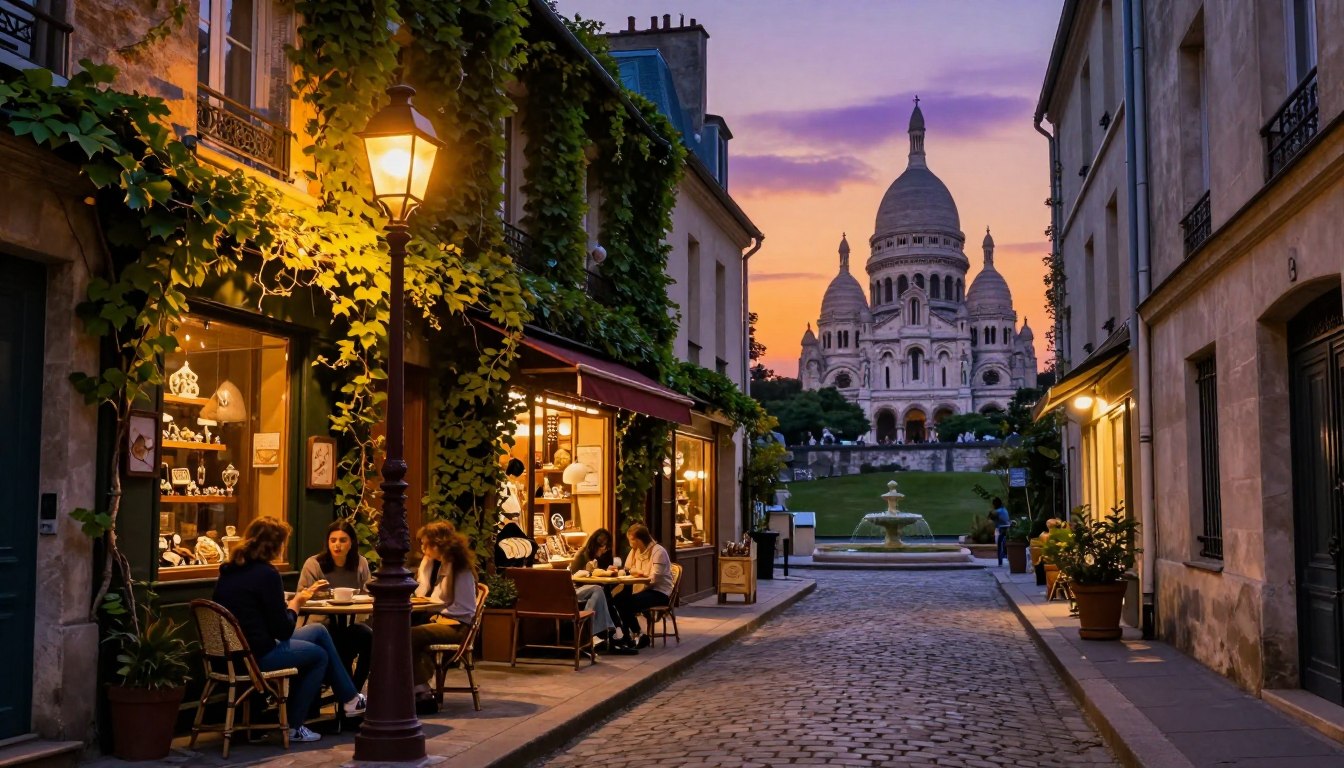
What if the best moments of the city wait one side street away from every famous sight?
I travel like a flâneur — I wander, I pause, and I let the streets guide me. You don’t need a frantic checklist to feel the city; you need a few small, deliberate detours.
This short list is for curious travelers who want real experiences without turning the trip into a scavenger hunt. Expect secret-feeling walks, tucked-away gardens, under-loved museums, and cozy corners inside big museums.
I’ll point to neighborhoods — Montmartre, Saint-Germain, Le Marais, Canal Saint-Martin and the Latin Quarter — so you can cluster stops and save time. I’ll also note how long each idea takes and the best time of day to go.
Pick what fits your pace and let the city do the rest.
Key Takeaways
- Wandering yields the best surprises; aimless walks can feel purposeful.
- This list balances iconic backdrops with quieter hidden gems.
- Neighborhood clusters help you save time and see more.
- Each suggestion includes timing and nearby pairings.
- Choose a few things that match your pace — less is often more.
How to Use This List of Hidden Gems in Paris
Start simple: pick a short walking tour of about 1.5–2 hours to get your bearings and learn how neighborhoods link. That first stretch saves time for the rest of the trip and gives you a clear way to move around without a map glued to your hand.
Think of the list as a menu, not a checklist. Choose 2–3 anchors each day and leave room to linger. My first-day strategy is a gentle orientation walk early on, then free roam later with more confidence.
“Group stops by arrondissement so you’re not crisscrossing the city; distances are shorter than they look.”
Try a simple daily rhythm: one big, structured activity + two small gems + one long sit at a café or garden. Book timed entries for high-demand things — Catacombs tickets sell out, so reserve those online.
| Plan Element | Example | Why it Helps |
|---|---|---|
| Orientation tour | 90–120 min neighborhood walk | Quick map of streets and local rhythm |
| Grouped stops | Cluster by arrondissement | Saves transit time, easier pacing |
| Flexible time | Keep one slot unplanned | Handles lines, energy dips, or people-watching |
Note accessibility: some spots have many stairs (Montmartre, Sacré-Cœur dome). If you’re tired, swap a museum block for a park bench — that pause still counts as Paris.
Hidden Attractions in Paris That Locals Actually Love
Some of the best places are the ones locals treat like everyday life—simple, useful, and easy to love.
I mean spots woven into daily life: parks where people walk dogs, a canal where friends meet, a market stall you visit every week. These are the places locals pick when they’re not entertaining guests.
Expect repeat categories: neighborhood streets, parks and gardens, low-key museums, markets, and riverbank hangs. Places like Parc des Buttes-Chaumont (19th), Canal Saint-Martin (10th), Parc Monceau (8th), and Le Marais (3rd/4th) show this well.
Some gems are plain to see—a free museum courtyard, a department-store rooftop, or a quiet wing of a famous museum. I’ll keep notes US travelers can use: which arrondissement, how long, and what’s nearby.
Tip: pin favorites on a map and build mini-routes. You don’t need perfect French—just a calm pace and curiosity to feel local life.
| Spot | Arrondissement | Quick plan |
|---|---|---|
| Parc des Buttes-Chaumont | 19th | 45–60 min stroll; bring a snack |
| Canal Saint-Martin | 10th | 30–90 min; café or picnic on the bank |
| Parc Monceau | 8th | 30–45 min; combine with a museum visit |
| Le Marais streets | 3rd/4th | 1–2 hours; market browsing and small museums |
Be a Flâneur in Under-the-Radar Neighborhood Streets
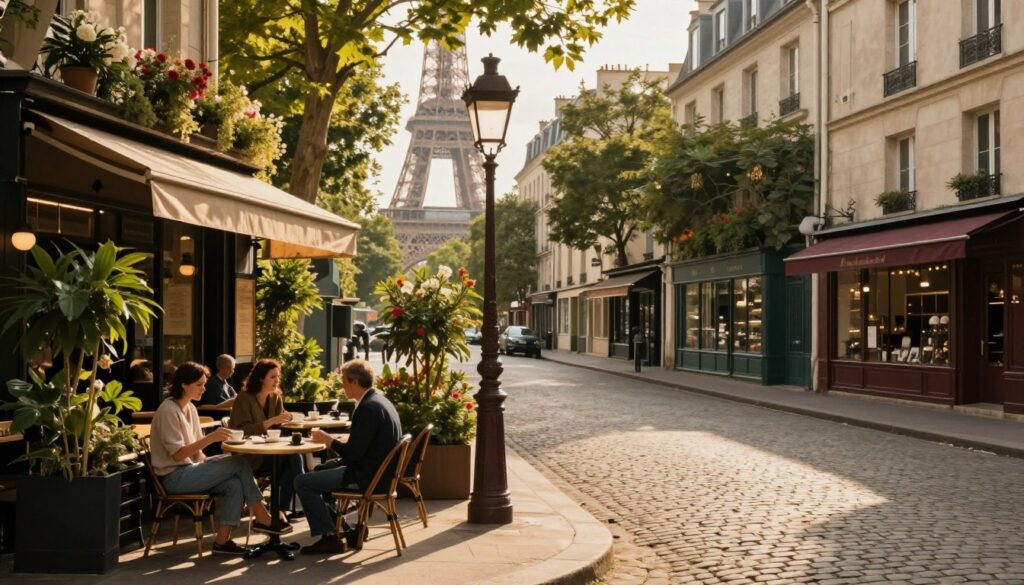
A good stroll is the simplest way to let a neighborhood tell its story. A flâneur is just someone who wanders without a strict plan — noticing small scenes, bakery windows, and life unfolding on the street.
Where to aim: try the Canal Saint-Martin edges, the back lanes of Le Marais, and the quieter bits of Saint-Germain. Pick one arrondissement and let it fill your afternoon; clustering stops keeps transit light and the walk pleasant.
Mini-mission: in Montmartre hunt a few stairways (it has 38) and the two surviving windmills — including Moulin Radet at 83 Rue Lepic — then stop when a café feels right.
This is the best free way to discover gems: you’ll spot courtyards, tiny galleries, and neighborhood bakeries without trying. While walking, window-shop, sit for coffee, step into a church, or detour for a small park when you see one.
“Go early morning or late afternoon in Montmartre if you want that secret-feeling vibe.”
- Choose one arrondissement per stroll to avoid fatigue.
- Look for small doors, tiled courtyards, and local bakeries.
- Be patient — the best finds happen when you slow down.
Paris Walks That Feel Like a Secret Even in Peak Season
Leave the plazas to the masses and take the ramps, alleys, and canal edges that invite lingering.
I like three simple walks that work when the city is slammed. First, the lower Seine riverbank from Île Saint-Louis toward Place de la Concorde; ramps and stairs give you quiet views below the main quays.
Second, the Canal Saint-Martin edges in the 10th — a calmer area where people sit by the water and small cafes line the route.
Third, hop through one covered passage for old-world charm and quick shops; it’s a short detour that feels private even at peak hours.
Why these work: they move you away from bottlenecks and into spaces meant for lingering. Choose a 60–90 minute loop, then stop for a snack — that way you don’t turn the day into an endurance test.
Micro-stops: pick a bench, a bakery, or a photo corner; do a little and move on. Best times: mornings for emptier paths, golden hour for reflections, weekdays for calmer canals.
“Walk slow, keep valuables close, and trust your sense of curiosity.”
These walks are the easiest way to stack multiple gems without spending much money or planning time; they show you small spots and simple things that feel like local life.

Elevated Green Walkways and Park Escapes
When the city noise piles up, a green path can reset your mood in ten minutes. This “green reset” is the fastest way to shift pace without leaving the center of town.
La Coulée Verte / Promenade Plantée is the headline example: a repurposed rail line turned into an elevated planted walk. Walk nearly three miles from Bastille toward Bois de Vincennes and enjoy gardens along the old line with street-level views below and zero traffic stress.
Parc des Buttes-Chaumont feels more rugged—trails, a pond, a dramatic cliff and a hilltop view that locals love. It’s a good contrast to the tidy central gardens and worth an afternoon detour.
Parc Monceau offers a polished, upscale stroll: willows, a small pond, and a colonnade make it a calm stop if you’re nearby.
Pair a museum morning with an afternoon park decompression: bring a snack, water, and something to sit on for a casual picnic. Peak-season tip: parks absorb crowds better than monuments, so they’re your best no-line Plan B.
“A few quiet minutes on green paths will change how you feel about the rest of your day.”
- Green reset: quick mood lift after busy sites.
- Choose an elevated line for unusual views and calmer walking.
- Bring basics and plan parks as flexible downtime options.
Garden Moments Worth Slowing Down For
Some of the nicest Paris moments happen when you slow to a chair and let the day unfold around you.
Jardin du Luxembourg is perfect for that. Go early, nab a green metal chair, and commit to an hour. Read, watch people, or simply close your eyes and breathe—the scene feels local even on busy days.
Place des Vosges is the oldest planned square and a tidy garden-square that pairs well with Le Marais wandering and a quick museum pop-in. Sit beneath the arcades and enjoy the calm center of the neighborhood.
Jardin des Tuileries stretches between the Louvre and Place de la Concorde and still gives surprising space to breathe. Musée de l’Orangerie sits at one end if you want art after fresh air.
Picnic formula: baguette + cheese + fruit + one sweet. Add a small bottle of wine if you like, keep it simple, and then watch local life pass by.
“One garden a day keeps the rush at bay.”
Etiquette note: clean up, keep your voice low, and respect where locals sit. Make gardens part of a slow travel rhythm—not a checklist.

Along the Seine: Book Stalls, Riverbanks, and Low-Key Views
The Seine offers a low-commitment route: drop by, sit down, and let the river set the pace. It works as a soft itinerary you can start or stop anytime, so it’s perfect for gaps between plans.
Les bouquinistes have lined the quays for roughly 300 years. Browse vintage books, prints, and quirky collectibles for a small souvenir that feels local rather than loud.
Lower riverbank walkways sit below street level and are reached near every one or two bridges. They feel calmer because traffic stays above; bring a snack and claim a ledge for a while.
Low-key views come without climbing: bridges at golden hour, river bends by Île Saint-Louis, and long sightlines toward central landmarks offer quiet photo chances. Mornings give softer light and fewer people; evenings give that classic glow.
“If you have 45 minutes between reservations, the Seine is the perfect filler that still feels like doing something.”
- Use the stretch from Île Saint-Louis to Place de la Concorde as a reliable loop.
- Keep it flexible — the city rewards slow pockets of time.
Covered Passages for Old-World Paris Vibes
Step under glass ceilings and you almost hear the city slow down.
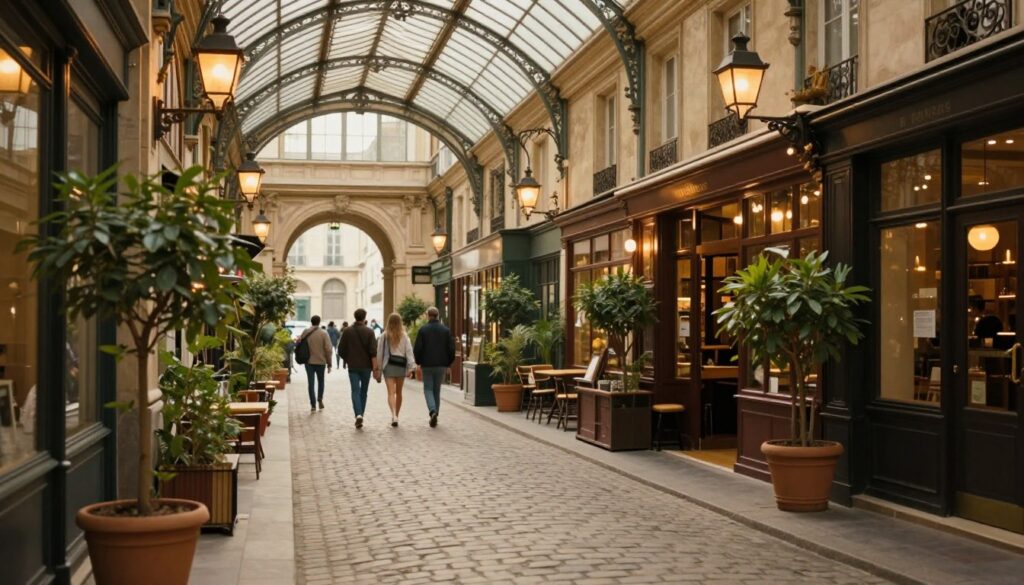
Covered passages are my go-to rainy-day hack or a cool refuge at noon. They offer instant atmosphere with very little effort.
Start with Galerie Vivienne for the visual wow: arched skylights, mosaic floors, and boutiques that feel paused in time. Then drift to Passage des Panoramas if you want a cozier, food-forward spot to graze and duck into a casual bite.
How to do it: choose one or two passages, plan 30–60 minutes, then spill back onto nearby streets and the Palais Royal area. No heavy planning; the pleasure is the pace.
“Sometimes the gem is the vibe, not a landmark.”
- Short visit: 30–60 min keeps it fresh.
- Pair with a Palais Royal walk and a coffee stop.
- They aren’t empty, but they feel intimate compared with major monuments.
| Passage | Character | Best for |
|---|---|---|
| Galerie Vivienne | Skylit, mosaic floors, boutiques | Visual wow, slow strolling |
| Passage des Panoramas | Narrow, restaurant-heavy, cozy | Food stops, casual grazing |
| Nearby arcades | Arcade shops and quiet courts | Short detours and people-watching |
Quick note: treat these as low-stress pockets of time. Pick one passage, sip a coffee, and enjoy small things that make the city feel like a lived place.
Hidden-Cool Museums That Won’t Eat Your Whole Day
A calm, two-hour museum visit can reset your day without draining it. I pick small museums that give real art and atmosphere, not an endurance test.
Musée Rodin is my go-to two-hour stop: classic sculptures like The Thinker and The Kiss, plus quiet gardens to sit and process what you saw. (Closed Mondays; generally 10am–6:30pm; ~€13.)
Petit Palais is free and high-reward—don’t miss the sculpture gallery and the courtyard café, which feels like a tiny oasis after a walk.
If you want something softer and human-scale, try Musée de la Vie Romantique. For refined interiors and a well-chosen collection without Louvre-level crowds, the Musée Jacquemart-André is a classy pick.
“One small museum + one neighborhood stroll often beats a full-day marathon.”
- Plan transit time and aim for off-peak entry.
- Build one short museum visit into a neighborhood loop to avoid fatigue.
| Museum | Best for | Why it fits a short visit |
|---|---|---|
| Musée Rodin | Sculpture, gardens | Perfect ~2-hour visit |
| Petit Palais | Sculpture gallery, café | Free, restorative stop |
| Jacquemart-André / Vie Romantique | Interiors / intimate art | Curated, human-scale museums |
Practical tip: don’t underestimate museum fatigue—give yourself a bench, a café, or a short stroll after a focused visit. These small gems will make the city feel friendlier and more manageable.
Secret Rooms and Overlooked Corners Inside Famous Museums
Major museums hide small rooms where the noise drops and the work feels close enough to touch. I recommend changing your aim: you win by lingering, not by racing through galleries.
Try this Louvre tip: head to the Richelieu wing, level -1, and find Cour Marly and Cour Puget. These airy sculpture courtyards have fewer people and more space to actually look.
At Musée d’Orsay, treat the place like a themed visit. Pick Impressionists or decorative arts, set a slow pace, and avoid darting gallery-to-gallery. You’ll notice details most visitors miss.
Time-box it: 2–3 hours inside a major museum is plenty. After that, step out for coffee or a river walk to reset and let what you saw settle.
“Timed tickets and off-peak arrival protect your energy for the parts that actually feel special.”
- Look for quieter rooms and side courtyards—they feel almost private.
- Use timed entry and early slots to avoid long line waits.
- Let curiosity lead; sometimes a short hallway becomes the day’s best moment.
| Spot | What to expect | Best for |
|---|---|---|
| Cour Marly / Cour Puget (Louvre, -1) | Large sculpture courtyards, airy light | Quiet looking, sculpture focus |
| Musée d’Orsay main halls | Impressionist paintings, grand station architecture | Themed visits (2–3 hours) |
| Side galleries and hallways | Smaller rooms, fewer visitors | Slow study and unexpected finds |
Art Nouveau and Belle Époque Details Hiding in Plain Sight
Look up: Art Nouveau details quietly thread through the city’s everyday surfaces. This style comes from the late 19th and early 20th century and shows flowing lines, stained glass, and sculptural flourishes that feel alive.
How to spot it: start at metro entrances — low effort, high payoff. A quick stop there brings classic ironwork and organic motifs into view without a long detour.
Make two architectural store stops: Galeries Lafayette Haussmann and La Samaritaine. Treat each store as an architectural visit; their domes and mosaics read like public art more than retail decor.
For a fast street-level wow, check Jules Lavirotte’s facade at 29 Avenue Rapp. You can admire the sculptural facade in minutes and then move on.
“Pick one store, one facade, and a café — you’ve made a themed day without a museum.”
If you want a Belle Époque interior, peek at Maxim’s for its carved wood and lacquered details. I like this mini-itinerary because small things add up; they make this place feel like a personal collection of quiet gems.
| Stop | Why Go | Time |
|---|---|---|
| Galeries Lafayette | Grande dome, stained glass | 30–45 min |
| 29 Avenue Rapp (J. Lavirotte) | Ornate facade, sculptural detail | 10–15 min |
| Maxim’s | Belle Époque interior, dining or peek | 30–60 min |
Unexpected Panoramic Views (Including Eiffel Tower Sightlines)
Some of the best skyline moments come from small, well-placed terraces rather than the biggest ticketed decks.
I recommend two rooftop spots that punch above their size. Galeries Lafayette’s 7th-floor terrace gives a roomy skyline view and a reliable frame of the Eiffel Tower. Printemps Femme’s roof is smaller and often quieter; it’s an easy win if you want fewer people and a fast snapshot.
Sacré-Cœur’s dome is the stair-heavy option: 292 steps, roughly €8, and usually open about 10am–5pm. The climb feels earned and the panoramic city view rewards the effort.
The Arc de Triomphe is the classic paid viewpoint for broad geometry and sweeping avenues. If you only pick one paid spot, it’s high value.
A ground-level alternative is Champ de Mars: a relaxed place for a picnic and direct Eiffel Tower sightlines without a climb.
“Aim for morning light for clearer views; sunset gives mood but draws crowds.”
| Spot | Best for | Notes |
|---|---|---|
| Galeries Lafayette terrace | Wide skyline views | Good for photos and a longer stop |
| Printemps Femme rooftop | Quieter snapshots | Smaller, less crowded |
| Sacré-Cœur dome | Earned panoramic view | 292 steps; ~€8; 10am–5pm |
| Arc de Triomphe | City geometry | Great single paid viewpoint |
| Champ de Mars | Picnic and tower sightlines | Ground-level, relaxed |
Pairing tip: combine a rooftop stop with a nearby café and a small museum so your afternoon feels full but unhurried. Pick a morning slot for clearer air and fewer people.
Spooky-Interesting Paris: Catacombs, Cemeteries, and Quiet History
There’s a quiet, graveyard calm to parts of the city that feels more reflective than spooky. These spots hold layers of history that reward slow walking and simple curiosity.
Start with the Catacombs if you’re genuinely curious. The tunnels hold bones moved from overflowing cemeteries during the 1700s, arranged with an oddly orderly eye for detail. Tickets must be reserved online; they can sell out, so book ahead.
Decide whether you want an audioguide or a guided tour. A guided tour often adds backstory and can grant access to restricted sections that standard tickets don’t reach. If you’re squeamish, skip it—this is macabre but historical, not a thrill ride.
Père Lachaise is the calmer counterpart: a leafy cemetery where you can slow down, read headstones, and feel the city’s memory. Look for graves like Oscar Wilde and Jim Morrison, and let the rest be wandering rather than a checklist.
“Go earlier in the day for quieter paths, then decompress with a café or a river walk afterward.”
- Book Catacombs tickets online—reserve your time before you go.
- Choose a guided tour for depth and rare access.
- Pair a cemetery visit with a slow café stop to settle the mood.
Markets, Flea Finds, and the Best Places to Shop for a “Paris Gem”
A single found object can hold an entire afternoon’s worth of memory. Treat shopping as memory-making, not hunting. One gem you love will beat an hour on a main boulevard most days.
Marché d’Aligre feels like everyday life: Tue–Sun 7:30am–1:30pm (closed Monday). Bring small cash and snack as you go—fruit, bread, or a little pastry make the stroll better.
Marché Saxe-Breteuil runs Thu 7am–1:30pm and Sat 7am–2:30pm. It’s a quieter market; plan ahead if your dates line up.
| Market | Hours | Why go |
|---|---|---|
| Marché d’Aligre | Tue–Sun 7:30–13:30 | Daily-life market, snacks |
| Marché Saxe-Breteuil | Thu & Sat mornings | Saturday freshness, local stalls |
| Puces de Saint-Ouen / Malassis | Best weekends | Antiques, design finds |
For gourmet souvenirs, head to Le Bon Marché and La Grande Épicerie for specialty food and cheese that travel well. Pick one great cheese and a jar or two for a picnic or gifts.
Curated shops add character: Merci for design-minded browsing; Officine Universelle Buly 1803 for old-world perfume and apothecary charm. One small store visit can shift your day.
“Go with one category—scarf, print, or fragrance—and set a spending cap.”
Budget tip: decide your category, keep a limit, and use markets for lasting gems rather than impulse buys. Good finds feel like stories you take home.
Food Experiences That Feel Local (Even If You’re Visiting for a Day)
A short, well-planned food day can feel like a local love letter to the city. Aim for balance: one sit-down restaurant meal and a handful of casual bites. That mix gives you texture without stress.
Simple one-day plan: bakery breakfast, market snack, a relaxed lunch, then a picnic or wine bar for evening. This keeps your energy steady and leaves room to linger.
I recommend a few proven spots as examples: Bouillon Pigalle for affordable classics, Breizh Café for crêpes, and Au Passage for modern small plates and natural wine. For cocktails or wine, try La Belle Hortense or Little Red Door.
A picnic is the most local way to eat without reservations. Grab bread, charcuterie, and produce at a market or gourmet hall and sit in a garden or by the riverbank.
“A short food tour is a great taster—learn what to order and where locals go.”
| Plan | Why it works | Example |
|---|---|---|
| Breakfast | Quick, local energy | Bakery croissant |
| Market snack | Fresh, portable | Marché stall pick |
| Evening | Relaxed scene | Wine bar or picnic |
Consider a short food tour early on if you want structure. And remember: reservations help, meal times run later, and leaving gaps makes the whole experience better.
Conclusion
You don’t owe the city a to-do list—pick a handful of things and let the rest happen.
I wrote this guide so you can mix and match: save favorite sections, build two or three simple routes, then let time and light decide the rest. Treat parks, passages, and riverbanks as flexible backups when lines form; book timed tickets for major sites to skip the worst waits.
One best tip: plan less than you think you should and you’ll notice more—small details, street life, and quiet moments that make any visit memorable.
If you love art, lean toward small museums; if you love food, pick markets and picnics; if you love views, choose rooftops over long queues. You don’t have to finish this city—come back and find another set of things Paris has waiting.
FAQ
How do I use this list of hidden gems to plan a day in Paris?
Start by grouping nearby spots—parks, a covered passage, and a museum—so you’re not zigzagging across the city. Pick one neighborhood as your base, build a walking loop along the Seine or through an arrondissement, and leave room for café stops and a picnic. I like to include one panoramic viewpoint and one market to balance scenery and local life.
Which neighborhoods are best for under-the-radar streets and local life?
Look to the Marais for historic lanes and Place des Vosges vibes, the 11th arrondissement for lively cafés and narrow streets, and the Canal Saint-Martin area for relaxed riverside scenes. These areas mix everyday Parisian life with interesting shops and food spots without the heavy tourist crush.
Are there small museums that are worth visiting without spending a whole day?
Absolutely. Museums like Musée Jacquemart-André or Musée de la Vie Romantique offer focused collections and charming rooms you can enjoy in an hour or two. They give authentic art-world moments without the crowds or time sink of larger institutions.
Where can I find elevated green walkways and quiet park escapes?
Try the Promenade Plantée (Coulée Verte René-Dumont) for a raised garden walk above the streets, Parc des Buttes-Chaumont for cliffs and views, and Jardin du Palais Royal for formal gardens and calm. These spots are great for a slower-paced afternoon and picnics.
Which viewpoints offer great Eiffel Tower sightlines without the crowds?
For a quieter Eiffel Tower perspective, head to Square Rapp or the area near Rue de l’Université for framed views. Montparnasse Tower’s observation deck provides a sweeping panorama that includes the tower without the typical queues at the Champ de Mars.
What are the best covered passages for an old-world shopping stroll?
Passage des Panoramas, Galerie Vivienne, and Passage Jouffroy are excellent choices. They have beautiful mosaics, glass roofs, and small specialist shops—bookstores, chocolatiers, and vintage boutiques—that feel like stepping into another era.
Where can I experience book stalls and calm riverbank views along the Seine?
Walk the quays near Île de la Cité and Île Saint-Louis, where bouquinistes line the Seine with secondhand books and prints. Early morning or late afternoon offers peaceful light and fewer people—perfect for browsing or a quiet bench-side read.
How can I explore spooky or quiet history like cemeteries and the Catacombs safely?
Visit Père Lachaise Cemetery for a reflective stroll among notable graves, and book Catacombs tickets online in advance to avoid long waits. Wear comfortable shoes and allow time to move slowly; these sites reward quiet observation rather than rush.
Where are the best markets and flea finds to hunt for a Paris gem?
Marché d’Aligre and Marché Bastille are lively food and general markets with local vendors. For secondhand treasures, Porte de Vanves and Marché aux Puces de Saint-Ouen offer antiques and curios. Bargain respectfully and be ready to haggle a little at flea markets.
What food experiences will feel genuinely local even on a short visit?
Seek out small wine bars (bistrots) off the main avenues, neighborhood bakeries for a morning croissant, and fromageries for cheese to assemble a picnic. Eating at a street-side table in a less-touristed quarter will feel more authentic than a tourist-heavy brasserie.
Are there overlooked rooms inside big museums worth finding?
Yes. Major museums like the Louvre and Musée d’Orsay hide quiet galleries and decorative rooms that many visitors miss—look for period salons, small sculpture rooms, and specialized collections tucked off main routes. A museum map helps you target these niches.
How much walking should I expect on these tours and walks?
Plan for moderate walking—roughly 3–6 miles (5–10 km) if you’re doing a full neighborhood loop with stops. Wear comfortable shoes, take breaks at cafés or parks, and consider public transit to jump between distant areas to keep energy up.
Can I find Art Nouveau and Belle Époque details on a casual walk?
Definitely. Look for ornate metro entrances by Hector Guimard, decorative façades around the 9th and 16th arrondissements, and interior details in covered passages. A slow pace and an eye for ironwork and ceramic tiles will reveal many elegant surprises.
What’s the best time of day to avoid crowds while still enjoying the city’s vibe?
Early morning and late afternoon are ideal—morning for peaceful markets and bookstalls, late afternoon for golden light and relaxed cafés. Midday can be busy at main sights, so use that time for a museum visit or a shaded park stop.
How do I keep costs low while getting a genuine local experience?
Eat at neighborhood cafés, shop at markets for picnic supplies, and choose small museums or free gardens over pricier attractions. Use the métro and buses for efficient travel and plan one paid attraction per day to stay within budget.