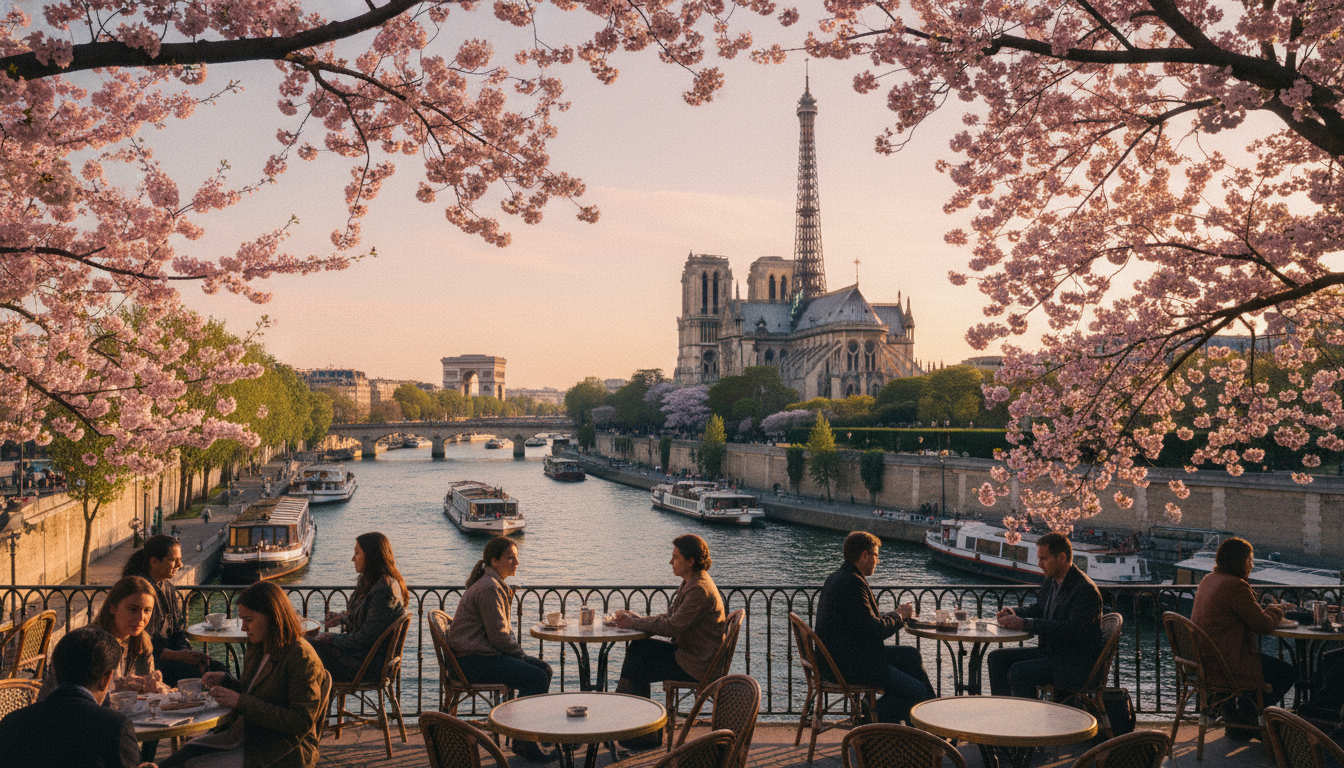
What makes Paris one of the world’s top travel destinations year after year? It’s the stunning mix of history, art, and culture. This mix attracts millions of visitors every year.
The French capital welcomed 12.6 million visitors in 2020. These numbers keep growing as people seek its legendary charm. Your trip to this enchanting city will show why it’s an unforgettable experience for tourists worldwide.
From the Eiffel Tower to the Louvre Museum, parisian landmarks have something special for everyone. You’ll find iconic landmarks and monuments alongside charming neighborhoods and top cultural venues. These paris tourist destinations include historic palaces and peaceful gardens.
Planning your visit well helps you enjoy it more. Consider getting skip-the-line tickets for popular sites. This way, you can avoid big crowds and make the most of your sightseeing.
Key Takeaways
- Paris attracts over 12 million visitors annually with its unique blend of history and culture
- The Louvre Museum, Eiffel Tower, and Versailles Palace rank among the top attractions worldwide
- Skip-the-line tickets help you avoid long queues at popular landmarks
- The city offers diverse experiences from historic monuments to world-class museums
- Strategic planning allows you to balance must-see sites with spontaneous discoveries
- Paris serves as a year-round destination with attractions suitable for all interests
Iconic Landmarks and Monuments
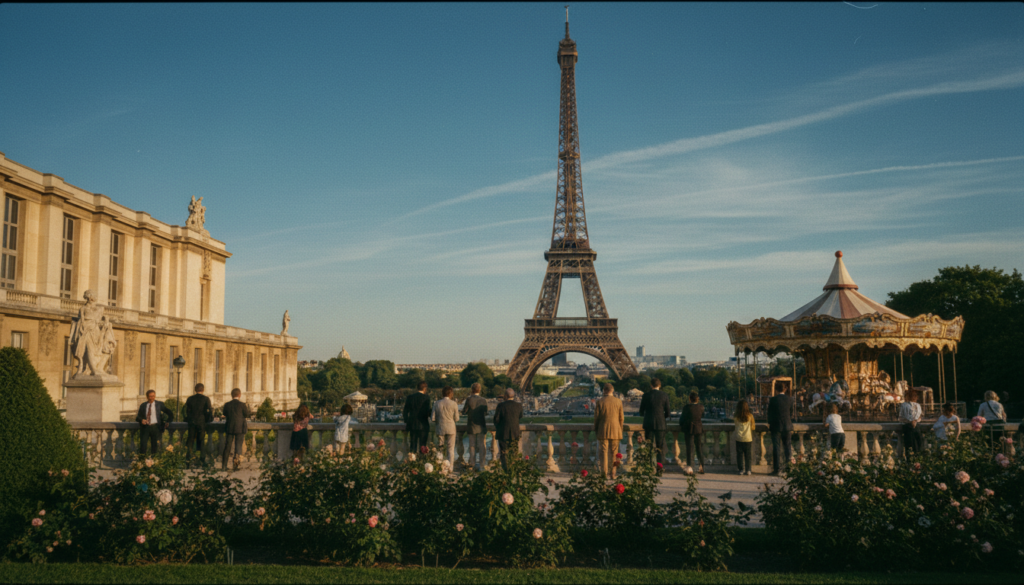
Paris’s popular monuments showcase French engineering and art from different eras. These architectural wonders attract millions each year. They symbolize the city’s rich culture. When planning your Paris trip, don’t miss these landmarks for their history and beauty.
The monuments are linked across the city, each telling a unique story of France’s past. You can see them one by one or follow a path that connects them. Learning about their history deepens your appreciation for their craftsmanship and vision.
The Iron Lady That Defines the Skyline
The Eiffel Tower is Paris’s symbol and the most photographed spot. Émile Nouguier and Maurice Koechlin designed it, with Gustave Eiffel finalizing the plan in 1885. It opened in 1889 for the World’s Fair, meant to be temporary.
Today, the Eiffel Tower welcomes 6.9 million visitors yearly. You can climb 674 steps or use elevators to see Paris from three levels. The first level has a glass floor, restaurants, and exhibits on the tower’s history.
Visiting the Eiffel Tower is better with planning. Without skip-the-line tickets, you might wait over four hours in summer. The tower has two restaurants and a champagne bar for enjoying views.
For the best Eiffel Tower photos, go to Trocadéro Plaza. It offers stunning views of the tower with fountains in the foreground. Evening visits are special, with light shows every hour after sunset.
The Triumphant Arch of Victory
The Arc de Triomphe Paris stands at Place Charles de Gaulle, where twelve major avenues meet. It honors French soldiers from the Revolutionary and Napoleonic Wars. The arch’s surfaces are covered in inscriptions of victories and generals.
The Tomb of the Unknown Soldier is under the arch, honoring all unidentified soldiers. Every evening at 6:30 PM, a ceremony re-lights the eternal flame. This has been done every day without pause for 99 years.
From the rooftop, you get 360-degree views of Paris. The arc’s design shows Baron Haussmann’s 19th-century renovation of Paris. Its central location helps you understand the city’s layout.
The World’s Most Beautiful Avenue
The Champs-Élysées stretches nearly two kilometers from Place de la Concorde to the Arc de Triomphe. Parisians call it “la plus belle avenue du monde” (the most beautiful avenue in the world). It welcomes 7 million visitors yearly, averaging 19,180 per day.
Champs-élysées shopping offers luxury boutiques, flagship stores, and elegant cafés. You’ll find international brands, historic cinemas, and Parisian bistros. The avenue is among the world’s most expensive, reflecting its prestige and commercial value.
The champs-élysées landmarks are celebrated during major events. The Tour de France ends here every July, and Bastille Day features military parades. New Year’s Eve turns the avenue into a massive street party, with thousands celebrating under the Arc de Triomphe.
The Grand Square of Revolution and Royalty
The Place de la Concorde is Paris’s largest public square, spanning over 18 acres. King Louis XV commissioned it in 1755, but it became infamous during the French Revolution. It’s where Louis XVI and Marie Antoinette were executed.
At its center is the ancient Egyptian Luxor Obelisk, given to France in 1829 and erected in 1836. This 3,300-year-old monument stands 75 feet high, covered in hieroglyphics. Two fountains and eight statues of major French cities mark the square’s perimeter.
Your visit to place de la concorde connects you to many attractions. The Tuileries Garden lies to the east, and the Seine River borders it to the south. It’s a key spot for exploring central Paris on foot.
Comparing Paris’s Premier Monuments
| Monument | Annual Visitors | Year Completed | Distinctive Feature |
|---|---|---|---|
| Eiffel Tower | 6.9 million | 1889 | 674 steps, three observation levels with restaurants |
| Arc de Triomphe | 1.5 million | 1836 | Eternal flame ceremony daily at 6:30 PM |
| Champs-Élysées | 7 million | 1670s | World’s most expensive commercial avenue |
| Place de la Concorde | Integrated traffic flow | 1772 | Paris’s largest square with 3,300-year-old obelisk |
These monuments offer a connected journey through French history and culture. Walking from Place de la Concorde to the Arc de Triomphe takes about 30 minutes. Each landmark shows different architectural styles and historical periods, from royal grandeur to republican ideals.
Exploring these landmarks gives you a deep understanding of Paris’s growth from a medieval city to a modern capital. They are not just tourist spots but living monuments that host ceremonies and daily life. Visiting at different times shows how lighting and crowds change each location’s feel.
World-Renowned Museums
Paris is a top spot for art lovers. Its museums are filled with incredible art from all over history. You’ll see pieces that have changed art and culture worldwide.
Planning your museum visits is key. Each museum offers a special look into art and history.
A Palace of Artistic Treasures
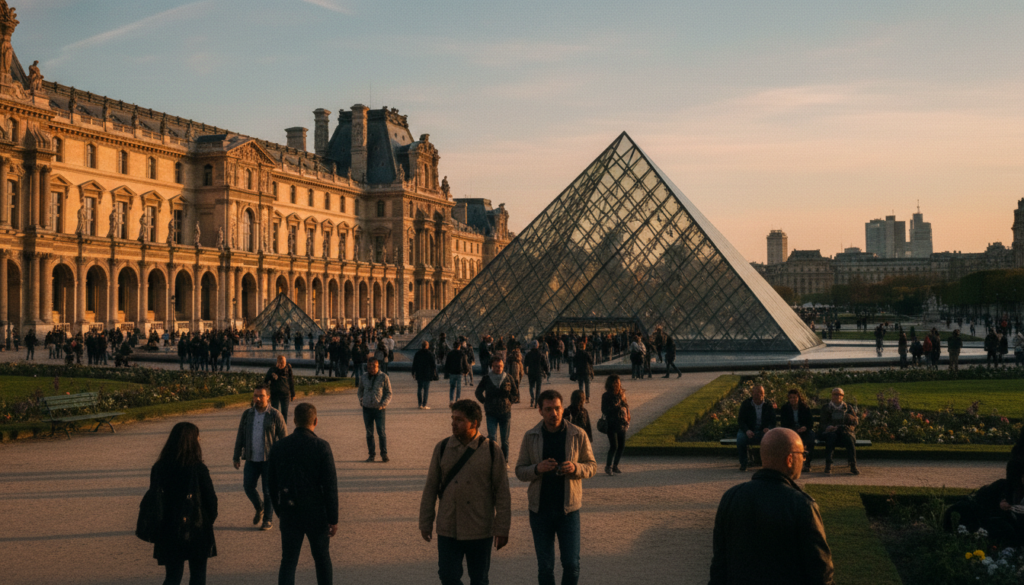
The Louvre Museum is the most visited museum globally, with over 10 million visitors annually. It was once a medieval fortress, now a museum open to the public. The famous glass pyramid entrance was added in 1989.
The Louvre spans three wings, covering over 60,000 square meters. It houses 35,000 pieces of art. Seeing everything in one visit is impossible.
Don’t miss these highlights at the Louvre:
- Mona Lisa by Leonardo da Vinci, the world’s most famous painting
- Venus de Milo, the iconic ancient Greek sculpture
- Winged Victory of Samothrace, a masterpiece of Hellenistic art
- Michelangelo’s sculptures and Napoleon III’s opulent apartments
- Egyptian antiquities and medieval fortress excavations in the basement levels
Visiting the Louvre can be crowded, but buying tickets in advance helps. Consider a guided tour for quicker access and expert insights.
Impressionism’s Grand Stage
The Musée d’Orsay is in a beautiful Beaux-Arts railway station from the 1890s. It opened as a museum in 1986. It’s known for its stunning setting and focus on French Impressionism.
See works by Monet, Renoir, Cézanne, Gauguin, and Van Gogh. The museum welcomed 3.17 million visitors in 2007, drawn by its impressive collection.
Don’t miss the rooftop terrace at Musée d’Orsay. It offers amazing views of Paris and a peaceful break from the galleries.
Revolutionary Modern Art Hub
Centre Pompidou is unlike any other museum. Opened in 1977, it has a colorful exterior and exposed mechanical systems. It was initially shocking to Parisians but is now loved.
It has hosted over 150 million visitors and 5.5 million in 2007 alone. Your visit includes:
- Rotating exhibitions of contemporary paintings and sculptures
- Multimedia installations and experimental art forms
- A wonderful rooftop deck with panoramic city views
- A sophisticated restaurant overlooking Paris’s historic skyline
The museum focuses on modern and contemporary art, a contrast to Paris’s classical collections.
An Intimate Impressionist Sanctuary
The Musée de l’Orangerie is in the Tuileries Garden. It received 598,762 visitors in 2007, a 33.9% increase from the year before.
Its main attraction is Claude Monet’s Water Lilies murals. These are displayed in two oval rooms designed for them. Natural light enhances the experience.
Beyond Monet, the museum offers a peaceful setting for impressionist and post-impressionist works. It’s a great place to relax after visiting bigger museums. The garden setting is perfect for reflection before continuing your Parisian journey.
Historic Palaces and Estates
Explore beyond museum walls to discover palaces that once defined French aristocratic life. These historic palaces and estates around Paris show the peak of royal architecture and power. Each place tells stories of kings, emperors, and the aristocracy who shaped French history.
Walk through ornate state rooms, magnificent gardens, and see priceless art collections. These spots give you a peek into the extraordinary luxury of French court life from the medieval period to the 19th century.
The Crown Jewel of French Royalty
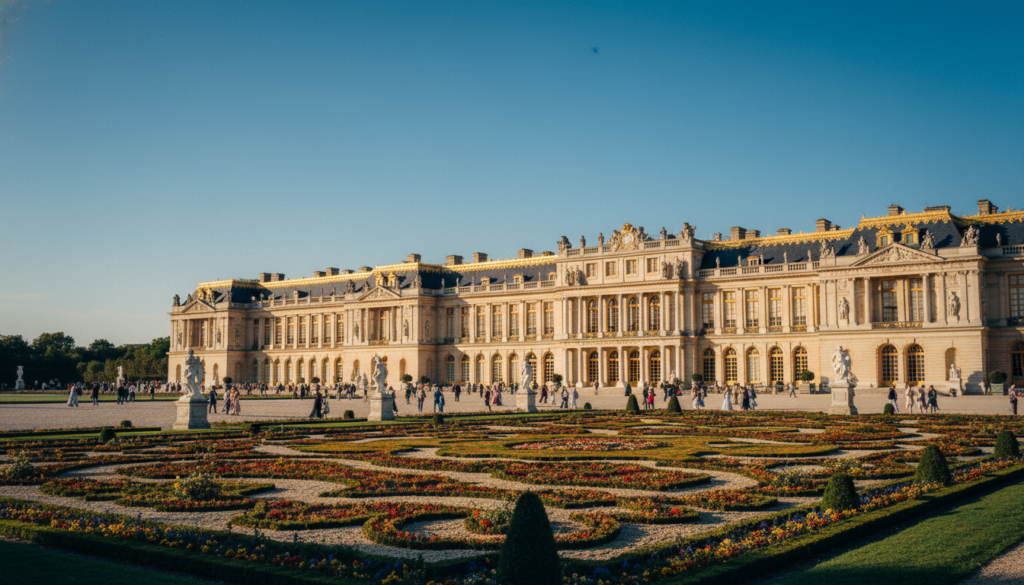
The Palace of Versailles is France’s most visited royal residence, with 7.7 million visitors each year. It’s about 50 miles from central Paris. This complex has over 700 rooms filled with art and historical treasures.
King Louis XIV turned a medieval hunting lodge into this symbol of absolute monarchy. The Hall of Mirrors is famous, with 357 mirrors reflecting light from 17 arched windows overlooking the gardens.
The State Apartments show the lavish lifestyle of French royalty. You can see Marie-Antoinette’s private chambers and the King’s Bedroom. Beyond the palace, 23 hectares of gardens feature geometric designs, ornate fountains, and classical statues.
Visiting Versailles requires planning due to big crowds. Security lines can make you wait 2-4 hours during peak months. Versailles palace tours offer skip-the-line access and expert guides who bring the palace’s history to life.
You can get to Versailles by train from Paris for about €4 each way. Many versailles palace tours include round-trip transportation, making your journey easier. The Petit Trianon and Marie-Antoinette’s Hamlet village offer quieter spots away from the main palace crowds.
Book morning tours to avoid afternoon crowds. Spring and fall are the best times to explore the gardens without the summer rush.
An Urban Oasis in Central Paris
The Palais Royal is a peaceful retreat in the heart of the city. It has beautiful gardens surrounded by elegant arcades with boutique shops and refined restaurants.
Built in 1633 for Cardinal Richelieu, this palace later became a royal residence. Today, you can stroll through columned walkways and enjoy the contemporary art installation in the courtyard. The black-and-white striped columns by Daniel Buren create a striking contrast with the classical architecture.
Unlike Versailles, this location offers free admission to its gardens and courtyards. You can explore independently without tickets or reservations, making it perfect for a relaxing afternoon break while visiting other built attractions in Paris.
A Masterpiece of Theatrical Architecture
The Palais Garnier Opera House dazzles visitors with Second Empire architectural splendor. Commissioned by Napoleon III in 1861, this building showcases opulent design on every surface.
You’ll ascend the grand marble staircase beneath a 30-foot chandelier. The auditorium features Marc Chagall’s colorful ceiling paintings created in 1964, depicting scenes from famous operas. Red velvet seats and gilded details create an atmosphere of theatrical grandeur.
This architectural masterpiece inspired Gaston Leroux’s “The Phantom of the Opera.” You can tour the building during the day or attend evening performances of world-class opera and ballet. Self-guided tours allow you to explore at your own pace, while guided options provide deeper historical context.
Monument to Military Glory
Hôtel des Invalides serves multiple functions as a military museum, historical monument, and burial site for French war heroes. Located in the 7th arrondissement, this complex received 1.19 million visitors in 2007.
Louis XIV commissioned this building in 1670 as a hospital and retirement home for war veterans. The distinctive golden dome rises above the Paris skyline, visible from many vantage points across the city.
You’ll find Napoleon Bonaparte’s impressive tomb beneath this dome, surrounded by 12 stone pillars symbolizing his military campaigns. The red quartzite sarcophagus sits within multiple nested coffins, creating a powerful memorial to France’s most famous emperor.
The Musée de l’Armée houses extensive military collections spanning centuries of warfare. You can examine armor, weapons, uniforms, and battle artifacts from medieval times through World War II. The museum provides insights into French military history and strategy.
| Palace | Annual Visitors | Distance from Paris | Key Features | Average Visit Duration |
|---|---|---|---|---|
| Palace of Versailles | 7.7 million | 50 miles | Hall of Mirrors, 700+ rooms, royal gardens | 4-6 hours |
| Palais Royal | Public gardens | Central Paris | Arcaded courtyards, contemporary art, boutiques | 1-2 hours |
| Palais Garnier Opera House | 350,000+ | Central Paris | Grand staircase, Chagall ceiling, opera performances | 1.5-2 hours |
| Hôtel des Invalides | 1.19 million | 7th arrondissement | Napoleon’s tomb, military museum, golden dome | 2-3 hours |
Each of these historic palaces and estates offers unique experiences that enhance your Paris visit. Spend a full day at the Palace of Versailles or a few hours at the centrally located sites. Together, they give a deep understanding of French royal heritage and architectural achievements.
Celebrated Churches and Cathedrals
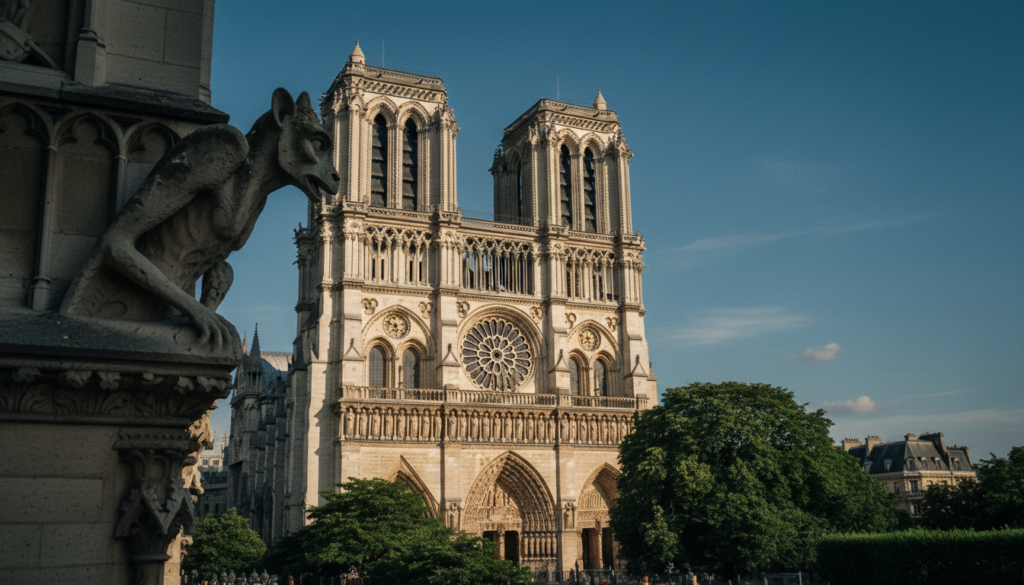
Paris is home to more than just museums and monuments. Its celebrated churches and cathedrals are filled with stunning stained glass, Gothic spires, and neoclassical domes. These buildings are architectural wonders that tell stories of French history. They are also places of religious art and craftsmanship that inspire millions every year.
The religious buildings in Paris tell stories of faith, power, and art. Each one offers a unique experience that goes beyond typical sightseeing. You’ll see everything from medieval Gothic designs to Baroque grandeur.
Notre-Dame Cathedral
Notre-Dame Cathedral is the most visited monument in Paris, with 13.65 million visitors annually. It’s located on Île de la Cité, in the heart of the city. This Gothic masterpiece has seen many important moments in French history.
The cathedral is known for its towers, flying buttresses, and detailed carvings. It was built over a century, with contributions from many skilled builders. It was built to honor the Virgin Mary and served as a bishop’s church and baptistery.
Notre Dame has hosted many historic events, like King Henry IV’s marriage and Napoleon’s coronation. A fire in 2019 damaged the roof and artifacts. After restoration, it reopened in 2024, though the towers are closed for now.
“Notre-Dame Cathedral represents the soul of Paris, standing as a testament to medieval craftsmanship and the resilience of French cultural heritage.”
You can visit Notre-Dame Cathedral for free with advance tickets. Inside, you’ll see hundreds of statues, paintings, and spectacular stained glass windows. Guided tours offer a deeper look at the architecture and secrets in the crypt.
Sainte-Chapelle
Sainte-Chapelle is known for its breathtaking stained glass and soaring nave. It received 866,982 visitors in 2007, showing 4% growth from the year before. Construction started in 1239, and it was consecrated in 1248.
King Louis IX built it to house the Crown of Thorns and other Passion Relics. The chapel is a masterpiece of Rayonnant Gothic architecture. It’s located near the Palais de la Cité and survived the French Revolution.
The stained glass windows create a heavenly atmosphere when sunlight passes through. The chapel has one of the world’s largest collections of medieval stained glass. This makes it a must-see among Paris’s celebrated churches and cathedrals.
Panthéon
The Panthéon is France’s secular temple and national mausoleum. It houses the tombs of famous French citizens. In 2007, it welcomed 507,452 visitors, a 11.5% growth from the year before. Its neoclassical architecture and massive dome dominate the Latin Quarter.
Inside, you’ll find the resting places of national heroes and intellectuals like Voltaire and Marie Curie. The Panthéon honors French achievement and republican values. Its grandeur reflects France’s respect for its greatest minds and leaders.
The Panthéon’s interior features stunning frescoes and sculptures. It also has a Foucault pendulum demonstration. This building bridges religious and secular traditions. Originally a church, it became a national monument during the French Revolution.
Saint-Sulpice Church
Saint-Sulpice Church is one of Paris’s largest churches, known for its Baroque architecture. It has a magnificent organ, considered one of Europe’s finest. Its size and details make it a key landmark in the Saint-Germain-des-Prés area.
Inside, you’ll see frescoes by Eugène Delacroix that showcase Romantic painting. The Chapel of the Holy Angels has three major murals by Delacroix. These artworks attract visitors interested in 19th-century French art and religious painting.
The church’s facade has two towers of different heights, giving it a unique look. A gnomon inside tracks the sun’s movement, adding scientific interest. Exploring Saint-Sulpice Church shows why it’s a must-see for those interested in Paris’s celebrated churches and cathedrals.
| Religious Site | Annual Visitors (2007) | Architectural Style | Key Feature |
|---|---|---|---|
| Notre-Dame Cathedral | 13.65 million | Gothic | Flying buttresses and gargoyles |
| Sainte-Chapelle | 866,982 | Rayonnant Gothic | 13th-century stained glass |
| Panthéon | 507,452 | Neoclassical | Burial site of French heroes |
| Saint-Sulpice Church | Not specified | Baroque | Delacroix frescoes |
Visiting these celebrated churches and cathedrals offers deep insights into French religious history and art. Each site offers unique experiences that enrich your understanding of Paris’s cultural heritage. Whether you’re drawn to Gothic grandeur, medieval stained glass, or neoclassical monuments, these sacred spaces offer unforgettable encounters with centuries of craftsmanship and devotion.
Popular Neighborhoods
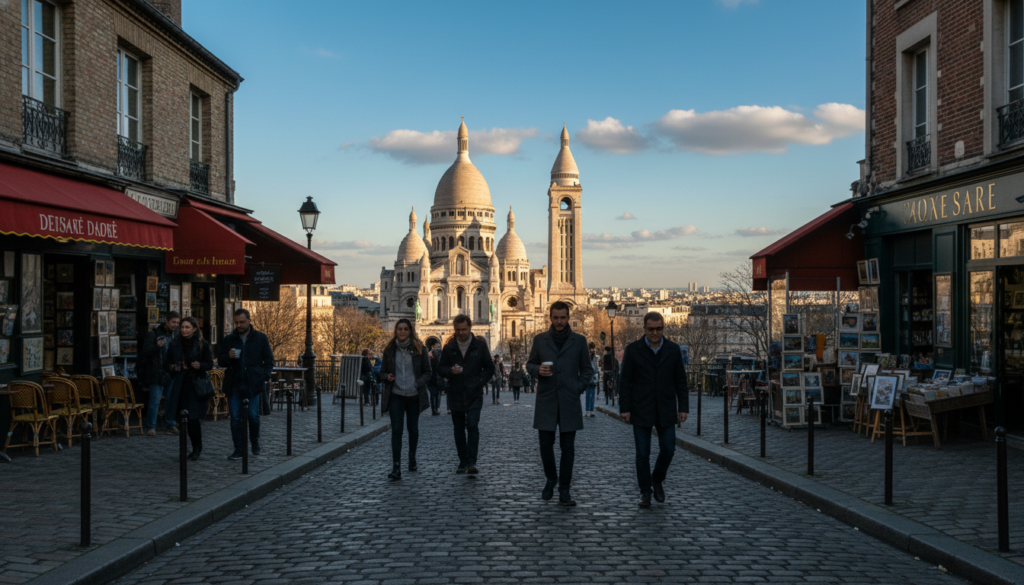
Exploring Paris through its neighborhoods gives you a real feel of the city. These areas show the local life, culture, and history that go beyond the famous landmarks. Each district has its own vibe, inviting you to explore its streets, courtyards, and community spaces.
Montmartre
Montmartre sits on a hill in the 18th arrondissement, keeping its village feel. It was once home to artists like Picasso and Renoir, thanks to its affordable rents. Today, it’s known for its winding streets and bohemian spirit.
The Sacré-Cœur Basilica stands tall, attracting 10.5 million visitors a year. Built in 1914, it honors the lives lost in the Franco-Prussian War. Its mosaic of Jesus Christ is a breathtaking sight.
The basilica’s white walls stay bright thanks to a natural process. Travertine stone reacts with rainwater, bleaching the walls. This makes visiting Sacré-Cœur unforgettable.
While many flock to Sacré-Cœur and the Moulin Rouge, Montmartre has more to offer. You can find:
- Small art museums with local talent
- Hidden parks for a peaceful escape
- Charming cafés on pedestrian lanes
- Historic windmills from the past
- A vineyard with an annual harvest festival
Le Marais
Le Marais spans the 3rd and 4th arrondissements, mixing medieval history with modern culture. Its narrow streets are lined with historic mansions and trendy shops. It’s a favorite spot for fashion lovers, history buffs, and food enthusiasts.
The Place des Vosges is the heart of Le Marais, Paris’s oldest planned square. It’s surrounded by galleries, cafés, and shops. Rue des Francs-Bourgeois is great for shopping, with designer and vintage stores.
Le Marais offers more than shopping. You can find hidden courtyards and artisanal markets. Its eclectic vibe makes it a beloved spot for locals and visitors.
Saint-Germain-des-Prés
Saint-Germain-des-Prés is known for its cafés and ancient church. It was a hub for existentialist philosophers and writers. You can visit Café de Flore and Les Deux Magots, where famous thinkers debated.
The neighborhood is elegant, with bookstores, galleries, and boutiques. Its historic architecture takes you back in time. Walking here, you’ll see why artists and intellectuals loved it.
Latin Quarter
The Latin Quarter has medieval Paris’s narrow streets and old buildings. It’s been home to bohemians, scholars, and protesters. The name comes from the Latin spoken by medieval students.
Brasseries along Boulevard Saint Germain were favorites of Hemingway in the 1920s. The Panthéon holds tombs of French heroes, and the Cluny Museum has medieval art. These spots show Paris’s intellectual side.
There’s more to the Latin Quarter than its famous sites. You can find:
- Old bookstores with rare books
- Tiny bistros with traditional French food
- Quirky boutiques with unique gifts
- Medieval churches like Saint Julien le Pauvre
- A 1st-century Roman arena
The Grand Mosque of Paris has a tea room with mint tea and pastries. The Jardin des Plantes is beautiful and peaceful. But avoid Rue de la Huchette, which is too crowded.
Île de la Cité is Paris’s historical heart, where the city started. It has Notre-Dame Cathedral and hidden parks. The mix of grand sights and quiet spots makes Paris’s neighborhoods essential to visit.
Beloved Parks and Gardens

Paris’s parks offer a peaceful escape from the city’s hustle. These green spaces are perfect for relaxing, picnicking, or enjoying fresh air. They balance the city’s energy with serene landscapes, ideal for recharging.
The City’s Most Popular Green Retreat
Luxembourg Gardens is Paris’s top park, with 448 other options. It’s a 60-acre oasis in the 6th arrondissement, surrounded by towering chestnut trees, manicured lawns, and vibrant flowerbeds. The central pool is a hit with kids and adults, who enjoy floating toy sailboats.
The garden has many areas, so it rarely feels crowded. You can play tennis, watch puppet shows, or let kids play with wooden boats. Numerous benches among lush flowers are great for reading or watching people.
Walking paths take you through different landscapes. The Medici Fountain is a romantic spot for a green metal chair. An open-air café serves drinks and lunch, making it perfect for a long afternoon.
“Gardens are not made by singing ‘Oh, how beautiful,’ and sitting in the shade.”
Historic Gardens Along the Seine
Tuileries Garden stretches between the Louvre and Place de la Concorde. Designed by André Le Nôtre, it features tree-lined promenades, ornamental ponds, and impressive sculptures. Its formal layout reflects classic French design.
Seasonal flower displays change the garden’s look throughout the year. Spring brings tulips, and summer has roses and dahlias. It’s a great place for walks or breaks between museum visits.
Botanical Wonder and Scientific Heritage
Jardin des Plantes is a botanical garden, natural history museum, and small zoo. Founded in 1626, it has plants from around the world. Spectacular cherry blossoms create stunning pink canopies in spring.
The garden has French, alpine, and rose gardens, plus greenhouses with tropical and desert plants. Educational displays and labeled specimens are everywhere. It’s a peaceful place to learn about plants and conservation.
Dramatic Landscapes and Romantic Views
Parc des Buttes-Chaumont offers a unique landscape. It has rocky cliffs, a picturesque lake, cascading waterfalls, and a classical temple on an island. Suspension bridges offer dramatic views.
This park shows Napoléon III’s vision for public green spaces. It has sweeping views of the city. The varied terrain includes caves, grottos, and steep paths for adventure.
Locals love Parc des Buttes-Chaumont for picnics, jogging, and relaxation. It’s less touristy, giving you a real look at Parisian life. It’s perfect for stunning photos or quiet moments.
Top Shopping and Market Destinations
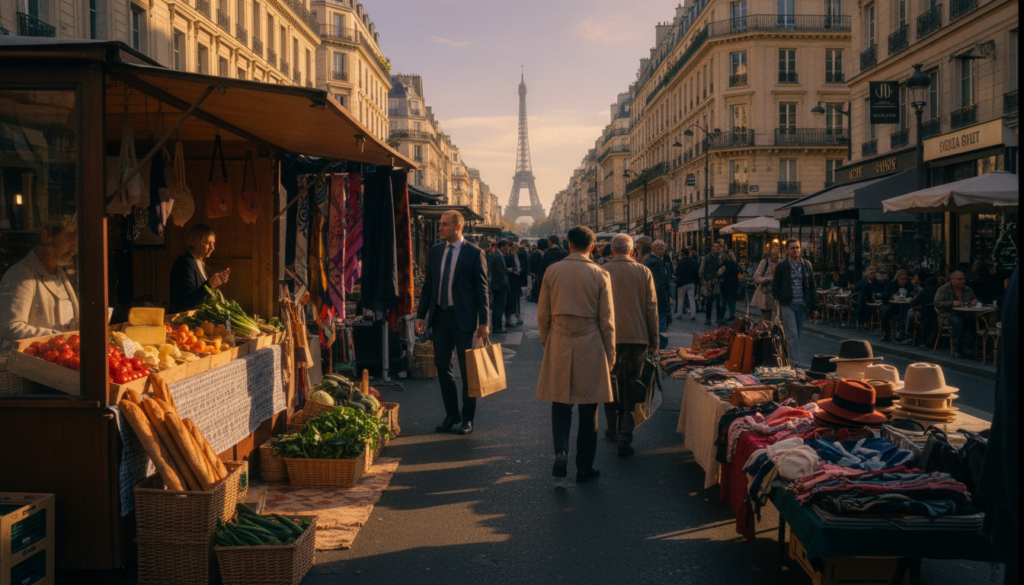
Your Parisian shopping adventure spans from Art Nouveau palaces of commerce to bustling flea market labyrinths. The top shopping and market destinations showcase French retail excellence. You’ll find luxury department stores, historic markets, and neighborhood specialty shops. These venues offer more than transactions—they provide cultural experiences that reveal Parisian lifestyle and heritage.
From designer boutiques under ornate glass domes to vintage treasures in sprawling open-air markets, Paris delivers shopping experiences for every taste and budget. You’ll discover that browsing these destinations becomes as memorable as visiting the city’s most famous landmarks and attractions.
The Architectural Splendor of a Belle Époque Emporium
Galeries Lafayette stands as an icon of Parisian retail elegance. It’s housed beneath a magnificent stained-glass dome that rivals museum architecture. This flagship department store features multiple floors dedicated to fashion, beauty, home goods, and gourmet delicacies.
The building’s Art Nouveau interior creates an atmosphere of turn-of-the-century splendor. This makes shopping feel like a cultural excursion. You’ll find both French and international designer brands throughout the expansive space.
The rooftop terrace provides spectacular panoramic views of the Opera Garnier and Parisian rooftops without admission fees. Weekly fashion shows during certain seasons add theatrical flair to your visit. This demonstrates why this destination attracts millions of visitors annually.
The store’s beauty department and perfume section offer expert consultations and exclusive French products. Gourmet Lafayette features regional specialties, wines, and artisanal foods perfect for gifts or personal indulgence.
The World’s First Modern Department Store
Le Bon Marché, founded in 1852, revolutionized retail shopping. It continues to offer refined luxury experiences today. This Left Bank institution provides carefully curated collections of fashion, accessories, and home furnishings with exceptional personal service.
The adjacent Grande Épicerie de Paris transforms grocery shopping into gastronomic exploration. This extraordinary food hall displays fresh produce, artisanal cheeses, charcuterie, pastries, chocolates, and international delicacies across beautifully arranged departments. Food enthusiasts spend hours browsing the selections that span from everyday staples to rare culinary treasures.
The store’s intimate scale compared to larger department stores creates a more personalized shopping atmosphere. You’ll appreciate the attentive staff who provide styling advice and product knowledge that enhances your experience.
Vintage Treasure Hunt at Europe’s Largest Flea Market
Marché aux Puces de Saint-Ouen transforms weekend shopping into an adventure through labyrinthine alleys filled with antiques, vintage clothing, retro furniture, and quirky collectibles. This sprawling flea market north of Paris covers multiple city blocks with distinct sections, each featuring specialized merchandise and unique character. The 300-year tradition continues attracting collectors, decorators, and curious browsers seeking one-of-a-kind discoveries.
You’ll navigate through various markets within the complex, including:
- Marché Vernaison – the oldest section with vintage clothing, jewelry, and decorative objects
- Marché Dauphine – an indoor space featuring upscale antiques and fine art
- Marché Paul Bert – popular for mid-century furniture and industrial design pieces
- Marché Biron – high-end antiques including paintings, sculptures, and luxury items
Negotiating with vendors becomes part of the experience as you hunt for treasures reflecting French cultural heritage. Arriving early on Saturday or Sunday mornings provides the best selection before crowds arrive. The market’s atmosphere buzzes with energy as dealers, designers, and tourists search through stalls filled with history.
Nearby Marché aux Puces de Vanves offers a more intimate alternative with charming alleyways perfect for discovering affordable vintage finds.
Authentic Market Street Experience
Rue Cler Market in the elegant 7th arrondissement delivers genuine Parisian market culture along a pedestrian-friendly street. This beloved neighborhood destination features food stalls, specialty shops, cafés, and vendors selling fresh produce, regional cheeses, meats, seafood, flowers, and prepared foods. Locals shop here daily, creating an authentic atmosphere absent of tourist theatrics.
You’ll experience French market traditions as vendors enthusiastically describe their products and offer samples. The colorful displays of seasonal fruits, vegetables, and flowers create visual appeal worthy of photographs. Small bistros and cafés along the street provide spots to enjoy coffee while watching market activity unfold.
The market operates Tuesday through Sunday mornings, with peak activity occurring on weekends. Specialty shops sell wine, cheese, chocolate, and baked goods perfect for assembling picnic supplies. This approachable market street lets you practice French while engaging with shopkeepers who appreciate curious visitors.
Don’t miss the bouquinistes along the Seine—distinctive green boxes containing vintage books, prints, postcards, and collectibles operated by book sellers for three centuries. These riverside stalls offer unique Parisian souvenirs with character and historical significance that mass-produced items cannot match.
Entertainment and Cultural Hotspots
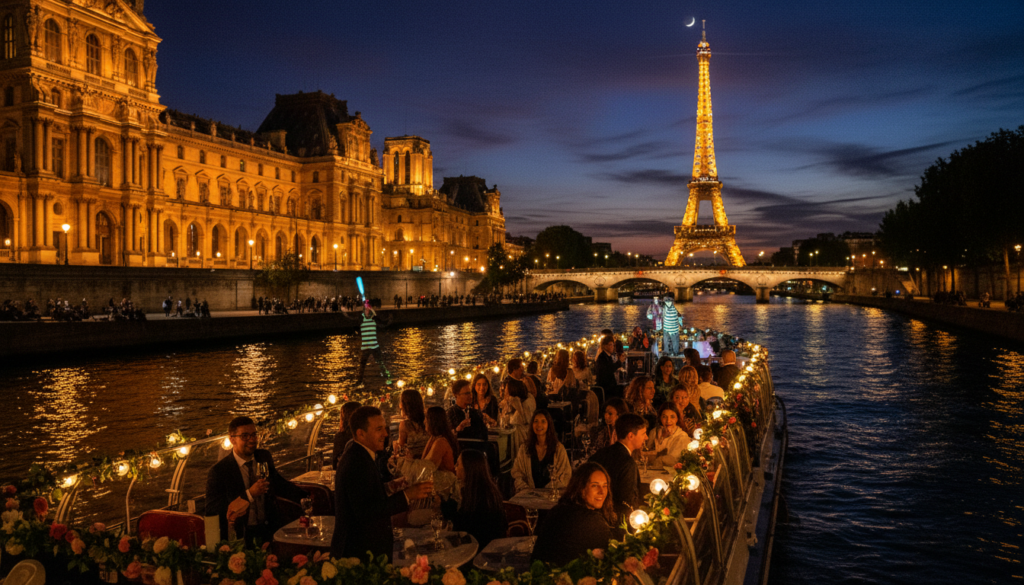
Paris is alive with entertainment and culture. You can enjoy performances, river cruises, and explore historic sites. These spots show off the city’s artistic side and offer unforgettable experiences.
Each place in Paris has its own charm. You can see dazzling stage shows, peaceful river tours, or learn about the city’s history. Paris has something for everyone, from fun to thought-provoking.
Moulin Rouge
Moulin Rouge is the world’s most famous cabaret, in Montmartre’s Pigalle neighborhood. It’s been a symbol of Parisian nightlife with its red windmill and extravagant shows. You’ll see French cancan dancing, a tradition from the Belle Époque.
There are different packages, including dinner and champagne with the show. You can pick from early or late-night shows, each lasting about two hours. The shows feature stunning costumes and choreography, making Moulin Rouge famous worldwide.
It’s important to book your tickets early, as it gets busy. People from all over come to see this iconic Parisian tradition. Dress code is smart casual, so avoid jeans and sportswear for evening shows.
Seine River Cruises
A Seine river cruise is a great way to see Paris from the water. You’ll pass by famous landmarks and enjoy the city’s beauty. The cruises start near the Eiffel Tower and go past Notre-Dame and the Musée d’Orsay.
There are many types of cruises to choose from. You can take a short sightseeing cruise or enjoy a dinner cruise with live music. It’s a great way to see the city and relax.
Many people take a cruise on their first day to get to know Paris. You’ll see attractions you want to visit later. There are even cruises with champagne tasting for a special treat.
The cruises go under beautiful bridges like Pont Neuf and Pont Alexandre III. You’ll hear about the history of the landmarks through audio guides. Evening cruises are very romantic, with the city lights reflecting on the water.
Paris Catacombs
The Paris Catacombs offer a unique look into the city’s darker side. You’ll explore underground tunnels filled with bones. It’s a journey into the city’s history that’s not for the faint of heart.
As you walk, you’ll think about life and death. The Catacombs were created in the 18th century to solve overcrowding in cemeteries. The bones are arranged in patterns that are both haunting and fascinating.
The temperature is cool all year, so bring a jacket. You’ll climb down stairs and walk through narrow spaces. It’s a unique experience that offers insights into Paris’s history and our relationship with death.
Lido de Paris
Lido de Paris on the Champs-Élysées offers another iconic cabaret experience. It features elaborate shows with dancers, costumes, and special effects. You’ll see a mix of traditional French cabaret and modern theater.
The Lido has dinner packages with French cuisine before the show. It’s located on the famous Champs-Élysées, making it easy to visit other places. Shows run all year, with new themes and performances.
The Lido’s shows are impressive, with water fountains, laser effects, and dramatic lighting. You’ll see a top-notch show that shows why Paris is the cabaret capital.
Musée Rodin is also worth visiting, as it’s perhaps the most romantic museum in Paris. It has a beautiful sculpture garden and a historic mansion. You’ll see Rodin’s famous works like “The Thinker” and “The Kiss” in a lovely setting.
The museum is open all year, and you can explore at your own pace. There’s also a café where you can relax and enjoy the atmosphere. It’s a peaceful place away from the crowds.
| Entertainment Venue | Location | Experience Type | Best For | Advance Booking |
|---|---|---|---|---|
| Moulin Rouge | Pigalle, Montmartre | Traditional cabaret show with French cancan | Classic Parisian nightlife experience | Essential |
| Seine River Cruises | Departing near Eiffel Tower | Sightseeing from water with monument views | Photography and orientation | Recommended |
| Paris Catacombs | 14th arrondissement | Underground tunnels with historic ossuaries | History enthusiasts and adventurous visitors | Highly recommended |
| Lido de Paris | Champs-Élysées | Modern cabaret with special effects | Sophisticated theatrical entertainment | Essential |
| Musée Rodin | 7th arrondissement | Sculpture museum with romantic gardens | Art lovers and couples | Optional |
Family-Friendly Attractions
Paris has amazing places for families that are both fun and educational. These spots are great for kids and keep adults entertained too.
Europe’s Premier Theme Park
Disneyland Paris is Europe’s top amusement park, welcoming 11 million visitors every year. It’s 32 kilometers east of Paris in Marne-la-Vallée. The park has two areas: Disneyland Park and Walt Disney Studios Park.
Disneyland Park is all about fairy tales, with a castle and character meet-and-greets. Walt Disney Studios Park shows off movie magic and animation. Getting there by train makes for a great day trip.
Interactive Science Discovery
Cité des Sciences et de l’Industrie is Europe’s biggest science museum, drawing 5 million visitors yearly. It’s in the Parc de la Villette and has a planetarium, the Argonaute submarine, and La Géode IMAX theatre. It’s designed for all ages, with hands-on activities to learn about science.
Classic Park Entertainment
Jardin d’Acclimatation is in the Bois de Boulogne, north of Paris. It offers rides, farm animals, and gardens. There’s a vintage carousel, mini-train, and puppet shows for old-fashioned fun.
Marine Life Exploration
Aquarium de Paris shows over 10,000 fish and invertebrates. Kids can see sharks up close and touch marine animals. It’s a great way to learn about the ocean.
When visiting Paris with kids, book tickets in advance and plan breaks. The Sacré-Cœur Basilica offers stunning views. It’s perfect for families. The Grévin Paris wax museum is also fun, with lifelike celebrity figures.
FAQ
What is the most visited attraction in Paris?
Notre-Dame Cathedral is the top spot with 13.65 million visitors each year. The Sacré-Cœur Basilica is close behind with 10.5 million. The Louvre Museum welcomes over 10 million annually. The Eiffel Tower sees nearly 7 million, and the Palace of Versailles draws 7.7 million to see its royal heritage.
How can I avoid long lines at the Eiffel Tower?
Buy advance skip-the-line tickets to skip waiting up to four hours. Book timed-entry tickets online or get guided tour packages with priority access. Visit early morning or late evening for shorter waits. The elevator and stair lines are separate, with stairs moving faster if you climb.
Do I need advance tickets for the Louvre Museum?
Yes, book skip-the-line tickets or join a guided tour for a better Louvre experience. With over 10 million visitors, pre-purchased tickets help avoid long lines at the glass pyramid. Guided tours offer expert insights into the vast collection, helping you see the highlights efficiently.
Can I visit Notre-Dame Cathedral after the 2019 fire?
Yes, Notre-Dame reopened in 2024 after the 2019 fire. You can enter free with advance reservation tickets from the official website. Tower access is limited during restoration. The cathedral’s interior features stunning stained glass and Gothic architecture.
How long should I plan for visiting the Palace of Versailles?
Plan a full day for the Palace of Versailles. It has 700+ rooms, the Hall of Mirrors, and 23 hectares of gardens. Guided tours include transportation, skip-the-line access, and expert history. Add time for the Petit Trianon and Marie Antoinette’s Hamlet village.
What are the best neighborhoods to explore in Paris?
Montmartre has a village-like charm with artistic heritage and the Sacré-Cœur Basilica. Le Marais blends medieval history with modern culture. Saint-Germain-des-Prés is known for its intellectual tradition and cafés. The Latin Quarter preserves medieval Paris. Île de la Cité is the historical heart with Notre-Dame Cathedral.
Which Paris museums are best for art lovers?
The Louvre Museum houses 35,000 artworks, including the Mona Lisa. The Musée d’Orsay showcases Impressionist and Post-Impressionist works. Centre Pompidou features contemporary art and multimedia installations. Musée Rodin offers Impressionist experiences and sculpture gardens.
What is the best way to see Paris landmarks?
Seine River cruises offer a unique view of Paris’s landmarks. They pass by the Eiffel Tower, Notre-Dame Cathedral, and more. Walking tours in neighborhoods like Montmartre and Le Marais reveal hidden gems. The Arc de Triomphe rooftop offers 360-degree views.
Are there skip-the-line options for Notre-Dame Cathedral?
Yes, Notre-Dame offers free entry with advance tickets. Guided tours provide deeper insights into the cathedral’s history and architecture. With 13.65 million visitors, planning ahead is key to avoid crowds.
What makes the Arc de Triomphe worth visiting?
The Arc de Triomphe honors French soldiers with inscriptions on its surfaces. Climbing to the rooftop offers 360-degree views of Paris. The daily re-lighting ceremony of the eternal flame is a solemn tribute to fallen soldiers.
How should I plan my visit to Montmartre?
Visit the Sacré-Cœur Basilica for stunning views and explore winding lanes. Discover small art museums, hidden parks, and historic windmills. Montmartre’s authentic charm is found away from the crowds.
What are the best parks in Paris for relaxation?
Luxembourg Gardens is Paris’s most popular park with 60 acres of beauty. Tuileries Garden stretches between the Louvre and Place de la Concorde. Jardin des Plantes and Parc des Buttes-Chaumont offer peaceful moments.
Should I take a guided tour of the Palace of Versailles?
Yes, guided tours offer skip-the-line access and expert insights. With 7.7 million visitors, tours help navigate the 700+ rooms. They cover the Hall of Mirrors and the history of King Louis XIV’s transformation of the palace.
What shopping experiences should I not miss in Paris?
Galeries Lafayette offers luxury shopping beneath an Art Nouveau dome. Le Bon Marché is the world’s first department store with gourmet food. Marché aux Puces de Saint-Ouen is a treasure trove of antiques and vintage items. The bouquinistes along the Seine sell unique souvenirs.
Is the Champs-Élysées worth visiting?
Yes, the Champs-Élysées is one of the world’s most famous avenues. It attracts 19,180 visitors daily with its luxury shops and cafés. Walking the avenue offers a taste of Parisian elegance.
What cultural entertainment should I experience in Paris?
Moulin Rouge offers a legendary nightlife experience. Lido de Paris presents spectacular cabaret shows. Seine River cruises offer romantic views of illuminated monuments. The Paris Catacombs and Palais Garnier Opera House provide unique cultural experiences.
Which attractions are best for families with children?
Disneyland Paris is a top choice for families with 11 million visitors. Cité des Sciences et de l’Industrie and Jardin d’Acclimatation offer interactive exhibits and rides. The Sacré-Cœur Basilica’s funicular railway and Montmartre’s street performers entertain all ages.
When is the best time to visit the Louvre Museum?
Visit the Louvre on weekday mornings or Wednesday and Friday evenings for smaller crowds. Booking the first time slot helps avoid tour groups. Guided tours offer expert insights and efficient navigation of the vast collection.
What makes Sainte-Chapelle special?
Sainte-Chapelle offers breathtaking stained glass windows and a soaring nave. Commissioned by King Louis IX, it houses Passion Relics. The chapel’s ethereal atmosphere is enhanced by sunlight filtering through the 13th-century glass.
How do I visit the Arc de Triomphe observation deck?
Climb stairs to the Arc de Triomphe rooftop for 360-degree views. Access requires purchasing tickets, with skip-the-line options available. Evening visits offer illuminated views, while daytime reveals architectural details.
Are there combination tickets for Paris attractions?
Yes, combination tickets and passes offer access to multiple attractions with savings. The Paris Museum Pass covers over 60 museums and monuments. Research your itinerary to determine if passes are worth it.
What should I know before visiting the Paris Catacombs?
The Paris Catacombs offer a unique experience with millions of bones arranged in artistic patterns. The tour involves walking through narrow passages. Advance tickets help avoid long lines, and arriving at opening time is best.
How can I experience authentic Parisian neighborhoods?
Explore Le Marais for its narrow streets and historic mansions. Saint-Germain-des-Prés offers intellectual atmosphere and cafés. The Latin Quarter preserves medieval Paris. Montmartre’s charm is found away from the crowds.
What makes Musée d’Orsay different from the Louvre?
Musée d’Orsay focuses on Impressionist and Post-Impressionist works. It’s housed in a stunning Beaux-Arts railway station. The Louvre covers a broader range of art and history. Musée d’Orsay offers a unique focus on a specific artistic movement.
Should I visit Versailles Palace gardens?
Yes, the Palace of Versailles gardens are a must-see. They span 23 hectares with geometric designs and fountains. The gardens offer beautiful spaces for walking and photography. Don’t miss the special fountain shows in spring and summer.
What are the best Seine River cruise options?
Seine River cruises range from simple sightseeing to dinner cruises. They pass by iconic landmarks like the Eiffel Tower. Bateaux-Mouches and Vedettes de Paris offer frequent departures with commentary.
Is Centre Pompidou worth visiting?
Yes, Centre Pompidou is a must-see with its revolutionary architecture and contemporary art. It attracts 150 million visitors. The rooftop deck and restaurant offer stunning views of Paris.
What family-friendly tips help when visiting Paris attractions?
Book skip-the-line tickets to avoid long waits. Plan breaks in parks for children to play. Choose attractions with varied activities. Visit early morning or late afternoon for fewer crowds.
Where can I find unique souvenirs in Paris?
The bouquinistes along the Seine offer unique souvenirs. Marché aux Puces de Saint-Ouen is a treasure trove of antiques. Museum gift shops sell high-quality items related to their collections.
What makes Luxembourg Gardens the most popular park?
Luxembourg Gardens is loved for its 60 acres of beauty. It has towering chestnut trees, a central pool, and beautiful statues. Despite its popularity, it rarely feels crowded due to its diverse areas.