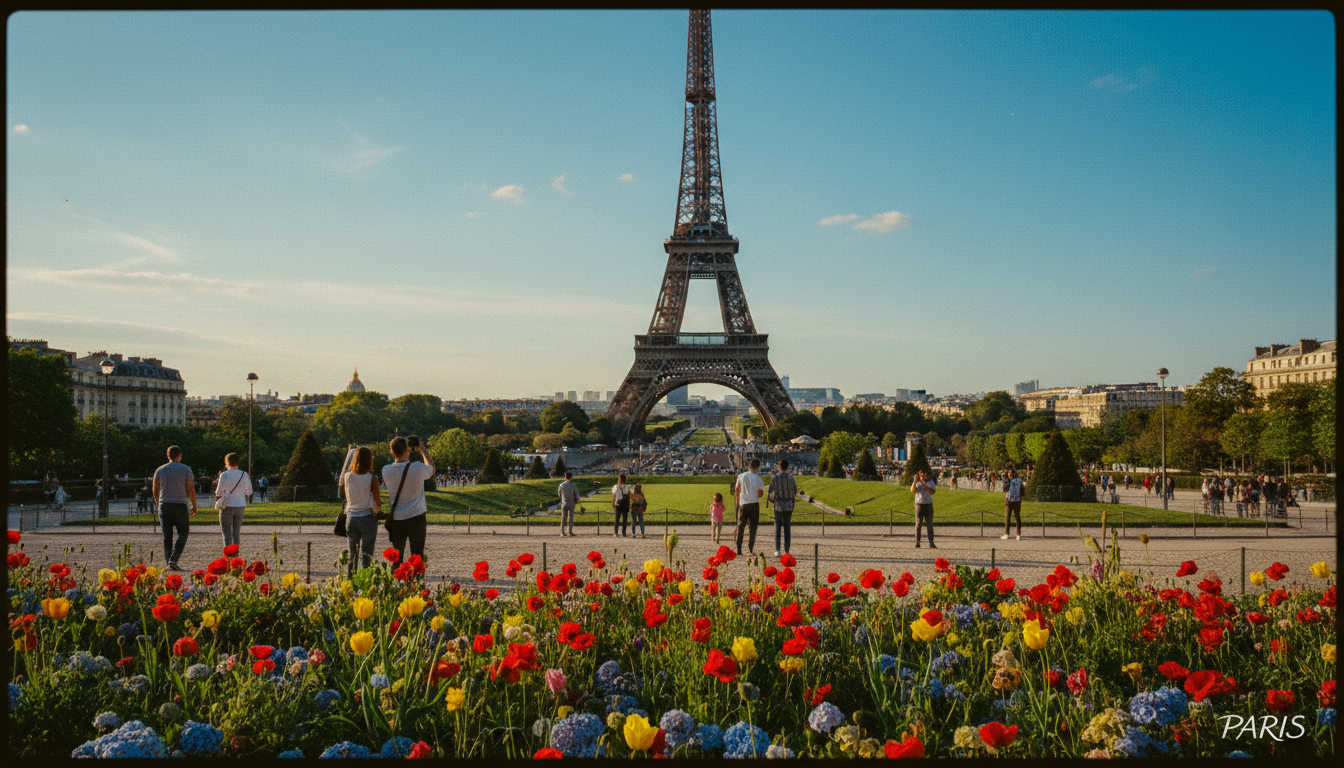
Have you ever wondered why millions of travelers choose Paris as their dream destination year after year? This enchanting city offers an extraordinary blend of romance, culture, and history. You’ll find experiences that stay with you forever.
Known as the City of Light for its early gas street lighting, Paris shines today. The Eiffel Tower stands tall, and the Louvre houses priceless treasures. You’ll also see stunning Gothic architecture and royal palaces.
Planning your visit is easier when you know the city’s layout. Consider a Paris Museum Pass or GoCity Pass to save money. Don’t pack too many activities into each day. Leave room for those magical moments that make Paris unforgettable.
Key Takeaways
- Paris earned its “City of Light” nickname from pioneering gas street lighting in the 1800s
- The city divides into easy-to-navigate arrondissements or neighborhoods for simple exploration
- Museum passes like the Paris Museum Pass and GoCity Pass offer significant savings on popular destinations
- Iconic landmarks include the Eiffel Tower, Louvre Museum, Notre Dame Cathedral, and Versailles Palace
- Leaving flexibility in your schedule allows for spontaneous discoveries and authentic local experiences
- Paris offers both famous tourist spots and hidden gems throughout its historic districts
World-Renowned Museums

Paris is home to many world-famous museums. They attract millions every year. These museums show art from ancient times to today.
Each museum has its own special feel. Whether you love old art or new, Paris has something for you. Planning your visits helps you see more without getting overwhelmed.
Louvre Museum
The Louvre is the most visited museum in the world. It welcomes over 9 million people each year. The museum is huge, covering over 60,000 square meters.
It has about 38,000 items on display. The Louvre Museum highlights include the enigmatic Mona Lisa, the graceful Venus de Milo, and the triumphant Winged Victory of Samothrace. These famous pieces draw big crowds, so plan your visit carefully.
Visiting the Louvre alone can be too much, even for first-timers. A private tour can make the experience better. You can also buy skip-the-line tickets to save time.
“A museum is a place where one should lose one’s head.”
Musée d’Orsay
The Musée d’Orsay is in a beautiful old railway station. It focuses on French art from 1848 to 1914. You’ll see Impressionist and Post-Impressionist masterpieces here.
Monet’s garden scenes, Van Gogh’s brushstrokes, and Degas’s dancers are all here. The museum is smaller than the Louvre, so you can see it in a few hours. It’s great for those who want a deep art experience without feeling rushed.
The building itself is worth seeing. Don’t miss the giant clock windows that frame spectacular views of the Seine River. They make for great photos and a break from looking at art.
Centre Pompidou
The Centre Pompidou is known for its bold design. It has Europe’s largest collection of modern and contemporary art. You’ll see works by Picasso, Matisse, Warhol, and more.
The outside plaza is lively with street performers and musicians. The upper floors offer amazing views of the city. This museum is a must-see for its art and views.
Even though the rooftop restaurant Georges is closed, the Centre Pompidou is worth visiting. It regularly changes its exhibitions, so you can always find something new.
Musée de l’Orangerie
The Musée de l’Orangerie is a peaceful place in the Tuileries Gardens. It has eight of Monet’s Water Lilies panels in oval rooms. Monet designed these spaces to surround you with his art.
These massive paintings are the peak of Monet’s work. Standing in the galleries feels like being in Monet’s garden. It’s a calm break from the busier museums.
The lower gallery has treasures by Cézanne, Renoir, Picasso, and others. Tickets are €12.50, and booking in advance is a good idea. The museum can get crowded, so plan ahead.
| Museum | Specialty Period | Approximate Visit Time | Key Feature |
|---|---|---|---|
| Louvre Museum | Ancient to 19th Century | 3-4 hours minimum | World’s largest art museum |
| Musée d’Orsay | 1848-1914 Impressionism | 2-3 hours | Converted railway station |
| Centre Pompidou | Modern & Contemporary | 2-3 hours | Inside-out architecture |
| Musée de l’Orangerie | Impressionist Masters | 1-2 hours | Monet’s Water Lilies rooms |
The Paris Museum Pass is great for those visiting many museums. It saves money and lets you skip lines. You’ll spend more time seeing art and less time waiting.
Each museum in Paris adds to its artistic reputation. Your choice depends on what you like, how much time you have, and your interests. Visiting different museums gives a full view of art history.
Historic Palaces and Estates
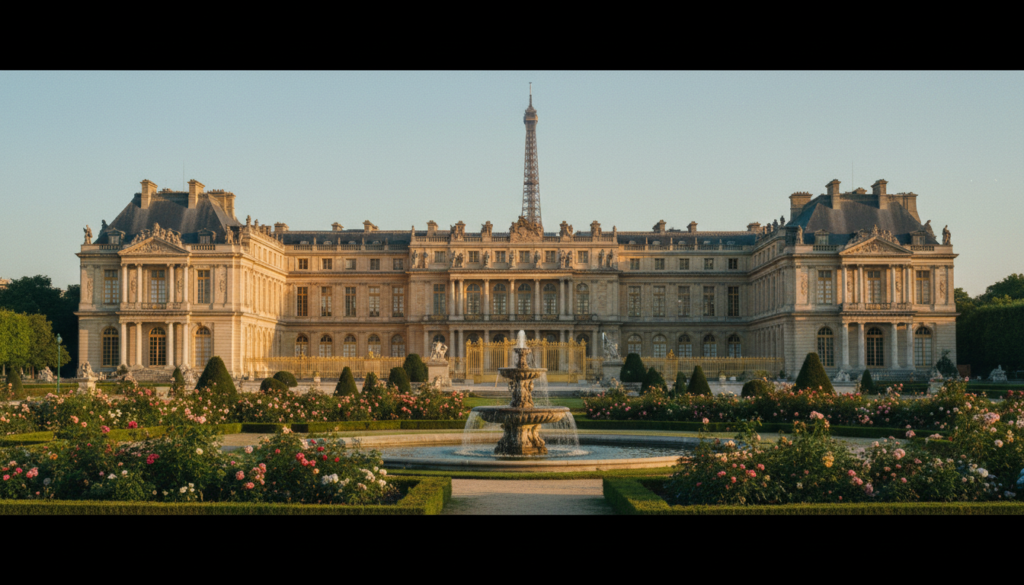
Paris is home to historic palaces and estates where you can walk in the footsteps of monarchs. These places show the grandeur of French royalty and the dreams of emperors. Each site tells a story of power, art, and culture.
Exploring these palaces and estates takes you back in time. You’ll see opulent interiors, beautiful gardens, and monuments to military heroes. It’s a journey through French heritage.
The Crown Jewel of Royal Residences
The palace of versailles is a must-see in Paris. It’s about 12 miles southwest of Paris and is a UNESCO World Heritage site. It shows the peak of royal excess and artistic achievement.
Getting to Versailles by train costs about €4 each way. Tours offer pickup and dropoff with skip-the-line access, saving time.
The palace was the royal home from 1682 until the French Revolution. This Baroque masterpiece shows the French monarchy’s excesses through its lavish interiors and grounds.
Highlights include the Hall of Mirrors and Marie Antoinette’s hamlet. The Hall of Mirrors has 357 mirrors and hosted the Treaty of Versailles signing in 1919.
Marie Antoinette’s hamlet is a charming contrast. She built it to escape court life, with a working farm and cottages.
The 2,000-acre gardens feature landscapes, fountains, and sculptures. Plan a full day to explore everything.
“Versailles is the image of Louis XIV—immense, proud, and perfectly ordered, a monument to absolute power transformed into art.”
Timed tickets give full access to the palace and gardens. Day tour tickets include transport and priority entrance, recommended in peak seasons.
An Elegant Urban Retreat
The palais royal is near the Louvre in central Paris. It offers a quieter palace experience away from crowds. The gardens and arcaded buildings create a peaceful oasis.
The courtyard has a contemporary art installation by Daniel Buren. The black-and-white columns contrast with the classical architecture.
Stroll through the gardens surrounded by arcaded buildings with shops and restaurants. It’s a great spot for a break during sightseeing.
A Temple of Performance and Beauty
The palais garnier opera house is a masterpiece built in the late 1800s. It showcases the opulence of Second Empire style with gold leaf, marble, and velvet.
The marble staircase welcomes visitors with its sweeping design. The Grand Foyer stretches 154 feet long with gilded mosaics and ceiling paintings.
The auditorium features a famous painted ceiling by Marc Chagall in 1964. This addition brought modern art to the historic venue.
The building inspired “The Phantom of the Opera.” Visit Box Five, where the phantom supposedly haunted, adding mystery to your visit.
Entry costs €15 for self-guided visits. The multimedia guide for €8 is recommended for detailed explanations.
Advanced booking is essential as tickets often sell out, during summer and holidays. Check performance schedules before visiting, as some areas close during shows.
Military Glory and Imperial Legacy
The hôtel des invalides complex combines military history with architectural grandeur. It was commissioned by Louis XIV in 1670 as a hospital and retirement home for war veterans.
Napoleon Bonaparte’s monumental tomb is a highlight. This large monument sits inside a building that served as the royal church during Louis XIV’s reign and later sheltered Allied pilots during World War II.
The complex houses several military museums, including the Musée de l’Armée. It features a world-class military history collection with weapons, armor, uniforms, and artifacts.
It offers insights into France’s military heritage and Napoleon’s influence on European history. The architectural splendor and historical significance make it a compelling destination.
| Palace | Key Features | Entry Fee | Best Time to Visit |
|---|---|---|---|
| Palace of Versailles | Hall of Mirrors, Marie Antoinette’s Hamlet, 2,000-acre gardens | Varies by ticket type (from €27) | Weekday mornings to avoid crowds |
| Palais Garnier | Grand marble staircase, Chagall ceiling, Phantom’s Box Five | €15 (€23 with guide) | Early afternoon between performances |
| Hôtel des Invalides | Napoleon’s Tomb, golden dome, military museums | €14 (includes museums) | Late morning midweek |
| Palais Royal | Buren columns, arcaded gardens, peaceful courtyards | Free | Early morning or late afternoon |
Each palace and estate offers a unique view of French history and architecture. Whether you’re interested in royal extravagance, artistic brilliance, or military heritage, these sites provide unforgettable experiences that bring history to life.
Stunning Churches and Cathedrals
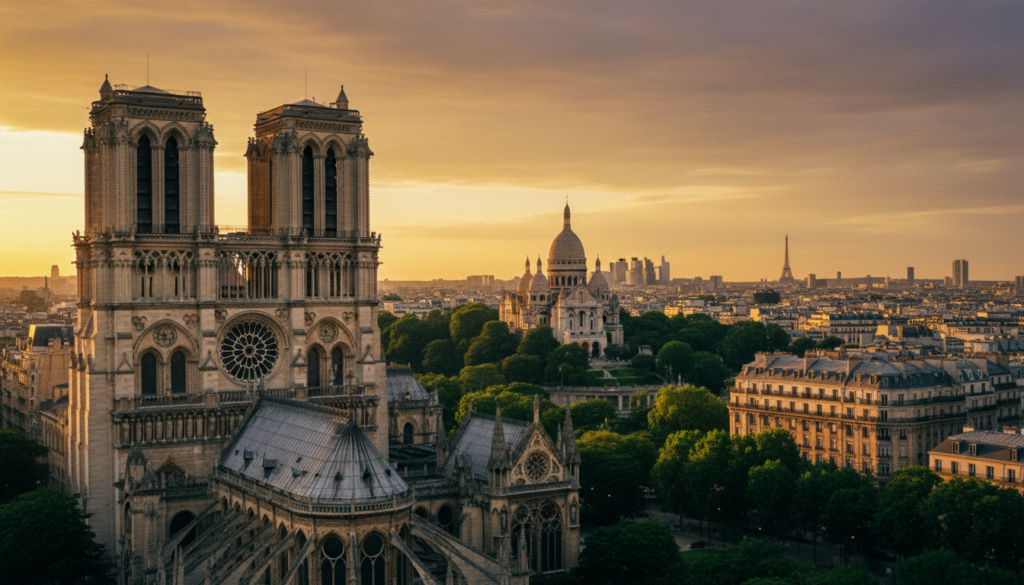
The city’s stunning churches and cathedrals showcase masterpieces of sacred architecture. They span from medieval times to the modern era. These religious landmarks represent centuries of artistic devotion, from Gothic spires to breathtaking stained glass installations. Visiting these spiritual spaces ranks among the best activities in Paris for anyone interested in history, art, or architecture.
Each cathedral tells its own story through stone carvings, soaring vaults, and luminous windows. You’ll discover architectural innovations that influenced religious buildings across Europe. Many of these sacred sites remain active places of worship while welcoming visitors from around the world.
A Phoenix Rises: Notre-Dame Cathedral
Notre-Dame Cathedral reopened in December 2024 after five years of intensive restoration. The medieval masterpiece emerged from the flames cleaner than it has appeared in centuries. Construction began in 1163 and continued for nearly 200 years, creating one of the finest examples of French Gothic architecture.
The cathedral’s western facade features three ornate portals topped by the Gallery of Kings. Inside, the soaring nave reaches 115 feet high, supported by iconic flying buttresses that revolutionized medieval engineering. The fire destroyed the spire and much of the roof, but the main structure, towers, and most precious artifacts survived.
You can book a free time slot to visit the newly refreshed church interior through advance reservations. The restoration removed layers of soot and grime, revealing stonework and colors not seen in generations. The Gothic facade displays intricacies and gargoyles that have watched over Paris for eight centuries.
Notre-Dame Cathedral tours of the exterior and crypt provide fascinating insights into its history. The towers remain closed to visitors as restoration work continues. Positioned majestically on the Île de la Cité, the cathedral stands as the spiritual heart of Paris.
A Kaleidoscope of Light: Sainte-Chapelle
Sainte-Chapelle offers what many consider the most breathtaking church interior in Paris. This Gothic chapel was completed in 1248 in just seven years—remarkably fast for medieval construction. King Louis IX commissioned it to house his collection of Passion relics, including the alleged Crown of Thorns worn by Jesus.
The chapel consists of two levels tucked within the Palais de Justice complex on the Île de la Cité. The lower chapel served palace staff, while the upper chapel dazzles with 15 stained-glass windows soaring 50 feet high. These windows contain 1,113 scenes depicting biblical stories from Genesis to the Resurrection.
Approximately two-thirds of the glass is original 13th-century work—an extraordinary survival rate. The elaborate stained-glass windows bathe the space in kaleidoscopic colored light. Visiting Sainte-Chapelle on sunny days maximizes the light show effect, though the chapel impresses regardless of weather.
Entry costs €19, and advance booking helps avoid long queues. The small Gothic-style chapel represents one of the most extensive collections of 13th-century stained glass in the world. Accessing the upper chapel requires climbing a narrow spiral staircase.
Temple of Great Minds: The Panthéon
The Panthéon crowns the highest point on Paris’s Left Bank in the Latin Quarter. Originally built as a church dedicated to St. Genevieve, the French Revolution transformed it into a mausoleum for France’s greatest citizens. The building’s neoclassical architecture features a massive dome inspired by St. Peter’s Basilica in Rome.
Inside, you’ll find tombs of luminaries including Voltaire, Rousseau, Victor Hugo, Marie Curie, and Alexandre Dumas. The interior showcases impressive murals depicting scenes from French history. The Panthéon also houses Foucault’s Pendulum, which demonstrates Earth’s rotation through an elegant scientific experiment.
The crypts beneath the main floor contain rows of tombs honoring philosophers, writers, scientists, and political figures. Visiting this monument provides insight into the individuals who shaped French culture and thought. The dome’s interior features stunning frescoes that celebrate French saints and national heroes.
Basilica Above the City: Sacré-Cœur
The Sacré-Cœur Basilica presides over Montmartre’s highest point, providing spectacular views across Paris. This Romano-Byzantine basilica was completed in 1914 after nearly 40 years of construction. Its distinctive white travertine stone self-cleans through calcite secretion when it rains, maintaining its gleaming appearance.
Sacré-Cœur Basilica views from the steps have become legendary among photographers and sunset watchers. The interior features one of the world’s largest mosaics, depicting Christ in Majesty. The basilica opened in 1914 but represents a newer addition to Paris’s religious architecture compared to medieval structures.
The steps leading up to the basilica have become a popular gathering spot for visitors. A small funicular provides an alternative to climbing the numerous stairs if you prefer. The church serves more as a general hangout spot and viewpoint than a traditional pilgrimage site.
Literary Fame: Saint-Sulpice Church
Saint-Sulpice Church gained worldwide recognition after its featured appearance in “The Da Vinci Code.” This architectural masterpiece displays mismatched towers that create a distinctive asymmetrical facade. The church houses one of the largest organs in France, with over 6,500 pipes producing magnificent sound.
The interior contains impressive murals by Eugène Delacroix in the Chapel of the Holy Angels. A brass meridian line runs across the floor, installed in the 18th century for astronomical observations. Saint-Sulpice Church represents another layer of Paris’s rich religious architectural heritage.
Located in the Saint-Germain-des-Prés neighborhood, the church welcomes visitors free of charge. The building’s construction spanned more than a century, beginning in 1646. Its grand scale and artistic treasures make it worthy of inclusion in any church exploration.
Picturesque Neighborhoods
Paris is a collection of distinct villages, each with its own charm. These neighborhoods show different sides of city life. You can find new corners and hidden gems every day.
Exploring these areas lets you see the real Paris, beyond famous landmarks. You’ll find local bakeries, cafés, and residential streets. Each district has its own unique feel, making Paris a diverse city.
The Bohemian Artists’ Hill
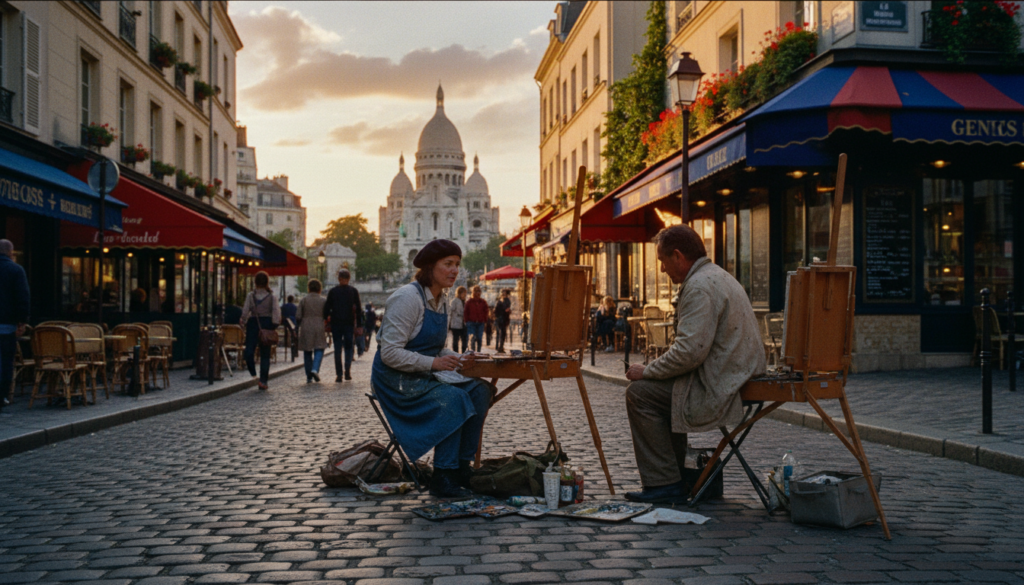
Montmartre sits on Paris’s highest hill, with stunning views. It was once a village for struggling artists. Picasso, Van Gogh, Degas, and Toulouse-Lautrec lived here during their creative years.
Winding cobblestone streets and ivy-covered houses give Montmartre its village feel. Place du Tertre square is alive with street artists. They sketch portraits and sell paintings, keeping the artistic tradition alive.
The white domes of Sacré-Cœur Basilica top the hill, visible from many places. You can take a funicular or climb 197 steps to reach it. Square Marcel Bleustein Blanchet is another great spot for photos.
Montmartre walking tours show you hidden spots. You’ll see the last urban vineyard, Moulin Rouge, and Musée de Montmartre. Food tours offer French cuisine and wine at eight locations.
Historic District Meets Modern Trendsetter
Le Marais is a mix of old and new, in the 3rd and 4th arrondissements. It was once a swamp, drained in the 12th century. In the 17th century, aristocrats built mansions here, many of which remain.
Place des Vosges is the heart of le marais architecture. This square, Paris’s oldest, has red brick buildings with arched arcades. Victor Hugo lived here, and his apartment is now a museum.
Today, le marais is full of modern energy and creativity. Trendy boutiques and art galleries line Rue des Francs-Bourgeois. Rue des Rosiers is famous for its falafel, adding to the vibrant food scene.
Hidden courtyards can be found by opening wooden doors marked “ouvert.” These secret spaces show off stunning architecture and peaceful gardens. The area is also a hub for Paris’s LGBTQ+ community, around Rue Sainte-Croix de la Bretonnerie.
Left Bank Intellectual Haven
Saint-germain-des-prés is the heart of Left Bank Paris, known for its intellectual and artistic vibe. The ancient church of Saint-Germain-des-Prés dates back to the 6th century. It’s Paris’s oldest church and a historical gem.
The district’s famous cafés were once haunts of famous writers. Café de Flore and Les Deux Magots welcomed Jean-Paul Sartre, Simone de Beauvoir, Ernest Hemingway, and F. Scott Fitzgerald. You can sit at these cafés and feel the literary atmosphere.
Boulevard Saint-Germain is known for luxury shopping and people-watching. Side streets have antique dealers, bookshops, and art galleries. The neighborhood blends its rich history with modern elegance.
Medieval Scholar’s District
The Latin Quarter got its name from medieval students who spoke Latin. The Sorbonne University, founded in 1257, is at its heart. Students fill the cafés and bookshops along the narrow streets.
Shakespeare and Company bookstore is a literary haven on the Left Bank. This cozy shop has been welcoming book lovers for decades. You can browse shelves and attend author readings.
Rue Mouffetard is one of Paris’s oldest and most charming market streets. The market offers fresh produce, cheese, and French specialties. The Panthéon and Luxembourg Gardens are nearby, adding to the area’s charm.
The île de la cité is in the Latin Quarter, marking Paris’s historical and geographical center. It’s home to Notre-Dame Cathedral and Sainte-Chapelle. This island is where Paris began over 2,000 years ago.
| Neighborhood | Main Character | Must-See Feature | Best Activity |
|---|---|---|---|
| Montmartre | Bohemian artists’ village | Sacré-Cœur Basilica views | Walking the cobblestone streets |
| Le Marais | Historic meets trendy | Place des Vosges square | Exploring hidden courtyards |
| Saint-Germain-des-Prés | Intellectual Left Bank | Historic literary cafés | Café-hopping and shopping |
| Latin Quarter | Medieval scholarly district | Shakespeare and Company | Browsing bookshops and markets |
These neighborhoods offer more than sightseeing. They give a glimpse into Paris’s history and modern life. Spend days exploring, discovering cafés, shops, and streets that show the city’s true character.
Parks and Gardens
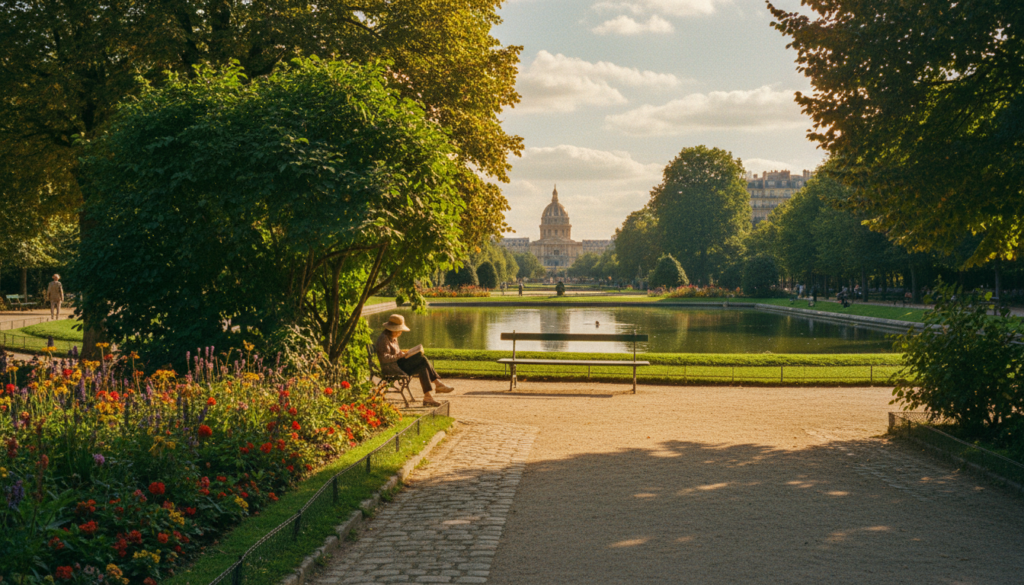
Paris is known for its beautiful green spaces. From French gardens to hillside parks, there’s something for everyone. These spots are perfect for relaxing, having a picnic, or enjoying the fresh air.
What’s great is that all Parisian parks are free to visit. This makes them a budget-friendly addition to your trip. You’ll see locals and visitors enjoying these spaces, away from the crowds.
A Royal Retreat in the Heart of Paris
The Luxembourg Gardens is a 23-hectare oasis around the Luxembourg Palace. It was created in 1612 by Marie de’ Medici, inspired by the Boboli Gardens. The park features French formal design with neat flowerbeds and trees.
There are over 100 statues, including those of famous writers and composers. The Grand Bassin is the main attraction where kids sail boats. The Medici Fountain is a peaceful spot for reflection.
Free chairs are scattered around the garden. Grab one and enjoy reading, people-watching, or just relaxing. The park also has a playground, puppet theater, tennis courts, and beehives that produce honey.
“The Luxembourg Garden is the garden of gardens, the park of parks.”
The Louvre’s Green Extension
The Tuileries Garden stretches along the Seine River. It was designed by André Le Nôtre in 1664. The garden has a central axis with chestnut trees along the sides.
There are pools where kids can sail boats, just like at Luxembourg. Modern sculptures are scattered throughout. The terraces along the Seine offer great views and quieter spots.
Spring brings tulips, and autumn turns the chestnut trees golden. Cafés in the garden provide refreshments, with Café Diane near the Louvre.
Paris’s Living Botanical Museum
Jardin des Plantes is Paris’s botanical garden, started in 1626. It has themed areas like an alpine garden and rose garden. It’s known for its educational focus.
The park is home to the Natural History Museum, a small zoo, and stunning greenhouses. The Grande Galerie de l’Évolution has amazing taxidermy displays. This garden offers a naturalistic experience.
Explore plants from around the world. The greenhouses have tropical and desert plants. This mix of science and beauty is perfect for curious minds.
A Dramatic Local Favorite
Parc des Buttes-Chaumont is a romantic park with an English landscape design. It was created in 1867 on former gypsum quarry sites. It has steep hills, waterfalls, and a suspended bridge.
This park is loved by locals, making it a great place to see everyday Parisian life. It’s away from tourist areas, so you’ll have more space. The lake and wooded areas invite exploration.
The park’s natural features offer a peaceful escape. You can picnic, cross the bridge for views, or wander and find hidden spots.
| Park Name | Size | Design Style | Key Features | Best For |
|---|---|---|---|---|
| Luxembourg Gardens | 23 hectares | Formal French | Grand Bassin, 100+ statues, Medici Fountain, puppet theater | Families, relaxation, central location |
| Tuileries Garden | 25 hectares | Formal French | Sculpture collection, Seine views, chestnut tree allées | Museum visits, photography, seasonal blooms |
| Jardin des Plantes | 28 hectares | Botanical | Themed gardens, Natural History Museum, historic greenhouses | Education, plant lovers, families with children |
| Parc des Buttes-Chaumont | 25 hectares | English Landscape | Temple de la Sibylle, suspended bridge, waterfalls, lake | Local atmosphere, dramatic scenery, hiking trails |
Each park offers a unique experience in Paris. Whether you want elegance, education, or drama, these spaces are essential. Pack a picnic, bring a book, and enjoy Paris at a slower pace.
Shopping and Market Sights
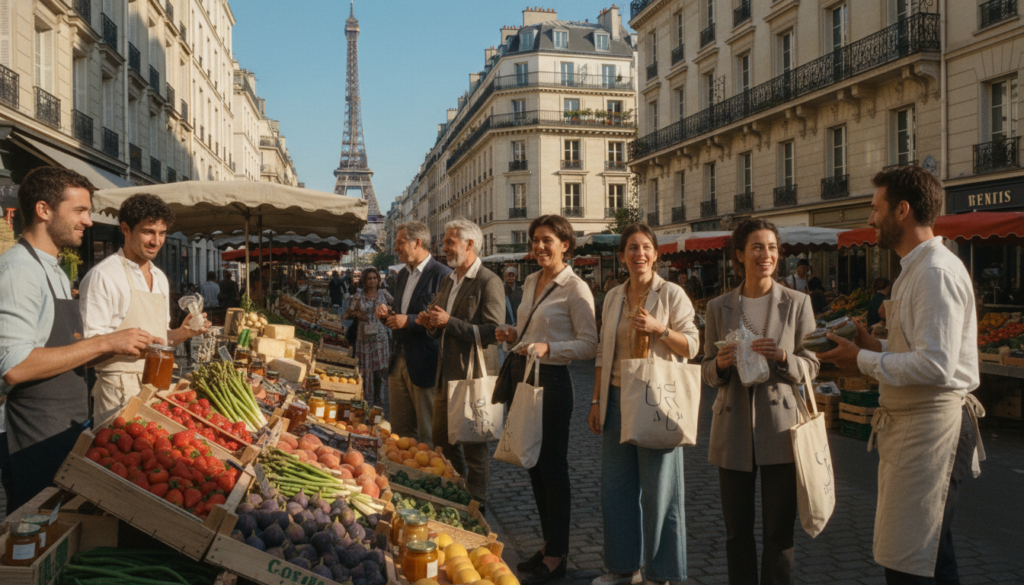
Paris is a city where shopping meets culture. You can find everything from grand department stores to riverside book stalls. Flea markets add to the mix, showing different sides of Parisian life.
Looking for luxury brands or vintage finds? Paris has it all. Each place tells a story about the city’s history and lifestyle. Shopping here is an adventure that engages all your senses.
A Historic Shopping Cathedral
Galeries Lafayette is a top Parisian department store on Boulevard Haussmann. It opened in 1893 with a stunning Art Nouveau glass dome. This makes shopping feel like an art form.
The store has three buildings, filled with fashion, beauty, and home goods. The seventh floor, Lafayette Gourmet, has a wide range of French foods. It’s perfect for gifts or treats.
Galeries Lafayette also offers great views and tax-free shopping. Don’t miss the famous Christmas window displays. They draw crowds with their animated scenes.
The World’s First Department Store
Le Bon Marché was the world’s first department store, founded in 1838. It introduced marked prices and mail-order catalogs in the 1850s. This changed shopping forever.
Located in the 7th arrondissement, Le Bon Marché offers high-end fashion and beauty. Its Art Deco architecture makes shopping special. The adjacent La Grande Épicerie de Paris is a food lover’s dream.
Here, you’ll find gourmet products from around the world. Walking through is like a culinary journey. It’s a feast for your eyes and taste buds.
“Le Bon Marché invented the modern way of shopping, turning it into a leisure activity.”
Europe’s Treasure Trove
Marché aux Puces de Saint-Ouen is Europe’s largest antique and flea market. It spans seven hectares in Saint-Ouen. With 12 distinct markets, it’s a treasure trove of unique finds.
Marché Vernaison is the oldest section, filled with vintage jewelry and antique furniture. Marché Paul Bert has high-end antiques. Marché Malik is for vintage clothing and military items.
The market is open Saturdays, Sundays, and Mondays. Arrive early to find the best deals. Bring cash for small vendors. The market’s atmosphere and hidden gems make it special.
Authentic Market Street Life
Rue Mouffetard Market offers a glimpse into Parisian life. This ancient street in the 5th arrondissement has been a hub for centuries. Outdoor stalls line the cobblestones, creating a lively scene.
Stalls sell fresh produce, meats, cheeses, and more. Specialty shops add to the charm. It’s where locals shop, making it a true Parisian experience.
The market is a must-see in the morning. Explore the side streets for more shops and cafés. It’s a chance to see Paris like a local.
The bouquinistes along the Seine are another must-see. These green boxes sell used books and more. Walking along the river, you’ll find a romantic shopping experience.
| Shopping Venue | Location | Best For | Operating Days |
|---|---|---|---|
| Galeries Lafayette | 9th arrondissement, Boulevard Haussmann | Luxury fashion, gourmet foods, panoramic views | Monday through Saturday |
| Le Bon Marché | 7th arrondissement, Left Bank | High-end fashion, La Grande Épicerie food hall | Monday through Saturday |
| Marché aux Puces de Saint-Ouen | Saint-Ouen (northern suburb) | Antiques, vintage clothing, collectibles | Saturday, Sunday, Monday |
| Rue Mouffetard Market | 5th arrondissement, Latin Quarter | Fresh produce, artisan foods, local atmosphere | Tuesday through Sunday mornings |
Entertainment and Nightlife Attractions
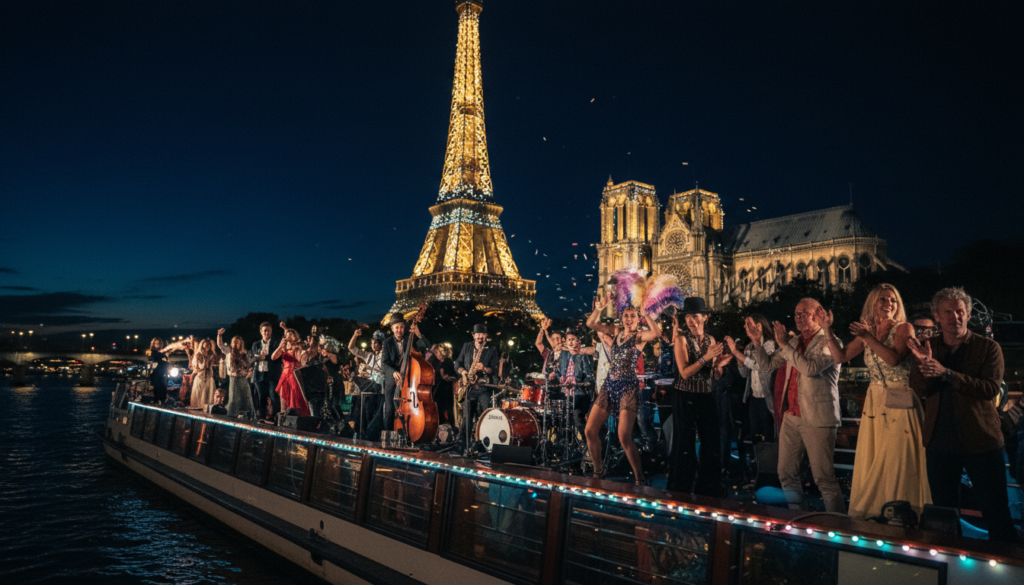
When night falls in Paris, the city lights up with shows, river cruises, and underground tours. You can enjoy world-famous cabarets, romantic boat rides, and even spooky historical sites. These entertainment and nightlife attractions show a different Paris, full of light and night-time fun.
Paris has something for everyone at night. You can see shows, go on family-friendly cruises, or try unique Paris experiences. There’s something for every taste and budget.
Paris is unforgettable after dark. Many visitors find that things to do in Paris at night offer a new view of this historic city.
Iconic Cabaret Theater in Montmartre
The Moulin Rouge is Paris’s most famous cabaret. It’s known for its red windmill and scandalous cancan dancers. Today, it offers “Féerie” shows with elaborate costumes and routines.
At the Moulin Rouge, 60 Doriss Girls perform in stunning outfits. They dance topless, keeping the venue’s reputation alive. The show is memorable, even if the dance is simple.
Special acts like acrobats and jugglers add to the excitement. These acts are often the show’s highlights. They show off incredible skills.
Shows run at 9 p.m. and 11 p.m. Tickets start at €118 per person. Book early, as the earlier show is more popular. The seating is cramped, but the show is worth it.
Most people skip the dinner option. It’s expensive and uncomfortable. Dress smartly, as the venue has a dress code.
Contemporary Cabaret on the Champs-Élysées
Lido de Paris offers a modern take on cabaret. It’s on the Champs-Élysées, with 23 Bluebell Girls performing. The show features video projections and special acts.
The Lido has better seats than the Moulin Rouge. It’s more modern, appealing to those who like new things. It’s a good choice for a different vibe.
Some like the Lido for its vibe and facilities. Others prefer the Moulin Rouge for its history. It depends on what you value more.
Romantic Waterway Journeys
Seine River cruises are relaxing and fun for all. You’ll see landmarks lit up at night. The Eiffel Tower and Louvre are highlights.
Standard cruises last an hour and cost about €17 per person. They offer audio guides in many languages. No need to book ahead, but sunset cruises are popular.
Just taking a basic cruise is a great way to see Paris. It’s a short, memorable trip. You don’t need to spend a lot.
Dinner cruises are more special. They offer meals and live music. Prices start at €75-€100 per person.
Seeing Paris from the water is unique. You’ll see details and lights you miss on land. The Seine offers a great view of the city’s landmarks.
Underground Ossuary Experience
The Paris Catacombs are a unique attraction. They’re a network of tunnels with human bones. The bones were moved here in the late 18th century.
Visitors walk about a mile of tunnels. The bones are arranged in decorative patterns. Philosophical quotes add to the experience.
The Catacombs are always dark and cool. Wear comfortable shoes and a jacket. It’s a fascinating but disturbing experience.
It’s not for everyone, but it’s memorable. Consider your comfort with human remains. It’s not suitable for young children or those who don’t like mortality themes.
Book tickets in advance, as it often sells out. Visits last about 45 minutes. It’s a unique part of Paris’s nightlife.
Paris also has jazz clubs, cocktail bars, and nightclubs. Wine bars offer French wines by the glass. There’s something for every taste.
Family-Friendly Sights and Attractions
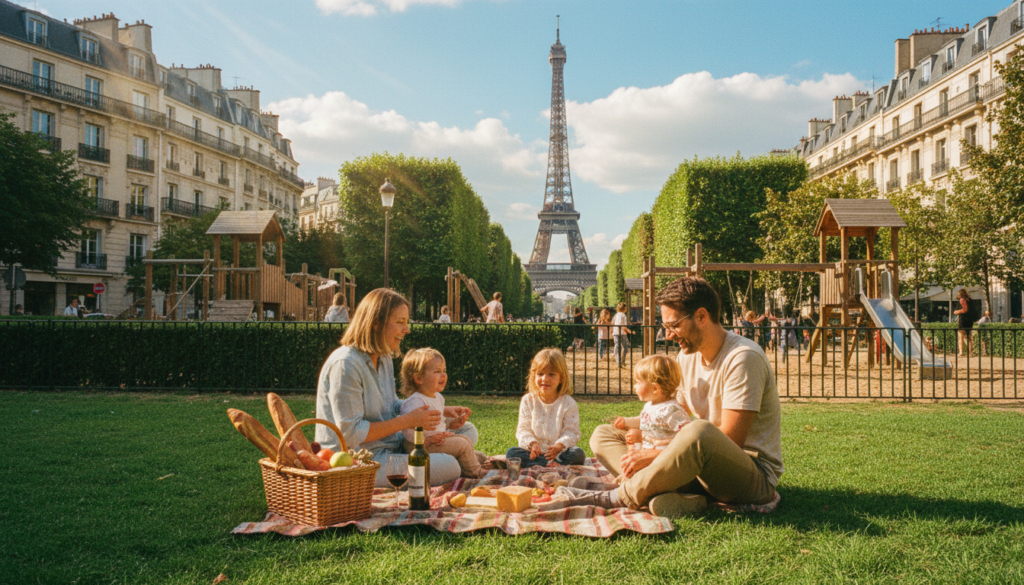
Paris is not just for couples; it’s also a haven for families. The city has attractions that are perfect for kids of all ages. You can explore iconic landmarks and places made just for children.
Planning your trip with kid-friendly spots helps avoid boredom. Many attractions are close to major areas, making it easy to get around. Paris offers fun and learning for both kids and adults.
Magic and Adventure at Europe’s Premier Theme Park
Disneyland Paris is a top spot for family fun, just 20 miles from Paris. It has two parks: Disneyland Park and Walt Disney Studios Park. Disneyland Park has classic Disney magic and rides that kids love.
Walt Disney Studios Park is all about movies and animation. You’ll see Marvel and Star Wars, and meet Pixar characters. Both parks are small, so you can see most attractions in one day.
The RER Line A train takes you to Disneyland Paris in 40 minutes. No need for cars or expensive shuttles. Buy tickets online to save money and skip lines.
Visit during off-peak times for shorter wait times. Avoid French school holidays for fewer crowds. The parks are open all year, with special decorations for Halloween and Christmas.
Europe’s Largest Interactive Science Museum
The Cité des Sciences et de l’Industrie is in northeastern Paris. It’s a huge science museum with hands-on exhibits. Kids can learn about space, math, and more through play.
The Cité des Enfants has two areas for different ages. Young kids can play in one area, while older kids can try more challenging activities. It’s a place where kids can discover and learn.
“The best family museums don’t just display information—they invite children to discover through direct experience and play.”
At the Cité des Sciences et de l’Industrie, kids can try out water systems and even a submarine. There’s also a planetarium and IMAX theater. Spend at least half a day here to see it all.
The museum is in the Parc de la Villette. There’s also a big park with playgrounds and boat rides. It’s a great place for a picnic.
Historic Amusement Park for Younger Children
The Jardin d’Acclimatation has been around for 160 years. It’s in the Bois de Boulogne and has old-world charm. There are rides and animals that are perfect for little kids.
There are farm animals, playgrounds, and shows. The park has both old and new attractions. It’s great for toddlers and early elementary-age kids.
The park is small, so you can walk it in 30 minutes. Families usually spend 3-4 hours here. It’s easy to get to by metro, and it’s not too expensive.
Underwater World Near the Eiffel Tower
The Aquarium de Paris is right across from the Eiffel Tower. It has over 10,000 fish and 450 species. The shark tank is a highlight, with a tunnel for walking through.
Children can touch certain fish in the stroke tank. There are feeding demonstrations and an area for clownfish. It’s a great place for kids to learn about marine life.
The aquarium is close to the Eiffel Tower. You can visit the aquarium in the morning and then go to the tower. Shows and feeding times are on a schedule at the entrance.
Comparison of Family Entertainment Options
| Attraction | Best Age Range | Time Needed | Location | Main Appeal |
|---|---|---|---|---|
| Disneyland Paris | 3-15 years | Full day (6-8 hours) | Marne-la-Vallée (20 miles east) | Theme park rides and Disney characters |
| Cité des Sciences et de l’Industrie | 2-12 years | Half day (4-5 hours) | Parc de la Villette (19th arr.) | Interactive science exhibits and planetarium |
| Jardin d’Acclimatation | 2-8 years | 3-4 hours | Bois de Boulogne (16th arr.) | Gentle rides and farm animals |
| Aquarium de Paris | 3-10 years | 2-3 hours | Trocadéro (16th arr.) | Shark tank and marine life exhibits |
Additional Family Attractions Worth Visiting
The Grévin Paris wax museum is a hit with kids. It has realistic figures of celebrities. You can take photos with Disney characters and soccer stars.
It’s in the 9th arrondissement, near the Grands Boulevards. Spend 2-3 hours here. Kids aged 5-12 love it, and younger and older siblings find it fun too.
Luxembourg Gardens is another great spot. Kids can sail boats, watch puppet shows, and play in playgrounds. It’s a free place to relax and have fun.
Many Paris attractions are good for families. The Eiffel Tower is exciting for all ages. Seine River cruises are relaxing. And don’t forget the patisseries and creperies for treats.
Make sure to balance museum visits with outdoor time. Take breaks at playgrounds to let kids run around. Don’t forget to rest at your hotel or apartment to avoid exhaustion.
Tips for Exploring Sights and Attractions in Paris
Planning ahead can make your Paris trip unforgettable. Buy a Paris Museum Pass or GoCity Pass to save money. These passes give you access to many sites for one price. The GoCity Pass offers 2-, 3-, 4-, or 6-day passes. The Paris Museum Pass lets you visit over 60 museums and monuments for 2-, 4-, or 6-days.
Book timed tickets early to avoid long lines. Popular spots fill up fast, so plan ahead. Arriving early means fewer crowds and better photos.
Don’t try to see too much each day. Leave time for surprises like finding hidden cafés or markets. Paris is best enjoyed at your own pace.
Big Bus tours are great for seeing the city. They offer 24- and 48-hour passes with Seine river cruises. These tours help you get the hang of Paris’s layout.
The Musée Rodin is a must-see. It features famous sculptures like The Thinker and The Kiss in beautiful gardens. It’s a peaceful break from the hustle and bustle.
For Versailles, get there early to beat the crowds. Check schedules at places like Palais Garnier, as some areas close for shows. Visit Sainte-Chapelle on sunny days for the best stained glass views. These tips will help you enjoy Paris to the fullest.
FAQ
Is the Paris Museum Pass worth purchasing for visiting sights and attractions in Paris?
The Paris Museum Pass is a good deal if you plan to see many museums and monuments. It lets you skip long lines at over 60 sites like the Louvre and Versailles. You can choose from 2, 4, or 6 days for around €62, €77, and €92.
It saves money if you visit 3-4 major spots. Plus, it saves time at busy places. Check if it fits your plans to see if it’s worth it.
How much time should I allocate for visiting the Louvre Museum?
Spend at least 3-4 hours for the Louvre’s highlights, or a full day for more. With 38,000 objects, seeing everything takes weeks. Guided tours help you see masterpieces like the Mona Lisa.
Arrive early to avoid crowds. Book tickets in advance, as the museum often sells out in summer.
What is the best time to visit the Eiffel Tower to avoid crowds?
Visit early morning or evening after 8 p.m. for smaller crowds. Early morning offers great photos. Evening visits show Paris lit up.
Avoid mid-day, 11 a.m. to 3 p.m. when it’s busiest. Book tickets weeks in advance, as it often sells out.
Has Notre-Dame Cathedral reopened after the 2019 fire?
Yes, Notre-Dame reopened in December 2024 after a big restoration. The fire revealed hidden colors and stonework. Now, you can see the interior with free timed-entry tickets.
The towers are closed, but exterior tours are available. The main structure and most artifacts survived the fire.
How do I get to the Palace of Versailles from central Paris?
Take RER Line C train from central Paris to Versailles Château Rive Gauche. It’s about 40 minutes. The station is a 10-minute walk from the palace.
Buy a specific ticket to Versailles. Tours include transportation and skip-the-line access.
Which Paris neighborhood should I stay in for easy access to major sights and attractions?
Stay in the 1st, 4th, 5th, 6th, or 7th arrondissements. They’re close to major sights. The 1st arrondissement is near the Louvre and Tuileries Gardens.
The 4th arrondissement has a charming historic feel. The 5th and 6th offer a Left Bank vibe. The 7th is near the Eiffel Tower.
Do I need to book tickets in advance for Sainte-Chapelle?
Yes, book tickets in advance for Sainte-Chapelle. It’s popular and often sells out. Walk-up tickets are rare.
Advance tickets save time and money. The chapel’s stained-glass windows are a must-see. The Paris Museum Pass includes entry.
Is it worth taking a Seine River Cruise in Paris?
Seine River Cruises are great value. They offer a relaxing way to see Paris’s sights. A one-hour cruise costs around €17.
Evening cruises are magical. They’re perfect for families. Consider a cruise on your first day for orientation.
What should I see in Montmartre beside Sacré-Cœur Basilica?
Montmartre has more than Sacré-Cœur. Visit Place du Tertre for artists. Explore the Musée de Montmartre for history.
See the Montmartre vineyard and charming streets. The Moulin Rouge is a must-see. Hidden spots and staircases are everywhere.
How long does a visit to the Palace of Versailles take?
Spend a full day at Versailles. The palace takes 2-3 hours. The gardens need 2-3 hours too.
Marie Antoinette’s estate adds another 1-2 hours. Arrive early to avoid crowds. Focus on the palace and main garden if short on time.
Are the Moulin Rouge cabaret shows appropriate for children?
The Moulin Rouge is not for young children. It’s not suitable for kids under 6. The show is not recommended for children under 12-13.
The costumes are revealing. The cancan dancing is suggestive. Families should choose other entertainment options.
What is the best way to visit the Musée d’Orsay?
Book timed-entry tickets for the Musée d’Orsay. Start on the fifth floor for Impressionist masterpieces. Work your way down to avoid fatigue.
Plan for 2-3 hours. Thursday evenings are less crowded. The museum café offers great views and refreshments.
Which is better for families with children: Disneyland Paris or Paris city attractions?
Disneyland Paris is best for young children. It offers Disney magic and rides. Paris city attractions are great for older kids.
The Eiffel Tower and Seine River Cruises are child-friendly. Parks and museums also offer fun for kids. Choose based on your child’s interests.
Can I see the Louvre Museum and Musée d’Orsay in one day?
Visiting both museums in one day is possible but not recommended. The Louvre needs 3-4 hours, and the Musée d’Orsay 2-3 hours.
Adding travel and breaks, you’ll spend 7-8 hours. Spend one day on each museum for a better experience.
What is the Paris Catacombs experience like?
The Paris Catacombs offer a unique underground experience. You’ll see the bones of six million people arranged in artistic patterns.
Visits last 45 minutes. It’s not for young children or those with claustrophobia. Book tickets weeks in advance.
Are hop-on-hop-off bus tours worth it in Paris?
Hop-on-hop-off bus tours are great for your first day in Paris. They help you get a feel for the city. Companies like Big Bus offer routes with commentary.
They’re a good way to see Paris’s layout. Afterward, you can explore on foot and by Métro. They’re a good value for orientation.
When is the best time of year to visit Paris sights and attractions?
Visit Paris in April-May or September-October for the best weather and fewer crowds. Spring has blooming gardens, and fall has autumn colors.
Summer is busy, and winter is cold. Winter has small crowds and lower prices. Book tickets in advance for summer visits.
What should I not miss in the Luxembourg Gardens?
Don’t miss the Grand Bassin with its boat rides. The Medici Fountain is a highlight. The gardens have over 100 statues.
Grab a chair for people-watching. The park is a favorite among Parisians. Visit the puppet theater and honey house for more fun.
How do I access the Arc de Triomphe viewing platform?
Access the Arc de Triomphe via an underground passage. It’s dangerous to cross the roundabout at street level. The climb to the platform takes 10-15 minutes.
Book tickets in advance, as it’s popular. The views are worth it. Sunset visits are stunning.
What are the bouquinistes along the Seine?
The bouquinistes are open-air booksellers along the Seine. They sell used books, magazines, and souvenirs. This tradition dates back to the 16th century.
They’re along the Seine from Pont Marie to Quai du Louvre. Browsing is a romantic experience. They’re open Tuesday to Sunday afternoons, weather permitting.
Is the Musée Rodin worth visiting?
The Musée Rodin is a hidden gem. It showcases Rodin’s famous sculptures in beautiful gardens. The museum is smaller, making for a relaxed visit.
The gardens are stunning in spring and summer. The museum is in the Hôtel Biron, where Rodin lived. It’s a great mid-afternoon stop.
What can I see at the Hôtel des Invalides?
At the Hôtel des Invalides, see Napoleon’s tomb and the Musée de l’Armée. The building is a historical site. The Église du Dôme has impressive architecture.
Plan 2-3 hours for a thorough visit. The Paris Museum Pass includes entry. The museum store and library are also worth exploring.
How should I plan my visit to Montmartre?
Arrive in Montmartre mid-morning to avoid crowds. Wander up the hill to explore charming streets. Visit Sacré-Cœur and Place du Tertre.
Consider a walking tour for a deeper experience. Visit the Musée de Montmartre and Montmartre vineyard. End with lunch at a traditional café.
What is special about the Musée de l’Orangerie?
The Musée de l’Orangerie is special for its Water Lilies by Monet. The two oval rooms are immersive. The museum also has works by Cézanne, Renoir, and Picasso.
It’s in the Tuileries Garden, near the Place de la Concorde. Spend 1-2 hours for a deep experience. The museum store and library are also worth visiting.
Are guided tours of Paris sights worth the extra cost?
Guided tours are worth it for major museums like the Louvre. They provide context and insights. Guides help you see highlights efficiently.
Many tours include skip-the-line access. Small group tours offer a more personal experience. Consider guided tours for key attractions and explore others on your own.
Can I visit the Palace of Versailles and see Paris sights in the same day?
Visiting Versailles and Paris sights in one day is possible but exhausting. Versailles needs a full day. The round-trip journey takes 90 minutes.
Visit Versailles first thing in the morning. Focus on the palace and main gardens. Return to Paris for a Seine River Cruise or Eiffel Tower visit.
What should I know about visiting the Centre Pompidou?
The Centre Pompidou is a modern art museum with a vast collection. The building’s design is a sight in itself. The exterior is colorful, and the interior is minimalist.
Ride the exterior escalators for free city views. Museum admission requires timed-entry tickets. The permanent collection changes regularly. Plan 2-3 hours for a visit.
What family-friendly restaurants are near major Paris attractions?
Near major attractions, many family-friendly restaurants offer quality French cuisine. Café de l’Homme near the Eiffel Tower has great views. L’As du Fallafel in Le Marais serves delicious food.
Breizh Café offers tasty crêpes. Angelina tearoom near the Louvre has yummy hot chocolate. Crêperie des Canettes in the Latin Quarter has authentic Breton crêpes. Traditional boulangeries and patisseries are also great for snacks.