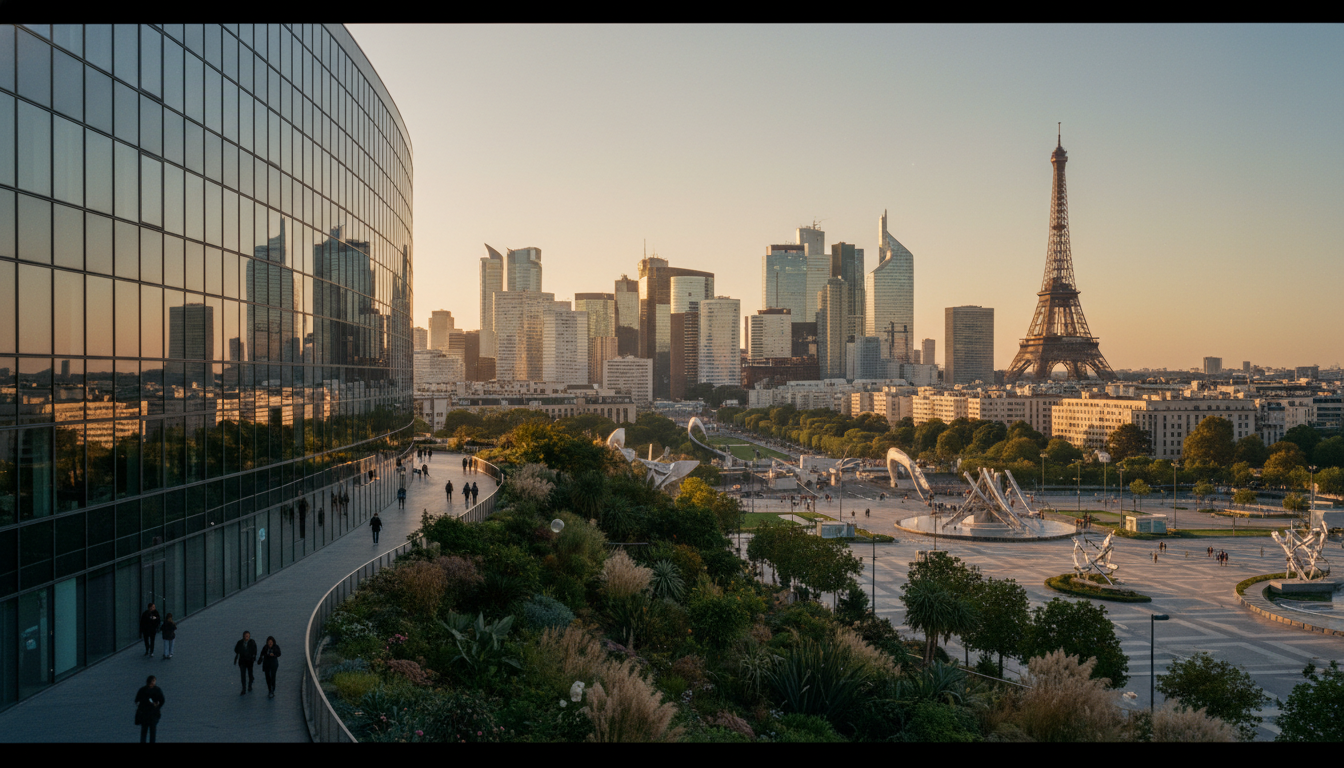
Have you ever wondered what lies beyond the Eiffel Tower and historic monuments that define the City of Light?
Paris has changed into a vibrant center where cutting-edge innovation meets classic beauty. Now, it boasts modern landmarks that show its growth into the 21st century.
You’ll find digital adventures, startup areas, and amazing buildings that change how we see this famous place. These new sites add to the classic charm, offering new views.
The city has welcomed virtual reality installations and green urban areas. It keeps its old charm while embracing new ideas. You can see cool galleries, tech spots, and cultural centers that show Paris is always changing.
Learning about these contemporary attractions will show you how old and new meet in this beloved city.
Key Takeaways
- Paris offers cutting-edge digital art experiences and immersive installations beyond traditional museums
- The city features innovative startup campuses and technology centers showcasing 21st-century development
- Contemporary architectural landmarks demonstrate how historic charm blends with forward-thinking design
- New cultural spaces in emerging districts provide fresh perspectives on Parisian creativity
- Sustainable urban parks and eco-friendly developments reflect the city’s commitment to modern living
- Virtual reality experiences and interactive exhibits transform how visitors engage with culture
Contemporary Art Museums and Galleries
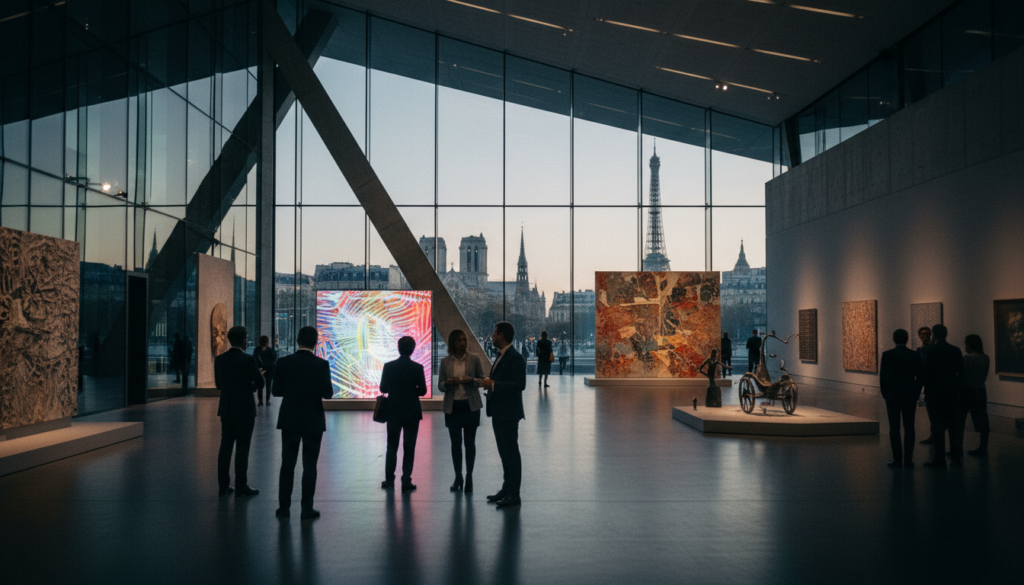
Paris’s modern art scene is vibrant and full of life. It has galleries and museums that stand up to any art capital. You’ll see art from the 20th century to today in these places. They show art in new ways with bold designs and experimental installations.
Paris has many art venues, from big museums to small, new spaces. You can see both famous artists and new talents. The city’s art museums and galleries offer experiences that teach, surprise, and inspire you.
Europe’s Largest Modern Art Collection
The Centre Pompidou is a bold building in the 4th arrondissement. Its design is unique, with pipes and escalators outside. It was once shocking but now it’s a beloved part of Paris.
Inside, you’ll find Europe’s biggest collection of modern art. It has works from Fauvism to today’s digital art. You’ll see pieces by Picasso, Matisse, and Warhol, among others.
The building is colorful, with pipes in different colors. You can take the outside escalators for panoramic views of Paris. The Centre Pompidou also has a library, cinema, and performance spaces.
Frank Gehry’s Architectural Masterpiece
The Fondation Louis Vuitton looks like a glass ship in the Bois de Boulogne. It was designed by Frank Gehry and opened in 2014. It’s a place of wonder and art.
Inside, you’ll see galleries with both permanent and temporary exhibitions. The building’s design is amazing, with curved glass and unique structures. You can see works by Basquiat and Schiele here.
The gardens and terraces offer stunning views of Paris. You can also enjoy concerts and educational programs. The Fondation Louis Vuitton shows how luxury brands support art.
Paris’s Laboratory for Contemporary Creation
Palais de Tokyo is a huge space for contemporary art and experiments. It has a raw, unfinished look with exposed concrete. You’ll see installations, performances, and video art that challenge your views on art.
Exhibitions change often, so you’ll always find something new. The Palais encourages artists to take risks. You might see immersive environments or installations about current issues.
The Palais is open late on weekends, perfect for evening visits. You can also eat at the onsite restaurant. It’s a place where artists are always creating something new.
Free Access to 20th and 21st Century Art
The Musée d’Art Moderne de la Ville de Paris offers free entry to its permanent collection. It’s in the Palais de Tokyo and shows modern art movements. You’ll see works by Matisse and Dufy.
The museum focuses on Parisian artists, showing the city’s role in modern art. Temporary exhibitions need a ticket but are worth it. The museum’s galleries have natural light and views of the Seine.
Visiting the museum is easy, with extended hours on Thursdays. It proves that you can see great art without spending a lot.
| Venue | Collection Size | Architectural Style | Admission | Best For |
|---|---|---|---|---|
| Centre Pompidou | 100,000+ works | High-tech inside-out design | €15-17 | Comprehensive modern art history |
| Fondation Louis Vuitton | Rotating exhibitions | Frank Gehry glass sails | €16-20 | Contemporary blockbuster shows |
| Palais de Tokyo | Temporary installations | Raw industrial spaces | €12-15 | Experimental and emerging artists |
| Musée d’Art Moderne | 15,000+ works | Classical 1930s building | Free permanent collection | Budget-conscious art lovers |
These four spaces in Paris show different ways to experience modern art. The Centre Pompidou teaches you about art history. Palais de Tokyo is all about new and experimental art. Fondation Louis Vuitton has amazing exhibitions in a stunning building. The Musée d’Art Moderne is free and has essential works.
Planning your art tour in Paris depends on what you like and how much time you have. The Centre Pompidou needs at least half a day. If you love architecture, Fondation Louis Vuitton is a must-see. Buying tickets in advance saves you time at busy places.
Exploring these places shows Paris’s role as a global art center. Each place offers a unique view of contemporary art. You’ll find something that interests you, whether it’s famous artists or new talents.
Modern Attractions in Paris for Immersive Experiences
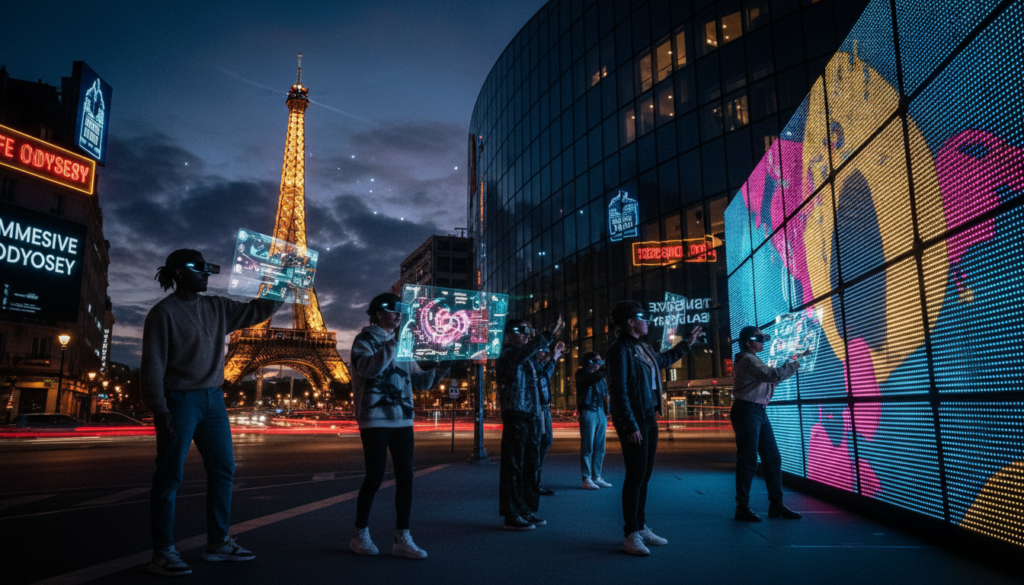
Explore beyond traditional sightseeing in Paris. Discover new ways to experience art and history through innovative attractions. These venues turn you into an active participant with interactive installations and virtual reality.
Paris now uses technology to enhance cultural experiences. Modern entertainment venues offer unique experiences that can’t be found at home. These experiences blend storytelling and visual spectacle, creating unforgettable memories.
Atelier des Lumières Digital Art Show
The Atelier des Lumières digital art show is a former iron foundry turned into a stunning venue. Located in the 11th arrondissement, it uses 140 video projectors and a sound system for immersive exhibitions. You’ll see famous artworks come alive around you.
Each show lasts about a year and focuses on renowned artists. Past shows have featured Van Gogh, Klimt, Monet, and Dalí. The projections envelop you, covering walls and floors.
The music is carefully chosen to match each artist’s style. Classical music enhances Impressionist works, while modern soundscapes accompany contemporary art. This creates an emotional connection that static displays can’t match.
Plan to spend 45 to 60 minutes here. The program loops continuously, so you can arrive at any time. Many visitors feel like they’re walking inside a painting, especially during Van Gogh shows.
The venue welcomes all ages and allows photography. Tickets should be booked online in advance, especially during peak seasons.
FlyView Paris Virtual Reality Flight Over the City
FlyView Paris offers a unique aerial view of the city. Located near the Opera Garnier, it uses VR headsets and motion seats for a flight simulation. You’ll see the Eiffel Tower, the Seine, and more.
The technology makes you feel like you’re flying. The motion seats and visual experience are synchronized, with wind effects and audio adding to the illusion. The 20-minute flight includes both daylight and nighttime views.
This venue is great for visitors with mobility issues. You can see architectural details from angles impossible for able-bodied tourists. The virtual flight takes you close to Notre-Dame’s spires and the Eiffel Tower.
The experience is suitable for ages 8 and above. Some may find the motion uncomfortable. Sessions run every 30 minutes, with English and French options.
FlyView Paris packages include a documentary about Paris’s history. This educational component turns the thrill ride into a learning experience. You’ll understand the city’s evolution and appreciate its monuments.
Eternal Notre-Dame VR Immersive Experience
The Eternal Notre-Dame VR experience lets you see the cathedral before the 2019 fire. Using 3D modeling and VR, you can explore areas closed to the public. This includes climbing the bell towers and examining the roof.
The experience starts with a history introduction. You’ll then wear a VR headset for a 45-minute journey. The guide explains Gothic architecture and medieval engineering feats.
This experience preserves Notre-Dame in detail. The digital model captures the cathedral’s minute details, creating a permanent record. You can see the attic forest, destroyed in the fire.
The technology allows you to see the cathedral at different times. You can witness its construction, the French Revolution, or Viollet-le-Duc’s restoration. This makes architectural education feel like time travel.
Located near the actual Notre-Dame, the experience complements a visit. Tickets include the VR experience and an exhibition about Notre-Dame’s history and future.
teamLab Borderless Paris at La Villette
TeamLab Borderless Paris at La Villette brings Japanese digital art to France. This installation creates a boundary-free art experience. Digital flowers bloom where you walk, and abstract light forms follow your movements.
The “borderless” concept means artworks interact and respond to your presence. A flock of digital birds might migrate from one room to another. Butterflies you touch in one gallery might later appear in a different section.
The La Villette location offers extensive space for teamLab’s vision. You’ll encounter multiple zones, including the Forest of Resonating Lamps and the Athletics Forest. These areas combine physical activity with digital interaction.
Photography and video recording are encouraged throughout teamLab installations. The artworks seem designed for social media sharing. However, the experience offers more than aesthetic appeal—it challenges the boundaries between observer and artwork.
Plan to spend at least 90 minutes to two hours here. The space is maze-like, encouraging exploration. Children enjoy the interactive elements, while adults appreciate the sophisticated visual design.
Advance booking is essential for this popular attraction. The venue limits capacity to ensure a good experience for everyone. Evening visits offer a different atmosphere than daytime explorations.
Modern Architecture and Urban Landmarks
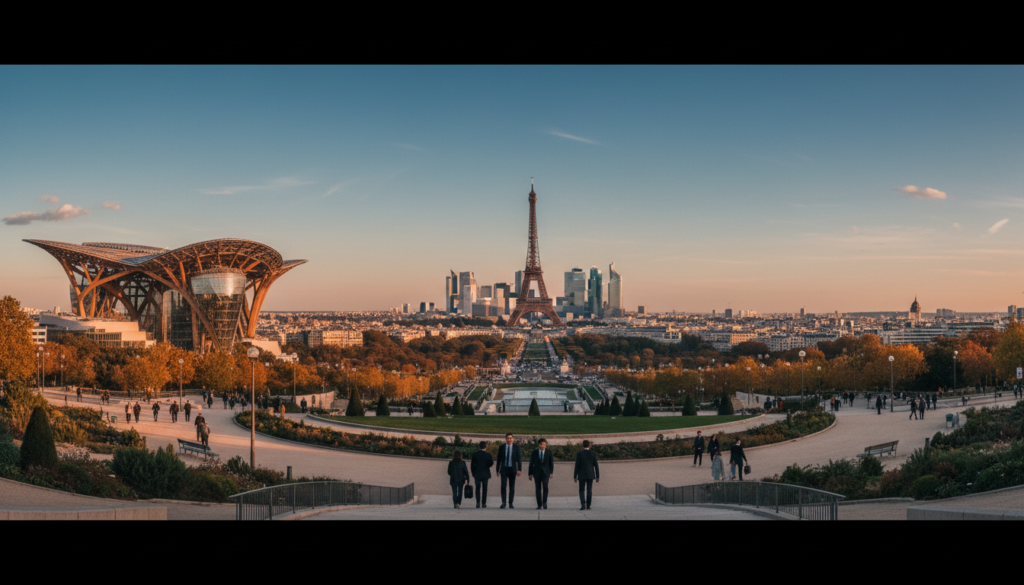
Paris’s modern landmarks show how new design can blend with old beauty. The recently built paris attractions show the city’s love for new architecture while keeping its heritage. You’ll see that modern architecture paris is as memorable as old buildings.
These buildings show different architectural ideas. Each tells a story of how Paris’s modern architecture pushes limits while serving cultural needs. You can visit these sites to see their designs and spaces.
Europe’s Premier Business District with Monumental Gateway
The la défense business district and grande arche stand out from old Paris. Located west of the city center, it has over 70 skyscrapers with big companies. The skyline feels like Manhattan, showing Paris’s modern economic power.
The Grande Arche is the district’s centerpiece. It’s a 110-meter hollow cube, echoing the Arc de Triomphe. You can take an elevator to the rooftop for amazing views of Paris.
La défense paris has over 60 public art pieces. These sculptures and monuments turn the corporate area into an outdoor gallery. You’ll see works by Miró, Calder, and César, adding culture to the urban scene.
Visiting tips for la défense:
- Take Métro Line 1 directly to La Défense station for easy access
- Visit during weekday lunch hours to experience the district’s energy
- Allow 2-3 hours to explore the plaza, art installations, and Grande Arche
- The rooftop of Grande Arche requires advance booking online
- Combine your visit with shopping at Les Quatre Temps mall
Frank Gehry’s Sculptural Masterpiece in Glass
The fondation louis vuitton frank gehry building is a 21st-century architectural wonder. Frank Gehry designed it with twelve glass “sails” that seem to float over the Bois de Boulogne. The building changes with the weather, time, and view.
Building it needed new engineering solutions. It uses 3,600 glass panels and 19,000 wooden beams. This futuristic paris building blends with the park, not dominating it.
The building also hosts contemporary art exhibitions. Its interior spaces adapt to different art needs. Your visit is a mix of admiring the building and its art.
The fondation is great for architectural photos. Walk around for different views or climb to the terraces for park views. Evening visits show the glass sails in dramatic light.
Undulating Concert Hall with Revolutionary Acoustics
The philharmonie de paris jean nouvel concert hall opened in 2015. Jean Nouvel designed it with an aluminum exterior that looks dynamic. The building’s shape reflects sound waves and music.
Inside, the 2,400-seat hall has amazing acoustics. Nouvel arranged the seats for everyone to feel close to the music. The ceiling has acoustic panels that enhance sound quality.
The philharmonie complex has more than just the main hall. It includes a chamber music room, rehearsal spaces, and educational areas. It’s a complete musical ecosystem.
Architectural tours show the building’s technical wonders:
- The exterior aluminum panels create a pixelated effect that changes with lighting
- Public spaces wrap around the concert hall in a continuous promenade
- Large windows connect interior spaces with Parc de la Villette
- Sustainable design features reduce energy consumption by 30%
Mechanical Façade Blending Technology and Tradition
The institut du monde arabe jean nouvel façade mixes modern tech with traditional design. Jean Nouvel’s south-facing wall has 240 light-sensitive apertures inspired by Islamic patterns. These apertures open and close to control light.
The façade is a stunning mix of Middle Eastern heritage and modern engineering. Each aperture has geometric patterns like traditional moucharabieh screens. You’ll see these elements change with light, making the building alive.
However, the mechanical system has faced maintenance issues since 1987. Many apertures no longer work automatically. Yet, the building’s visual impact remains strong. It shows how Paris’s modern architecture references cultural traditions in new ways.
The institut has museum galleries, a library, and research areas for Arab world culture. The ninth-floor terrace offers great views of the Seine and Notre-Dame. The rooftop restaurant serves Moroccan-French food with architectural views.
These architectural approaches show different ways to design today:
| Building | Architect | Design Philosophy | Key Feature |
|---|---|---|---|
| Fondation Louis Vuitton | Frank Gehry | Sculptural expressionism | Glass sails creating fluid forms |
| Philharmonie de Paris | Jean Nouvel | Function-driven aesthetics | Acoustic-optimized undulating surfaces |
| Institut du Monde Arabe | Jean Nouvel | Cultural technology fusion | Mechanical light-sensitive apertures |
| Grande Arche | Johan Otto von Spreckelsen | Monumental minimalism | Hollow cube on historic axis |
These modern architecture and urban landmarks show Paris’s ongoing evolution. Each building approaches modern design uniquely, from Gehry’s forms to Nouvel’s tech. Visiting these sites offers experiences as rich as seeing Paris’s historic sites, showing the city’s respect for its past and future.
Modern Attractions in Paris for Science and Innovation
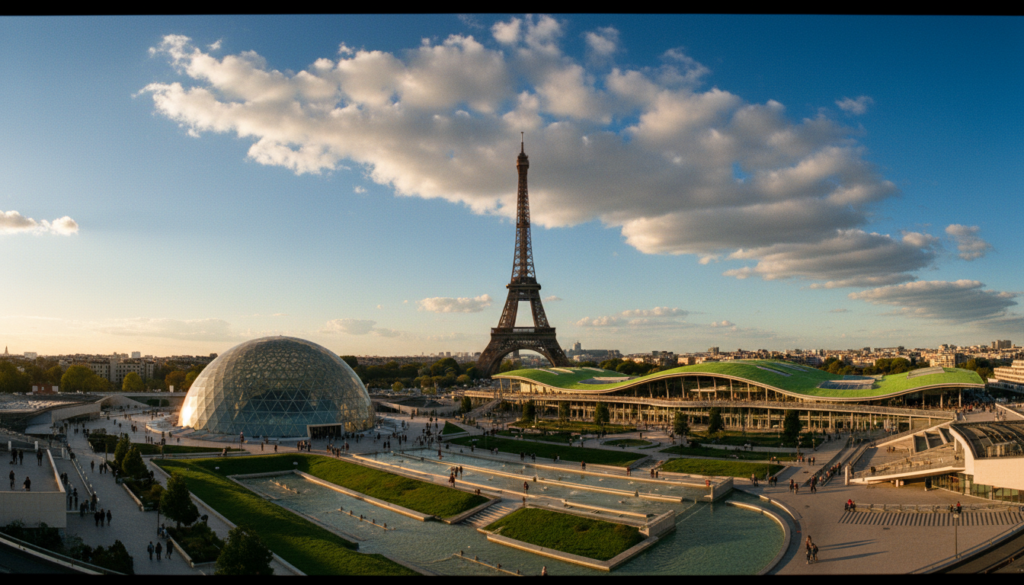
Paris is a hub for science and technology, with interactive museums and innovation centers. These places show the city’s commitment to STEM education and tech advancement. You can enjoy hands-on experiences, live demos, and see how new ideas are born.
The city’s paris innovation centers add to the art museums beautifully. They show the full range of human creativity and problem-solving through history and into the future.
Europe’s Largest Science Museum at Parc de la Villette
The cité des sciences et de l’industrie is Europe’s biggest science museum. It’s in the Parc de la Villette and has interactive exhibits on space, oceans, and more. There are areas for all ages.
The museum has special sections for kids aged 2-7 and 5-12. They can play with water, build, and learn about their bodies.
Outside, you can see a real submarine, the Argonaute. The Planétarium offers shows on space and astronomy with advanced tech.
Temporary exhibits cover topics like AI, climate change, and biotech. The museum makes complex ideas easy to understand with multimedia and hands-on activities.
Hands-On Science Education at Grand Palais
The palais de la découverte focuses on live demos and experiments in the Grand Palais. It brings science to life with interactive experiments.
Watch electrical demos in the electrostatics room. Presenters create lightning and explain electrical phenomena in a dramatic way.
The math section has puzzles and geometric concepts. Physics and chemistry labs offer experiments where you can learn by doing.
The planetarium shows different topics like planetary science and stellar formation. It’s perfect for all knowledge levels. If you want to explore the science museum in paris with hands-on learning, this is the place.
World’s Largest Startup Campus Tours
The station f startup campus and innovation tours are unique. This converted railway building is home to over 1,000 startups in the paris innovation district.
Public tours show Paris’s entrepreneurial ecosystem. You’ll see coworking spaces where teams work on new tech products.
The campus supports startups at all stages. It offers resources, mentorship, and community, making Paris a global tech hub.
Visitors learn about French startup success stories. Guides explain how Paris attracts innovators worldwide, blending tech and creativity.
| Science Venue | Primary Focus | Best For | Special Features |
|---|---|---|---|
| Cité des Sciences | Interactive science exhibitions across all disciplines | Families with children | Submarine tours, planetarium, dedicated children’s areas |
| Palais de la Découverte | Live demonstrations and hands-on experiments | School-age children and science enthusiasts | Spectacular electrical shows, mathematics puzzles, chemistry labs |
| Station F | Startup ecosystem and entrepreneurship | Business professionals and tech enthusiasts | Coworking tours, innovation programs, networking events |
| Musée des Arts et Métiers | Historical technology and invention collections | History buffs and technology fans | Original Foucault pendulum, early automobiles, historic aircraft |
Historical Technology Collections in Le Marais
The musée des arts et métiers technology collections is one of the oldest science and tech museums. It shows humanity’s tech progress with over 2,400 historical objects.
The museum is in the Marais district. Walking through, you feel like you’re traveling through time. You’ll see early flying machines, cars, and communication devices.
See Foucault’s original pendulum and early telescopes and microscopes. These devices helped make scientific breakthroughs.
Early computing devices show how info processing evolved. The transportation section has vintage cars, bikes, and planes that changed how we move.
What’s special is the authenticity of these objects. They’re the real inventions that shaped our world. Each one tells a story of human ingenuity and problem-solving.
These innovative museums paris show the city’s commitment to science and tech. You’ll see how paris urban innovations go beyond art and design into research, education, and entrepreneurship.
These venues offer something for everyone, no matter your age or interests. From kids’ activities to advanced research demos, Paris offers a wide range of science education. It’s a place where science and culture come together.
Contemporary Cultural Venues and Performance Spaces
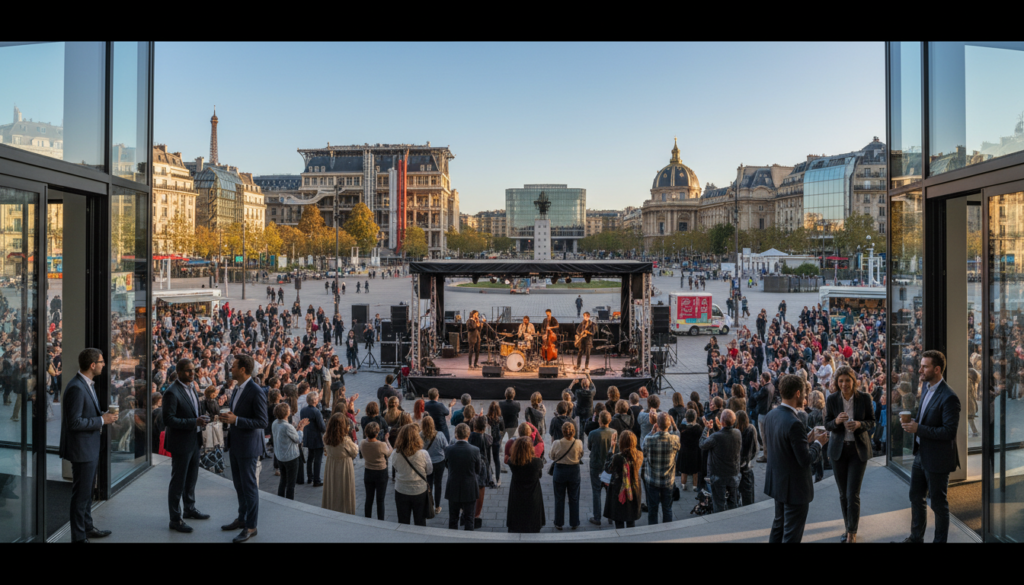
Paris now offers exciting cultural experiences in old industrial spaces and new venues. These contemporary cultural venues and performance spaces show Paris’s dedication to making culture open to all. You can see former funeral homes turned into creative spots, old railway stations hosting concerts, and floating concert halls designed by famous architects.
These venues are different from traditional theaters. They offer a democratic way to enjoy culture. Many have no entrance fee. Others mix dining, shopping, socializing, and art under one roof.
These spaces show how Parisians want to enjoy culture today. They value flexibility, community, and authenticity over being exclusive.
La Seine Musicale Concert Venue on Île Seguin
La Seine Musicale is on Île Seguin in the western suburbs. You can get there by Metro line 9 to Pont de Sèvres. It was designed by Japanese architect Shigeru Ban and French architect Jean de Gastines. The venue has a massive glass sail that moves with the sun.
The complex has two main performance spaces. The Grande Seine auditorium seats 4,000 and hosts big pop, rock, and world music acts. The smaller Auditorium seats 1,150 and focuses on classical music and jazz.
You can visit even without a concert. The riverside promenade, restaurants, and observation areas are open to everyone. The glass sail is perfect for sunset photos.
Tickets cost from €20 to €150. The venue’s modern design and varied programming make it a top 21st century Parisian attraction for music fans. Check the schedule online before visiting, as there’s everything from classical symphonies to international pop stars.
104 CentQuatre Arts and Culture Centre
The 104 CentQuatre arts and culture centre is in a huge industrial complex in the 19th arrondissement. It was a funeral home from 1874 but reopened in 2008 as a free contemporary art space. It’s called 104 rue d’Aubervilliers.
The halls have a raw, industrial look. Exposed beams, concrete floors, and high ceilings create spaces perfect for large installations. You can watch artists work through glass walls.
Programming changes often. You might see contemporary dance rehearsals, video art, experimental music, or participatory art projects. The venue also has design boutiques, a bookstore, and restaurants and cafés where locals meet.
The goal is to make culture not something you consume passively, but something you participate in actively, breaking down barriers between artists and audiences.
Families like the dedicated children’s programming and open spaces for kids to play. The venue shows Paris’s vision of accessible, community-centered culture. Visit any day except Monday, and you’ll find something happening. No ticket is needed for general admission.
Le Hasard Ludique Repurposed Railway Station Venue
Le Hasard Ludique turns an old 1920s railway station into a cool concert venue and community space. It’s in the 18th arrondissement near Porte de la Chapelle. This project keeps the station’s industrial look while creating a lively cultural spot.
The venue spans several levels. The main concert hall is in the former train shed. The original railway platform is now an outdoor terrace bar. The space has exposed brick, steel beams, and vintage signs, giving it an authentic feel. String lights and street art add a cozy touch.
It focuses on live music across genres—indie rock, electronic, hip-hop, jazz, and world music. The venue also hosts DJ sets, theatrical performances, comedy shows, and community events. Cover charges are affordable, usually €5-15, making it great for young Parisians and budget-conscious travelers.
The name means “playful chance,” showing the venue’s spontaneous and experimental vibe. It’s where you’ll meet local artists, students, and creative professionals, not just tourists. The kitchen serves simple, affordable food, and the bar offers craft beers and natural wines.
Ground Control Urban Culture and Food Market
Ground Control is in a former SNCF administrative building near Gare de Lyon in the 12th arrondissement. It’s a temporary occupation until 2025, turning into a huge urban culture and food market. The 6,000-square-meter space brings together street food, bars, concerts, and community events under one roof.
The atmosphere is inclusive and accessible. Entrance is free. You’ll find families, groups of friends, solo diners, and more sharing picnic tables. The diverse food vendors offer everything from Vietnamese bánh mì to Mexican tacos to French rotisserie chicken, with most meals costing €8-15.
Cultural programming includes live concerts, DJ sets, film screenings, markets, and workshops. The venue partners with local associations to provide social services and support community initiatives. This makes Ground Control more than entertainment—it’s a social experiment in urban culture.
Visit Thursday through Sunday when the venue is most active. The industrial setting, with shipping containers turned into kitchens and bars, feels like an urban beach club. You can spend an afternoon or evening here without spending much, making it perfect for budget travelers seeking authentic Parisian experiences.
| Venue | Location | Entry Fee | Best For | Unique Feature |
|---|---|---|---|---|
| La Seine Musicale | Île Seguin (West) | €20-150 (concerts) | Major performances, architecture | Moving glass sail, bioclimatic design |
| 104 CentQuatre | 19th arrondissement | Free | Contemporary art, families | Former funeral home, artist studios |
| Le Hasard Ludique | 18th arrondissement | €5-15 (events) | Live music, local scene | Railway station platform bar |
| Ground Control | 12th arrondissement | Free entry | Street food, community events | Temporary social experiment space |
These contemporary cultural sites Paris offers show how the city reinvents itself while keeping its industrial heritage. Each venue tells a story of transformation—from funeral home to art center, from railway station to concert hall, from administrative building to community space. This approach preserves architectural history while meeting today’s needs.
When planning your visit to these Paris cultural centers, think about timing and how to get there. La Seine Musicale needs concert schedule checks. CentQuatre is great for afternoon visits. Le Hasard Ludique shines in the evenings. Ground Control is best Thursday through Sunday for food vendors and events.
Getting to these venues is easy. Each is near Metro stations or short bus rides away. Exploring different Paris neighborhoods, from the industrial 19th arrondissement to the emerging eastern districts near Gare de Lyon, helps you see how contemporary culture flourishes throughout the city, not just in tourist areas.
These modern entertainment venues in Paris make culture participatory, not just passive. You’re not watching from a distance. You’re sharing picnic tables, watching artists work, drinking beer on railway platforms, and experiencing culture as a social activity. This shows the future of urban cultural consumption—inclusive, flexible, and deeply embedded in community life.
Modern Attractions in Paris for Urban Parks and Design
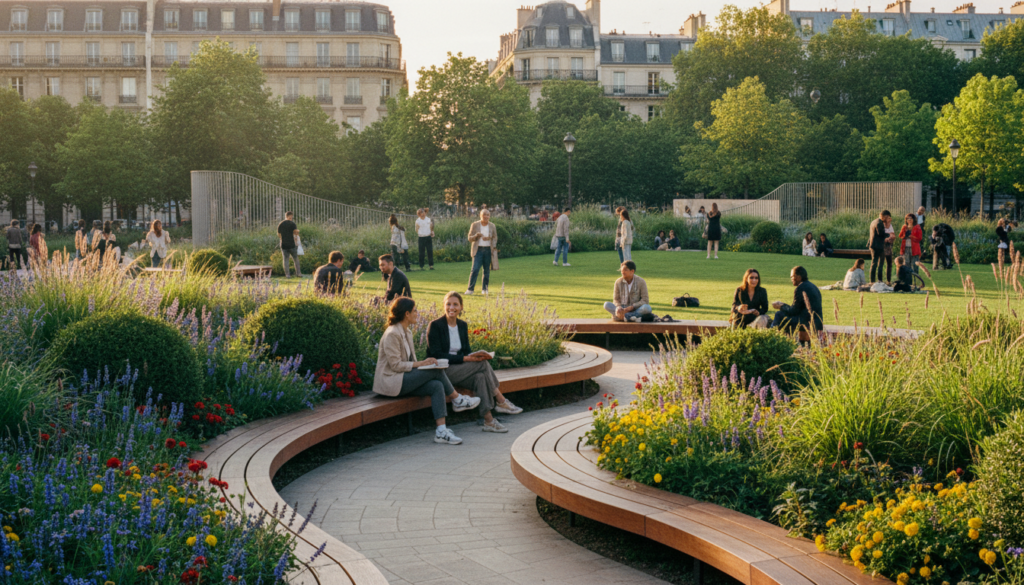
Paris has seen a big change in its parks. Now, they focus on being easy to get to, green, and modern. These parks are very different from the old French gardens like Luxembourg or Tuileries. They mix nature with art and green ideas.
Modern attractions in Paris for urban parks and design do more than just offer a place to relax. They also host cultural events, help the environment, and are places for people to meet. These parks show how cities can turn old areas into lively public spaces.
Paris has changed a lot in how it plans its city. It has turned old car areas and factories into places for people to walk and enjoy nature and design.
Deconstructivist Landscape at the Villette
Parc de la Villette and its folies is a big change from old French gardens. It’s the city’s third-biggest park. It was designed by Bernard Tschumi in the 1980s.
The park has 26 bright red buildings called folies. They are all over the park on a grid. Each folie does something different, like giving out info or being a place for kids to play.
There are special gardens in the park that show different ideas and feelings. The Dragon Garden has a big slide shaped like a dragon. The Mirror Garden plays tricks with mirrors.
The park has big open areas for picnics, concerts, and movies in the summer. It also has museums and the Philharmonie de Paris. This mix of nature, buildings, and culture makes it special.
Reclaimed Waterfront Along the Seine
Les Berges de Seine urban riverside promenade turned old car roads into places for people. It’s along the Left Bank, from the Musée d’Orsay to Pont de l’Alma. It’s now a place for walking and enjoying the river.
You can see floating gardens, places to exercise, and areas for kids to play. There are also places to eat and cultural events all year. This shows how cities can put people first in important areas.
The promenade has different areas for different things. Some are for relaxing, and others are for being active. There are running paths and places to work out outside.
Seasonal events make les berges de seine even more lively. You can find temporary art, markets, and festivals. This is a big win for urban renewal paris.
Elevated Garden Path Through Eastern Paris
The Coulée Verte René-Dumont elevated linear park is older than New York’s High Line. It’s a 4.7-kilometer walkway made from an old railway. It goes from Bastille to the Bois de Vincennes through the 12th arrondissement.
Walking here, you see Paris from above. You pass through tunnels and over bridges. The park is full of plants and trees.
The park changes as you walk. Some parts are wide and open, while others are narrow and green. It’s great for walking, jogging, or biking.
Under part of the park, there’s the Viaduc des Arts. It has workshops for artisans in old railway arches. This makes the park special.
Sustainable Design in the 17th District
Martin Luther King Park in the 17th arrondissement is a modern park. It opened in 2007 as part of a big development. It’s about 10 hectares and is still growing.
The park uses special water systems to save water. It has plants that help the environment and look good all year. This park is a good example of modern design.
The park has different areas for different things. There’s a big lawn for fun and quiet areas for birds. It also has plants that look good all year.
The park has modern buildings that fit with the green space. It’s a place for the community and shows how parks can be part of new developments.
| Park Name | Size & Location | Key Features | Best Activities | Unique Characteristic |
|---|---|---|---|---|
| Parc de la Villette | 55 hectares, 19th arrondissement | 26 red folies, themed gardens, cultural institutions | Concerts, outdoor cinema, museum visits, picnics | Deconstructivist design with architectural follies |
| Les Berges de Seine | 2.3 km riverside, Left Bank central Paris | Floating gardens, exercise equipment, climbing walls | Walking, fitness activities, riverside dining | Reclaimed expressway transformed for pedestrians |
| Coulée Verte René-Dumont | 4.7 km linear park, 12th arrondissement | Elevated walkway, planted gardens, viaduct architecture | Walking, jogging, cycling, photography | World’s first elevated linear park (predates High Line) |
| Martin Luther King Park | 10 hectares, 17th arrondissement | Ecological water systems, wetlands, sustainable plantings | Relaxation, nature observation, community events | 21st-century sustainable design with rainwater management |
These paris urban attractions show how the city is changing its parks. Each park tackles different city problems while offering important benefits. They show that modern parks can be good for the environment, culture, and fun.
These parks are different from old Parisian gardens. They are more casual and do many things. This change shows how people’s views on parks are changing.
When you visit these parks, each one offers something special. Parc de la Villette is great for architecture and culture. Les Berges de Seine is perfect for enjoying the river. The Coulée Verte gives you a unique view of the city. Martin Luther King Park shows off green design.
Street Art and Modern Creative Districts
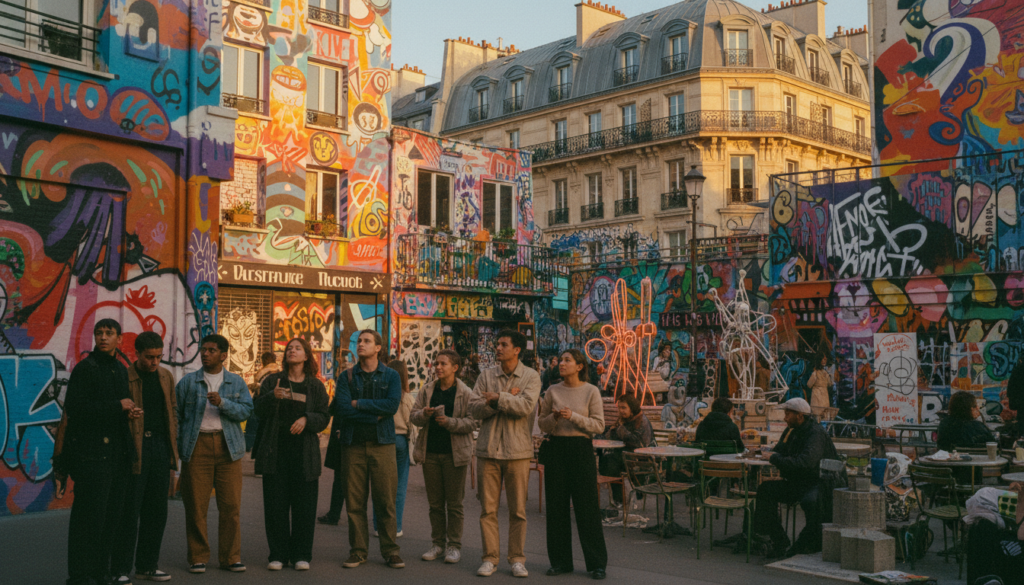
Paris now sees street art as a real form of art, especially in lively areas. The city has moved from covering up graffiti to supporting murals and urban art. You’ll see how Paris’s art scene goes beyond museums into vibrant areas where creativity is part of everyday life.
In these areas, international and local artists team up to make huge murals and share messages. Paris’s changing views on street art show how urban spaces now celebrate creativity. Walking through these areas gives you a real look at the artistic energy that makes Paris a global creative center.
13th Arrondissement Open-Air Street Art Gallery
The 13th arrondissement is now Paris’s biggest outdoor museum, with huge murals on buildings. Famous artists like Shepard Fairey and JR have left their mark here. This working-class area has been transformed by street art.
Start near the Boulevard Vincent Auriol métro station to see many murals. There are over 100 street art pieces here, from realistic portraits to abstract designs. Each piece tells a story about community, identity, or social justice.
The 13th arrondissement’s street art gallery is always changing. You can find maps or join tours to learn about the artists. Morning is the best time to visit, as the light makes the murals look amazing for photos.
Belleville Street Art and Graffiti Trail
Belleville is Paris’s most authentic street art spot, where creativity is everywhere. This area shows a mix of paste-ups, stencils, tags, and murals that reflect its diverse community. The street art here captures Paris’s contemporary culture in a raw, unfiltered way.
The street art here is full of political messages and social commentary, giving a voice to often overlooked communities. You’ll see works about immigration, gentrification, and social inequality. Belleville’s street art is always changing, making it a unique experience.
Walk along Rue Denoyez to see many colorful murals. Then, explore the winding streets to find hidden artworks. Belleville’s art reflects its diverse population, celebrating difference and creativity.
Canal Saint-Martin Creative Scene Walk
The Canal Saint-Martin area is Paris’s hipster hub, with street art and independent galleries. This charming neighborhood offers a complete Paris experience, blending art, shopping, and café culture.
Street art and trendy spots line the canal, perfect for leisurely walks. The walk takes you past historic bridges and warehouses. Stop at galleries to see emerging artists or browse concept stores with local designers.
This area is authentically cool, without feeling fake. Spend an afternoon here, enjoying street art and people-watching from cafés. Weekends bring out local artists and musicians.
Le Marais Contemporary Gallery Crawl
Le Marais is unique, with modern galleries in old buildings. The le marais contemporary gallery crawl takes you through medieval streets with experimental art spaces. You’ll see photography, video art, and digital installations.
Rue de Turenne, Rue Charlot, and Rue Vieille du Temple have many galleries. They show emerging and established artists. The contrast between old buildings and modern art is uniquely Parisian.
Visit Thursday to Saturday for the most gallery openings. Many galleries are free, allowing you to see many in one afternoon. You can visit ten galleries in a few blocks, each offering a different view on contemporary art.
Street art and creative districts show Paris’s balance between tradition and innovation. These areas prove Paris’s art scene goes beyond museums into the city’s streets.
Tips for exploring Paris’s street art districts:
- Download street art mapping apps like Street Art Paris or use Google Maps custom routes shared by local art enthusiasts
- Photograph respectfully—avoid climbing on artworks or blocking narrow sidewalks while taking pictures
- Visit during weekday mornings for quieter exploration and better natural lighting conditions
- Wear comfortable walking shoes as these districts require significant walking on varied terrain
- Check gallery opening hours before planning your Le Marais crawl, as many close Sundays and Mondays
- Join organized street art tours for deeper insights into artists’ techniques and neighborhood histories
- Bring a portable charger for your phone as you’ll likely take many photos during your explorations
Modern Attractions in Paris for Shopping and Lifestyle
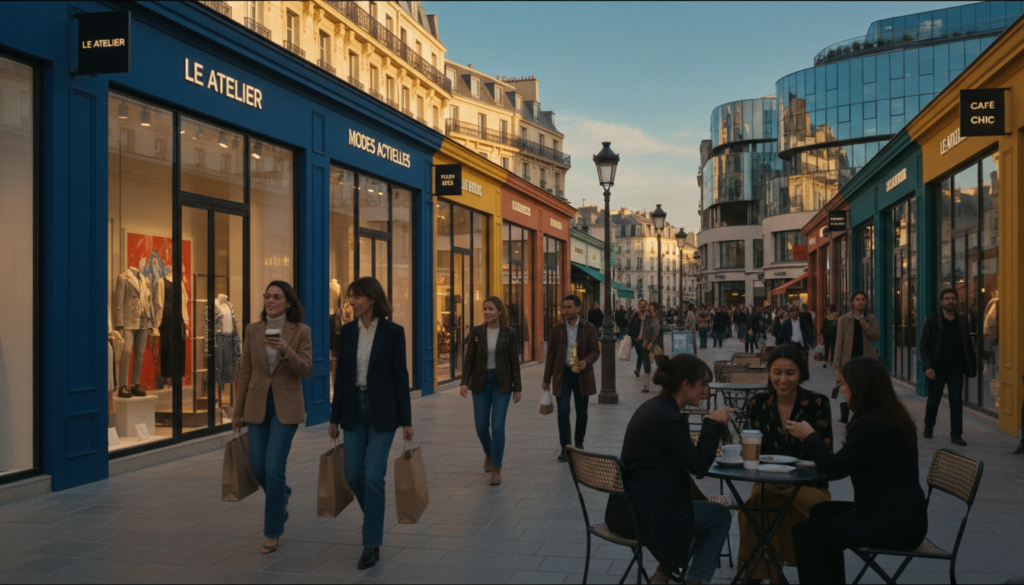
Paris’s modern shopping and lifestyle spots are more than just places to buy things. They are cultural experiences where architecture, art, and shopping come together. Many of these spots are so beautiful, people visit just to see them, even if they don’t buy anything.
These places show how Paris is embracing new ways of shopping and dining. They mix shopping, sightseeing, and culture in a unique way. Whether you’re looking for unique stores or dining in old industrial spaces, you’ll find experiences that show Paris’s changing face.
Spectacular Historic Department Stores Reimagined
The galeries lafayette haussmann rooftop and glass dome is a must-see, even if you’re not shopping. This iconic store has a stunning Art Nouveau glass dome that turns the inside into a light-filled cathedral. The stained glass cupola, from 1912, is one of Paris’s most photographed sights.
You can visit the rooftop for free and see amazing views of the Eiffel Tower, Sacré-Coeur, and Opéra Garnier. There’s also a trendy café where you can enjoy the view with a drink. Galeries Lafayette is a mix of old-world charm and modern style, making it a key spot in Paris.
Even if you’re not buying anything, these stores are worth seeing. They’re definitely worth a visit!
The store hosts fashion shows and cultural events on different floors. Free guided tours show you the building’s architecture and retail innovations. For more on Paris’s top shopping spots, check out the best malls in Paris guide.
Paris’s Oldest Department Store and Gourmet Paradise
Le bon marché and la grande épicerie started the modern department store idea in 1852. Located in the 6th arrondissement, it focuses on high-end fashion, home goods, and design. The shopping experience is intimate, with helpful staff and well-arranged displays.
The adjacent La Grande Épicerie is a food lover’s dream. It offers French and international products like a museum, with beautiful displays of cheeses, meats, pastries, chocolates, and wines. You’ll find rare ingredients, artisanal products, and specialty items not found elsewhere in Paris.
The épicerie is perfect for making luxury picnics or finding unique souvenirs. It has prepared foods, fresh sandwiches, and ready-to-eat delicacies. The quality is worth the slightly higher prices, and the presentation is worth seeing even if you don’t buy anything.
Contemporary Urban Renewal and Underground Shopping
The les halles canopy and forum des halles show Paris’s effort to renew its urban spaces. The glass canopy, designed by Patrick Berger, covers the city’s central food market, famous from Émile Zola’s “The Belly of Paris.” The canopy is a striking modern landmark in the historic 1st arrondissement.
The Forum des Halles shopping complex is underground and spans several levels. It has over 150 stores, from international chains to French brands, making it one of Paris’s biggest shopping centers. The complex also has cinema multiplexes, restaurants, and direct métro and RER line connections.
Recent renovations improved the lighting, circulation, and public spaces. The above-ground gardens offer a welcome green space in this busy area. Les Halles shows how Paris meets modern urban needs while keeping its historical charm.
Concept Store with Conscience and Style
The merci concept store in the 3rd arrondissement is different from regular stores. It beautifully displays fashion, home goods, books, and vintage furniture in lifestyle vignettes. Walking through Merci feels like touring a design museum, not shopping.
What makes Merci special is more than its looks—it supports children’s charities in Madagascar with all its profits. This mission adds meaning to every purchase. The store is in a former wallpaper factory, keeping its original architectural details.
This place is like an installation mixed with a shop. It shows current trends in real-life settings, with vintage and modern items and fashion.
The Used Book Café is a cozy spot with comfy seating and carefully chosen secondhand books. The courtyard garden and in-house restaurant make Merci a place to visit all day. It shows that conscious consumption and beautiful design can go hand in hand.
New Generation Food Halls Transform Dining
Modern food halls and culinary destinations have changed how Parisians and visitors dine. These places focus on variety, quality, and social atmosphere, unlike traditional restaurants. The beaupassage gourmet art walk between Rue de Grenelle and Rue du Bac has boutique food shops and restaurants around a beautifully designed courtyard with contemporary art.
Celebrity chefs like Yannick Alléno, Thierry Marx, and Pierre Hermé have venues in Beaupassage. The design by Franklin Azzi creates a unique pedestrian passage that feels exclusive yet welcoming. You can try different foods or enjoy a coffee at one of the outdoor terraces.
The la felicità giant italian food hall is in the 13th arrondissement and covers 4,500 square meters. It has multiple Italian food stations for everything from Neapolitan pizza to fresh pasta to creative cocktails. The huge dining area can hold over 1,000 guests, making it lively, especially evenings and weekends.
Eataly paris marais italian market and dining brings the Italian concept to the historic Marais district. This three-level space has a market for premium Italian products, several restaurants, and a rooftop terrace. You can shop, eat, or attend cooking classes and tastings all in one visit.
| Venue | Location | Specialty | Best Feature |
|---|---|---|---|
| Galeries Lafayette Haussmann | 9th Arrondissement | Luxury Department Store | Free rooftop terrace with panoramic views |
| Le Bon Marché | 6th Arrondissement | Curated Fashion & Gourmet Food | La Grande Épicerie museum-quality food displays |
| Forum des Halles | 1st Arrondissement | Underground Shopping Complex | Contemporary canopy architecture and transit connections |
| Merci Concept Store | 3rd Arrondissement | Lifestyle & Design Goods | Profits support children’s charities |
| La Felicità | 13th Arrondissement | Giant Italian Food Hall | 1,000+ capacity industrial-chic dining space |
Budget-Friendly Ways to Experience Shopping Destinations
You don’t have to spend a lot to enjoy Paris’s modern shopping and lifestyle spots. Many places welcome window shoppers and architecture fans. Free activities include exploring Galeries Lafayette’s dome and rooftop, browsing Merci’s displays, and taking photos of the Les Halles canopy.
Here are some tips for visiting on a budget:
- Visit La Grande Épicerie for the visual feast and buy small items like specialty chocolates or teas as affordable souvenirs
- Enjoy a coffee or pastry at food hall venues to experience the atmosphere without full meals
- Browse concept stores like Merci for design inspiration and trend forecasting even if prices are high
- Time your visits during weekly events, tastings, or special promotions often advertised on venue websites
These spots show how retail is becoming a part of cultural participation in Paris. The experience is as important as any purchase. By seeing shopping venues as modern Parisian attractions, you learn about contemporary French lifestyle and design, beyond what traditional tourist sites offer.
How to Plan a Modern Attractions Itinerary in Paris
Planning a modern attractions itinerary in Paris needs careful thought. Modern sites are spread out across the city, unlike old landmarks. Grouping attractions wisely will make your visit better.
Grouping Contemporary Sites by Location
Start your day at Fondation Louis Vuitton in the morning. Then, head to Palais de Tokyo in the afternoon. Evening visits are perfect for Centre Pompidou. This way, you can enjoy each place without rushing.
Architectural Tours Across Districts
Explore modern architecture from La Défense to La Villette. Start at Grande Arche, then visit Institut du Monde Arabe. Finish at Philharmonie de Paris. Each building shares stories of modern design.
Metro Connections for Efficiency
The métro connects eastern and western modern sites quickly. Line 1 links La Défense to central Paris. Line 5 reaches La Villette efficiently. Get a day pass for unlimited travel to new attractions.
Advance Planning Benefits
Skip-the-line tickets make visits smoother. Book Atelier des Lumières and teamLab Borderless online early. The Paris Museum Pass covers many sites at once.
Make your itinerary based on what you really want to see. Leave room for surprises. The best experiences often come from being flexible.
FAQ
What qualifies as a “modern attraction” in Paris?
Modern attractions in Paris include developments from the 1970s on. This includes contemporary art spaces, digital experiences, and 21st-century architecture. You’ll also find innovative cultural venues and urban design projects.
Places like the Centre Pompidou and Atelier des Lumières are examples. So are Fondation Louis Vuitton and startup hubs like Station F. Even reimagined urban spaces like Les Berges de Seine are part of this.
These attractions show Paris’s evolution. They complement, not replace, historic landmarks. This makes Paris a living city that values both its past and future.
Do I need to book tickets in advance for modern attractions in Paris?
Yes, booking in advance is recommended for popular spots like Atelier des Lumières and FlyView Paris. Fondation Louis Vuitton and Station F startup tours also benefit from early booking.
Centre Pompidou and Palais de Tokyo can have long lines. Buying skip-the-line tickets saves time. But, 104 CentQuatre, Ground Control, and Musée d’Art Moderne de la Ville de Paris offer free entry without reservations.
For VR experiences, booking a time slot ensures you visit when you prefer. This is important for immersive experiences.
Are modern attractions in Paris suitable for children and families?
Many modern attractions are great for families. Cité des Sciences et de l’Industrie has special areas for kids. It also has interactive science exhibits.
Atelier des Lumières is immersive but might be too much for very young kids. Parc de la Villette has playgrounds and family-friendly events. teamLab Borderless Paris has interactive digital art that kids love.
However, Palais de Tokyo and FlyView Paris VR experiences are better for older kids and teens. Palais de la Découverte engages school-age children with live science demos.
How do I get to La Défense from central Paris?
La Défense is easy to reach by Métro and RER lines. RER Line A is the fastest, reaching La Défense in about 15 minutes. Métro Line 1 also connects central Paris to La Défense.
The Grande Arche sits above La Défense station, making it easy to navigate. You can use standard Métro tickets or passes for this journey. Walking from the station to the arch and surrounding modern architecture takes about 10-15 minutes.
Is the Centre Pompidou worth visiting if I’m not interested in contemporary art?
Yes, the Centre Pompidou is worth visiting. Its revolutionary design is an architectural landmark. The top-floor terrace offers stunning views of Paris.
The Piazza hosts street performers, making it great for people-watching. The building houses a public library, cinema, and restaurants. Even without the museum, the building and views are worth seeing.
What’s the difference between Atelier des Lumières and traditional art museums?
Atelier des Lumières offers a unique experience. Instead of static paintings, you’re surrounded by digital projections. Famous paintings are animated across walls, floors, and ceiling, synchronized with music.
You can walk through the space, sit, or stand as the artwork surrounds you. There are no plaques or chronological arrangements. It’s about emotional and sensory engagement.
The experience lasts about one hour. This makes it accessible to those who find traditional museums intimidating.
Are there free modern attractions in Paris?
Yes, several modern attractions offer free access. The permanent collection at Musée d’Art Moderne de la Ville de Paris is always free. 104 CentQuatre is completely free to enter.
Ground Control charges nothing for entry. You only pay for food and drinks. Les Berges de Seine riverside promenade and Coulée Verte René-Dumont elevated park are free public spaces.
The 13th arrondissement street art gallery and Belleville street art trail cost nothing to explore. Galeries Lafayette rooftop terrace offers free panoramic views. Many contemporary galleries in Le Marais have free entry.
How long should I spend at Fondation Louis Vuitton?
Spend 2-3 hours at Fondation Louis Vuitton. Allow 30-45 minutes to explore the building itself. The art exhibitions require 1.5-2 hours.
The venue also has a restaurant and café. The location in Bois de Boulogne means it’s somewhat removed from central Paris. Visitors typically dedicate a half-day to this attraction.
Can I visit modern attractions using the Paris Museum Pass?
The Paris Museum Pass covers some modern attractions. It includes the Centre Pompidou permanent collections and Musée des Arts et Métiers technology collections. However, it does not include many newer attractions like Fondation Louis Vuitton and Atelier des Lumières.
The pass covers the Palais de la Découverte. For attractions not included in the Museum Pass, you’ll need to purchase separate tickets. If your Paris itinerary focuses heavily on modern attractions, the Museum Pass may offer less value.
What’s the best way to experience Paris street art?
The best approach combines self-guided exploration with some background knowledge. Start in the 13th arrondissement for massive murals by internationally known artists. Download a street art app or map beforehand.
Belleville offers a grittier, more organic experience. Wandering without a specific plan lets you discover spontaneous works. Consider taking a guided street art tour for your first neighborhood to gain context.
Photograph respectfully, especially in residential areas. The Canal Saint-Martin area combines street art with a trendy creative scene, making it perfect for a half-day.
Is La Défense business district worth visiting as a tourist?
La Défense offers a striking contrast to central Paris and deserves a visit. The Grande Arche provides dramatic photo opportunities. The district features impressive skyscrapers and outdoor sculptures by famous artists.
The experience feels dramatically different from historic Paris. More like Manhattan or La Défense. Allow 1-2 hours for a visit. The district is easily accessible via RER Line A or Métro Line 1.
It’s especially impressive at sunset when modern buildings are illuminated. If your Paris time is extremely limited, this is less essential than core attractions, but it provides valuable context for understanding contemporary Paris.
What should I know before visiting Station F startup campus?
Station F is the world’s largest startup campus. It houses over 1,000 startups in a converted railway warehouse. Public access is limited to scheduled tours, which must be booked in advance through their website.
Tours last approximately one hour. They provide insight into Paris’s entrepreneurial ecosystem. The campus is located in the 13th arrondissement near Bibliothèque François Mitterrand Métro station.
This attraction appeals primarily to people interested in technology, entrepreneurship, business, or innovation. The experience is informational rather than interactive. Combine your visit with exploring the nearby 13th arrondissement street art to maximize your time in this eastern Paris neighborhood.
Are immersive digital experiences like Atelier des Lumières suitable for people with mobility issues?
Yes, Atelier des Lumières and similar immersive digital experiences are excellent for visitors with mobility limitations. The venue is wheelchair accessible, and the experience doesn’t require standing for extended periods.
Benches are provided where you can sit and still be fully immersed in the floor-to-ceiling projections. Unlike traditional museums where you must move from artwork to artwork, the art comes to you in these immersive spaces.
FlyView Paris accommodates wheelchair users in their VR flight simulation chairs with assistance from staff. Eternal Notre-Dame VR experience allows you to virtually explore areas of the cathedral that would require climbing stairs in reality, making it accessible to people who couldn’t physically tour the actual building.
What’s the best time of day to visit modern art museums to avoid crowds?
For popular venues like Centre Pompidou and Fondation Louis Vuitton, arrive right when they open (typically 10-11am) for the quietest experience, especially on weekdays. Mid-week visits (Tuesday-Thursday) see fewer crowds than weekends and Mondays when some other museums close.
Palais de Tokyo stays open until midnight on Tuesday through Saturday, making evening visits atmospheric and less crowded—the experimental art often feels more impactful in evening hours. Avoid visiting on the first Sunday of the month when many museums offer free entry, causing significant crowds.
How do modern food halls like La Felicità compare to traditional Parisian restaurants?
Modern food halls like La Felicità, Ground Control, and Beaupassage offer fundamentally different experiences from traditional bistros or brasseries. They provide casual, self-service dining where you can sample multiple vendors, cuisines, and price points in one location—perfect for groups with varied tastes or dietary requirements.
The atmosphere is livelier, younger, and more relaxed than traditional restaurants, with communal seating, high noise levels, and an energetic vibe. La Felicità, for example, occupies a massive industrial space with multiple Italian food stations, cocktail bars, and indoor greenery, serving up to 1,000 people—the opposite of an intimate neighborhood bistro.
You sacrifice personalized service, quiet ambiance, and traditional French culinary experience, but gain flexibility, affordability, and a window into contemporary Parisian food culture. These venues work well for lunch or casual dinners, while traditional restaurants better suit special occasion meals or authentic French dining experiences.
Can I create an itinerary focusing only on modern attractions, or should I mix them with historic sites?
You can absolutely create a modern-focused itinerary, but most visitors find that mixing modern and historic attractions creates the richest Paris experience. The contrast between centuries-old monuments and cutting-edge contemporary spaces helps you understand Paris as a living city that honors its past while embracing its future.
Consider organizing days thematically—perhaps one day exploring modern architecture from La Défense to La Villette, another day focused on contemporary art at Centre Pompidou and Palais de Tokyo, while other days center on classic sights. Geographic proximity often naturally mixes eras: you might visit historic Le Marais while also exploring its contemporary galleries, or combine the classic Tuileries Garden with the modern Musée de l’Orangerie and contemporary Palais Royal area.
If your time is limited (3-4 days), prioritize iconic historic landmarks while incorporating 1-2 modern attractions. Longer stays (5+ days) allow deeper exploration of contemporary Paris without sacrificing essential classic experiences.
What’s the difference between Atelier des Lumières and traditional art museums?
Atelier des Lumières creates an entirely different experience from traditional museums. Instead of viewing static paintings on walls, you’re immersed in floor-to-ceiling digital projections that transform the entire former foundry space into living artworks.
Famous paintings by artists like Van Gogh, Klimt, or Monet are deconstructed and animated across walls, floors, and ceiling, synchronized with music to create multisensory experiences. You can walk through the space, sit, or stand as the artwork surrounds you.
There are no explanatory plaques or chronological arrangements—it’s about emotional and sensory engagement rather than intellectual art history study. The experience typically lasts about one hour as different programs cycle through. This makes it accessible to people who find traditional museums intimidating or exhausting.
Are there free modern attractions in Paris?
Yes, several modern attractions offer free access. The permanent collection at Musée d’Art Moderne de la Ville de Paris is always free, showcasing 20th and 21st-century works. 104 CentQuatre is completely free to enter, allowing you to explore contemporary art, watch artists working in studios, and experience the industrial space.
Ground Control charges nothing for entry—you only pay for food and drinks you consume. Les Berges de Seine riverside promenade, Coulée Verte René-Dumont elevated park, and other urban parks are free public spaces. The 13th arrondissement street art gallery and Belleville street art trail cost nothing to explore.
Galeries Lafayette rooftop terrace offers free panoramic views. Many contemporary galleries in Le Marais have free entry. The exterior architecture of buildings like Institut du Monde Arabe and Philharmonie de Paris can be appreciated without paying admission.
How long should I spend at Fondation Louis Vuitton?
Plan to spend 2-3 hours at Fondation Louis Vuitton to fully appreciate both the Frank Gehry architecture and the art exhibitions. Allow at least 30-45 minutes to explore the building itself, walking around the exterior to see how the twelve glass “sails” change appearance from different angles, and exploring the various levels and terraces.
The art exhibitions—both permanent collection and rotating temporary shows—typically require 1.5-2 hours depending on your interest level and the current exhibitions. The venue also has a restaurant and café where you might spend additional time. The location in Bois de Boulogne means it’s somewhat removed from central Paris, so visitors typically dedicate a half-day to this attraction, potentially combining it with a walk in the park or nearby attractions in the 16th arrondissement.
Can I visit modern attractions using the Paris Museum Pass?
The Paris Museum Pass covers some but not all modern attractions. It includes the Centre Pompidou permanent collections and the Musée des Arts et Métiers technology collections. However, it does not include many newer attractions like Fondation Louis Vuitton, Atelier des Lumières, FlyView Paris, teamLab Borderless, or Palais de Tokyo.
The pass covers the Palais de la Découverte. For attractions not included in the Museum Pass, you’ll need to purchase separate tickets. If your Paris itinerary focuses heavily on modern attractions, the Museum Pass may offer less value than if you’re primarily visiting historic monuments and classic museums.
What’s the best way to experience Paris street art?
The best approach combines self-guided exploration with some background knowledge. Start in the 13th arrondissement where massive murals by internationally known artists like Shepard Fairey, C215, and Invader cover building facades. Download a street art app or map beforehand showing notable pieces.
Belleville offers a grittier, more organic experience where street art constantly evolves. Wandering without a specific plan lets you discover spontaneous works. Consider taking a guided street art tour for your first neighborhood to gain context.
Photograph respectfully, especially in residential areas. The Canal Saint-Martin area combines street art with a trendy creative scene, making it perfect for a half-day.
Is La Défense business district worth visiting as a tourist?
La Défense offers a striking contrast to central Paris and deserves a visit. The Grande Arche provides dramatic photo opportunities. The district features impressive skyscrapers and outdoor sculptures by famous artists.
The experience feels dramatically different from historic Paris. More like Manhattan or La Défense. Allow 1-2 hours for a visit. The district is easily accessible via RER Line A or Métro Line 1.
It’s especially impressive at sunset when modern buildings are illuminated. If your Paris time is extremely limited, this is less essential than core attractions, but it provides valuable context for understanding contemporary Paris.
What should I know before visiting Station F startup campus?
Station F is the world’s largest startup campus. It houses over 1,000 startups in a converted railway warehouse. Public access is limited to scheduled tours, which must be booked in advance through their website.
Tours last approximately one hour. They provide insight into Paris’s entrepreneurial ecosystem. The campus is located in the 13th arrondissement near Bibliothèque François Mitterrand Métro station.
This attraction appeals primarily to people interested in technology, entrepreneurship, business, or innovation. The experience is informational rather than interactive. Combine your visit with exploring the nearby 13th arrondissement street art to maximize your time in this eastern Paris neighborhood.
Are immersive digital experiences like Atelier des Lumières suitable for people with mobility issues?
Yes, Atelier des Lumières and similar immersive digital experiences are excellent for visitors with mobility limitations. The venue is wheelchair accessible, and the experience doesn’t require standing for extended periods.
Benches are provided where you can sit and still be fully immersed in the floor-to-ceiling projections. Unlike traditional museums where you must move from artwork to artwork, the art comes to you in these immersive spaces.
FlyView Paris accommodates wheelchair users in their VR flight simulation chairs with assistance from staff. Eternal Notre-Dame VR experience allows you to virtually explore areas of the cathedral that would require climbing stairs in reality, making it accessible to people who couldn’t physically tour the actual building.
What’s the best time of day to visit modern art museums to avoid crowds?
For popular venues like Centre Pompidou and Fondation Louis Vuitton, arrive right when they open (typically 10-11am) for the quietest experience, especially on weekdays. Mid-week visits (Tuesday-Thursday) see fewer crowds than weekends and Mondays when some other museums close.
Palais de Tokyo stays open until midnight on Tuesday through Saturday, making evening visits atmospheric and less crowded—the experimental art often feels more impactful in evening hours. Avoid visiting on the first Sunday of the month when many museums offer free entry, causing significant crowds.